BRCA Genes: Essential Guide For Carriers And Families
Discover the critical role of BRCA1 and BRCA2 genes in DNA repair, cancer risk, and genetic testing options for proactive health management.
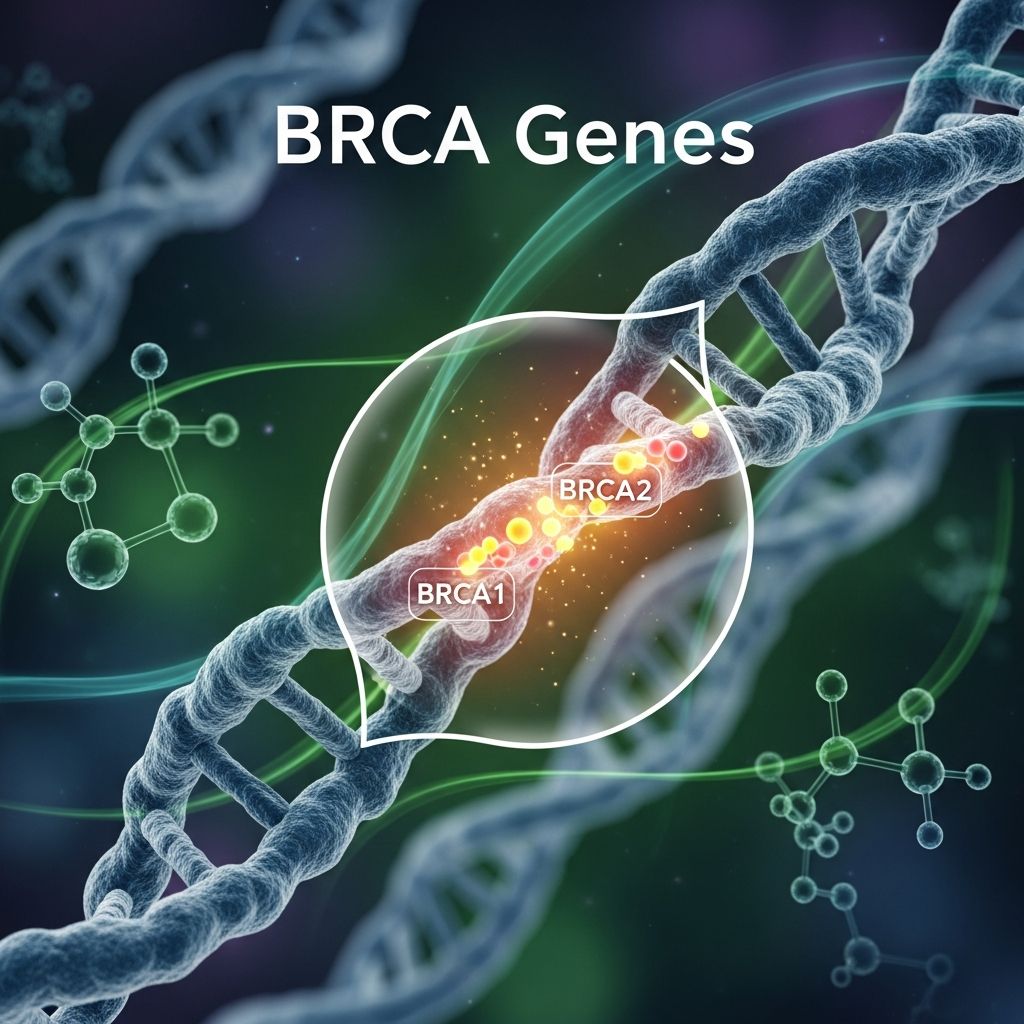
BRCA1 and BRCA2 genes serve as essential guardians of genomic stability, producing proteins that repair damaged DNA and suppress tumor formation. When mutated, these genes significantly elevate the lifetime risk of developing breast, ovarian, prostate, and other cancers, affecting both men and women.
Essential Functions of BRCA Genes in Cellular Health
These genes encode proteins vital for maintaining the integrity of genetic material. The BRCA1 protein coordinates the repair of double-strand DNA breaks through homologous recombination, a precise mechanism that prevents mutations from accumulating. BRCA2 complements this by facilitating the loading of RAD51 recombinase onto damaged DNA sites, stabilizing repair processes during replication stress.
Beyond repair, BRCA1 influences cell cycle checkpoints, halting division when damage is detected to allow time for fixes or trigger apoptosis if irreparable. It also participates in chromatin remodeling and epigenetic regulation, ubiquitinating histones to silence inappropriate gene expression and preserve heterochromatin structure. These multifaceted roles underscore why disruptions lead to genomic instability and oncogenic transformation.
Types and Mechanisms of BRCA Mutations
Mutations in BRCA genes can be germline—inherited and present in every cell—or somatic, acquired during life in specific tissues. Germline variants, often single nucleotide changes or deletions in key domains like BRCA1’s RING finger, impair ubiquitin ligase activity and downstream repair functions.
Loss of heterozygosity (LOH) is a critical event where the remaining functional copy is lost or altered, forcing reliance on error-prone repair pathways like non-homologous end joining (NHEJ). This shift promotes chromosomal aberrations, cancer stem cell formation, and tumor progression.
- Gain-of-function vs. loss-of-function: Most pathogenic mutations cause loss of protein function, but some alter interactions with partners like 53BP1, favoring HR over NHEJ.
- Domain-specific impacts: RING domain mutations in BRCA1 disrupt ubiquitination; BRCA2 BRC repeats affect RAD51 binding.
- Frequency: Thousands of variants exist, classified as pathogenic, likely pathogenic, variants of uncertain significance (VUS), or benign via databases like ClinVar.
Inheritance Patterns and Family Risk Dynamics
BRCA mutations follow autosomal dominant inheritance with incomplete penetrance. Each child of a carrier has a 50% chance of inheriting the variant, regardless of sex, and it cannot skip generations. Men transmit equally but face lower expressivity, primarily elevated prostate and male breast cancer risks.
Families with BRCA alterations often show early-onset cancers, bilateral breast tumors, or multiple primaries across relatives. Population prevalence varies: about 1 in 300-500 for Ashkenazi Jewish individuals carrying founder mutations (e.g., 185delAG in BRCA1), higher than the general 1 in 400 rate.
| Gene | Lifetime Breast Cancer Risk (Women) | Lifetime Ovarian Cancer Risk | Male Risks |
|---|---|---|---|
| BRCA1 | 55-72% | 39-44% | Prostate (up to 20%), male breast (~1%) |
| BRCA2 | 45-69% | 11-17% | Prostate (~20%), male breast (5-10%) |
| General Population | 12-13% | 1.3% | Prostate 12%, male breast <0.1% |
Related Stories



Risks are estimates from large cohort studies; lifestyle, hormones, and modifiers influence actual outcomes.
Recognizing Signs of Hereditary Cancer Predisposition
Not all carriers develop cancer, but patterns signal testing need: breast cancer before 50, ovarian cancer at any age, male breast cancer, or multiple affected first-degree relatives. Triple-negative breast cancers or high-grade serous ovarian tumors associate strongly with BRCA1.
Proactive identification matters—carriers benefit from tailored surveillance. Tools like the Manchester Scoring System or National Comprehensive Cancer Network (NCCN) criteria guide referrals.
Genetic Testing: Process, Results, and Implications
Testing sequences BRCA1/BRCA2 via blood/saliva, analyzing coding regions and introns. Multigene panels often include other genes like PALB2, CHEK2 for comprehensive risk assessment. Results categorize as positive (pathogenic), negative, VUS, or uninformative.
Positive findings prompt cascade testing in relatives. Counseling precedes and follows, addressing psychological impacts, insurance, and options. Cost coverage varies; programs like the CDC’s facilitate access.
- Pre-symptomatic: Healthy individuals with family history.
- Diagnostic: Cancer patients for treatment guidance (e.g., PARP inhibitors for HR-deficient tumors).
- Post-treatment: Survivors planning family or surveillance.
Risk Reduction Approaches for BRCA Carriers
Strategies blend screening, chemoprevention, and surgery. Annual MRI/mammography from age 25-30 detects breast cancers earlier. Oral contraceptives lower ovarian risk by 30-50% but slightly raise breast risk short-term.
Risk-reducing salpingo-oophorectomy (RRSO) by 35-40 slashes ovarian cancer 80-96% and breast 37-50%; mastectomy reduces breast risk 90-95%. These decisions weigh benefits against menopause induction, body image, and reconstruction.
Therapeutic Advances Targeting BRCA-Deficient Cancers
Mutations confer synthetic lethality to PARP inhibitors (PARPi) like olaparib, exploiting HR deficiency. Approved for maintenance in ovarian, breast, prostate, pancreatic cancers. Immunotherapies and platinum chemotherapies also show efficacy due to high tumor mutational burden.
Clinical trials explore combinations, like PARPi with immunotherapy, expanding options.
Navigating Emotional and Familial Impacts
Learning carrier status evokes anxiety, guilt, or relief. Disclosure to family sparks discussions; CDC resources aid conversations emphasizing shared risk without pressure. Support groups, therapy, and genetic counseling foster resilience.
Children testing requires caution—typically deferred until adulthood unless immediate interventions apply.
Frequently Asked Questions
Can men get tested for BRCA mutations?
Yes, men carry and transmit mutations equally, facing prostate and breast cancer risks. Testing informs personal and family planning.
Does a negative test mean no cancer risk?
No—negative in a family with known mutation rules it out; otherwise, population or other gene risks remain.
Are all BRCA mutations harmful?
No—many are benign or VUS; expert interpretation clarifies pathogenicity.
How soon after testing can preventive surgery occur?
Timing personalizes post-counseling, often RRSO ages 35-40, mastectomy based on parity desires.
Do lifestyle changes mitigate BRCA risks?
Limited evidence; breastfeeding, exercise, avoiding alcohol may modestly help alongside medical strategies.
Future Horizons in BRCA Research
Ongoing studies refine risk models incorporating polygenic scores, AI-driven variant classification, and novel therapies like gene editing. Understanding modifiers promises personalized prevention.
References
- What Is BRCA1? About the BRCA1 Mutation and More — Breast Cancer Research Foundation. 2024. https://www.bcrf.org/about-breast-cancer/brca1/
- BRCA Genes: The Role in Genome Stability, Cancer Stemness and… — National Center for Biotechnology Information (PMC). 2019-05-28. https://pmc.ncbi.nlm.nih.gov/articles/PMC6548160/
- BRCA mutation — National Cancer Institute (via Wikipedia references). 2024. https://en.wikipedia.org/wiki/BRCA_mutation
- The Breast Cancer Gene – BRCA Mutations & Risks — National Breast Cancer Foundation. 2024. https://www.nationalbreastcancer.org/what-is-brca/
- What are BRCA Mutations? Science Made Simple — OCRA Hope. 2024. https://ocrahope.org/news/science-made-simple-brca-mutations/
- BRCA Gene Changes: Cancer Risk and Genetic Testing Fact Sheet — National Cancer Institute. 2024-08-05. https://www.cancer.gov/about-cancer/causes-prevention/genetics/brca-fact-sheet
- What to know after learning you have a BRCA mutation — MD Anderson Cancer Center. 2020-02-27. https://www.mdanderson.org/cancerwise/what-to-know-after-learning-you-have-a-brca-mutation.h00-159701490.html
Similar Articles








Read full bio of medha deb