BRCA Genes: Essential Guide To Risks, Testing, And Management
Understanding BRCA1 and BRCA2 genes: their role in cancer risk, genetic testing, and management strategies for high-risk individuals.
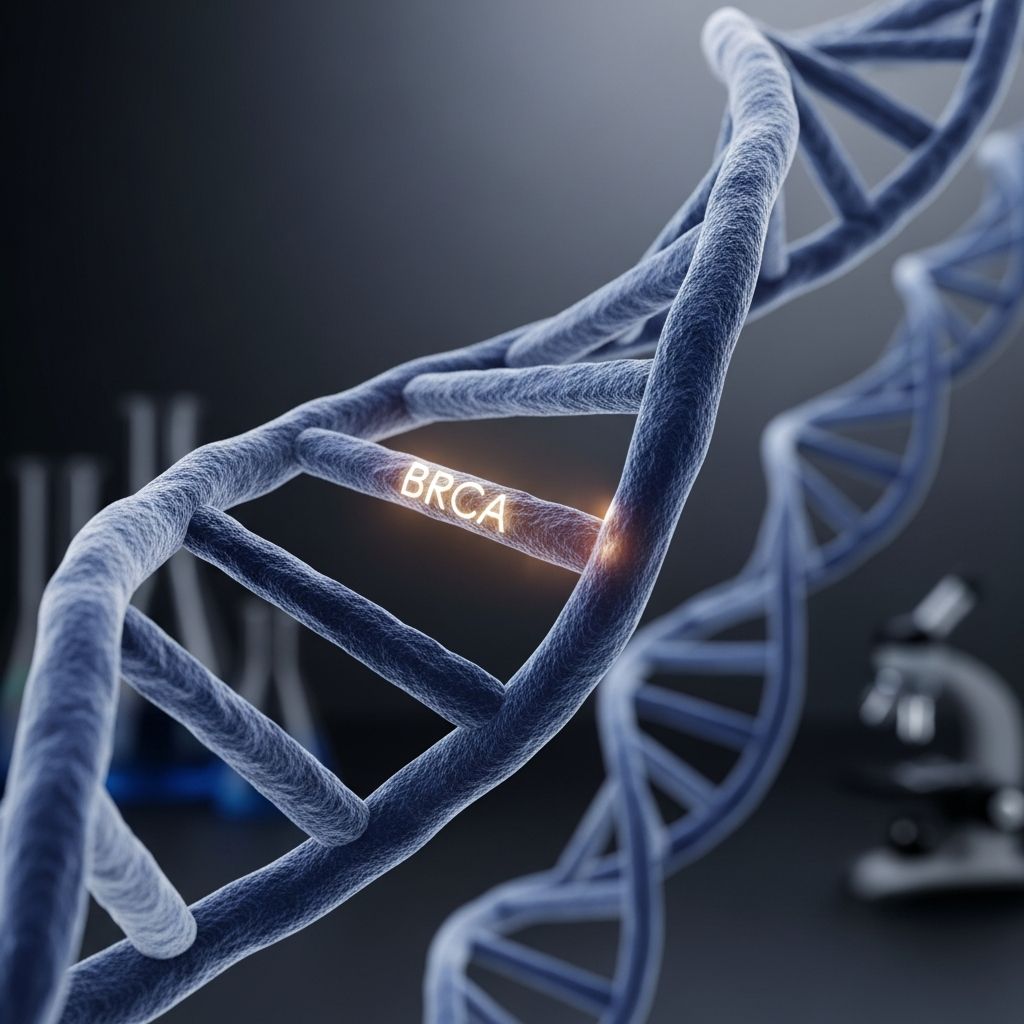
BRCA genes (BRCA1 and BRCA2) are tumour suppressor genes that help repair damaged DNA and prevent cancer. Harmful changes (pathogenic variants) in these genes significantly increase the lifetime risk of certain cancers, particularly breast and ovarian cancer.
What are BRCA genes?
Everyone has two copies of the BRCA1 and BRCA2 genes, located on chromosomes 17 and 13 respectively. These genes produce proteins essential for repairing double-strand breaks in DNA, maintaining genomic stability, and acting as tumour suppressors to halt uncontrolled cell growth.
BRCA1 and BRCA2 are crucial for homologous recombination, a DNA repair pathway. When functioning normally, they suppress tumour formation. A harmful inherited change (mutation or pathogenic variant) impairs this function, leading to accumulated DNA damage and heightened cancer susceptibility.
- BRCA1: Primarily linked to breast and ovarian cancers; mutations often result in triple-negative breast cancers.
- BRCA2: Associated with breast, ovarian, prostate, and pancreatic cancers; broader cancer spectrum.
Not all changes are harmful; variants of uncertain significance (VUS) require further evaluation. Only pathogenic or likely pathogenic variants confer high risk.
What cancers are linked to BRCA gene changes?
Harmful BRCA variants markedly elevate cancer risks, with breast and ovarian cancers most affected. Risks are higher and onset earlier than in the general population.
| Cancer Type | BRCA1 Lifetime Risk | BRCA2 Lifetime Risk | General Population Risk |
|---|---|---|---|
| Female Breast Cancer | 60-72% (by age 80) | 69% (by age 80) | 12-13% |
| Ovarian Cancer | 40-50% | 15-25% | 1-2% |
| Male Breast Cancer | Slight increase | 5-10% | <1% |
| Prostate Cancer | No significant increase | 20-25% (by age 80) | 10-12% |
| Pancreatic Cancer | Up to 5% | 5-10% | 1.6% |
Data synthesized from major studies; individual risks vary by family history and other factors.
BRCA1 carriers face higher ovarian cancer risk; BRCA2 impacts males more for prostate and breast cancers. Contralateral breast cancer risk post-diagnosis is 30-40% for BRCA1 and 25% for BRCA2 within 20 years, vs. 8% general.
Emerging links include melanoma, stomach, and uterine serous carcinoma, though evidence is less conclusive.
Understanding your family history of cancer
A BRCA variant is more likely with suggestive family patterns, even without personal cancer history. Inheritance is autosomal dominant: 50% chance per child if a parent carries it.
- Multiple relatives with breast/ovarian cancer.
- Breast cancer diagnosis before age 50.
- Triple-negative breast cancer or high-grade serous ovarian cancer at young age.
- Bilateral breast cancer or breast+ovarian in one person.
- Male breast cancer or prostate cancer under 60.
- Ashkenazi Jewish ancestry (founder mutations).
Not all carriers have family cancer; de novo mutations occur rarely. Genetic counselling assesses personal/family risk.
Genetic testing for a BRCA variant
Testing involves blood/saliva analysis for BRCA1/BRCA2 pathogenic variants. Offered via NHS/genetic services if criteria met.
Who should test?
- Personal history: Breast cancer <40-50 years, triple-negative <45, ovarian cancer (any age), male breast cancer.
- Family history: As above, or known relative variant.
Results:
- Positive (pathogenic/likely pathogenic): Increased cancer risk; discuss screening/surgery.
- Negative: No detected variant; average risk if from high-risk family (rules out only tested genes).
- VUS: Unclear; reclassification possible over time.
Counselling pre/post-test is standard. Testing is confidential; implications for family discussed.
Related Stories



What happens if you test positive for a BRCA gene change?
A positive result empowers proactive management but does not guarantee cancer. Lifelong surveillance and risk-reduction advised.
Screening and monitoring
- Breast: Annual MRI + mammogram from age 25-30; clinical exams.
- Ovarian: No routine screen; transvaginal ultrasound + CA-125 from 30-35 for high-risk.
- Prostate/Pancreatic: PSA/MRI for prostate from 40; pancreatic screening if family history.
Risk-reducing surgery
- Mastectomy: Reduces breast cancer risk by 90-95%; bilateral recommended.
- Salpingo-oophorectomy: Removes ovaries/fallopian tubes; cuts ovarian risk 80-96%, breast risk 50%; ideal post-childbearing, age 35-40.
Hormone replacement may be offered post-oophorectomy.
Chemoprevention
Tamoxifen/raloxifene for breast risk reduction; not routine for BRCA.
Treatment implications
BRCA-associated cancers respond better to PARP inhibitors (olaparib, etc.) and platinum chemotherapy due to homologous recombination deficiency (HRD).
Managing your cancer risk
Personalised plans via multidisciplinary teams include lifestyle (exercise, no smoking, healthy weight) alongside medical interventions.
- Regular specialist follow-up.
- Psychological support for mutation carriers.
- Family testing cascade.
Risks persist post-risk-reduction; ongoing vigilance needed.
Frequently Asked Questions (FAQs)
What is the difference between BRCA1 and BRCA2?
Both suppress tumours via DNA repair, but BRCA1 links more to ovarian/triple-negative breast; BRCA2 to prostate/pancreatic/male breast.
Can men inherit and pass on BRCA variants?
Yes, 50% chance to each child; increases their prostate/breast/pancreatic risks.
Does a positive test mean I will get cancer?
No, but lifetime risks are substantially higher (e.g., 72% breast for BRCA1).
Is genetic testing free on the NHS?
Yes, if eligible via criteria; private options exist.
What if my test is negative but family has BRCA?
You likely don’t carry the family variant; return to population screening.
References
- BRCA and cancer — Cancer.ie. 2024. https://www.cancer.ie/cancer-information/about-cancer/cancer-and-genes/brca-and-cancer
- BRCA gene — Macmillan Cancer Support. 2025. https://www.macmillan.org.uk/cancer-information-and-support/worried-about-cancer/causes-and-risk-factors/brca-gene
- BRCA Gene Changes: Cancer Risk and Genetic Testing — National Cancer Institute (NCI.gov). 2024-10-04. https://www.cancer.gov/about-cancer/causes-prevention/genetics/brca-fact-sheet
- Living with a BRCA Mutation: What You Need to Know About Your Cancer Risk — Prevent Cancer Foundation. 2024. https://preventcancer.org/article/living-with-a-brca-mutation-what-you-need-to-know-about-your-cancer-risk/
- BRCA Genes: Cancer Risk and Genetic Testing — Patient.info. 2025. https://patient.info/cancer/brca-genes
Similar Articles








Read full bio of Sneha Tete