Breast Anatomy: Structure, Function & Health
Comprehensive guide to breast anatomy, physiology, tissue types, and health conditions.
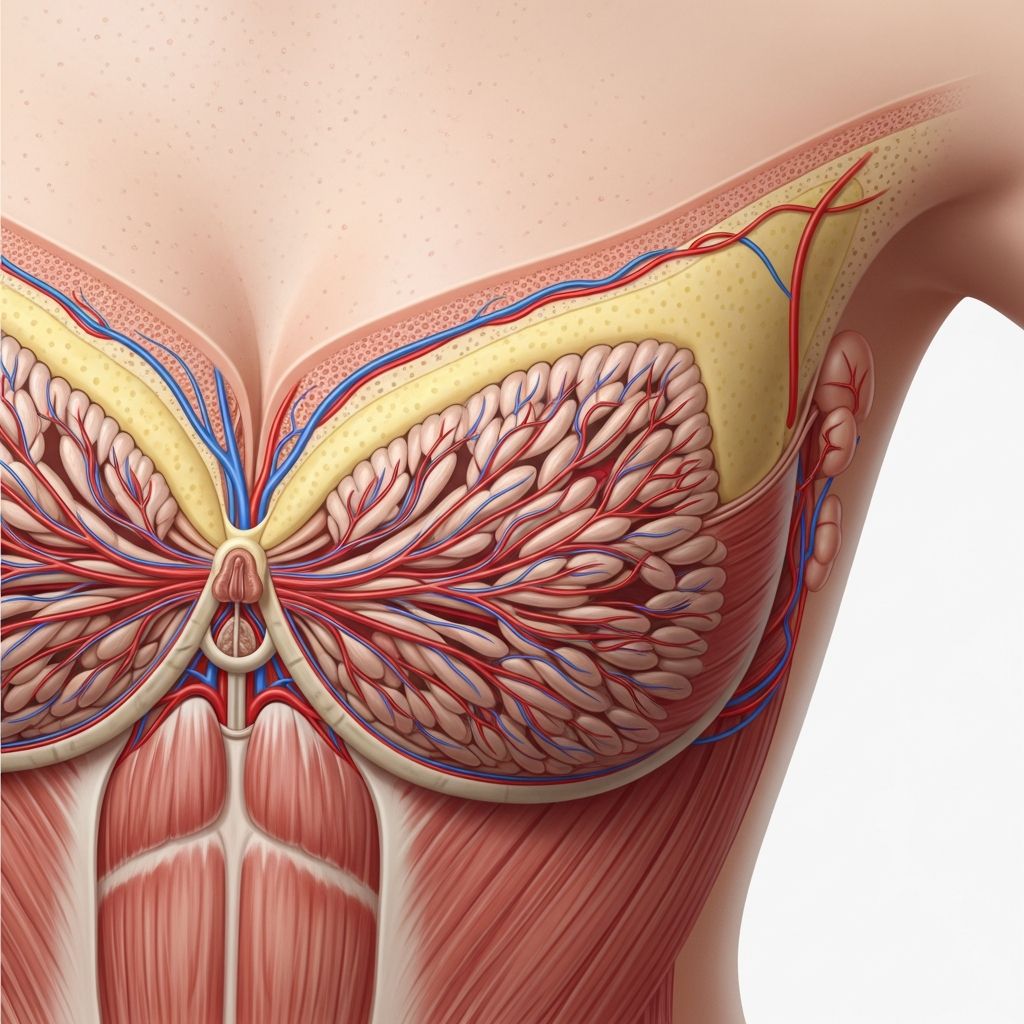
Breast Anatomy: Understanding Structure, Function & Physiology
The human breast is a complex organ with distinct differences between males and females, each serving unique biological and physiological purposes. Understanding breast anatomy is essential for recognizing normal variations, detecting potential health concerns early, and appreciating the diverse functions these organs perform. Breasts are part of both the reproductive and sexual anatomy, contributing to sexual pleasure for both sexes while serving critical lactation functions in females. The breast tissue is composed of several different structural components working together to create the complete organ system, and familiarizing yourself with these elements can help you make informed decisions about your health and wellbeing.
Overview of Breast Anatomy in Females and Males
While breast anatomy shares similarities between males and females, there are significant structural and functional differences. Female breasts are equipped with specialized milk ducts and glandular tissue that enable lactation and breastfeeding, making them both functional and sexual organs. These structures are primarily dormant until pregnancy occurs, at which point hormonal changes trigger their development and activation. Male breasts, by contrast, contain minimal glandular tissue and underdeveloped milk ducts, as they do not serve a lactation function. However, male breasts retain sensory capabilities and can provide sexual pleasure through nerve stimulation in the nipples and areolas. It is important to note that all sexes are susceptible to breast cancer, though females experience higher rates of benign breast disease and are more frequently diagnosed with breast cancer overall.
Key Components of Breast Structure
The breast is composed of several distinct tissue types and structural components that work together to create a functional organ system. Understanding these components helps clarify how the breast functions and why certain health conditions may develop.
The Nipple and Areola Complex
The most visible aspects of breast anatomy are the nipple and areola. The nipple is the small, projecting structure located at the center of each breast, typically featuring a slightly darker color than the surrounding tissue. Surrounding the nipple is the areola, a circular area of darker-pigmented skin that forms what healthcare professionals call the nipple-areolar complex (NAC). Most individuals are born with two breasts, one on each side of the chest, and each possesses its own nipple and areola. The nipples contain numerous nerve endings that enhance sexual sensitivity and pleasure for all sexes. Interestingly, nipple appearance varies considerably among individuals—some nipples protrude outward, while others may be flat or even inverted, pointing inward toward the breast tissue. These variations are typically harmless and represent normal anatomical diversity. However, if nipples that previously protruded suddenly become inverted, this change could signal an underlying health condition and warrants consultation with a healthcare provider.
Breast Tissue Composition
The female breast comprises three primary types of tissue that work together to create the organ’s structure and function:
Glandular Tissue: This tissue is responsible for milk production during lactation. It expands and develops significantly during pregnancy in preparation for breastfeeding, then typically reduces in size after nursing ceases. Glandular tissue density can vary considerably among individuals and changes throughout a woman’s life, particularly with hormonal fluctuations during the menstrual cycle.
Fatty Tissue: Surrounding and interspersed with glandular tissue, fatty tissue provides cushioning, protection, and contributes significantly to breast shape and size. The proportion of fatty to glandular tissue varies among individuals and influences breast density on mammograms.
Connective Tissue: This supportive tissue binds the breast structures together and connects the breast to the chest wall and underlying muscles. Connective tissue provides structural integrity and helps maintain breast shape.
Muscular and Skeletal Support
The breast does not contain muscle tissue itself, but muscles connect the breast structures to the ribs and chest wall, providing underlying support. The pectoralis major and minor muscles lie beneath breast tissue, anchoring the breast to the skeletal framework. This muscular foundation is critical for breast stability and positioning. The sternum (breastbone), located centrally in the chest, serves as a key anatomical reference point and provides structural support for the entire breast complex.
Related Stories



Male Breast Anatomy
Male breasts differ significantly from female breasts in both structure and function. Males possess glandular tissue and fatty tissue but lack the extensive duct system and developed glandular structures found in females. Male breast tissue contains underdeveloped milk ducts that remain largely dormant throughout life, as males do not lactate. Despite these differences, male breasts can still provide sexual pleasure through the sensory-rich nipples and areolas. In some cases, males may develop gynecomastia, a condition characterized by enlarged glandular breast tissue, which can result from hormonal imbalances, certain medications, or other medical conditions.
Functions of Breast Tissue
Lactation and Breastfeeding
One of the primary functions of female breast tissue is lactation—the production and delivery of milk to nourish newborns. The milk ducts and glandular tissue work together in a coordinated system that activates during pregnancy and the postpartum period. When a baby breastfeeds, suckling stimulates nerve endings in the nipple, triggering hormonal responses that promote milk production and release. This remarkable biological process can continue for as long as a mother chooses to breastfeed, with milk composition changing over time to meet the infant’s nutritional needs.
Sexual Function and Pleasure
Beyond their reproductive role, female breasts serve as an erogenous zone—a pleasure-sensitive area that can enhance sexual arousal and satisfaction. The nipples and areolas are particularly rich in nerve endings, making them highly sensitive to touch and stimulation. This sensory capacity contributes to sexual pleasure for many individuals. Similarly, male breasts also contain sensory nerve endings that can provide sexual pleasure, though this is not typically associated with reproductive function. For both sexes, the breast’s sensory properties represent an important aspect of sexual and intimate health.
Breast Health and Common Conditions
Benign Breast Conditions
While breast cancer is a serious health concern, the majority of breast changes and concerns are benign (noncancerous). Females are particularly prone to benign breast disease, which can manifest in various forms. Common benign breast lumps include fibroadenomas—solid, firm, smooth lumps that move easily when touched and are particularly common in younger women. Another condition affecting breast tissue is mastitis, a breast infection that causes the breast to become red, hard, and swollen, often accompanied by fever or flu-like symptoms. Benign breast conditions, while sometimes causing concern, typically do not pose serious health risks but may benefit from medical evaluation to rule out malignancy.
Breast Cancer Risk
Although all sexes can develop breast cancer, the disease is significantly more common in females. Regular mammograms and breast screenings are crucial tools for detecting breast cancer early, when it is most treatable and outcomes are generally more favorable. Healthcare providers recommend that women undergo routine mammographic screening according to age-appropriate guidelines. Any noticeable changes in the appearance or feel of the breast—including new lumps, dimpling, skin changes, or nipple discharge—should prompt immediate consultation with a healthcare provider.
Nipple Variations: Flat and Inverted Nipples
Nipple appearance varies considerably among individuals, and variations such as flat or inverted nipples are common anatomical differences. Flat nipples lay even with the surrounding breast tissue rather than projecting outward, while inverted nipples point inward toward the breast instead of protruding. These variations are typically harmless and represent normal anatomical diversity. Most individuals born with flat or inverted nipples experience no associated health problems. However, flat and inverted nipples can sometimes make breastfeeding more challenging, as infants may difficulty achieving proper latch. If an individual with previously normal, protruding nipples develops sudden inversion, this could indicate an underlying health condition requiring medical evaluation.
Breast Tissue Density and Mammography
Breast tissue density, which reflects the proportion of glandular and connective tissue relative to fatty tissue, is an important consideration in breast cancer screening. Nearly 80% of women fall into categories of scattered fibroglandular density or heterogeneously dense breast tissue, with significant variation between individuals. Breast density can change over time, with some women experiencing reclassification between dense and nondense categories on subsequent mammograms. Denser breast tissue can make it more challenging to detect abnormalities on mammograms, which is why healthcare providers may recommend supplemental imaging in women with dense breasts.
Physical Examination and Self-Assessment
A systematic approach to evaluating breast health begins with understanding normal anatomy. During physical examination by a healthcare provider, assessment focuses on breast symmetry, skin changes such as dimpling, nipple discharge or inversion, and palpation for masses or lumps. Evaluation also includes assessment of lymph nodes in the cervical, supraclavicular, infraclavicular, and axillary regions, as these areas can provide important diagnostic information. Individuals are encouraged to become familiar with their own breast anatomy through regular self-examination, noting any changes in appearance or feel and reporting concerning findings to their healthcare provider.
Surgical Considerations and Breast Sensation
In cases where mastectomy or breast surgery becomes necessary, preserving or restoring breast sensation has become an increasingly important consideration. The intercostal nerve, which provides sensation to breast tissue, plays a crucial role in maintaining protective sensation—the ability to detect temperature, pressure, and potential injury. Research has identified that this nerve typically exits from under the fourth rib at a predictable location, approximately 13.1 cm from the sternum. Understanding these anatomical landmarks allows surgeons to better preserve this nerve during surgical procedures, maintaining or restoring sensation to prevent complications such as inadvertent injury from heat exposure. When nerve repair or reconstruction is necessary, advanced surgical techniques can reconnect sensory nerves from donor sites, such as the abdominal wall, to restore sensation to reconstructed breast tissue.
Frequently Asked Questions About Breast Anatomy
Q: What is the primary function of breast milk ducts?
A: Milk ducts transport milk produced by glandular tissue to the nipple during lactation, enabling breastfeeding and infant nutrition.
Q: Can males develop breast cancer?
A: Yes, all sexes can develop breast cancer, though females have significantly higher incidence rates. Males with breast cancer should receive appropriate medical evaluation and treatment.
Q: Are flat or inverted nipples a health concern?
A: Flat or inverted nipples are typically harmless anatomical variations present from birth. However, sudden nipple inversion may indicate an underlying condition requiring medical evaluation.
Q: What should I do if I notice a change in my breast appearance?
A: Contact your healthcare provider promptly if you notice any changes in breast appearance or feel, including new lumps, dimpling, skin changes, or nipple discharge, as early evaluation is important.
Q: How often should women receive mammogram screening?
A: Screening recommendations vary based on age and risk factors. Consult your healthcare provider for personalized recommendations regarding mammography schedules.
Q: What tissue types comprise the female breast?
A: Female breasts contain glandular tissue (for milk production), fatty tissue (providing cushioning and shape), and connective tissue (providing structural support).
References
- Breast Anatomy: Milk Ducts, Tissue, Conditions & Physiology — Cleveland Clinic. 2024. https://my.clevelandclinic.org/health/articles/8330-breast-anatomy
- Advancements in Mastectomy: Preserving and Restoring Breast Sensation Through Innovative Surgical Techniques — Cleveland Clinic Consult QD. 2024. https://consultqd.clevelandclinic.org/advancements-in-mastectomy-preserving-and-restoring-breast-sensation-through-innovative-surgical-techniques
- Common Benign Breast Concerns for the Primary Care Physician — Cleveland Clinic Journal of Medicine. 2019. https://www.ccjm.org/content/86/1/57
- Inverted & Flat Nipples: Causes & Treatment — Cleveland Clinic. 2024. https://my.clevelandclinic.org/health/diseases/25118-flat-and-inverted-nipples
- Nipple: Anatomy & Types — Cleveland Clinic. 2024. https://my.clevelandclinic.org/health/body/nipple
- Breast Fibroadenoma: Symptoms, Treatment & Removal — Cleveland Clinic. 2024. https://my.clevelandclinic.org/health/diseases/15690-fibroadenomas-of-the-breast
- Mastitis: Causes, Symptoms, Treatment & Prevention — Cleveland Clinic. 2024. https://my.clevelandclinic.org/health/diseases/15613-mastitis
Similar Articles








Read full bio of medha deb