Breast Cancer Causes And Risk Factors: What To Know
Understand the key causes and risk factors for breast cancer, from unchangeable traits like age and genetics to modifiable lifestyle choices.
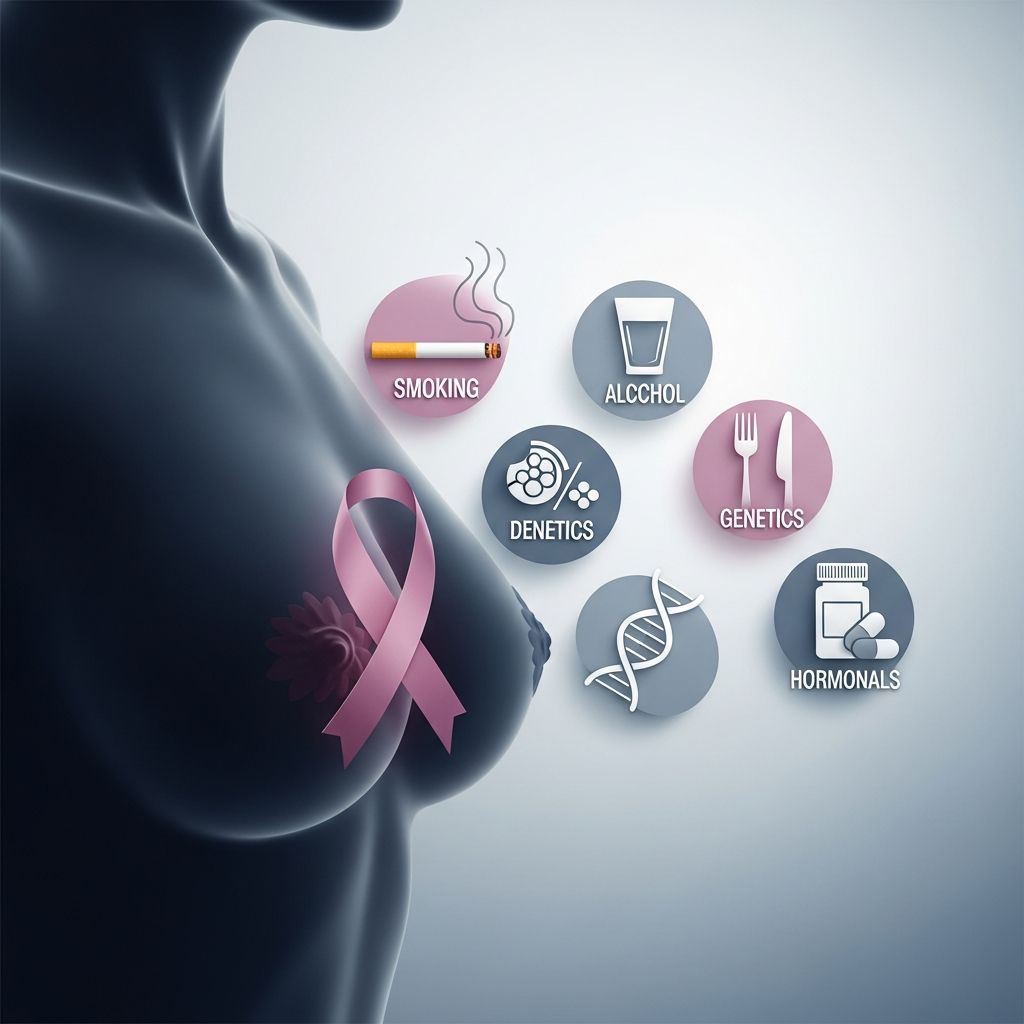
Breast cancer develops when cells in the breast grow uncontrollably, often due to a combination of genetic, environmental, and lifestyle factors that damage DNA and promote abnormal cell division. While the exact causes remain multifaceted and not fully understood, identifying
risk factors
helps in prevention, early detection, and personalized screening.What Causes Breast Cancer?
The precise cause of breast cancer is unknown, but it arises from mutations in breast cells’ DNA that lead to uncontrolled growth and tumor formation. These mutations can be inherited, acquired over time from environmental exposures, or result from hormonal influences that stimulate cell division. Research shows that only 5-10% of cases are directly linked to hereditary gene mutations like
BRCA1
andBRCA2
, which impair DNA repair and significantly elevate risk for breast and ovarian cancers. Most cases involve sporadic mutations influenced by modifiable factors such as hormone exposure duration and lifestyle choices.DNA damage accumulates over a lifetime, exacerbated by prolonged estrogen exposure—a key hormone in breast tissue growth. Factors extending this exposure, like early menarche or late menopause, heighten vulnerability. Cancer risk does not mean inevitability; many with multiple risks never develop it, while others with none do.
Who Is Most at Risk for Breast Cancer?
The strongest risks are non-modifiable: female sex (99% of cases occur in women), advancing age (most diagnoses after 50), and genetic predispositions. About two-thirds of invasive breast cancers are found in women over 55. White women have higher incidence rates, though Black women face higher mortality. High-risk groups include those with dense breasts (complicating mammogram detection), prior breast cancer or precancerous conditions like ductal carcinoma in situ (DCIS), or chest radiation before age 30.
- Age: Risk doubles every decade after 40.
- Sex: Men account for less than 1% of cases but share similar risks.
- Dense breasts: Increases risk and masks tumors on imaging.
Risk Factors You Cannot Change
Certain inherent factors elevate breast cancer odds irreversibly, emphasizing the need for vigilant screening. These include genetics, family history, reproductive milestones, and past treatments.
Age
Breast cancer risk rises steadily with age; most cases (over 75%) occur in women 50+. The average diagnosis age is 62. Post-menopausal hormonal changes and cumulative DNA damage contribute.
Genetics and Family History
Inherited mutations in genes like
BRCA1
,BRCA2
,PALB2
,CHEK2
,TP53
,CDH1
,PTEN
,STK11
, andATM
drastically increase risk—up to 60-80% lifetime for BRCA carriers. A first-degree relative (mother, sister, daughter) with breast or ovarian cancer doubles risk; multiple relatives or early-onset cases (under 50) amplify it further. Male relative breast cancer or Ashkenazi Jewish ancestry also signals higher genetic risk.| Gene | Associated Risk | Syndrome (if applicable) |
|---|---|---|
| BRCA1/BRCA2 | 45-85% lifetime risk | Hereditary Breast-Ovarian Cancer |
| TP53 | High | Li-Fraumeni |
| PTEN | High | Cowden Syndrome |
Reproductive History
Longer lifetime estrogen exposure correlates with higher risk: menarche before 12, menopause after 55, first full-term pregnancy after 30, or never giving birth. Never breastfeeding also elevates odds, as pregnancy and lactation reduce cell divisions.
Personal History and Breast Conditions
Prior breast cancer, DCIS, or atypical hyperplasia (e.g., atypical ductal hyperplasia, lobular carcinoma in situ) substantially raises recurrence risk. Dense breasts independently increase it by 4-6 times.
Prior Radiation or DES Exposure
Chest radiation (e.g., for Hodgkin lymphoma) before 30 heightens later risk. Diethylstilbestrol (DES), given to pregnant women 1940-1971 to prevent miscarriage, links daughters to higher breast cancer odds.
Related Stories



Risk Factors You Can Change
Modifiable factors account for 20-30% of cases. Lifestyle interventions like exercise, weight management, and limiting alcohol can lower risk by 30-50%.
Body Weight and Physical Activity
Post-menopausal obesity raises risk via excess estrogen from fat tissue; pre-menopausal obesity may protect somewhat. Sedentary lifestyles increase it—aim for 150+ minutes moderate activity weekly to cut risk 12-20%.
Alcohol Consumption
Even moderate drinking (1 drink/day) boosts risk 7-10%; heavier use more so. Alcohol raises estrogen and damages DNA.
Hormone Use
Combined estrogen-progestin hormone replacement therapy (HRT) for over 5 years increases risk; estrogen-only is lower. Oral contraceptives slightly elevate it short-term.
Other Lifestyle Factors
Diets high in saturated fats and low in produce may contribute; smoking and night-shift work (circadian disruption) show links in studies.
- Exercise: Reduces risk by lowering insulin/estrogen.
- Diet: Emphasize fruits, vegetables, whole grains.
- No smoking: Lowers overall cancer risk.
How to Lower Your Risk of Breast Cancer
While unchangeable risks can’t be eliminated, strategies reduce modifiable ones and enable early detection:
- Maintain healthy weight (BMI 18.5-24.9).
- Exercise regularly (30 min/day most days).
- Limit alcohol (<1 drink/day) or abstain.
- Breastfeed if possible; consider risk-reducing meds (e.g., tamoxifen for high-risk).
- Avoid/delay HRT; discuss alternatives.
- Get annual screenings: mammograms from 40-50 (per guidelines), earlier if high-risk.
Genetic counseling/testing for high-risk families guides preventive mastectomy or surveillance.
Frequently Asked Questions (FAQs)
What is the biggest risk factor for breast cancer?
Age and female sex; most cases occur after 50 in women.
Does family history guarantee breast cancer?
No—only 5-10% are hereditary; most have no family history.
Can lifestyle really prevent breast cancer?
It can reduce risk up to 30%; combine with screening.
Are dense breasts a risk factor?
Yes, they increase risk 4-6x and hinder detection.
Should I get genetic testing?
If strong family history or Ashkenazi ancestry—consult a doctor.
References
- Breast Cancer Risk Factors — Centers for Disease Control and Prevention (CDC). 2024-01-12. https://www.cdc.gov/breast-cancer/risk-factors/index.html
- Causes and Risk Factors | Breast Cancer — National Cancer Institute (NCI). 2025-08-15. https://www.cancer.gov/types/breast/causes-risk-factors
- Breast Cancer Symptoms, Conditions, Causes and Risk Factors — Brown University Health. 2024-06-01. https://www.brownhealth.org/centers-services/breast-cancer-center/breast-cancer-symptoms-conditions-causes-and-risk-factors
- Breast Cancer Risk Factors — National Breast Cancer Foundation. 2025-03-20. https://www.nationalbreastcancer.org/breast-cancer-risk-factors/
- Am I at risk of breast cancer? — Know Your Girls (BCRF initiative). 2024-11-05. https://knowyourgirls.org/resources/know-your-risk-of-breast-cancer/
Similar Articles








Read full bio of Sneha Tete