Breast MRI: Advanced Imaging for Cancer Detection
Comprehensive guide to breast MRI technology, benefits, and clinical applications.
Understanding Breast MRI: A Comprehensive Guide to Advanced Imaging
Breast MRI (Magnetic Resonance Imaging) represents one of the most advanced diagnostic imaging technologies available for evaluating breast health and detecting abnormalities. Unlike mammography, which uses X-rays, breast MRI uses powerful magnetic fields and radio waves to create detailed images of breast tissue. This sophisticated imaging modality has revolutionized how healthcare providers screen for breast cancer, particularly in high-risk populations, and has become an essential tool in comprehensive breast cancer care.
At leading medical institutions like Johns Hopkins Medicine, breast MRI is integrated into a comprehensive diagnostic strategy that combines multiple imaging approaches to ensure accurate detection and diagnosis. The technology offers superior soft tissue contrast resolution, allowing radiologists to visualize subtle changes in breast tissue that might not be apparent on conventional mammography or ultrasound.
What is Breast MRI?
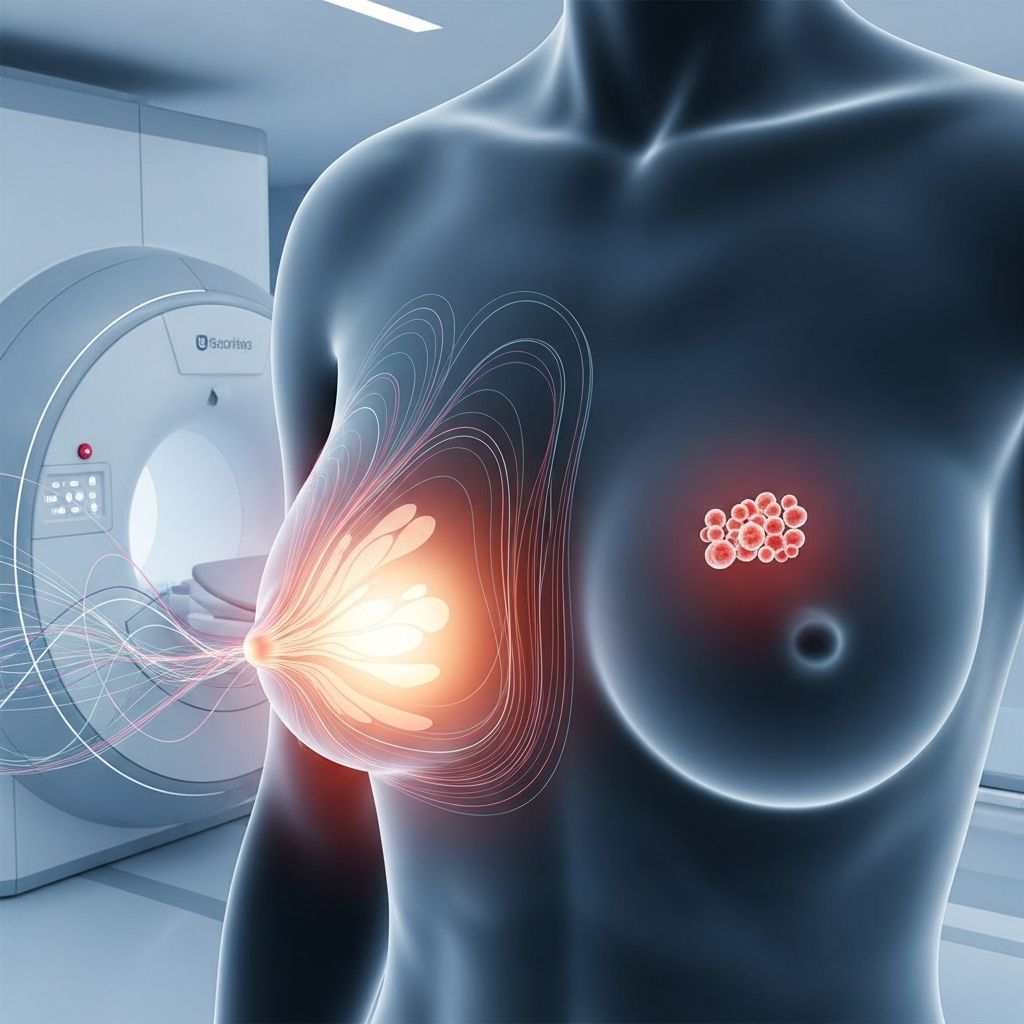
Breast MRI is a non-invasive diagnostic imaging procedure that uses magnetic resonance technology to produce high-resolution, three-dimensional images of breast tissue. The procedure involves the patient lying face-down on a specialized imaging table with their breasts positioned in a dedicated breast coil. A contrast agent containing gadolinium is typically injected intravenously to enhance visualization of suspicious areas and improve diagnostic accuracy.
The magnetic field used in breast MRI is approximately 1.5 to 3 Tesla, which creates detailed images with excellent contrast resolution between normal and abnormal breast tissue. The procedure produces images in multiple planes and sequences, each providing different information about tissue characteristics and blood flow patterns. This multi-planar capability allows radiologists to evaluate the breast from various perspectives, significantly improving diagnostic confidence.
Primary Clinical Indications for Breast MRI
Breast MRI serves several important clinical purposes in breast cancer care and prevention:
High-Risk Screening
One of the most valuable applications of breast MRI is screening women at elevated risk for breast cancer. Current guidelines recommend annual breast MRI screening for women with a 20% or greater lifetime risk of developing breast cancer based on validated risk assessment models. This population includes women with strong family histories of breast cancer, carriers of genetic mutations such as BRCA1 or BRCA2, and patients who have received mantle radiation therapy for conditions like Hodgkin’s lymphoma.
For high-risk women under age 40, breast MRI demonstrates particularly impressive performance, with cancer detection rates of approximately 11.7 cancers per 1,000 examinations in this age group. This is significantly higher than mammography, which shows 0% detection in this population, making MRI alone potentially more useful for young high-risk women where radiation exposure from mammography is a concern.
Evaluation of Newly Diagnosed Breast Cancer
When breast cancer is newly diagnosed, breast MRI plays a critical role in determining the full extent of disease. Multiple research studies demonstrate that breast MRI identifies additional sites of disease in approximately 15% of patients within the same (ipsilateral) breast and approximately 5% in the opposite (contralateral) breast. This information is crucial for treatment planning, as it helps surgeons and oncologists determine whether breast conservation is feasible or whether mastectomy may be necessary for complete disease removal.
Assessing Treatment Response
For patients receiving neoadjuvant chemotherapy (chemotherapy given before surgery), breast MRI provides valuable information about how tumors are responding to treatment. The imaging can demonstrate significant reduction or resolution of enhancement patterns that indicate positive treatment response, helping guide subsequent surgical planning and potentially identifying patients who would benefit from additional or modified treatment approaches.
Related Stories



Evaluation of Suspicious Imaging Findings
When clinical examination or conventional imaging reveals findings requiring further clarification, breast MRI can provide additional diagnostic information. The superior soft tissue contrast and multiplanar imaging capabilities make MRI particularly useful for distinguishing between benign and malignant lesions when mammography or ultrasound findings are equivocal.
Silicone Implant Assessment
Breast MRI is considered the gold standard for evaluating the integrity of silicone breast implants. The FDA recommends routine MRI screening for implant rupture beginning three years after implant placement and every two years thereafter. MRI can detect both extracapsular ruptures (where silicone escapes beyond the implant shell) and intracapsular ruptures (where silicone breaches the inner shell but remains within the outer shell), providing critical information for patient management.
How Breast MRI Works
Understanding the technical aspects of breast MRI helps patients understand what to expect and why the procedure is so valuable. The MRI scanner uses a powerful magnetic field, typically 1.5 or 3 Tesla, which aligns hydrogen atoms in the body. Radiofrequency pulses then disrupt this alignment, and as the atoms realign, they emit signals detected by sensitive receiver coils.
For breast imaging, patients are positioned prone (face-down) on a specialized imaging table with their breasts suspended in a dedicated bilateral breast coil. This positioning optimizes image quality while minimizing patient discomfort. The prone positioning also helps reduce artifacts related to motion and improves the consistency of imaging across patients.
Gadolinium contrast, a gadolinium-based chelate compound, is typically administered intravenously during the examination. This contrast agent accumulates preferentially in areas of increased vascularity and increased vascular permeability, which are characteristics of malignant lesions. The contrast injection allows radiologists to assess enhancement kinetics—the rate and pattern of contrast uptake—which provides important diagnostic information about lesion characteristics.
Preparation for Breast MRI
Proper preparation ensures optimal image quality and patient comfort during the breast MRI examination:
Pre-Examination Requirements
Patients should schedule their breast MRI during the second week of their menstrual cycle (days 7-14 from the onset of menstruation) when possible, as fibrocystic changes are typically less pronounced, potentially improving diagnostic accuracy. Patients should avoid using lotions, perfumes, or deodorants on the breast area on the day of the examination, as these may contain metallic particles that could affect image quality.
Safety Screening
Before entering the MRI suite, all patients complete a comprehensive safety questionnaire assessing for metallic implants or foreign bodies that could be affected by the magnetic field. This includes permanent pacemakers, certain types of metal implants, metallic fragments in the eyes, or other ferromagnetic objects. Patients must remove all metal objects including jewelry, piercings, watches, and hearing aids.
Contrast Considerations
While gadolinium-based contrast agents are generally safe, patients with severely compromised kidney function should inform their healthcare provider, as rare cases of gadolinium deposition have been reported. Patients may eat and drink normally before the examination unless specifically instructed otherwise by their imaging facility.
The Breast MRI Procedure
The breast MRI examination typically takes 30-60 minutes from start to finish, though the actual imaging sequences usually require 20-30 minutes.
Patient Positioning and Comfort
Upon entering the imaging room, patients change into an examination gown and lie face-down on the specialized imaging table. Technologists carefully position the breasts in the bilateral breast coil, ensuring optimal positioning for image quality. Patients receive a call button they can use to communicate with the technologist during the procedure. Many facilities provide headphones allowing patients to listen to music or communication from the technologist throughout the examination.
Initial Imaging Sequences
The examination begins with multiple non-contrast sequences that establish baseline imaging. These sequences provide anatomical information and help identify any obvious abnormalities. The table then moves into the scanner bore, and the magnetic field is activated.
Contrast Administration
After preliminary imaging sequences are complete, an intravenous line is established and gadolinium contrast is injected. Imaging continues during and after contrast injection, capturing the enhancement characteristics of breast tissue. Dynamic sequences are acquired at intervals during the several minutes following contrast administration, allowing assessment of enhancement kinetics.
Post-Contrast Imaging
Additional imaging sequences are obtained following contrast injection, often including high-resolution bilateral imaging and subtraction techniques that remove background breast tissue signal to highlight areas of contrast enhancement. These sophisticated post-processing techniques enhance lesion conspicuity and improve diagnostic accuracy.
Key Benefits of Breast MRI
Superior Sensitivity
Breast MRI demonstrates the highest sensitivity of all breast imaging modalities for detecting breast cancer, with reported sensitivities exceeding 90% in many patient populations. This is particularly advantageous for high-risk patients and those with dense breast tissue where mammography performance is limited.
Enhanced Detection in Dense Breast Tissue
For women with dense breast parenchyma, breast MRI is particularly valuable, as it provides excellent contrast resolution regardless of breast density. This addresses a significant limitation of mammography in women with dense breasts, where cancer detectability is substantially reduced.
Multiplanar Imaging Capability
Unlike mammography, which provides two-dimensional imaging in limited projections, breast MRI acquires data that can be reconstructed into multiple planes (axial, sagittal, and coronal), providing comprehensive three-dimensional visualization of breast pathology.
Functional Information
Breast MRI provides functional information about tissue perfusion and vascular permeability through dynamic contrast-enhanced imaging, which helps distinguish between benign and malignant lesions based on enhancement kinetics. This functional information is not available from morphologic imaging alone.
Breast MRI-Guided Biopsies
When breast MRI identifies suspicious findings that are not visible on mammography or ultrasound, MRI-guided biopsy allows precise tissue sampling for diagnosis. During an MRI-guided biopsy, patients remain in the same prone position used for imaging, but the breast is placed under tighter compression to minimize motion during the procedure. Specialized MRI-compatible biopsy equipment allows the radiologist to precisely localize and sample the abnormality using real-time MRI guidance.
MRI-guided biopsies use core needle sampling techniques that obtain multiple tissue samples for pathological analysis. This approach provides diagnostic accuracy approaching that of surgical biopsy while maintaining the minimally invasive nature of needle-based procedures.
Complementary Role with Other Imaging Modalities
While breast MRI is highly sensitive, it is most effective when integrated with other imaging modalities rather than used in isolation. A comprehensive approach typically includes:
Digital Mammography with 3D Tomosynthesis
Standard digital mammography provides excellent specificity for detecting breast cancer and remains the primary screening tool for average-risk women. Three-dimensional tomosynthesis (breast CT) improves cancer detection by reducing tissue overlap artifacts and allows visualization of findings at different depths within the breast.
Breast Ultrasound
Ultrasound is particularly valuable for evaluating palpable lumps, differentiating solid masses from cysts, and characterizing the vascularity of lesions. It requires no radiation and provides real-time imaging, making it ideal for biopsy guidance. For women with dense breast tissue, supplemental screening ultrasound can improve cancer detection when used with mammography.
Integrated Diagnostic Strategy
Johns Hopkins Medicine and similar comprehensive breast centers use an integrated approach where each modality contributes specific diagnostic information. Mammography provides broad screening capability with excellent specificity, ultrasound offers real-time assessment and biopsy guidance, and MRI provides highest sensitivity for lesion detection and functional tissue characterization.
Limitations and Considerations
Increased False Positives
While breast MRI’s high sensitivity is an advantage for cancer detection, this can result in increased detection of benign findings, potentially leading to additional biopsies and patient anxiety. The specificity of breast MRI is lower than mammography, meaning more findings will require additional evaluation.
Longer Examination Time
Breast MRI examinations typically require 30-60 minutes, significantly longer than mammography (10-15 minutes) or ultrasound (15-30 minutes). This longer duration can be challenging for patients with claustrophobia or difficulty remaining still.
Contrast Injection Requirements
The need for intravenous contrast administration requires establishment of an IV line and carries rare risks associated with gadolinium contrast agents, though serious adverse reactions are uncommon.
Cost Considerations
Breast MRI is more expensive than mammography or ultrasound, which may affect insurance coverage and patient access. However, the clinical value in high-risk populations generally justifies the additional cost.
Frequently Asked Questions About Breast MRI
Is breast MRI safe?
Breast MRI is a safe imaging procedure with no ionizing radiation exposure. The magnetic field and radiofrequency pulses used in MRI do not cause tissue damage. Gadolinium contrast is generally well-tolerated, though patients with severe kidney disease should inform their provider. Patients with certain metallic implants should not undergo MRI due to safety risks.
How long does a breast MRI take?
A typical breast MRI examination takes 30-60 minutes total. The actual imaging sequences usually require 20-30 minutes, with additional time needed for patient preparation, positioning, and contrast injection.
Does breast MRI hurt?
Breast MRI is not painful. Patients may experience mild discomfort from breast compression in the coil, but this is typically well-tolerated. The procedure is generally quiet except for knocking sounds from the imaging sequences.
Can I have breast MRI if I’m pregnant?
While MRI has not been shown to cause harm during pregnancy, contrast-enhanced MRI during pregnancy should generally be avoided unless the clinical benefits clearly outweigh potential risks. Non-contrast MRI is considered safer if imaging is necessary during pregnancy.
Who should get regular breast MRI screening?
Current guidelines recommend annual breast MRI screening for women with a 20% or greater lifetime risk of breast cancer, including those with BRCA mutations, strong family histories, or prior chest radiation. Women at intermediate risk or with personal history of breast cancer may also benefit from MRI screening.
What happens if something abnormal is found on my breast MRI?
If an abnormality is identified on breast MRI, your radiologist will communicate findings to your physician. Depending on the characteristics of the finding, you may require follow-up imaging, biopsy, or clinical correlation with physical examination findings. Your physician will discuss appropriate next steps.
The Future of Breast MRI
Ongoing research and technological advances continue to expand the applications and improve the clinical utility of breast MRI. Emerging techniques including diffusion-weighted imaging (DWI), magnetic resonance spectroscopy, and artificial intelligence-assisted interpretation are enhancing diagnostic capabilities. Integration of MRI with positron emission tomography (PET) in combined PET/MRI systems offers the potential for simultaneous anatomic and metabolic imaging, potentially improving both sensitivity and specificity for breast cancer detection and characterization.
Conclusion
Breast MRI represents a powerful imaging technology that has become indispensable in comprehensive breast cancer screening and diagnosis, particularly for high-risk populations. Its superior soft tissue contrast resolution, multiplanar capabilities, and ability to provide functional information about tissue perfusion make it uniquely valuable for detecting breast cancer, assessing disease extent, and evaluating treatment response. When integrated with mammography and ultrasound within a comprehensive diagnostic strategy, breast MRI significantly enhances the ability to detect breast cancer early, improve treatment planning, and ultimately improve patient outcomes. As technology continues to advance and research further defines optimal clinical applications, breast MRI will likely play an increasingly important role in personalized breast cancer care and prevention.
References
- Diagnosis & Testing | Johns Hopkins Aramco Healthcare — Johns Hopkins Aramco Healthcare. 2024. https://www.jhah.com/en/centers-of-excellence/oncology-center-of-excellence/breast-cancer-program/diagnosis-testing/
- Breast MRI: What Referring Providers Should Know — Johns Hopkins Medicine. Presented by Dr. Emily Ambinder. https://www.youtube.com/watch?v=PX_DfeFfDSI
- Comparative effectiveness of breast MRI and mammography in screening women less than 40 years of age: Results of the Magnetic Resonance Imaging Screening (BMRSS) trial — PubMed/NCBI. 2016. https://pubmed.ncbi.nlm.nih.gov/27444927/
- Breast Pathology Service — Johns Hopkins Pathology. 2024. https://pathology.jhu.edu/breast/
- Breast MRI for Diagnosis and Staging of Breast Cancer — Johns Hopkins Research Portal. 2024. https://pure.johnshopkins.edu/en/publications/breast-mri-for-diagnosis-and-staging-of-breast-cancer-4
Similar Articles








Read full bio of Sneha Tete