Breast Scan: Methods, Benefits & When to Get Screened
Complete guide to breast imaging: understand mammography, ultrasound, and MRI screening options.
Understanding Breast Scans: A Complete Guide to Imaging Methods
Breast scans are imaging tests used to detect abnormalities in breast tissue and help identify signs of breast cancer in its earliest stages. These tests play a crucial role in preventative healthcare and can significantly improve outcomes through early detection. Healthcare providers use several different imaging methods to examine breast tissue, each with distinct advantages and specific applications depending on individual risk factors and clinical presentation.
What Is a Breast Scan?
A breast scan is a diagnostic imaging procedure that uses various technologies to create detailed images of breast tissue. These scans allow radiologists to identify masses, calcifications, architectural distortions, and other abnormalities that may indicate breast cancer or benign conditions. Unlike physical examination alone, imaging tests can detect lesions that are too small or located too deep within the breast to feel. Breast scans are essential components of breast cancer screening programs and diagnostic evaluation when symptoms or risk factors are present.
Types of Breast Scans
Mammography
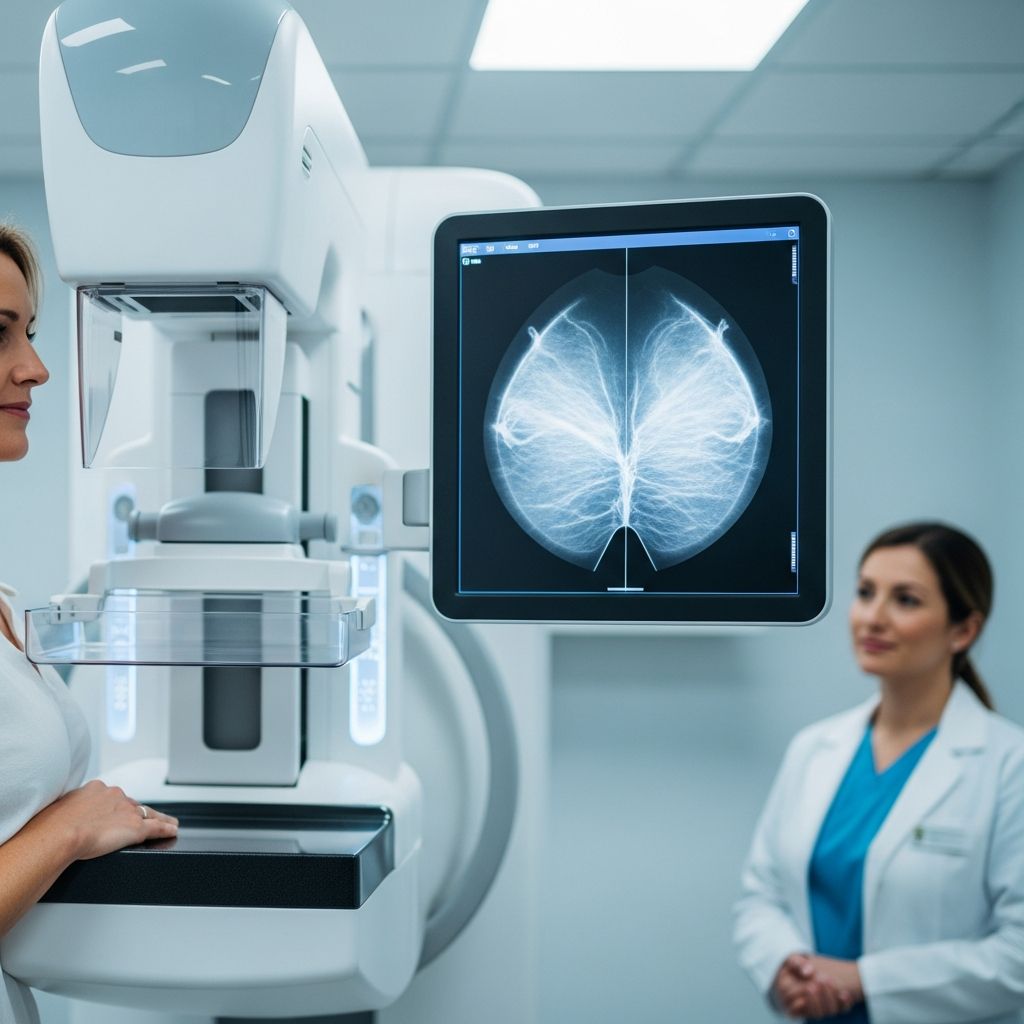
Mammography remains the gold standard screening tool for breast cancer detection in average-risk women. This imaging technique uses low-dose X-rays to visualize breast tissue from multiple angles. Two-dimensional mammography (2D) has been the traditional standard, while three-dimensional mammography, also known as digital breast tomosynthesis (DBT), provides enhanced visualization by creating cross-sectional images of the breast tissue. The 3D approach offers improved detection rates by reducing overlapping tissue that can obscure lesions on traditional mammograms.
Full-field digital mammography (FFDM) provides high-resolution images that allow radiologists to identify microcalcifications, masses, and other suspicious findings. Studies have demonstrated that regular mammographic screening reduces breast cancer mortality by approximately 33 percent in women over 40 years old. During the procedure, each breast is compressed between two plates to obtain clear, detailed images from different projections.
Breast Ultrasound
Ultrasound imaging uses sound waves to create real-time images of breast tissue without using radiation. This modality is particularly valuable for evaluating dense breast tissue, where mammography may have reduced sensitivity. Ultrasound can distinguish between solid masses and fluid-filled cysts, often eliminating the need for unnecessary biopsies. Handheld ultrasound is operator-dependent but provides excellent real-time imaging capabilities and immediate clinical correlation.
Automated breast ultrasound (ABUS) represents an advancement in ultrasound technology, offering standardized, operator-independent imaging of the entire breast. Research has shown that combining mammography with ABUS significantly improves detection of breast cancers in women with dense breast tissue. When FFDM is combined with ABUS, sensitivity increases from 57.5% to 74.1%, representing a 29% relative improvement in cancer detection rates. The area under the receiver operating characteristic curve improved from 0.72 for mammography alone to 0.82 for mammography combined with ABUS.
Ultrasound demonstrates high diagnostic performance for breast cancer detection, with meta-analysis showing pooled sensitivity of 80.1% and specificity of 88.4%. Importantly, ultrasound shows statistically significantly higher areas under the curve compared to mammography when both are compared against histopathology as the gold standard.
Related Stories



Magnetic Resonance Imaging (MRI)
Magnetic resonance imaging creates detailed images using magnetic fields and radiofrequency pulses rather than radiation. Breast MRI offers exceptional sensitivity for detecting breast cancer and is particularly useful in high-risk patients, those with implants, or for evaluating the contralateral breast in newly diagnosed cancer patients. However, MRI is expensive, requires longer imaging times, has limited availability, and may produce false positives leading to unnecessary biopsies. Due to these limitations, MRI is typically reserved for specific clinical scenarios rather than routine screening.
Advantages of Breast Scanning
Early Detection: Breast scans can identify cancers before they become palpable or symptomatic, when treatment options are most favorable and outcomes are generally superior.
Reduced Mortality: Regular mammographic screening has been proven to reduce breast cancer deaths by approximately one-third in screened populations.
Improved Accuracy with Complementary Imaging: Combining different imaging modalities enhances diagnostic accuracy. When ABUS is added to mammography, detection of breast cancers in dense breast tissue improves significantly without substantially affecting specificity.
Better Tissue Characterization: Modern imaging techniques allow radiologists to better characterize lesions, distinguish benign from malignant findings, and reduce unnecessary biopsies.
Accessibility in Underserved Areas: Emerging portable ultrasound technologies with AI assistance promise to lower costs and broaden access to breast cancer screening in underserved populations globally.
Understanding Breast Density and Screening
Breast density significantly impacts mammographic sensitivity. Dense breast tissue appears white on mammograms, similar to cancerous lesions, which can reduce the visibility of tumors. Women with dense breasts (BI-RADS C or D categories) benefit from supplemental imaging methods. Ultrasound and automated breast ultrasound are particularly valuable for these patients, as they are not affected by breast density and maintain high sensitivity regardless of tissue composition.
Research demonstrates that for women with mammography-negative cancers, ABUS combined with mammography yields a 25% relative improvement in diagnostic accuracy. This significant improvement highlights the complementary nature of combining ultrasound with mammography for comprehensive breast assessment.
Technological Innovations in Breast Imaging
Advanced technologies are revolutionizing breast cancer detection and improving clinical efficiency. Data fusion and image registration technologies, combined with artificial intelligence, are being developed to integrate information from multiple imaging modalities. These innovations aim to create more efficient, accurate, and cost-effective screening solutions.
Artificial intelligence systems are increasingly being incorporated into breast imaging workflows to assist radiologists in improving accuracy and reducing workload. AI-assisted analysis can help identify suspicious findings, prioritize cases for radiologist review, and reduce recall rates. These technologies aim to help clinicians achieve accurate diagnoses more quickly, reducing patient anxiety and improving overall screening efficiency.
When Breast Scans Are Recommended
Screening Recommendations
- Average-risk women aged 40 and older should discuss screening options with their healthcare provider
- Women aged 50-74 are typically offered routine mammographic screening
- Women with dense breast tissue may benefit from supplemental ultrasound screening
- Those with significant family history or genetic predisposition may require earlier or more frequent screening
- High-risk patients may benefit from MRI in addition to mammography
Diagnostic Indications
Breast scans are also performed when patients present with symptoms such as palpable lumps, nipple discharge, breast pain, or skin changes. In these situations, imaging helps determine whether symptoms are due to cancer or benign conditions, guiding further management decisions.
Risks and Considerations
Radiation Exposure
Mammography uses low-dose radiation. The risk from radiation exposure is minimal, particularly when compared to the benefits of early cancer detection. Modern digital mammography systems use the lowest effective radiation doses available while maintaining image quality.
False Positives and Anxiety
Breast scans can occasionally identify findings that require further evaluation, leading to additional testing or biopsies. While many of these findings prove benign, the process can cause patient anxiety. However, this is generally considered an acceptable trade-off for the benefits of early detection.
Overdiagnosis
Screening can occasionally detect cancers that would never have caused harm. This phenomenon, called overdiagnosis, is an important consideration when discussing screening recommendations, particularly with informed decision-making processes.
The Future of Breast Imaging
The future of breast cancer detection involves integrating multiple imaging modalities with artificial intelligence to improve accuracy and accessibility. Emerging research focuses on developing portable, low-cost ultrasound screening solutions that can be deployed in underserved areas where mammography infrastructure is limited. These innovations aim to democratize access to breast cancer screening globally while improving detection rates.
Researchers are working to overcome current limitations in breast imaging by creating systems that combine information from multiple sources, reducing costs, and enabling radiologists to work more efficiently. The goal is to help clinicians achieve accurate diagnoses quickly while reducing unnecessary procedures and improving patient outcomes.
Preparing for Your Breast Scan
Before scheduling a breast scan, inform your healthcare provider about your personal and family history of breast cancer, current medications, and any symptoms you are experiencing. Schedule mammograms during the first half of your menstrual cycle when breasts are less tender. Wear comfortable, two-piece clothing for easy access. On the day of the procedure, avoid deodorants, antiperspirants, and powder, as these can interfere with mammographic images.
For ultrasound examinations, no special preparation is typically required. For MRI studies, inform the facility if you have metal implants or if you have claustrophobia, as MRI machines are enclosed spaces.
Understanding Your Results
Breast imaging results are typically reported using the Breast Imaging-Reporting and Data System (BI-RADS) classification, which standardizes terminology and management recommendations. BI-RADS categories range from 0 (incomplete assessment) to 6 (known malignancy), with each category associated with specific recommendations for follow-up and management.
Your healthcare provider will discuss results with you and recommend appropriate next steps, which may include continued surveillance, additional imaging, or biopsy evaluation when indicated.
Frequently Asked Questions
Q: At what age should I begin breast cancer screening?
A: Most organizations recommend that average-risk women aged 40 and older discuss screening options with their healthcare provider. Women at higher risk may need to start earlier. Your doctor can help determine the appropriate age to begin screening based on your individual risk factors.
Q: How often should I have screening mammograms?
A: For average-risk women, annual or biennial (every 2 years) mammographic screening is typically recommended. High-risk women may require more frequent screening or additional imaging modalities. Your healthcare provider will determine the appropriate screening interval based on your individual risk profile.
Q: Is mammography painful?
A: Mammography involves breast compression, which can cause discomfort or mild pain, particularly in women with sensitive breasts. The compression is necessary to obtain clear images and typically lasts only a few seconds per view. Scheduling during the first half of your menstrual cycle may reduce discomfort.
Q: What does it mean if my mammogram shows dense breast tissue?
A: Dense breast tissue is common and not abnormal. However, it can reduce the sensitivity of mammography for cancer detection. If you have dense breasts, your healthcare provider may recommend supplemental imaging such as ultrasound or other modalities to improve cancer detection rates.
Q: Can ultrasound replace mammography for breast cancer screening?
A: While ultrasound has excellent sensitivity for breast cancer detection, it is currently used as a supplemental screening tool rather than a replacement for mammography in average-risk women. For women with dense breasts or in populations where mammography is unavailable, ultrasound can serve as a primary screening modality.
Q: What is the difference between 2D and 3D mammography?
A: 2D mammography creates traditional flat images, while 3D mammography (digital breast tomosynthesis) creates cross-sectional images that allow radiologists to view breast tissue layer by layer. This reduces overlapping tissue and often improves cancer detection rates, particularly in dense breast tissue.
Q: Who should consider breast MRI screening?
A: Breast MRI is typically recommended for high-risk women, those with BRCA mutations, patients with personal history of breast cancer, and selected other scenarios. Due to its cost and limited availability, MRI is not used for routine screening in average-risk women.
References
- From the Battlefield to Breast Cancer Detection: Johns Hopkins APL Technologies Find Dual Impact — Johns Hopkins University Applied Physics Laboratory. 2024. https://ventures.jhu.edu/news/from-the-battlefield-to-breast-cancer-detection-johns-hopkins-apl-technologies-find-dual-impact/
- Automated Breast Ultrasound in Breast Cancer Screening of Women with Dense Breast Tissue — American Journal of Roentgenology. Johns Hopkins University, June 2016. https://pure.johnshopkins.edu/en/publications/automated-breast-ultrasound-in-breast-cancer-screening-of-women-w/
- Ultrasound for Breast Cancer Detection Globally: A Systematic Review and Meta-Analysis — National Institutes of Health, National Center for Biotechnology Information. 2019. https://pmc.ncbi.nlm.nih.gov/articles/PMC6733207/
- Five Mammogram Myths — Johns Hopkins Aramco Healthcare. https://www.jhah.com/en/news-events/in-focus/five-mammogram-myths/
- Artificial Intelligence for Reducing Workload in Breast Cancer Screening — Radiology. Radiological Society of North America. https://pubs.rsna.org/doi/abs/10.1148/radiol.211105
Similar Articles








Read full bio of medha deb