Breath Training to Lower Blood Pressure: Techniques That Work
Simple breathing exercises can naturally reduce blood pressure and improve heart health.
How Breathing Exercises Can Help Lower Blood Pressure
High blood pressure, or hypertension, affects millions of Americans and increases the risk of heart disease and stroke. While medication is often necessary, research shows that simple, free breathing techniques can significantly reduce blood pressure and support overall cardiovascular health. When we inhale, our lungs expand and pressure on the heart and blood vessels changes, which stimulates sensory nerves that affect our nervous system and cardiovascular function. By learning to control our breathing through targeted exercises, we can unlock powerful health benefits that complement traditional medical treatments.
The beauty of breathing exercises lies in their accessibility and simplicity. Unlike many health interventions, these techniques require no equipment, can be performed anywhere, and offer immediate benefits to both physical and mental well-being. Research demonstrates that deep breathing exercises can reduce systolic blood pressure by 4 to 54 millimeters of mercury, with diastolic blood pressure dropping by 3 to 17 millimeters of mercury. These improvements rival those achieved through some pharmaceutical interventions, making breathing exercises a valuable tool in any hypertension management plan.
The Science Behind Breathing and Blood Pressure
Understanding how breathing affects blood pressure helps explain why these exercises work so effectively. The respiratory system directly communicates with the cardiovascular system through the nervous system. When we practice slow, controlled breathing, we activate the parasympathetic nervous system—often called the “rest and digest” response—which counteracts the stress-induced “fight or flight” activation. This physiological shift reduces heart rate, lowers blood pressure, and promotes overall relaxation.
Deep breathing exercises at a respiratory rate of 6 to 10 breaths per minute prolong the contraction of the diaphragm, minimize the frequency of respiration, and increase the volume of inspiration and expiration to maximize the amount of oxygen entering the bloodstream. This increased oxygenation results in arteriolar dilation—the widening of small blood vessels—which helps reduce blood pressure naturally. Additionally, when you hold your breath during certain exercises, you temporarily increase your carbon dioxide level in the bloodstream, which decreases your heart rate and activates parasympathetic physiology.
Inspiratory Muscle Strength Training (IMST)
One of the most researched breathing techniques is inspiratory muscle strength training, or IMST, which involves using a handheld device that makes it harder to inhale. Research has demonstrated remarkable results with this method. In a study of healthy adults, those who practiced high-resistance IMST for just 30 breaths a day for six weeks saw their systolic blood pressure drop by 9 millimeters of mercury. The control group that had sham training with low breathing resistance saw no improvement, demonstrating the importance of proper technique and resistance level.
IMST is particularly appealing because it requires minimal time commitment—only 30 breaths daily—yet produces measurable cardiovascular benefits. The mechanism behind IMST’s effectiveness involves strengthening the muscles used for breathing, which improves overall respiratory efficiency and cardiovascular function. For people seeking a practical, time-efficient approach to blood pressure management, IMST offers an evidence-based option that fits easily into daily routines.
Specific Breathing Techniques to Lower Blood Pressure
Several breathing techniques have been scientifically validated for their ability to reduce blood pressure. Each method works slightly differently and may suit different individuals based on their preferences and health conditions. The following techniques are recommended by health experts and supported by research:
1. The 4-7-8 Breathing Method
The 4-7-8 breathing method has roots in Indian yoga practices and has become increasingly popular in Western medicine. This technique involves a specific counting pattern that maximizes the breath-hold period, which creates temporary increases in carbon dioxide that help calm the nervous system.
How to perform 4-7-8 breathing:
- Inhale through your nose for four counts
- Hold your breath for seven counts
- Exhale through your mouth for eight counts
- Repeat this cycle 4-8 times or until you feel relaxed
Related Stories



The extended exhale period is particularly important, as it activates the parasympathetic nervous system and promotes relaxation. However, individuals with chronic obstructive pulmonary disease (COPD) or those who have difficulty holding their breath should avoid this exercise, as the seven-count breath hold can temporarily increase carbon dioxide levels to uncomfortable or even unsafe levels.
2. Box Breathing
Box breathing, also known as square breathing, is a symmetrical technique that’s easy to remember and perform. This method is often taught to military personnel and first responders because of its effectiveness in managing stress and maintaining calm under pressure.
How to perform box breathing:
- Inhale through your nose for four counts
- Hold your breath for four counts
- Exhale through your mouth for four counts
- Hold for four counts
- Repeat 5-10 times
The symmetrical nature of box breathing makes it easier to remember and practice consistently. When you breath-hold, carbon dioxide levels temporarily increase, which decreases your heart rate and helps bring parasympathetic physiology online. Like the 4-7-8 method, individuals with lung conditions should consult their healthcare provider before practicing box breathing due to the extended breath hold.
3. Pursed-Lip Breathing
Pursed-lip breathing is particularly beneficial for people with breathing difficulties and helps open airways more effectively. This technique is gentler than methods involving breath holds and may be more suitable for those with respiratory conditions.
How to perform pursed-lip breathing:
- Inhale slowly through your nose
- Exhale through your mouth through pursed lips, as if blowing out birthday candles
- Make the exhale 4 times longer than the inhale
- Repeat 5-10 times
The extended exhale with pursed lips helps regulate breathing patterns and open airways, promoting better oxygen exchange and cardiovascular function. This technique is excellent for people who experience shortness of breath during exercise or daily activities.
4. Diaphragmatic Breathing
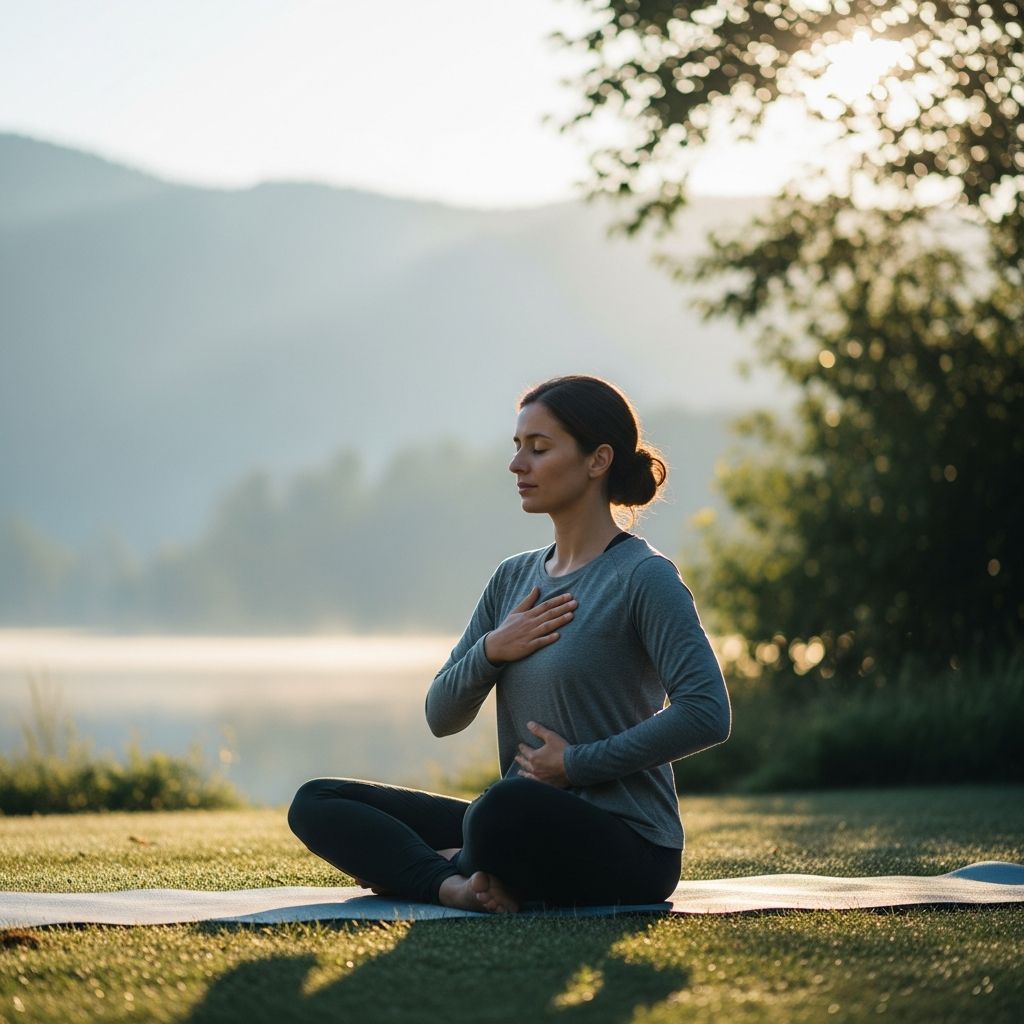
Diaphragmatic breathing, also called belly breathing or deep breathing, engages the primary muscle responsible for respiration. This fundamental technique can be performed sitting or lying down, making it accessible for nearly everyone.
How to perform diaphragmatic breathing:
- Place both hands on your abdomen
- Inhale through your nose, allowing your abdomen to balloon outward
- Exhale through your mouth, deflating your belly as if bringing your belly button closer to your spinal cord
- Repeat 10-15 times
Diaphragmatic breathing can be performed when you wake up, before sleep, or if you have trouble falling asleep. This technique has been shown to have therapeutic effects on both physical and psychological health in people with hypertension. The hand placement helps you become aware of your breathing patterns and ensures you’re using the diaphragm rather than shallow chest breathing.
Beyond Blood Pressure: Additional Health Benefits
While lowering blood pressure is the primary focus, breathing exercises offer numerous additional health benefits. Deep breathing exercises have been shown to improve blood glucose levels in healthy people, supporting metabolic health. These techniques also bolster mental health by lowering stress and reducing feelings of anxiety and depression. The simple act of learning to manage stress through breathing has its own independent health benefits.
Controlled breathing is also a well-established tool for pain control. Pain is perceived as a threat that stresses the body, and mindfulness combined with breathing exercises has been shown to decrease pain by calming the sympathetic nervous system and encouraging the parasympathetic response. Additionally, nasal breathing specifically has been shown to relax airways and improve breathing efficiency, while also shifting the nervous system into a more parasympathetic state during rest conditions.
The Importance of Proper Technique and Consistency
Research shows that consistency and proper technique are crucial for achieving blood pressure reduction through breathing exercises. Most studies showing significant results involved practicing these techniques daily for several weeks. A study examining slow loaded breathing training found that systolic blood pressure was reduced by 12.6 millimeters of mercury after 30 minutes of daily practice for 8 weeks. Another study using a 2:1 yogic breathing technique at 5 breaths per minute for 5-7 minutes twice daily for 3 months resulted in systolic blood pressure decreasing by 12 millimeters of mercury and diastolic blood pressure dropping by 7 millimeters of mercury.
Safety considerations are important when beginning any breathing exercise program. Deep breathing exercises should be done sitting down, at least initially, in case you experience dizziness as you adjust to the practice. Start slowly and gradually increase the duration and intensity of your breathing exercises. If you have any respiratory conditions or concerns, consult with your healthcare provider before beginning a new breathing exercise routine.
Getting Started With Breathing Exercises
Beginning a breathing exercise practice is simple and requires no special equipment or preparation. Choose a quiet, comfortable location where you won’t be interrupted. Sit in a comfortable position with your back supported, and consider trying different techniques to find which ones feel most natural and effective for you.
Tips for success:
- Practice at consistent times each day, such as upon waking or before bed
- Start with just 5-10 minutes daily and gradually increase duration
- Keep a log of your practice to monitor consistency and benefits
- Combine breathing exercises with other healthy lifestyle habits like regular exercise, healthy diet, and stress management
- Monitor your blood pressure regularly to track improvements
- Be patient—most studies show results after 6-8 weeks of consistent practice
Frequently Asked Questions
Q: How long does it take to see results from breathing exercises?
A: Most research shows that consistent practice for 6-8 weeks produces measurable reductions in blood pressure. Some people may notice improvements in stress and anxiety levels within a few days, but cardiovascular benefits typically develop over several weeks of regular practice.
Q: Can breathing exercises replace blood pressure medication?
A: Breathing exercises are a valuable complementary therapy but should not replace prescribed blood pressure medication without consulting your healthcare provider. They work best as part of a comprehensive approach that may include medication, exercise, dietary changes, and stress management.
Q: Which breathing technique is best for me?
A: The best technique is one you’ll practice consistently. Try different methods and see which feels most natural and sustainable. If you have respiratory conditions, consult your doctor before trying techniques involving breath holds, such as 4-7-8 breathing or box breathing.
Q: Can I practice breathing exercises while exercising?
A: Most breathing exercises for blood pressure reduction are best practiced during rest or low-activity periods. Research shows that nasal breathing during exercise may provide some benefits, but the primary blood pressure-lowering effects occur with dedicated breathing practice during calm, seated periods.
Q: Are there any side effects from breathing exercises?
A: Breathing exercises are generally very safe. Some people may experience mild dizziness when beginning, which is why it’s recommended to practice while seated. If you have serious respiratory conditions like COPD, discuss breath-holding exercises with your healthcare provider first.
References
- It’s not just inspiration – careful breathing can help your health — American Heart Association. 2023-07-07. https://www.heart.org/en/news/2023/07/07/its-not-just-inspiration-careful-breathing-can-help-your-health
- 6 Breathing Exercises to Lower Blood Pressure — AARP. https://www.aarp.org/health/conditions-treatments/breathing-exercises-to-lower-blood-pressure/
- Breathing exercise for hypertensive patients: A scoping review — National Center for Biotechnology Information. https://pmc.ncbi.nlm.nih.gov/articles/PMC9905130/
- Nose Breathing Lowers Blood Pressure, May Help Reduce Risk Factors for Heart Disease — American Physiological Society. 2024-01-17. https://www.physiology.org/detail/news/2024/01/17/nose-breathing-lowers-blood-pressure-may-help-reduce-risk-factors-for-heart-disease
Similar Articles








Read full bio of Sneha Tete