Breathing Challenges in Parkinson’s Disease
Explore how Parkinson's impacts respiratory health, from shortness of breath to aspiration risks, and discover effective management strategies.
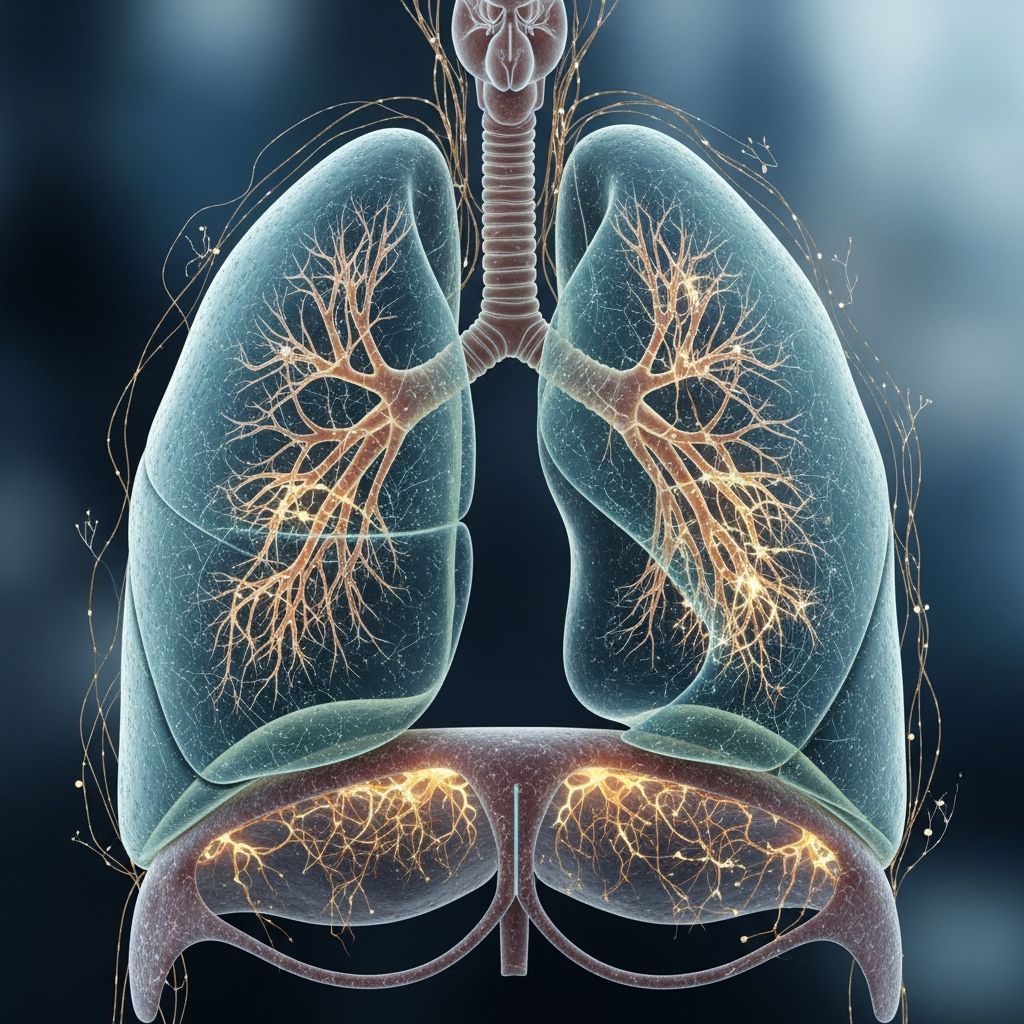
Parkinson’s disease profoundly influences respiratory function, leading to a spectrum of challenges that extend beyond motor symptoms. These issues, including shortness of breath, weakened cough reflexes, and increased pneumonia risk, contribute significantly to morbidity and reduced quality of life.
The Link Between Parkinson’s Pathology and Lung Function
At its core, Parkinson’s involves dopaminergic neuron loss in the brain, which disrupts not only movement but also the neural control of breathing. Respiratory centers in the brainstem suffer from reduced ATP production due to astrocytic cell loss, altering breathing awareness and efficiency. This manifests as irregular airflow, muscle rigidity in the chest wall, and impaired coordination between breathing, speaking, and swallowing.
Studies reveal that up to 35.8% of patients experience exertional dyspnea, 17.9% report coughing difficulties, and 13% note sputum production, highlighting the prevalence of these non-motor symptoms. Restrictive lung patterns emerge from stiff ribcage muscles, limiting lung expansion and promoting paradoxical breathing where the abdomen moves inward during inhalation.
Common Respiratory Symptoms and Their Impact
Individuals with Parkinson’s often face multifaceted breathing difficulties. Key symptoms include:
- Dyspnea: A sensation of breathlessness, particularly during activity or ‘wearing-off’ periods when medications lose efficacy.
- Hypophonia and Voice Changes: Reduced voice volume and altered pitch due to upper airway obstruction, accompanied by stridor or wheezing.
- Weak Cough and Aspiration Risk: Inefficient coughing leads to silent aspiration, where food or saliva enters the lungs undetected, fostering pneumonia.
- Sleep-Disordered Breathing: Obstructive sleep apnea (OSA) causes repeated breathing pauses, resulting in daytime fatigue.
These symptoms interconnect; for instance, upper airway instability causes airflow flutter and reduced peak expiratory flow, exacerbating speech and swallow impairments. Advanced disease stages amplify risks, with 80% of patients developing dysphagia, a primary driver of aspiration pneumonia—the leading cause of death in Parkinson’s.
Respiratory Dyskinesia: Irregular Breathing Patterns
Respiratory dyskinesia involves involuntary, rapid, shallow breaths tied to levodopa-induced spasms. This pattern, often painful and prominent post-medication dosing, stems from dysregulated muscle control in the airways and chest. Patients describe chest tightness and gasping, especially when speaking beyond short phrases.
Spirometry confirms obstructive changes, such as lowered maximal flow at 50% vital capacity and elevated FEV1/PEF ratios. Two breathing models during speech are noted: elevated lung volumes requiring extra effort or diminished volumes straining inspiratory muscles.
Risks of Aspiration Pneumonia and Restrictive Disease
Aspiration pneumonia arises from dysphagia, where delayed pharyngeal swallowing and reduced hyolaryngeal elevation allow bolus penetration into airways. Frequency correlates with liquid volume and swallow repetitions. Chest X-rays diagnose it, with antibiotics as first-line treatment; recurrent cases warrant speech therapy for liquid thickening.
Restrictive lung disease limits expansion due to rigidity, mimicking ‘chest breathing’ where shoulders rise inefficiently instead of diaphragmatic expansion. This energy-wasting pattern heightens hypoxia and hypercapnia risks.
| Aspect | Parkinson’s Patients | Healthy Controls |
|---|---|---|
| Lung Volumes | Reduced ribcage capacity; paradoxical motion in 50% | Normal expansion |
| Airflow | Obstructive; low PEF, irregular flutter | Smooth, consistent |
| Speech Breathing | Higher/lower volumes at onset/end | Optimal calibration |
| Cough Strength | Weakened expiratory force | Robust clearance |
Related Stories



This table illustrates key physiological divergences, underscoring therapeutic targets.
Medication Effects and ‘Wearing-Off’ Phenomena
Levodopa fluctuations trigger non-motor ‘wearing-off,’ including dyspnea and hyperventilation, independent of cardiac or pulmonary pathology. Adjusting doses or adding COMT inhibitors like entacapone can alleviate these. Anxiety amplifies symptoms, creating a cycle of shallow breathing and panic; cognitive behavioral therapy or anxiolytics break it.
Diagnostic Approaches for Breathing Issues
Comprehensive evaluation combines:
- Spirometry for obstruction/restriction.
- Endoscopy for upper airway dynamics.
- Chest imaging for pneumonia.
- Sleep studies for OSA.
- Swallow assessments via videofluoroscopy.
Early detection prevents complications like acute respiratory failure or extubation difficulties.
Management and Rehabilitation Strategies
Targeted interventions improve outcomes:
- Expiratory Muscle Training: Strengthens cough and swallowing via resistance devices, enhancing speech pressure control.
- Diaphragmatic Breathing Exercises: Promotes belly expansion over chest breathing; physiotherapists guide mirror-based practice.
- Speech-Language Therapy: Addresses dysphagia with postural techniques and thickened fluids.
- Medication Optimization: Dose adjustments or adjuncts for wearing-off.
- OSA Management: CPAP devices maintain airway patency.
Rehabilitation focusing on expiratory muscles boosts functional speech and reduces aspiration. Multidisciplinary care, including pulmonologists and neurologists, is essential.
Lifestyle Modifications for Better Respiratory Health
Daily habits support lung function:
- Maintain upright posture to ease breathing.
- Practice paced breathing during exertion.
- Avoid supine positions if chest tightness occurs.
- Monitor for aspiration cues like wet voice.
- Engage in aerobic exercise tailored to ability.
These steps mitigate exercise intolerance and somnolence.
FAQs on Breathing in Parkinson’s
Why does Parkinson’s cause shortness of breath?
It results from muscle rigidity, wearing-off effects, dyskinesia, or anxiety, not always structural lung disease.
Can breathing exercises help Parkinson’s patients?
Yes, diaphragmatic and expiratory training improve efficiency, cough strength, and speech.
How common is aspiration pneumonia in Parkinson’s?
It’s the top mortality cause, affecting advanced stages due to dysphagia in 80% of cases.
Is sleep apnea linked to Parkinson’s?
Yes, via airway muscle dysfunction and brain lesions disrupting respiratory drive.
When should I seek help for breathing issues?
Immediately for new dyspnea, coughing sputum, or sleep disruption; consult neurology and pulmonology.
Outlook and Research Directions
While respiratory complications pose serious threats, proactive management extends independence. Ongoing research into neural respiratory control promises advanced therapies, emphasizing early intervention. Patients should track symptoms and collaborate with care teams for personalized plans.
References
- Respiratory Dysfunctions in Parkinson’s Disease Patients — PMC/NCBI. 2021-05-25. https://pmc.ncbi.nlm.nih.gov/articles/PMC8147845/
- 5 Potential Respiratory Complications With Parkinson’s Disease — MyParkinsonsTeam. 2023-01-15. https://www.myparkinsonsteam.com/resources/potential-respiratory-complications-with-parkinsons-disease
- Shortness of breath, a ‘wearing-off’ symptom in Parkinson’s disease — PubMed. 2009-08-24. https://pubmed.ncbi.nlm.nih.gov/19715385/
- Lung health and Parkinson’s — Parkinson’s UK. 2022-06-10. https://www.parkinsons.org.uk/magazine/experts/lung-health-and-parkinsons
Similar Articles








Read full bio of medha deb