Sun-Safe Baby: 4 Evidence-Based Protection Tips in 2025
Essential strategies for parents to shield infants from harmful UV rays and prevent skin cancer risk from early sun exposure.
Bringing Up a Sun-Safe Baby
Skin cancer ranks as the most common cancer in the United States, with a single blistering sunburn in childhood or adolescence nearly doubling the lifetime risk of melanoma, the deadliest form. Infants possess delicate, thin skin that offers minimal natural defense against ultraviolet (UV) radiation, making early protection crucial. UV exposure during the first years accumulates damage that heightens skin cancer odds later in life, yet simple habits like seeking shade and proper clothing can dramatically lower this risk. This guide outlines evidence-based strategies for raising a sun-safe baby, drawing from recommendations by the American Academy of Dermatology (AAD), American Academy of Pediatrics (AAP), and pediatric health experts.
Why Sun Protection Starts at Birth
Babies under six months should avoid direct sunlight entirely, as their skin lacks sufficient melanin—the pigment that blocks UV rays—and is up to five times thinner than adult skin, allowing deeper UV penetration. A severe sunburn doubles melanoma risk, and children accumulate 25-80% of lifetime UV exposure by age 18. Programs targeting ages 2-6 demonstrate that consistent sun protection reduces pigmentation changes—a marker of UV damage—and boosts behaviors like sunscreen use across all skin types. Establishing routines early fosters lifelong habits, preventing not just cancer but also premature aging and burns.
Key Principles of Sun Safety for Infants
Follow these layered defenses, prioritized by effectiveness: avoid peak sun, use shade and clothing first, then minimal sunscreen if needed.
- Avoid Peak Sun Hours: Limit outdoor time between 10 a.m. and 4 p.m., when UV rays peak. Check daily UV Index (1-11+ scale); higher values mean faster burns.
- Seek Shade: Use strollers with canopies, trees, or umbrellas. Keep infants out of direct sun.
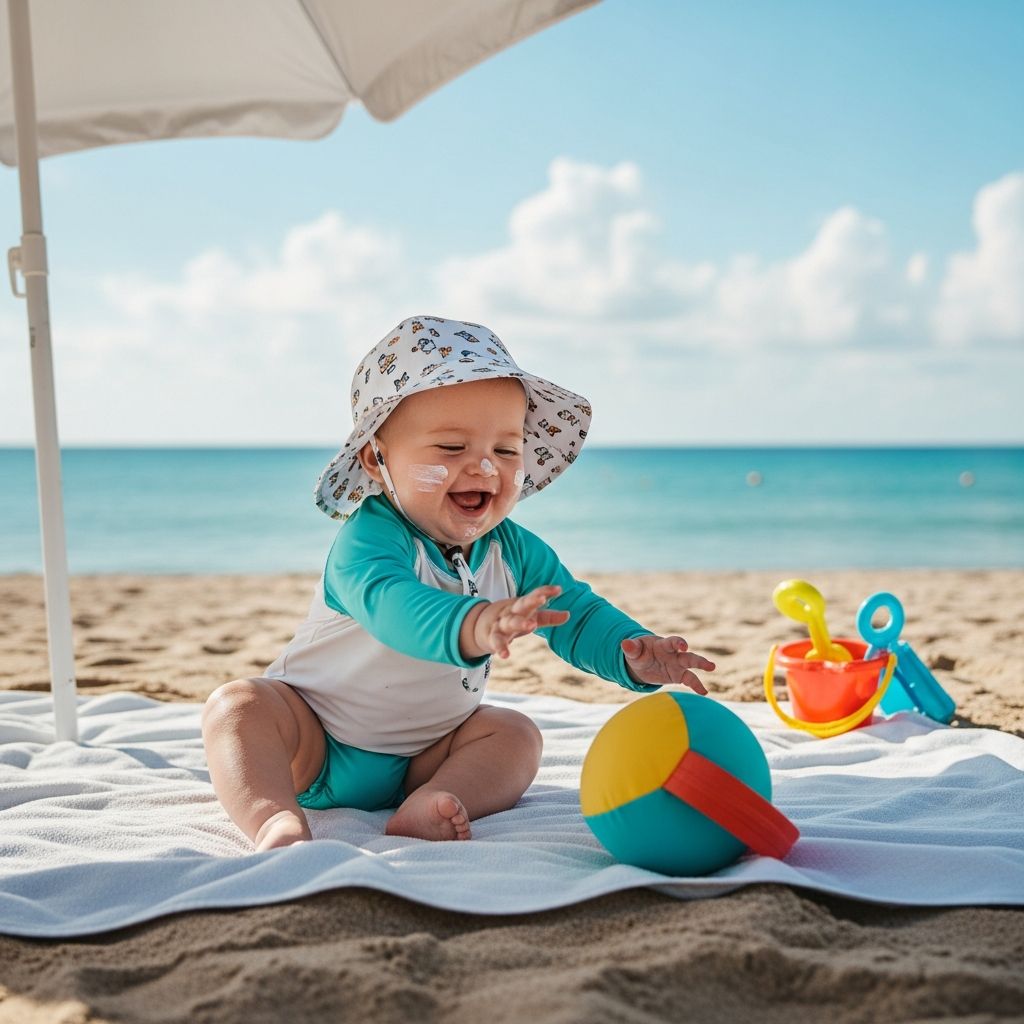
- Protective Clothing: Opt for lightweight, long-sleeved shirts, pants, and socks with tight weaves. Look for UPF 30+ rated fabrics.
- Hats and Sunglasses: Wide-brimmed hats shading face, neck, ears; UV-blocking sunglasses.
Sunscreen Guidelines by Age
Sunscreen serves as a last resort; prioritize coverage first.
Birth to 6 Months
AAP advises keeping babies out of direct sun. If unavoidable, apply minimal broad-spectrum, water-resistant SPF 30+ sunscreen to small exposed areas like face and hands. Use mineral-based formulas (zinc oxide/titanium dioxide) to minimize irritation.
6-12 Months and Older
Incorporate sunscreen daily. Select infant-specific, hypoallergenic, fragrance-free broad-spectrum SPF 30+ (UVA/UVB protection). Apply generously 15 minutes pre-exposure; reapply every 2 hours, after swimming/sweating. Test for allergies first.
| Age Group | Primary Protection | Sunscreen Use | SPF Recommendation |
|---|---|---|---|
| 0-6 Months | Shade + Clothing | Minimal, if needed | 30+ Broad-Spectrum |
| 6+ Months | Shade + Clothing + Sunscreen | Routine | 30+ Broad-Spectrum, Water-Resistant |
Choosing the Right Gear
Swim Protection: Rash guards (long-sleeve swim shirts) with UPF 50+ outperform sunscreen alone in water. Pair with swim diapers and hats.
Stroller Shields: Attachments providing UPF coverage keep babies cool and protected.
Every Skin Tone Matters: All types benefit; darker skin (types 4-6) shows less pigmentation rise with intervention, but cancer risk persists.
Building Family Sun Habits
Model behaviors: Parents using protection encourage kids. Educational tools like read-along books on UV risks improve compliance. Track skin changes monthly; consult dermatologists for moles or spots.
Common Myths Debunked
- Myth: Cloudy Days Are Safe. Up to 80% UV penetrates clouds; use same protections.
- Myth: Dark Skin Is Immune. Less burn-prone, but still cancer-vulnerable.
- Myth: Water-Resistant Means Waterproof. Reapply after 40-80 minutes in water.
Frequently Asked Questions (FAQs)
Q: Can I use sunscreen on my newborn?
A: No routine use under 6 months; prioritize shade/clothing. Small amounts OK on exposed spots if necessary.
Q: What’s the best sunscreen for babies?
A: Mineral-based, broad-spectrum SPF 30+, fragrance-free, hypoallergenic.
Q: How often reapply sunscreen?
A: Every 2 hours; immediately after swimming/sweating.
Q: Are rash guards enough without sunscreen?
A: UPF 50+ rash guards provide excellent protection; ideal for water play.
Q: Does shade fully protect?
A: Best first line, but combine with clothing/hats for full coverage.
Long-Term Benefits
Interventions like books, swim shirts, and reminders yield sustained behavior gains, smaller UV damage markers, across sunny/cloudy days and skin types. Early habits slash lifetime risk; one study noted reduced pigmentation in intervened groups (p=.001). Monitor via self-exams; seek shade, cover up, protect eyes—habits that last.
By integrating these practices, parents safeguard delicate skin, curbing the UV damage that accumulates into cancer risk. Consult pediatricians for personalized advice.
References
- Skin Cancer: Prevention — Phoenix Children’s Hospital. Accessed 2026. https://phoenixchildrens.org/specialties-conditions/skin-cancer-prevention
- Sun Protection for Early Childhood — Cancer Control Programs. Accessed 2026. https://ebccp.cancercontrol.cancer.gov/programDetails.do?programId=28421782
- Skin Cancer | Rady Children’s Health — Rady Children’s Hospital. Accessed 2026. https://www.rchsd.org/programs-services/dermatology/conditions-treated/sun-protection-and-skin-cancer/
- Sun Safety for Children and Babies — UCSF Benioff Children’s Hospitals. Accessed 2026. https://www.ucsfbenioffchildrens.org/education/sun-safety-for-children-and-babies
- Infant sun protection: How parents can keep their baby safe — American Academy of Dermatology. Accessed 2026. https://www.aad.org/news/the-first-steps-of-sun-protection-how-to-keep-your-baby-safe
- How To Protect Your Child From Skin Cancer — Children’s Wisconsin. 2025-05. https://childrenswi.org/at-every-turn/stories/2025/05/skin-cancer-melanoma
- Raising Awareness of Child Skin Cancer — Quinn Dermatology. Accessed 2026. https://quinndermatology.com/raising-awareness-for-skin-cancer-in-children/
Similar Articles




Read full bio of Sneha Tete