Broccoli vs. Cauliflower: Which Is Healthier?
Discover the nutritional showdown between broccoli and cauliflower to determine which cruciferous vegetable packs more health benefits for your diet.
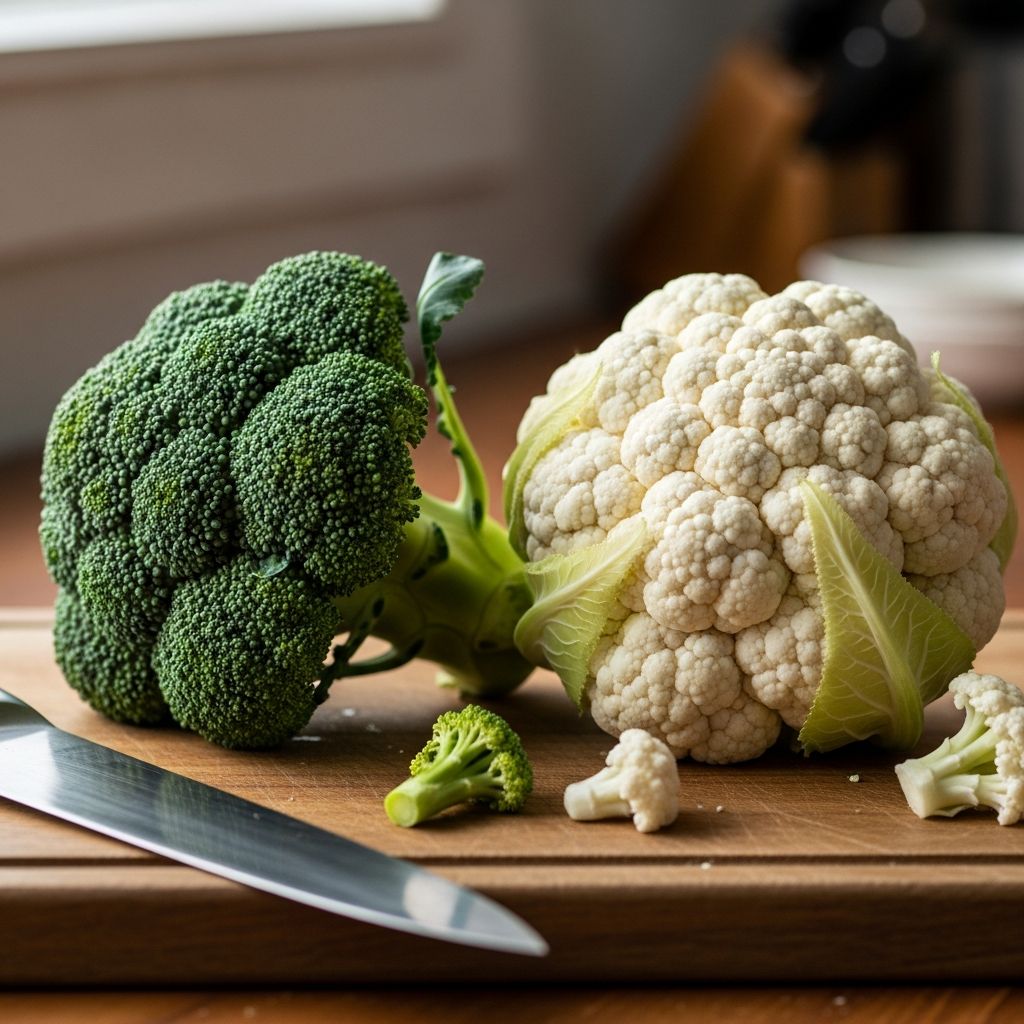
Broccoli and cauliflower, both cruciferous vegetables from the Brassica family, are nutritional powerhouses often compared for their health merits. While broccoli generally edges out with higher vitamin and mineral content, cauliflower offers unique advantages like lower calories and higher B vitamins, making both essential for a balanced diet.
A Registered Dietitian Explains the Differences Between Broccoli and Cauliflower
Broccoli (Brassica oleracea var. italica) features dense, dark green florets and stalks, delivering a slightly bitter, earthy flavor rich in sulforaphane. Cauliflower (Brassica oleracea var. botrytis), with its mild, nutty white heads, is more versatile for low-carb recipes. Both thrive in cool climates and share goitrogen compounds that may affect thyroid function in excess, but cooking mitigates this.
Nutrition Comparison: Broccoli vs. Cauliflower
Per 100g raw serving, broccoli provides 34 calories, 2.8g protein, 0.4g fat, 6.6g carbs (2.6g fiber), while cauliflower offers 25 calories, 1.9g protein, 0.3g fat, 5g carbs (2g fiber). Broccoli leads in most nutrients, but cauliflower shines in sugars and choline.
| Nutrient (per 100g raw) | Broccoli | Cauliflower | Daily Value % (Broccoli) |
|---|---|---|---|
| Calories | 34 | 25 | 2% |
| Protein | 2.8g | 1.9g | 6% |
| Fiber | 2.6g | 2g | 9% |
| Vitamin C | 89mg | 48mg | 99% |
| Vitamin K | 102mcg | 16mcg | 85% |
| Folate | 63mcg | 57mcg | 16% |
Data synthesized from comparative analyses; broccoli excels in protein (+46.9%), carbs (+33.6%), and fats (+32.1%).
Health Benefits of Broccoli
Broccoli’s sulforaphane activates Nrf2 pathways for detoxification and anti-cancer effects, with sprouts containing 10-100 times more than mature heads. It supports eye health via lutein/zeaxanthin, bone strength with vitamin K, and immunity with vitamin C—99% DV per 100g. Fiber aids digestion, reducing GERD and colon cancer risk.
- Cancer Prevention: Sulforaphane inhibits tumor growth; studies link higher intake to lower prostate/breast cancer risk.
- Heart Health: Potassium and fiber lower cholesterol; antioxidants reduce inflammation.
- Brain Function: Vitamin K supports cognitive health.
Health Benefits of Cauliflower
Cauliflower provides folate (25% DV per cup) for DNA synthesis and red blood cell formation, ideal for pregnancy. Its antioxidants like glucoraphanin combat inflammation, while lower carbs (3g net) suit keto diets. Choline supports liver and brain health; it’s lower in oxalates for kidney stone prevention.
- Weight Management: Low-calorie, high-fiber profile promotes satiety.
- Digestion: Fiber prevents constipation, though raffinose may cause bloating in IBS.
- Metabolism: B6 and pantothenic acid boost energy production.
Which Is Healthier—Broccoli or Cauliflower?
Broccoli is slightly healthier overall due to superior vitamin C, K, A, fiber, and sulforaphane content, per dietitians. However, cauliflower’s folate, lower sodium, and versatility make it comparable. Variety wins: rotate both for comprehensive phytonutrients.
Should You Choose Broccoli or Cauliflower?
Incorporate both: broccoli for antioxidant potency, cauliflower for milder flavor and low-carb swaps (e.g., rice, pizza crust). Aim for 1-2 cups daily; steam or stir-fry to preserve nutrients and maximize sulforaphane.
Related Stories



Bottom Line: Broccoli vs. Cauliflower
Neither is definitively superior—broccoli leads nutritionally, but cauliflower complements with unique B vitamins and lower calories. Prioritize both in meals for anti-cancer, digestive, and heart benefits from cruciferous compounds.
Frequently Asked Questions (FAQs)
Is broccoli healthier than cauliflower?
Yes, broccoli has more vitamins C/K, fiber, and sulforaphane, but cauliflower offers folate and fewer carbs—both are excellent.
Which has more fiber: broccoli or cauliflower?
Broccoli edges out with 2.6g vs. 2g per 100g, aiding digestion and satiety.
Are broccoli and cauliflower good for weight loss?
Both are low-calorie, high-fiber foods that promote fullness and gut health, ideal for weight management.
Can you eat too much broccoli or cauliflower?
Excess may cause gas from raffinose or goitrogen interference; limit to 2 cups/day if thyroid-sensitive.
Raw or cooked: Which is better?
Light steaming boosts sulforaphane bioavailability; raw preserves vitamin C but may irritate digestion.
Delicious Ways to Enjoy Broccoli and Cauliflower
- Roasted broccoli with garlic and lemon.
- Cauliflower rice stir-fry.
- Broccoli-cheddar soup.
- Buffalo cauliflower wings.
- Salad with both, tahini dressing.
These recipes highlight their flavors while delivering nutrients.
References
- Broccoli vs Cauliflower — Nutrition Comparison and Health Impact — Foodstruct. 2023. https://foodstruct.com/nutrition-comparison-text/broccoli-vs-cauliflower
- Broccoli vs. Cauliflower | Which is Better for Health? — PlushCare. 2024-01-15. https://plushcare.com/blog/broccoli-vs-cauliflower-differences
- Broccoli Vs. Cauliflower: Which Has More Fiber? Dietitians Explain — Prevention. 2024-10-20. https://www.prevention.com/food-nutrition/healthy-eating/a69741644/broccoli-vs-cauliflower/
- Broccoli vs. Cauliflower: Is One Healthier? — Healthline. 2023-05-12. https://www.healthline.com/nutrition/broccoli-vs-cauliflower
- Cauliflower, Cabbage Or Broccoli: Which One Is The Healthiest? — NDTV. 2023-11-08. https://www.ndtv.com/health/cauliflower-cabbage-or-broccoli-which-one-is-the-healthiest-10892697
Similar Articles








Read full bio of Sneha Tete