Broken Femur: Symptoms, Treatment & Recovery
Complete guide to femur fractures: causes, symptoms, surgical treatment, and rehabilitation.
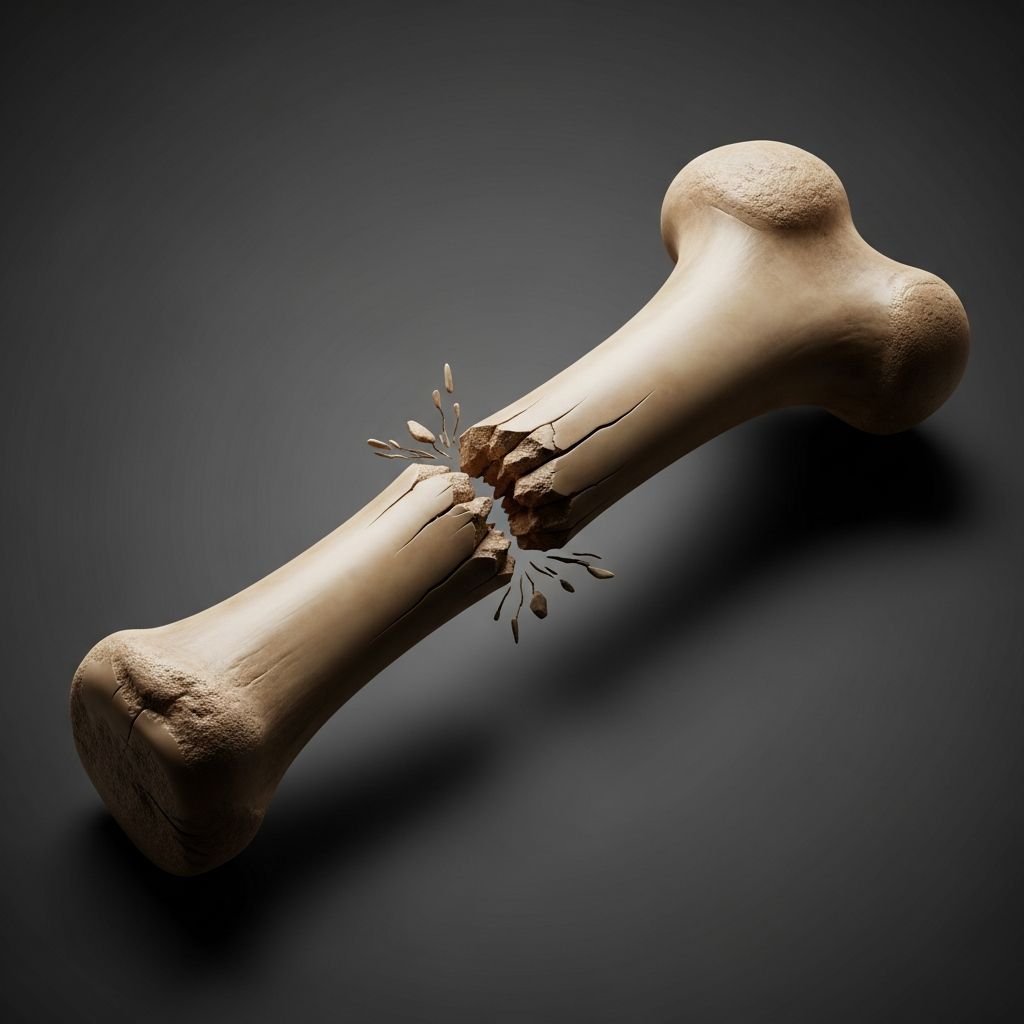
A broken femur, or femoral fracture, is a serious orthopedic injury affecting the thighbone—the longest and strongest bone in your body. Due to the femur’s substantial size and strength, it typically requires severe trauma to fracture. Understanding the causes, symptoms, treatment options, and recovery process is essential for anyone who has experienced this injury. This comprehensive guide will help you navigate your path to recovery with confidence and knowledge.
What Is a Broken Femur?
The femur is the thighbone that extends from your hip to your knee, and it bears much of your body’s weight when you stand, walk, and move. A broken femur occurs when the bone fractures due to significant force or trauma. Because the femur is the strongest bone in the human body, breaks typically result from high-energy injuries rather than minor falls or accidents. Understanding what constitutes a broken femur helps patients recognize the severity of the condition and the importance of immediate medical attention.
Causes of a Broken Femur
Femur fractures are caused by severe traumas that generate substantial force. The most common causes include:
- Motor vehicle accidents (the leading cause)
- Falls from significant heights
- High-impact sports injuries
- Severe crush injuries
- Gunshot wounds
Individuals with weakened bones due to osteoporosis or bone cancer may experience femur fractures from lower-energy trauma than would typically cause such injuries in healthy individuals. Because the femur must support substantial body weight and endure significant stress during movement, only severe trauma can typically break this robust bone.
Symptoms of a Broken Femur
Recognizing the symptoms of a broken femur is critical for seeking immediate emergency care. Common symptoms include:
- Severe pain in the thigh, hip, or knee area
- Visible swelling and massive bruising of the thigh
- Tenderness at the fracture site
- Inability to bear weight on the injured leg
- Visible deformity of the thigh
- Loss of sensation or movement in the foot if nerve or blood supply is affected
- Open wound with bone protruding through the skin (in open fractures)
- Signs of shock including rapid heart rate and low blood pressure
Internal bleeding from a broken femur can be significant and life-threatening, potentially causing rapid heart rate, low blood pressure, and shock. The severity of symptoms often reflects the seriousness of the injury. Seek immediate emergency medical attention if you suspect a femur fracture.
Types of Femur Fractures
Femur fractures are classified according to their location and pattern:
By Location
- Femoral head fractures: Located at the rounded top of the femur where it connects to the hip socket
- Femoral neck fractures: Located in the narrow section below the femoral head
- Intertrochanteric fractures: Occur between two bony projections on the upper femur
- Subtrochanteric fractures: Located just below the trochanteric region
- Femoral shaft fractures: Occur in the middle, long portion of the thighbone
- Supracondylar fractures: Located just above the knee joint
- Condylar fractures: Affect the rounded surfaces at the bottom of the femur that form the knee joint
Related Stories



By Pattern
- Transverse fractures: Break straight across the bone
- Comminuted fractures: Result in multiple bone fragments that require complex surgical repair
- Segmental fractures: Involve breaks at two or more levels, leaving a bone segment completely separated
- Spiral fractures: Wrap around the bone in a spiral pattern
- Open fractures: Involve skin and tissue damage with bone protruding through the skin
- Closed fractures: Break without breaking the skin
Diagnosis of a Broken Femur
Proper diagnosis is essential for determining the appropriate treatment approach. Healthcare providers use a multi-step diagnostic process:
Physical Examination
A healthcare provider will conduct a thorough physical examination including assessment of pain location, ability to move the leg, wound evaluation (if present), and careful checks for nerve and blood supply damage. The examination also includes evaluation of shock status and assessment for other injuries related to the trauma.
Imaging Tests
Multiple imaging techniques help confirm the diagnosis and determine fracture characteristics:
- X-rays: The primary imaging tool for visualizing bone fractures and their patterns
- CT scans: Provide detailed three-dimensional images, especially useful for complex fracture patterns
- MRI scans: Help assess soft tissue damage and vascular integrity
Emergency Room Assessment
If you’re admitted to an emergency room following trauma, a team of healthcare providers will stabilize you and treat injuries in order of severity. Special attention is paid to vascular and nerve supply assessment, blood loss evaluation, and identification of multiple trauma injuries.
Treatment Options for a Broken Femur
Treatment approach depends on fracture location, pattern, and severity. However, most femur fractures require surgical intervention.
Surgical Treatment
Broken femurs almost always require surgery to ensure proper healing and function. The most common surgical approach is open reduction with internal fixation, where your surgeon realigns the bone to its correct position and secures it with metal hardware.
Internal Fixation Methods
Healthcare providers use various internal fixation techniques depending on fracture characteristics:
- Intramedullary rods (IM rods): A metal rod is passed through the interior of the femur bone and secured with screws at either end. The bone marrow cavity may be reamed (cleared) first to ensure proper rod fit.
- Metal plates and screws: Surgeons attach metal plates to the bone surface and secure them with screws to hold fragments in alignment
- Metal pins: Used in specific fracture patterns to hold bone segments together
External Fixation
For certain fracture patterns or open fractures, external fixation devices may be used. In this procedure, large threaded pins are passed into bone fragments above and below the fracture. These pins are attached to a rigid framework outside the thigh, holding fragments in position during healing.
Post-Operative Immobilization
After surgery, the thigh will be immobilized using a combination of braces, splints, or casts. Immobilization prevents movement of the fracture site and protects the surgical repair while healing occurs. Your surgeon will provide specific instructions on weight-bearing restrictions and activity limitations.
Recovery Timeline for a Broken Femur
Recovery from a femur fracture is a lengthy process requiring patience and commitment:
Initial Recovery Phase (First 6-12 Weeks)
During the immediate post-operative period, pain management is prioritized. Pain will remain significant for several weeks as the thighbone heals, though surgical stabilization helps reduce discomfort. Swelling, tenderness, and massive bruising typically persist for weeks. Your surgical team will monitor for complications and provide pain management strategies.
Intermediate Recovery Phase (3-6 Months)
As bone healing progresses, you’ll gradually begin weight-bearing activities under medical guidance. Physical therapy becomes increasingly important during this phase, with focus on regaining range of motion and building muscle strength. The initial phases of gaining range of motion and strength after a femur fracture progress relatively quickly.
Long-Term Recovery (6-12+ Months)
Complete recovery from a femur fracture typically takes at least a year or longer, depending on fracture complexity and individual healing factors. Return to normal activities happens gradually, and some patients may experience ongoing physical therapy needs beyond the first year.
Physical Therapy and Rehabilitation
Physical therapy is an essential component of femur fracture recovery. A physical or occupational therapist will guide you through rehabilitation:
Range of Motion Restoration
Therapists will mobilize your joints using hands-on techniques to encourage the hip, knee, ankle, and foot to gradually return to normal range of motion. Mobilization may be combined with assisted stretching of tight muscles around the surgical site.
Strength Building
Progressive strengthening exercises help rebuild muscle mass in the thigh, hip, and leg. As bone healing allows, resistance exercises are gradually introduced to restore functional strength.
Weight-Bearing Progression
Your healthcare provider will show you how to safely stand, walk, and move while wearing immobilization devices or after surgery. Weight-bearing progresses gradually from non-weight-bearing through partial weight-bearing to full weight-bearing based on bone healing progress.
Functional Recovery
Late-stage physical therapy focuses on returning to daily activities, including walking, climbing stairs, and returning to work or recreational activities. You may need physical therapy for several months to regain your ability to move and walk.
Complications and Considerations
While treatment for femur fractures has a very high success rate, understanding potential complications helps you recognize warning signs:
- Nonunion: Failure of bone fragments to heal together properly
- Malunion: Bone fragments heal in incorrect alignment
- Infection: Particularly in open fractures with skin damage
- Blood clots: Deep vein thrombosis can develop after immobilization
- Nerve or blood vessel damage: May cause long-term complications if not treated promptly
- Stiffness: Loss of joint mobility if rehabilitation is inadequate
- Post-traumatic arthritis: Joint degeneration may develop years after the injury
Self-Care During Recovery
Following your healthcare provider’s guidance is essential for optimal recovery. Ask your provider about:
- Proper cast or immobilization care
- Bathing and dressing modifications
- Pain management strategies
- Activity restrictions and advancement timeline
- Warning signs requiring immediate medical attention
- Return to work and driving timelines
Celebrate your progress throughout recovery—each step represents meaningful healing and functional improvement.
Frequently Asked Questions
Q: How long does a broken femur take to heal?
A: Recovery from a femur fracture typically takes at least a year or longer, depending on fracture severity and individual factors. The initial bone healing may take 3-6 months, but functional recovery continues for many more months.
Q: Will I need surgery for a broken femur?
A: Yes, broken femurs almost always require surgery. The femur’s size, strength, and role in weight-bearing make surgical realignment and fixation necessary for proper healing and function.
Q: Can a broken femur cause permanent disability?
A: Most femur fractures heal very well without long-term consequences when properly treated. However, commitment to physical therapy and following medical guidance is essential for optimal functional recovery.
Q: What is an intramedullary rod?
A: An intramedullary rod is a metal device inserted through the interior of the femur bone and secured with screws at both ends. This surgical technique allows early mobilization, pain relief, and faster hospital discharge compared to other fixation methods.
Q: When can I start putting weight on my leg after femur surgery?
A: Weight-bearing progression depends on your specific fracture and surgical repair. Your surgeon and physical therapist will guide you through gradual advancement from non-weight-bearing to partial weight-bearing to full weight-bearing based on bone healing.
Q: What should I expect from physical therapy?
A: Physical therapy involves gradual restoration of range of motion, progressive strength building, weight-bearing progression, and functional recovery. Sessions typically occur several times weekly for several months, with exercises and stretches tailored to your recovery stage.
Q: How do doctors diagnose a broken femur?
A: Diagnosis involves physical examination assessing pain, movement ability, and neurovascular status, combined with imaging tests including X-rays, CT scans, or MRI to visualize the fracture pattern and severity.
References
- Comminuted Fracture: Symptoms, Causes & Treatment — Cleveland Clinic. 2021-12-27. https://my.clevelandclinic.org/health/diseases/22252-comminuted-fracture
- Adult Femur Fractures: Physical and Occupational Therapy — Therapy Specialists. https://www.therapy-specialists.com/Injuries-Conditions/Hip/Hip-Issues/Adult-Femur-Fractures/a~4388/article.html
- Broken Leg: Symptoms & Recovery — Cleveland Clinic. https://my.clevelandclinic.org/health/diseases/broken-leg
- Femur (Thighbone): Anatomy, Function & Common Conditions — Cleveland Clinic. https://my.clevelandclinic.org/health/body/22503-femur
- Hip Fracture (Broken Hip): Symptoms, Risks & Recovery — Cleveland Clinic. https://my.clevelandclinic.org/health/diseases/17101-hip-fracture
- Bone Fractures: Types, Symptoms & Treatment — Cleveland Clinic. https://my.clevelandclinic.org/health/diseases/15241-bone-fractures
- Femoral Fractures — Physiopedia. https://www.physio-pedia.com/Femoral_Fractures
Similar Articles








Read full bio of Sneha Tete