Bromelain: Comprehensive Guide To Uses, Benefits, And Safety
Comprehensive guide to bromelain's therapeutic uses, benefits, and safety profile.
Bromelain: Usefulness and Safety
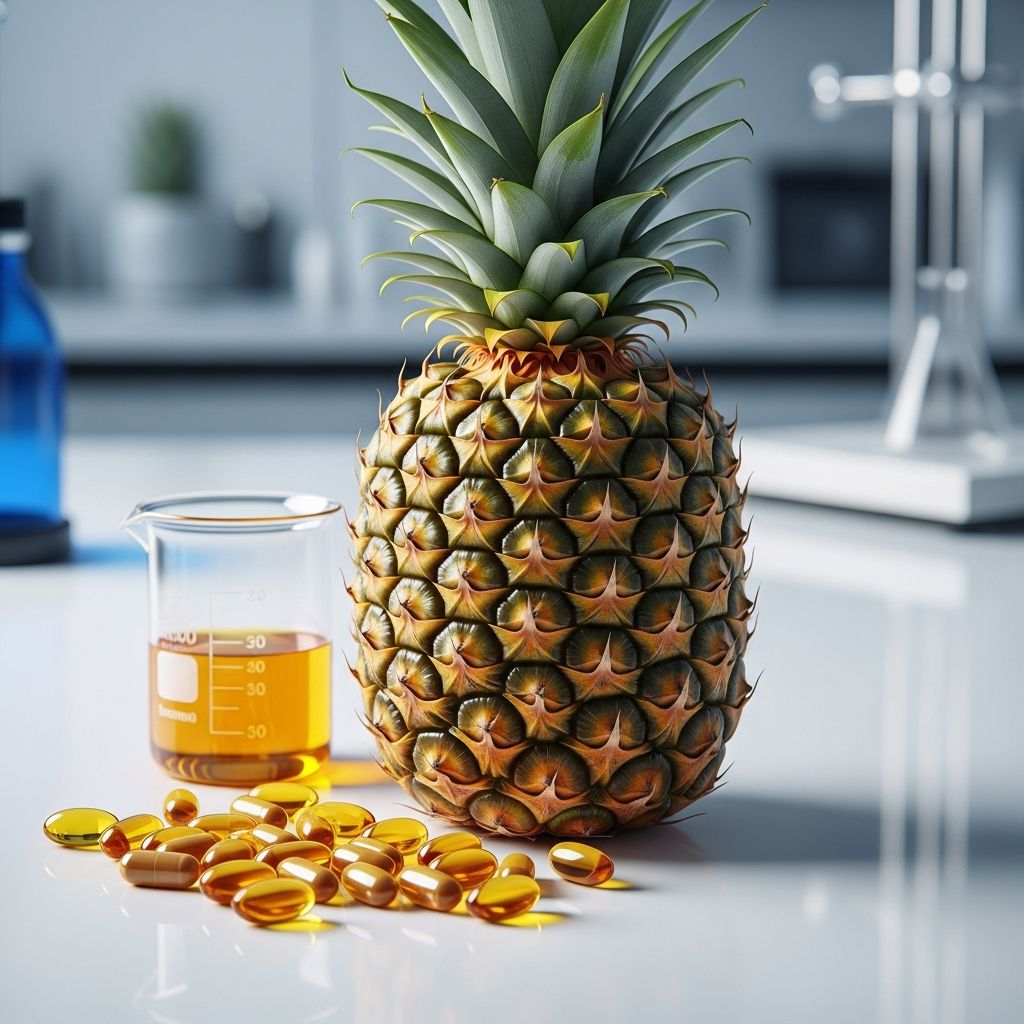
Bromelain is a naturally occurring enzyme mixture derived from the pineapple plant that has gained considerable attention in the health and wellness community. This comprehensive guide explores what bromelain is, its historical uses, current applications, and what scientific research reveals about its effectiveness and safety profile.
Background and Origin
Bromelain is a group of enzymes that break down proteins, found in the stem and fruit of the pineapple plant (Ananas comosus). The use of pineapple for medicinal purposes has deep historical roots, particularly throughout Central and South America, where it was traditionally employed to treat various medical ailments. This centuries-long history of traditional use has contributed to renewed scientific interest in understanding bromelain’s mechanisms and potential therapeutic applications.
Today, bromelain is categorized as a dietary supplement and is generally recognized as safe (GRAS) by the U.S. Food and Drug Administration (FDA). It can be derived from various parts of the pineapple plant and is available in multiple forms for different applications.
Common Uses and Applications
Bromelain is promoted for numerous health purposes, with some uses supported by scientific evidence and others requiring further research. Understanding these applications helps consumers make informed decisions about whether bromelain might be appropriate for their needs.
Postoperative Pain and Dental Health
One of the primary applications of bromelain is the reduction of postoperative pain, particularly following wisdom tooth extraction. The enzyme’s anti-inflammatory properties make it a candidate for managing discomfort and swelling associated with surgical procedures. This application demonstrates bromelain’s potential in accelerating recovery processes following dental and surgical interventions.
Sinusitis and Nasal Congestion
Bromelain may be helpful as a supportive therapy to reduce the symptoms of sinusitis and related conditions affecting breathing and the nasal passages. A 2021 review found that bromelain may help treat sinusitis by managing the infection and can minimize the duration of symptoms, particularly in children with severe cases. When taken orally, bromelain is effective at reducing swelling, congestion, and other symptoms associated with sinusitis and nasal allergies. This application represents one of the more promising uses with emerging clinical support.
Osteoarthritis and Joint Health
People commonly use bromelain supplements to improve the symptoms of osteoarthritis. Research indicates that bromelain can improve symptoms of pain and stiffness in those with osteoarthritis, especially when combined with nutraceuticals such as turmeric. After six weeks of treatment, bromelain resulted in significant and similar reduction in pain and inflammation compared to other treatments. This suggests that bromelain may provide an alternative or complementary approach to traditional nonsteroidal anti-inflammatory drugs (NSAIDs) for arthritis management.
Anti-Inflammatory Effects
Beyond its application for specific conditions, bromelain exhibits broader anti-inflammatory properties throughout the body. A 2023 study found that bromelain reduced inflammatory effects and decreases the production of inflammatory cytokines, which are signaling molecules that stimulate the immune system. When produced in excess, these cytokines can cause harmful inflammation, making bromelain’s regulatory effect potentially valuable for various inflammatory conditions.
Related Stories



Muscle Soreness and Exercise Recovery
Bromelain is frequently used as a dietary supplement to reduce exercise-induced muscle soreness and promote faster recovery. Its proteolytic properties and anti-inflammatory action may help athletes and active individuals manage post-exercise discomfort and optimize their training recovery periods.
Topical Applications for Burns
Bromelain is used topically (applied to the skin) as a prescription drug in the treatment of serious burns. It can be applied as a cream to help relieve burns and remove dead skin cells from damaged tissue, potentially facilitating the healing process and reducing infection risk.
Digestive Support
Bromelain serves as a digestive aid by breaking down proteins, which may improve nutrient absorption and support overall digestive health. This application leverages the enzyme’s natural protein-digesting properties to enhance gastrointestinal function.
Cardiovascular and Circulation Benefits
Research suggests that bromelain may offer several benefits for cardiovascular health and circulation. Bromelain prevents or minimizes the severity of angina pectoris and transient ischemic attack (TIA). It is useful in the prevention and treatment of thrombophlebitis and may break down cholesterol plaques while exerting potent fibrinolytic activity.
The enzyme acts as an inhibitor of blood platelet aggregation, thus minimizing the risk of arterial thrombosis and embolism. A combination of bromelain with other nutrients protects against ischemia/reperfusion injury in skeletal muscle. In vitro and in vivo studies have demonstrated that bromelain is an effective fibrinolytic agent, as it stimulates the conversion of plasminogen to plasmin, resulting in increased fibrinolysis by degrading fibrin.
Immunological and Anti-Inflammatory Mechanisms
Bromelain has been recommended as an adjuvant therapeutic approach in the treatment of chronic inflammatory, malignant, and autoimmune diseases. In vitro experiments have shown that bromelain has the ability to modulate surface adhesion molecules on T cells, macrophages, and natural killer cells and can induce the secretion of immune signaling molecules.
Bromelain can block specific cellular pathways by inhibiting T cell signal transduction, which decreases the activation of certain immune cells and reduces inflammatory markers. There is evidence that oral therapy with bromelain produces analgesic and anti-inflammatory effects in patients with rheumatoid arthritis, one of the most common autoimmune diseases.
Additional Therapeutic Applications
Beyond the primary uses mentioned above, bromelain has been studied for several other conditions:
Asthma and Allergies
Bromelain has anti-inflammatory effects that can help treat asthma and allergies. Research suggests that bromelain may attenuate the development of allergic airway disease while altering immune cell populations, indicating potential similar effects in the treatment of human asthma and hypersensitivity disorders.
Colitis
Bromelain can help reduce inflammation and heal mucosal ulcers associated with colitis, offering potential benefits for inflammatory bowel conditions.
Pain Management
Bromelain possesses analgesic properties thought to result from its direct influence on pain mediators such as bradykinin. This mechanism suggests its potential utility in various pain management scenarios beyond those already discussed.
Safety Profile and Tolerability
One of bromelain’s significant advantages is its favorable safety profile. Bromelain is considerably absorbable in the body without losing its proteolytic activity and without producing any major side effects, even after prolonged use. It is currently categorized as a dietary supplement and generally recognized as safe (GRAS) by the U.S. Food and Drug Administration (FDA).
However, users should be aware of potential interactions with medications. Bromelain can have an effect on how your body absorbs certain antibiotics. For example, it can increase how much amoxicillin or tetracycline is absorbed by the body. Taking bromelain at the same time as these antibiotics can increase the effects and side effects of the medications, making timing and medical consultation important considerations.
Drug Interactions and Precautions
While bromelain is generally well-tolerated, it is important to be aware of potential interactions. Bromelain may be used alone or in conjunction with other medications, but medical supervision is recommended. The enzyme’s ability to enhance drug absorption, particularly of antibiotics, means that dosing adjustments may be necessary when combining bromelain with pharmaceutical agents.
It is advised to consult with a doctor before taking bromelain, particularly if you are taking medications or have underlying health conditions. Healthcare providers can help determine appropriate dosing and identify potential interactions specific to an individual’s medical situation.
Current Scientific Evidence
While bromelain has a long history of traditional use and shows promise in multiple research studies, it is important to note that not all claimed uses have equally strong scientific support. Some applications, such as for kidney stones and certain other conditions, lack robust scientific evidence despite popular use. However, emerging research continues to explore bromelain’s mechanisms and potential applications, with several studies demonstrating its effectiveness for inflammation-related conditions.
In vitro and in vivo studies demonstrate that bromelain exhibits various fibrinolytic, antiedematous, antithrombotic, and anti-inflammatory activities, supporting its traditional use and opening new avenues for research into its therapeutic potential.
Frequently Asked Questions
Q: What exactly is bromelain?
A: Bromelain is a group of protein-digesting enzymes derived from the stem, fruit, and juice of the pineapple plant. It has been used for centuries in Central and South America for medicinal purposes and is now available as a dietary supplement worldwide.
Q: Is bromelain safe to take?
A: Bromelain is generally recognized as safe (GRAS) by the FDA and has been shown to be well-absorbed without major side effects, even with prolonged use. However, it can interact with certain antibiotics, so consulting with a healthcare provider is recommended before starting supplementation.
Q: What is the most well-supported use of bromelain?
A: While bromelain has multiple applications, its use for reducing sinusitis symptoms and osteoarthritis pain appears to have the strongest emerging scientific support, with multiple studies demonstrating effectiveness for these conditions.
Q: Can bromelain be used topically?
A: Yes, bromelain can be applied topically to the skin for burn treatment and removal of dead skin cells. It is used as a prescription drug for serious burns and is available in cream formulations.
Q: How does bromelain affect cardiovascular health?
A: Bromelain may benefit cardiovascular health by inhibiting blood platelet aggregation, reducing the risk of blood clots, breaking down cholesterol plaques, and exhibiting fibrinolytic activity that improves blood flow.
Q: Can I take bromelain with medications?
A: Bromelain may be used with other medications, but it can increase the absorption of certain antibiotics like amoxicillin and tetracycline. Medical supervision is recommended to avoid unwanted interactions and ensure proper dosing.
Q: What are the anti-inflammatory mechanisms of bromelain?
A: Bromelain reduces inflammatory cytokine production, modulates immune cell surface molecules, and influences pain mediators like bradykinin. It can also block certain cellular pathways involved in inflammation and immune activation.
References
- Properties and Therapeutic Application of Bromelain: A Review — PMC National Center for Biotechnology Information. 2012. https://pmc.ncbi.nlm.nih.gov/articles/PMC3529416/
- Bromelain: Benefits, risks, sources, and side effects — Medical News Today. 2023. https://www.medicalnewstoday.com/articles/323783
- Bromelain: Dosage, Benefits, and Side Effects — Healthline Media. 2024. https://www.healthline.com/health/bromelain
- Bromelain: Usefulness and Safety — National Center for Complementary and Integrative Health (NCCIH), National Institutes of Health. https://www.nccih.nih.gov/health/bromelain
- What Is Bromelain Good For? 7 Health Benefits & Side Effects — MedicineNet. 2024. https://www.medicinenet.com/what_is_bromelain_good_for/article.htm
- Bromelain – Uses, Side Effects, and More — WebMD LLC. 2024. https://www.webmd.com/vitamins/ai/ingredientmono-895/bromelain
- Bromelain — LiverTox, National Center for Biotechnology Information (NCBI). https://www.ncbi.nlm.nih.gov/books/NBK600584/
Similar Articles








Read full bio of Sneha Tete