Bromfenac Eye Drops Complete Guide: Uses, Dosage, Side Effects
Effective relief from eye inflammation and pain after cataract surgery with bromfenac eye drops (Yellox).
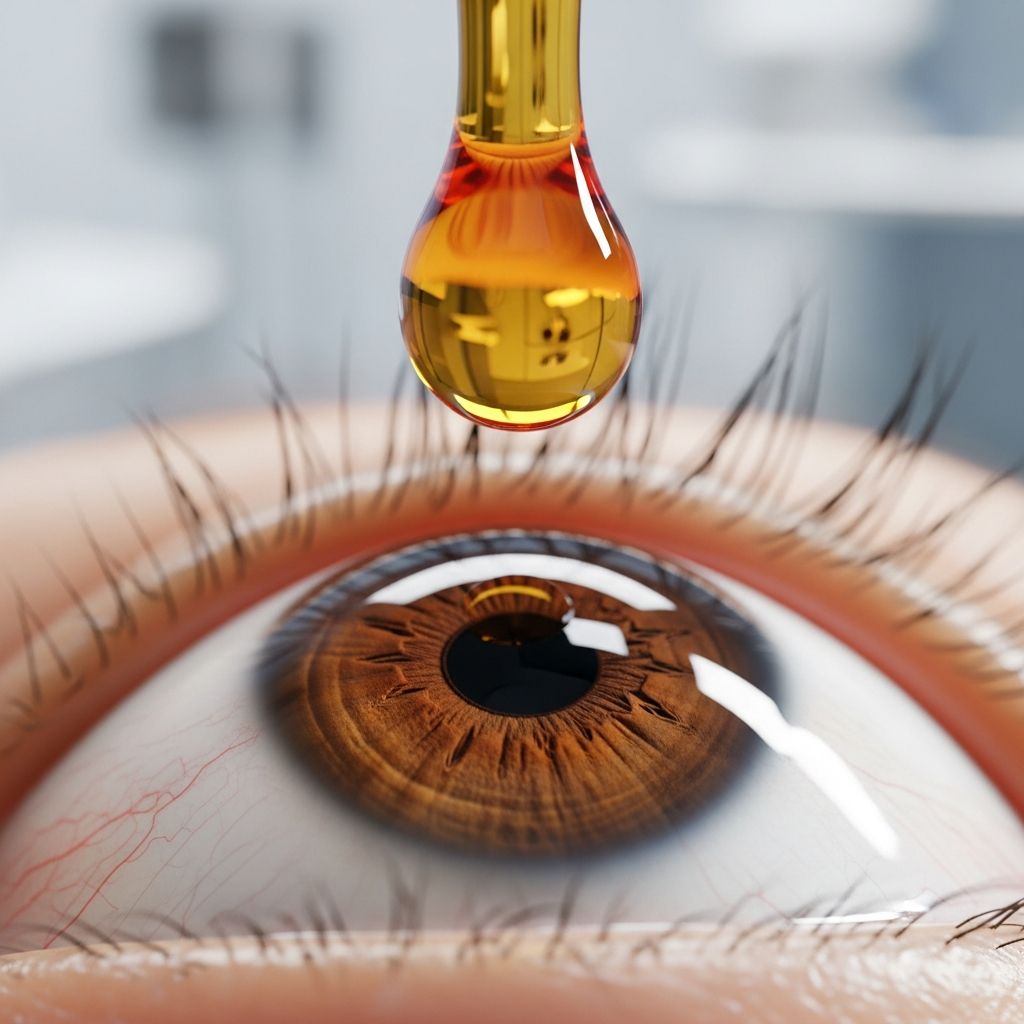
Bromfenac eye drops, marketed as Yellox, are a prescription medication designed for short-term use to alleviate pain and inflammation in the eye following cataract surgery. This non-steroidal anti-inflammatory drug (NSAID) targets postoperative ocular discomfort effectively when used as directed.
| Type of medicine | A non-steroidal anti-inflammatory eye drop |
|---|---|
| Used for | After cataract surgery, to ease pain and discomfort |
| Also called | Yellox® |
| Available as | Eye drops |
About bromfenac eye drops
Bromfenac eye drops belong to the class of non-steroidal anti-inflammatory drugs (NSAIDs) specifically formulated for ocular use. They are primarily indicated for adults to manage inflammation and associated pain that arises after cataract surgery, a common procedure to remove the clouded lens of the eye.
The active ingredient, bromfenac, works by inhibiting the enzyme cyclo-oxygenase (primarily COX-2), which reduces the production of prostaglandins—chemicals responsible for triggering inflammation in the eye. Clinical studies demonstrate that Yellox leads to significantly faster clearance of ocular inflammation compared to placebo, with 64% of patients achieving complete resolution by day 15 post-surgery versus 43.3% in the placebo group.
Cataract surgery often results in temporary anterior chamber inflammation, characterized by increased cells and flare. Yellox effectively diminishes these signs, showing benefits as early as day 3 after surgery, with 85.1% of patients exhibiting minimal flare by two weeks. This makes it a valuable adjunct in postoperative care, typically used for 14 days starting the day after surgery.
Available as a 0.9 mg/ml solution in 5 ml bottles, each drop delivers approximately 33 micrograms of bromfenac. The formulation includes benzalkonium chloride as a preservative, which helps maintain sterility but may cause irritation with prolonged use.
Before using bromfenac eye drops
Before initiating treatment with bromfenac eye drops, consult your doctor to ensure suitability, especially considering potential risks and interactions. Disclose any history of allergic reactions, particularly to aspirin or other NSAIDs like ibuprofen, diclofenac, or naproxen, as cross-sensitivity can occur.
Inform your healthcare provider if you have conditions such as a bleeding tendency, eye infections, diabetes, or rheumatoid arthritis, which may influence safety. Yellox has not been studied in patients with hepatic or renal impairment, nor in pediatric populations, so it is not recommended for these groups.
- Allergies: Especially to NSAIDs or aspirin.
- Bleeding disorders: NSAIDs can affect clotting.
- Eye infections: Active infections require different management.
- Diabetes or rheumatoid arthritis: May increase corneal risks.
- Pregnancy or breastfeeding: Use only if benefits outweigh risks; discuss with your doctor.
- Other medications: Including other eye drops or systemic drugs.
Do not wear contact lenses during treatment, as they are not recommended post-cataract surgery and the preservative can damage soft lenses. Wait at least 10-15 minutes after drops before reinserting lenses, if approved.
How to use bromfenac eye drops
Follow your doctor’s instructions precisely. The standard regimen is one drop in the affected eye(s) twice daily—morning and evening—beginning the day after cataract surgery and continuing for 14 days.
Administration steps:
- Wash hands thoroughly.
- Tilt head back, pull down lower eyelid to form a pocket.
- Hold dropper above eye, avoid contact with eye or eyelids.
- Instill one drop into the pocket; close eye gently for 1-2 minutes.
- Press finger against tear duct to minimize drainage.
- If using multiple eye medicines, space them 5 minutes apart.
Related Stories



Shake the bottle well before use. Discard 4 weeks after opening or as per leaflet. If a dose is missed, apply as soon as remembered unless near next dose; do not double up.
Initial application may cause temporary blurred vision or watering; wait until clear before driving or operating machinery. Protect eyes from strong sunlight with sunglasses, as sensitivity may increase.
Attend all follow-up appointments for progress monitoring. Report any worsening symptoms immediately.
Getting the most from your treatment
To optimize outcomes with bromfenac eye drops:
- Use consistently at regular intervals without missing doses.
- Avoid rubbing eyes post-application to prevent contamination.
- Store at room temperature, away from children.
- Do not exceed prescribed duration to minimize risks like corneal issues.
- Combine with prescribed antibiotics or steroids if indicated, spacing administrations.
Long-term use of topical NSAIDs like bromfenac can rarely lead to serious corneal complications such as thinning, erosion, ulceration, or perforation, particularly in at-risk patients. Discontinue and seek care if epithelial breakdown occurs. Concomitant corticosteroids may heighten this risk.
Accidental ingestion poses low risk; the entire 5 ml bottle equates to less than 5 mg bromfenac orally, far below systemic doses. Drink fluids if ingested.
Side effects
Most side effects are mild and transient. Common ones include:
| Side Effect | Description |
|---|---|
| Eye discomfort, discharge, dryness, redness, itching, irritation, eyelid swelling | Occurs soon after instillation; resolves quickly. |
| Cough, nosebleeds, runny nose | Report if persistent. |
Serious side effects (rare): Stop use and contact a doctor immediately for allergic reactions (rash, swelling, itching around eyes), severe redness, vision changes, light sensitivity, eye pain, bleeding in the eye, or breathing difficulties.
Preservatives may cause irritation or dry eye with extended use. Monitor for corneal health, especially if on corticosteroids.
Frequently Asked Questions (FAQs)
Q: How soon after cataract surgery can I start using Yellox?
A: Begin the day after surgery, one drop twice daily for two weeks.
Q: Can I wear contact lenses while using these drops?
A: No, avoid contact lenses post-surgery and during treatment due to recovery needs and preservative effects.
Q: What if I miss a dose?
A: Use as soon as remembered unless near next dose; do not double.
Q: Are there risks with long-term use?
A: Yes, potential corneal damage; use only as prescribed short-term.
Q: Is Yellox safe during pregnancy?
A: Consult your doctor; use only if necessary.
Q: How does bromfenac work?
A: Inhibits COX-2 to reduce prostaglandin-mediated inflammation.
References
- Yellox | European Medicines Agency (EMA) — EMA. 2023. https://www.ema.europa.eu/en/medicines/human/EPAR/yellox
- Yellox 0.9 mg/ml eye drops solution – Patient Information Leaflet (PIL) — medicines.org.uk. 2023-06-01. https://www.medicines.org.uk/emc/product/4626/pil
- Yellox 0.9 mg/ml eye drops solution – (emc) | 4626 — medicines.org.uk. 2023. https://www.medicines.org.uk/emc/product/4626/smpc
- Bromfenac eye drops (Yellox) — patient.info. 2023. https://patient.info/medicine/bromfenac-eye-drops-yellox
- Bromfenac (Yellox®) 900 micrograms/ml eye drops — publications.scot.nhs.uk. 2023-06. https://www.publications.scot.nhs.uk/files/msan-2023-06.pdf
- Bromfenac (ophthalmic route) — Mayo Clinic. 2025. https://www.mayoclinic.org/drugs-supplements/bromfenac-ophthalmic-route/description/drg-20062377
- Bromfenac Ophthalmic: MedlinePlus Drug Information — MedlinePlus. 2025. https://medlineplus.gov/druginfo/meds/a611018.html
Similar Articles








Read full bio of medha deb