Bronchoscopy: Procedure, Uses, and What to Expect
Complete guide to bronchoscopy: understanding the procedure, preparation, and diagnostic applications.
What is Bronchoscopy?
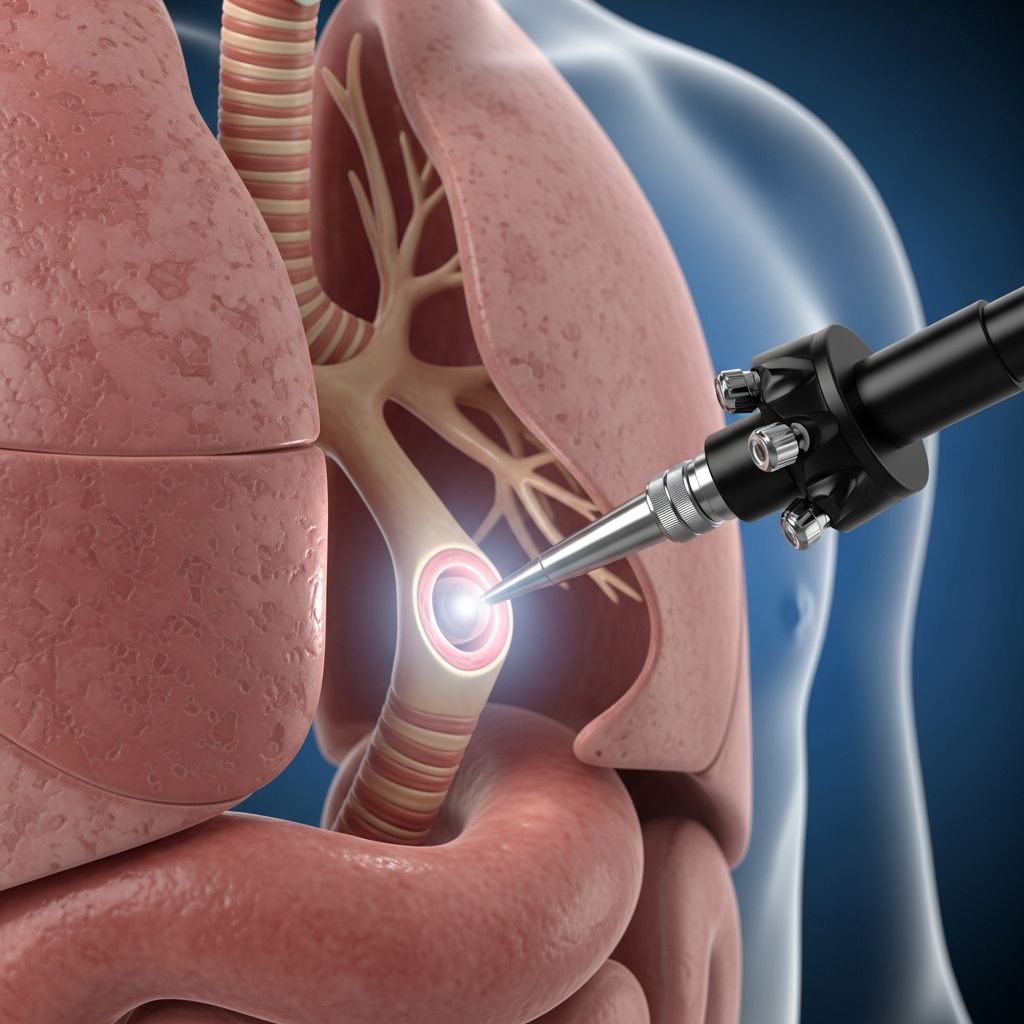
Bronchoscopy is a medical procedure that allows physicians to directly visualize and examine the airways within your lungs using a specialized instrument called a bronchoscope. The bronchoscope is a thin, flexible tube equipped with a light source and a camera at its tip, enabling your doctor to see detailed images of your respiratory tract. This minimally invasive procedure has become an essential diagnostic and therapeutic tool in pulmonary medicine, allowing clinicians to evaluate suspected lung conditions, collect tissue samples, and perform various interventional treatments.
The procedure is typically performed by a pulmonologist or trained thoracic surgeon in a controlled medical setting such as a bronchoscopy suite, operating room, or intensive care unit. Modern bronchoscopes are often compatible with color video technology, which helps your doctor document findings and create a permanent medical record of the examination.
Why Your Doctor May Recommend Bronchoscopy
Your physician may recommend a bronchoscopy for several diagnostic and therapeutic reasons. Understanding these indications helps you appreciate why this procedure is valuable for your respiratory health.
Diagnostic Applications
Bronchoscopy serves as an important diagnostic tool for identifying various lung and airway conditions. Your doctor may recommend this procedure if you have suspected lung cancer, persistent cough, hemoptysis (coughing up blood), abnormal chest imaging findings, or suspected respiratory infections. The procedure allows direct visualization of suspicious areas and enables collection of tissue samples for laboratory analysis and pathological examination.
Therapeutic Applications
Beyond diagnosis, bronchoscopy offers several therapeutic capabilities. Your doctor may use this procedure to suction retained secretions from your airways, place endobronial tubes or stents to maintain airway patency, remove foreign objects accidentally inhaled into the lungs, or use balloon dilation techniques to relieve airway stenoses (narrowing). These therapeutic interventions can significantly improve respiratory function and quality of life.
Preparation for Your Bronchoscopy
Proper preparation is essential for a safe and successful bronchoscopy. Your medical team will provide specific instructions tailored to your individual health status.
Pre-Procedure Requirements
Except in true medical emergencies, patients should receive nothing by mouth for at least 6 hours before the bronchoscopy. This fasting requirement reduces the risk of aspiration during the procedure. Before your appointment, inform your doctor about all medications you take, particularly blood thinners, as you may need to adjust or temporarily discontinue certain medications.
On the day of your procedure, your medical team will establish intravenous (IV) access to administer medications and monitor your vital signs. You will receive intermittent blood pressure monitoring, continuous pulse oximetry (oxygen saturation monitoring), and cardiac monitoring throughout the procedure. These safety measures ensure your medical team can respond immediately to any complications.
Anesthesia and Sedation
Your throat and nose will be anesthetized with nebulized or aerosolized lidocaine (1 or 2 percent solution) to prevent discomfort during the procedure. The typical maximum dose is 250 to 300 milligrams for a 70-kilogram patient. You will also receive light sedation that keeps you conscious but drowsy and unable to feel discomfort from the inserted tube. This sedation approach allows you to remain responsive to your doctor’s instructions while maintaining comfort throughout the examination. General anesthesia is rarely needed for routine bronchoscopy procedures.
Related Stories



The Bronchoscopy Procedure: Step-by-Step
Understanding what happens during your procedure can help reduce anxiety and prepare you mentally for the experience.
Procedure Overview
The entire bronchoscopy typically takes 30 to 45 minutes on average. Once you are adequately sedated and anesthetized, your clinician will apply numbing spray to your mouth, nose, and throat to prevent gag reflex. A suction tube will be placed to absorb saliva so you won’t need to swallow during the examination.
Bronchoscope Insertion
Your doctor will insert the lubricated bronchoscope through either your nostril or your mouth (using an oral airway or bite block if necessary). The instrument may also be passed through an artificial airway such as an endotracheal tube if you are already intubated. Your doctor will navigate the bronchoscope from your nose or mouth down through your throat, past your vocal cords during inspiration, into your trachea, and then further into the bronchi—the main airways branching into your lungs.
Visualization and Examination
After inspecting your nasopharynx and larynx, your physician systematically examines the airways using the bronchoscope’s camera and lighting system. The color video capability allows your doctor to clearly visualize any abnormalities, inflammation, tumors, or other structural problems. Your doctor may take photographs or video recordings to document findings and create a permanent medical record.
Diagnostic Procedures During Bronchoscopy
Your bronchoscopy may include one or more of the following procedures to collect diagnostic samples:
Bronchial Washing
Sterile saline is injected through the bronchoscope onto the airway surface and subsequently aspirated back out. This process retrieves cells and other material from your airways for microscopic examination and laboratory analysis. Bronchial washing helps diagnose infections, inflammatory conditions, and malignancies.
Bronchial Brushing
Your doctor may advance a small brush through the bronchoscope and gently abrade (scrape) suspect lesions or abnormal areas to obtain cellular samples. These cells are then examined under a microscope or sent for special staining and culture to identify infectious organisms or malignant cells.
Bronchoalveolar Lavage (BAL)
In this procedure, 50 to 200 milliliters of sterile saline is infused into the distal bronchoalveolar tree (the deepest portions of your lungs) and subsequently suctioned back out. This retrieves cells, protein, and microorganisms located at the alveolar level, providing valuable diagnostic information about infections, inflammatory disorders, and other pulmonary conditions.
Transbronchial Biopsy
Your doctor may use a small biopsy forceps passed through the bronchoscope to obtain tissue samples from the lung parenchyma (functional lung tissue). While this can be done without fluoroscopic guidance, evidence supports that using fluoroscopic guidance increases diagnostic yields and reduces the incidence of complications such as pneumothorax.
Transbronchial Needle Aspiration
A retractable needle is inserted through the bronchoscope to sample enlarged mediastinal lymph nodes or masses adjacent to the airways. Endobronchial ultrasonography (EBUS) can guide this needle biopsy, improving accuracy and diagnostic capability. This technique is particularly valuable for staging lung cancer and evaluating mediastinal pathology.
After Your Bronchoscopy
After your procedure is complete, your clinician will carefully remove the bronchoscope. If you received general anesthesia, you will gradually wake up while your healthcare team monitors your vital signs and ensures your recovery. Most patients can return to normal activities the following day, though you should avoid strenuous exercise for at least 24 hours after the procedure.
You may experience a mild sore throat for a few hours or days following the procedure—this is normal and typically resolves without intervention. Throat lozenges or warm salt water gargles can provide comfort. Your doctor will discuss the preliminary findings with you and explain when you can expect detailed results from any tissue samples sent to pathology.
Understanding the Risks and Complications
While bronchoscopy is generally a safe procedure, like all medical interventions, it carries potential risks. Serious complications are relatively rare, occurring in less than 1 percent of procedures when performed by experienced practitioners.
Possible complications include bleeding from biopsy sites, pneumothorax (collapsed lung), respiratory tract infection, bronchospasm (airway constriction), and medication reactions. Most complications are minor and resolve without additional intervention. Your medical team has equipment and expertise to manage any complications that may arise.
Certain factors increase your risk of complications, including severe emphysema, pulmonary hypertension, coagulopathy (bleeding disorders), and severe hypoxemia. Discuss your individual risk factors with your physician before the procedure.
Advantages of Bronchoscopy
Bronchoscopy offers several significant advantages in pulmonary medicine. The procedure is minimally invasive compared to surgical lung biopsy, requiring no incisions and minimal recovery time. It provides direct visualization of airways, enabling your doctor to see abnormalities not apparent on imaging studies. The ability to collect diagnostic samples through brushing, washing, and biopsy techniques allows precise diagnosis of infections, inflammatory conditions, and malignancies. Additionally, the therapeutic capabilities—such as removing foreign objects, placing stents, or performing airway dilation—make it valuable for treating various pulmonary conditions without requiring surgery.
Frequently Asked Questions
Q: Is bronchoscopy painful?
A: No. Your throat will be numbed with anesthetic spray, and you will receive sedation to keep you comfortable. You may feel pressure or slight discomfort, but pain should not occur. Tell your doctor immediately if you experience pain during the procedure.
Q: How long does recovery take after bronchoscopy?
A: Most patients can return to normal activities the following day. You should avoid strenuous exercise for 24 hours. Any sore throat typically resolves within a few days.
Q: When will I receive my results?
A: Your doctor will discuss preliminary findings immediately after the procedure. Detailed pathology results from tissue samples typically take 3 to 7 business days.
Q: Can I eat or drink after my bronchoscopy?
A: You should wait until the numbness in your throat wears off (usually 1 to 2 hours) before eating or drinking to avoid aspiration.
Q: Is bronchoscopy safe for elderly patients?
A: Yes, bronchoscopy can be safely performed in elderly patients. Your doctor will assess your individual health status and adjust the procedure accordingly.
References
- Bronchoscopy — Merck Manuals Professional Edition. 2024. https://www.merckmanuals.com/professional/pulmonary-disorders/diagnostic-and-therapeutic-pulmonary-procedures/bronchoscopy
- Bronchoscopy: Uses, Procedure, and Risks — Healthline. 2024. https://www.healthline.com/health/bronchoscopy
- What Is A Bronchoscopy Procedure? — SmartVest. 2024. https://smartvest.com/blog/what-is-a-bronchoscopy-procedure/
- Optimal Procedure Planning and Guidance System for Peripheral Bronchoscopy — National Center for Biotechnology Information. 2016. https://pmc.ncbi.nlm.nih.gov/articles/PMC5560503/
Similar Articles








Read full bio of medha deb