Brooke-Spiegler Syndrome: Overview and Management
Comprehensive guide to Brooke-Spiegler syndrome: genetics, clinical features, and treatment options.
Brooke-Spiegler Syndrome: A Comprehensive Overview
Brooke-Spiegler syndrome (BRSS or BSS) is a rare genetic condition resulting in a range of tumors derived from skin appendages, including hair follicle tumors and sweat gland tumors. The syndrome was first described in 1892 and 1899 by Brooke and Spiegler, establishing it as a distinct clinical entity in dermatological literature. This condition predisposes individuals to develop multiple benign skin tumors predominantly on the head and neck, with potential implications for appearance and quality of life.
The syndrome represents a significant challenge in dermatological practice due to its rarity and the need for long-term management. Affected individuals typically present in late childhood to early adulthood with progressive development of lesions over time. Understanding the genetic basis, clinical manifestations, and available treatment modalities is essential for both healthcare providers and affected patients.
Genetic Basis and Inheritance Pattern
Brooke-Spiegler syndrome, familial cylindromatosis, and multiple familial trichoepitheliomas are all caused by germline mutations in the cylindromatosis (CYLD) gene located on chromosome 16q12. These conditions share a common genetic etiology but may present with different clinical manifestations.
The inheritance pattern of Brooke-Spiegler syndrome follows an autosomal dominant inheritance model, meaning that only one copy of the mutated gene is necessary to predispose an individual to the condition. This inheritance pattern indicates that approximately half of an affected individual’s children will inherit the genetic susceptibility to develop the syndrome.
To date, a total of 51 germline CYLD mutations have been identified. The CYLD gene functions as a tumor suppressor gene and plays regulatory roles in development, immunity, and inflammation. A wide range of ethnic and racial backgrounds have been reported in affected families, indicating that the condition occurs across diverse populations.
Molecular Pathogenesis
The CYLD protein functions as a crucial tumor suppressor through regulation of the NF-κB signaling pathway. In individuals with Brooke-Spiegler syndrome, the loss of functional CYLD protein allows cells to grow and divide in an uncontrolled manner, leading to tumor formation.
An important mechanism in the pathogenesis involves a “two-hit” model of tumorigenesis. Affected individuals inherit one mutated CYLD gene copy in all cells. Subsequently, a second CYLD mutation typically occurs in multiple cells over an affected person’s lifetime. The loss of CYLD protein in different types of cells in the skin appendages leads to the growth of a variety of skin tumors.
Currently, researchers do not fully understand why mutations in the CYLD gene cause different patterns of skin appendage tumors in each related condition, or why the tumors remain generally confined to the skin in these disorders.
Clinical Presentation and Demographics
Brooke-Spiegler syndrome predominantly affects women, with reported male-to-female ratios ranging from 1:6 to 1:9.6. The exact incidence of the condition remains unknown due to its rarity.
Affected individuals typically present in late childhood to early adolescence or in the early adulthood years, particularly in the 2nd to 3rd decades of life. Patients develop an increasing number of lesions over time, with significant variability in presentation within and between families.
Related Stories



The characteristic features of Brooke-Spiegler syndrome include:
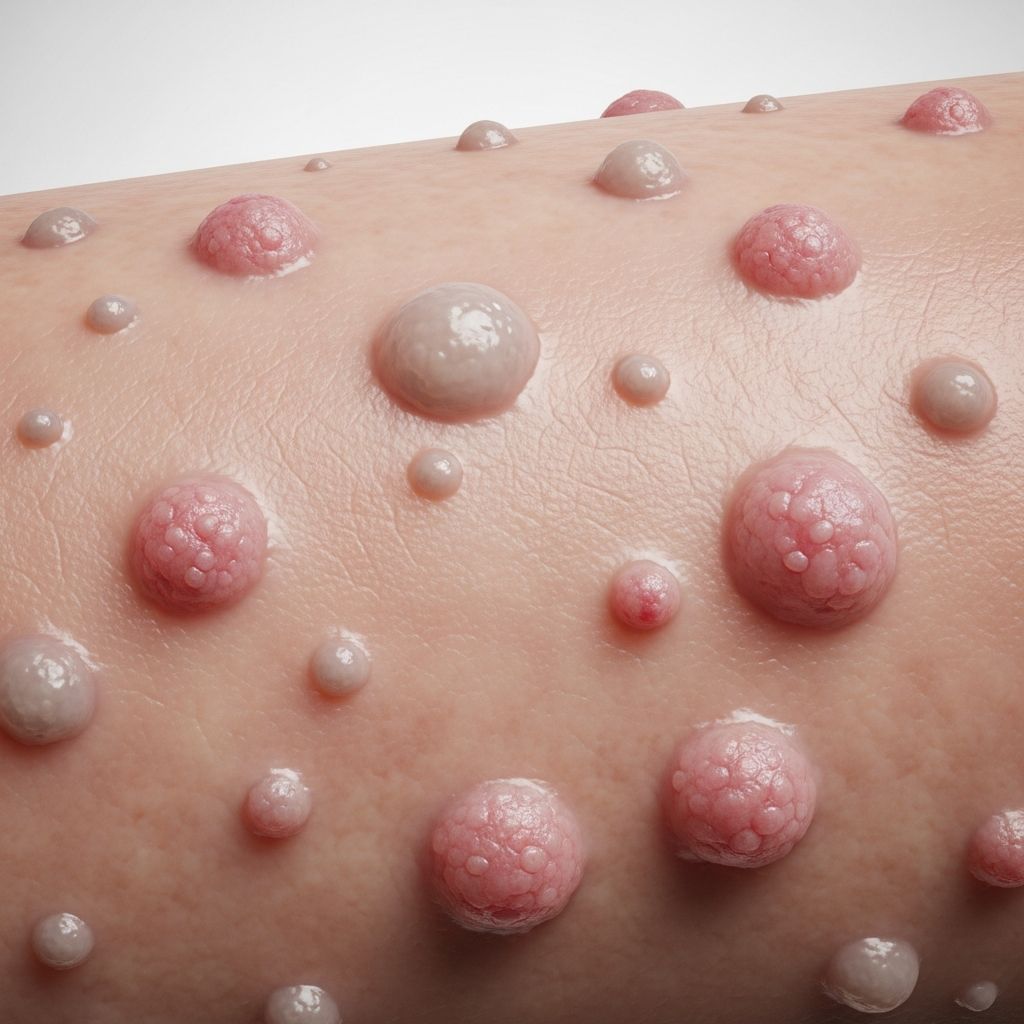
- Multiple firm, rubbery, flesh-colored papules and nodules
- Predisposition to develop 10-30 or several hundred cutaneous adnexal neoplasms over a lifetime
- Lesions typically ranging from 0.5 to 3 cm in size, though larger lesions may occasionally develop
- Primary localization to the face, scalp, and neck, with less frequent involvement of the trunk and extremities
- Progressive enlargement of lesions over time
Types of Tumors in Brooke-Spiegler Syndrome
Brooke-Spiegler syndrome results in a predisposition to three types of benign skin appendage tumors, which are defined by their histological origin and characteristics:
Spiradenomas
Spiradenomas develop in sweat glands and represent one of the characteristic tumor types in Brooke-Spiegler syndrome. These benign tumors arise from eccrine sweat gland structures within the dermis.
Trichoepitheliomas
Trichoepitheliomas arise from hair follicles and are among the most common tumors seen in Brooke-Spiegler syndrome. These tumors may be localized to specific areas such as the nasolabial fold and inner aspects of the eyebrows.
Cylindromas
While previously thought to derive from sweat glands, cylindromas are now generally believed to originate from hair follicles. In some cases, scalp cylindromas may become numerous enough to eventually cover the entire scalp and result in hair loss, a presentation referred to as the “turban tumor“.
Related Phenotypic Variants
Brooke-Spiegler syndrome includes limited phenotypic variants that display more restricted patterns of tumor development:
Multiple Familial Trichoepitheliomas (MFT1)
This variant is characterized by numerous trichoepitheliomas without the presence of other adnexal tumors. Trichoepitheliomas in this form tend to be localized to the nasolabial fold and inner aspects of the eyebrows.
Familial Cylindromatosis
This variant is characterized by the predominant presence of numerous cylindromas. The scalp involvement in familial cylindromatosis can be particularly extensive, potentially causing the turban tumor appearance and associated hair loss.
Some researchers consider Brooke-Spiegler syndrome and these two related conditions to be different forms of the same disorder, referred to collectively as CYLD Cutaneous Syndrome.
Associated Systemic Manifestations
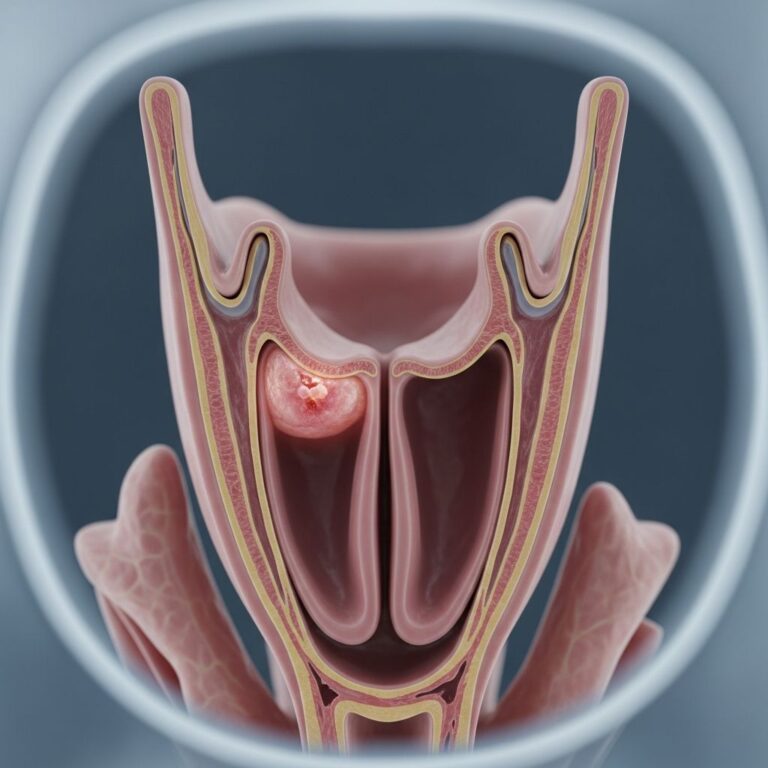
While Brooke-Spiegler syndrome primarily affects the skin, affected individuals face increased risks of tumors in tissues beyond skin appendages. Brooke-Spiegler syndrome is infrequently associated with salivary and parotid gland tumors. Specifically, patients have an increased risk of adenocarcinoma of the major and minor salivary glands, with parotid gland tumors most commonly reported.
Additional complications may arise from extensive involvement of specific anatomical areas. Extensive involvement of the eyelids can potentially lead to vision problems or blindness, while involvement of the external auditory meatus may result in hearing difficulties or deafness.
Diagnosis of Brooke-Spiegler Syndrome
Diagnosing Brooke-Spiegler syndrome requires a comprehensive clinical and histological evaluation. Brooke-Spiegler syndrome may be suspected based on a family history of multiple benign skin tumors and the characteristic clinical presentation.
A critical diagnostic challenge involves differentiating between the three types of tumors, as cylindromas, trichoepitheliomas, and spiradenomas can be difficult to distinguish clinically. Therefore, skin biopsy is required to confirm the diagnosis. Histological examination allows pathologists to identify the specific tumor types and confirm the diagnosis of Brooke-Spiegler syndrome.
Genetic testing for CYLD mutations may also be performed to confirm the genetic basis of the condition, though clinical and histological findings are typically sufficient for diagnosis.
Malignant Transformation Risk
Although the tumors in Brooke-Spiegler syndrome are usually considered benign and harmless, there is a reported potential for malignant transformation. A small percentage of cases show potential for malignant transformation, with reports indicating that malignant transformation occurs in 5% to 10% of patients with Brooke-Spiegler syndrome.
Malignant transformation is usually associated with rapid enlargement, ulceration, and bleeding. Close clinical follow-up is essential to identify these changes and initiate appropriate interventions when malignancy is suspected.
Treatment Options for Brooke-Spiegler Syndrome
Brooke-Spiegler syndrome is not curable, but various treatment options are available for managing individual tumors. Given the rarity of the condition, treatment approaches remain somewhat controversial, and no widely accepted standard of treatment has been universally established.
Because Brooke-Spiegler syndrome is characterized by diffuse involvement and numerous adnexal tumors of the head and neck, surgical excision alone is often difficult. Treatment strategies therefore include multiple modalities:
Surgical and Physical Modalities
- Surgical excision of individual lesions
- Dermabrasion for treatment of multiple superficial lesions
- Electrosurgery for destruction of tumor tissue
- Cryosurgery using freezing techniques
- Radiosurgery for precise tissue destruction
- Laser therapy, including neodymium-doped YAG, erbium:YAG, and carbon dioxide lasers
- Photodynamic therapy for light-activated tumor destruction
Medical Treatment Options
Emerging medical treatment options have shown promise in case reports and small studies:
- Sodium salicylate
- Prostaglandin A1
- A combination of aspirin and adalimumab (a TNF-alpha inhibitor)
- Topical imiquimod (an immune response modifier)
Management and Follow-Up
Effective management of Brooke-Spiegler syndrome requires a comprehensive, individualized approach. Close clinical follow-up is essential for several important reasons:
- Monitoring for signs of malignant transformation
- Identifying new lesions requiring treatment
- Assessing the need for intervention based on cosmetic concerns and functional impairment
- Evaluating treatment efficacy and patient tolerance
- Screening for systemic manifestations such as salivary gland tumors
The significant cosmetic and functional impact of Brooke-Spiegler syndrome necessitates psychological support and counseling for affected individuals, particularly in cases with extensive facial or scalp involvement.
Frequently Asked Questions
Q: Is Brooke-Spiegler syndrome inherited?
A: Yes, Brooke-Spiegler syndrome follows an autosomal dominant inheritance pattern, meaning one mutated CYLD gene copy from either parent increases the risk of developing the condition. Approximately half of an affected individual’s children will inherit the genetic susceptibility.
Q: At what age does Brooke-Spiegler syndrome typically appear?
A: Affected individuals typically present in late childhood to early adolescence, with onset often occurring in the 2nd to 3rd decades of life. However, there is significant variability in presentation between individuals and families.
Q: Can Brooke-Spiegler syndrome be cured?
A: No, Brooke-Spiegler syndrome is not curable. However, various treatment options are available for managing individual tumors, including surgical excision, laser therapy, cryosurgery, and emerging medical therapies.
Q: What is the risk of cancer in Brooke-Spiegler syndrome?
A: While most tumors are benign, malignant transformation occurs in 5% to 10% of patients with Brooke-Spiegler syndrome. Additionally, affected individuals have an increased risk of developing adenocarcinoma of the salivary glands.
Q: How is Brooke-Spiegler syndrome diagnosed?
A: Diagnosis requires skin biopsy to confirm the histological findings, as the three tumor types cannot be reliably distinguished clinically. A family history of multiple benign skin tumors and characteristic clinical presentation support the diagnosis.
References
- Understanding Brooke-Spiegler syndrome and its dermatologic manifestations: A comprehensive scoping review — Cureus Dermatology and Skin Surgery Journal. 2024. https://cdsjournal.com/index.php/cds/article/view/110
- Brooke-Spiegler Syndrome — National Library of Medicine, MedlinePlus Genetics. U.S. National Institutes of Health. https://medlineplus.gov/genetics/condition/brooke-spiegler-syndrome/
- Brooke-Spiegler Syndrome — National Center for Biotechnology Information, U.S. National Institutes of Health. 2018. https://pmc.ncbi.nlm.nih.gov/articles/PMC6062842/
- Brooke-Spiegler Syndrome — DermNet. New Zealand Dermatological Society. https://dermnetnz.org/topics/brooke-spiegler-syndrome
Similar Articles








Read full bio of Sneha Tete