Bruised Toenail: Causes, Symptoms, Treatment & Prevention Guide
Causes, symptoms, home care, treatments, and when to seek podiatrist help for bruised toenails.
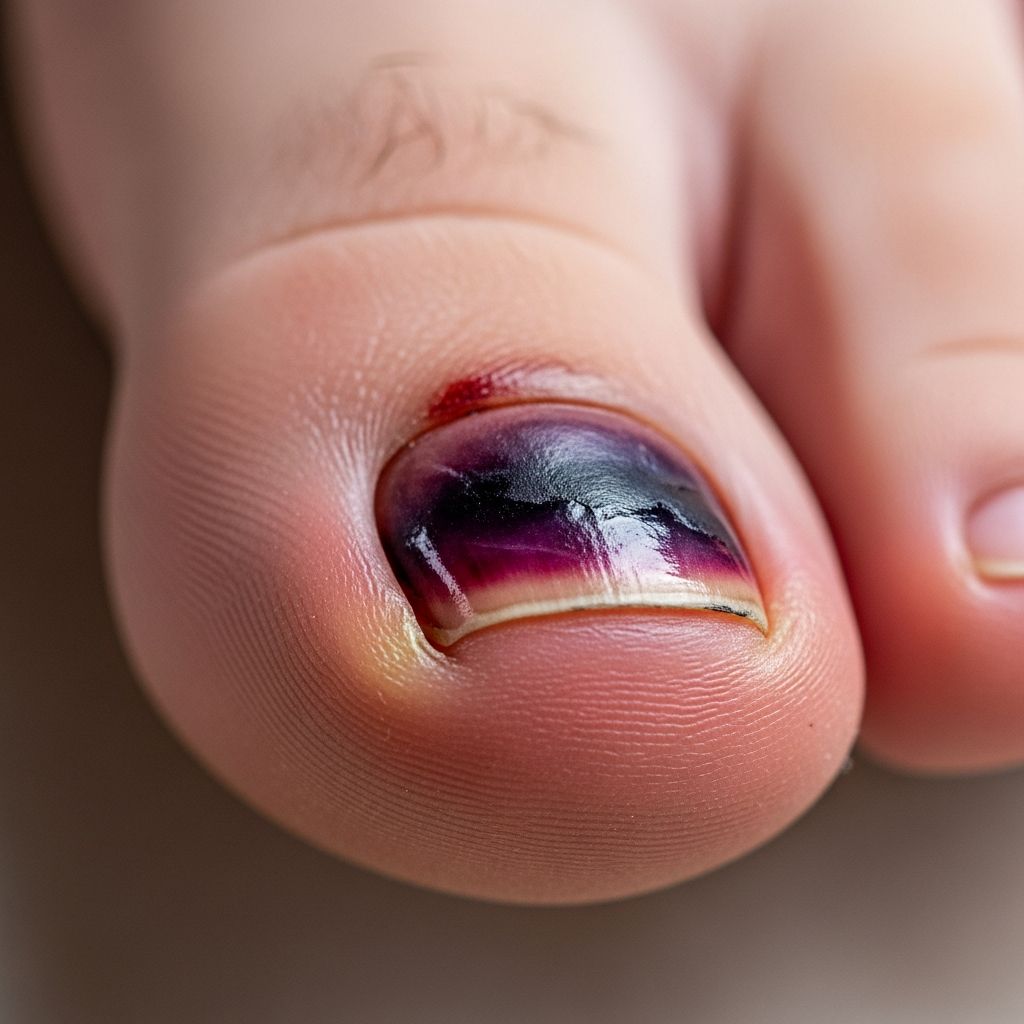
A
bruised toenail
, medically known as a subungual hematoma, occurs when blood pools under the nail due to trauma, causing discoloration and potential pain. This common injury affects runners, athletes, and anyone with foot trauma, typically resolving with home care but requiring professional attention in severe cases.What Is a Bruised Toenail?
A bruised toenail happens when injury damages small blood vessels under the nail plate, leading to blood leakage and trapping beneath the nail. Unlike skin bruises, this creates a dark spot or full discoloration because blood has no escape route under the hard nail surface. The condition is formally called a subungual hematoma, where ‘subungual’ means ‘under the nail’ and ‘hematoma’ refers to collected blood.
The nail bed, the sensitive skin beneath, experiences pressure from the pooled blood, which can cause throbbing pain. Severity varies: minor cases show small dark spots without discomfort, while major trauma leads to widespread blackening, swelling, and intense pain. Over time, the nail may lift, tear partially, or fall off completely as new nail grows underneath.
Symptoms of a Bruised Toenail
Symptoms depend on injury extent but commonly include:
- Discoloration: Red, purple, brown, or black spots or full nail darkening
- Throbbing pain: Pressure buildup causes pulsing discomfort, worse with activity
- Bleeding under the nail: Visible blood pooling, creating a blister-like feel
- Nail changes: Loose, raised, torn, or partially detached nail from the bed
- Swelling and tenderness: Around the toe, with painful pressure on the nail bed
In mild cases, only a small painless spot appears; severe ones mimic a fracture with inability to bear weight.
Causes of Bruised Toenails
Trauma is the primary trigger, divided into acute and repetitive types.
Acute Trauma
Sudden impacts like stubbing a toe, dropping heavy objects (e.g., dumbbells), or kicking something hard burst vessels under the nail. Sports like soccer or football exacerbate this during aggressive play.
Repetitive Stress (Chronic Trauma)
Common in runners, hikers, dancers, and football players, toes repeatedly jam against shoe fronts during downhill runs or sprints. Ill-fitting shoes with narrow toes or inadequate length worsen this ‘black toenail syndrome.’
Risk Factors
Increase susceptibility include:
- Activities: Long-distance running, soccer, dancing
- Footwear: Tight, short, or open shoes like sandals/thongs
- Long/untrimmed nails: Hit shoe ends causing micro-trauma
- Medical: Bleeding disorders, diabetic neuropathy (reduced pain sensation), poor circulation
Runners often see it as a ‘badge of honor,’ but repeated episodes signal shoe or form issues.
When to Worry About a Bruised Toenail
Most resolve without issue if under half the nail is affected and pain-free. Healing takes 7-10 days for the nail bed, with full regrowth up to 12 months if the nail falls off.
Seek podiatrist care if:
- Large bruise covering over half the nail
- Severe or worsening pain
- Nail torn, cut, loose, or separating
- Discharge, pus, redness, warmth (infection signs)
- Suspected fracture, deep cut needing stitches
- Discoloration without trauma (could be fungus, melanoma)
- Diabetes, neuropathy, poor circulation delaying healing
Related Stories



Untreated severe cases risk permanent nail deformity, infection, or missing serious issues like subungual melanoma (rare but critical).
Home Treatment for Bruised Toenails
For mild cases, follow the
RICE protocol
:- Rest: Avoid pressure on the toe
- Ice: 15-20 minutes every few hours to reduce swelling/pain
- Compression: Buddy tape or light bandage (avoid tight wraps)
- Elevation: Keep foot above heart level
Use OTC pain relievers like ibuprofen. Protect with bandage and antibiotic ointment if nail loosens. Never pull off a loose nail; let it shed naturally.
If nail falls off: Clean wound, apply antibiotic (e.g., Neosporin), bandage daily until healed (1-2 weeks). New nail grows from base over months.
Professional Treatment Options
Podiatrists assess via exam; may use X-ray for fractures. Treatments include:
| Condition | Treatment |
|---|---|
| Painful pressure buildup | Nail trephination: Sterile drilling/small hole to drain blood, relieving pain instantly |
| Severe damage/loose nail | Partial/full nail removal under local anesthesia |
| Infection risk | Antibiotics, wound care |
| Fungus/melanoma suspicion | Tests, antifungals, biopsy/referral |
Trephination must occur within days of injury for best results.
How Long Does a Bruised Toenail Take to Heal?
Nail bed heals in 7-10 days; discoloration fades as nail grows out (toenails grow ~1mm/month). Full regrowth: 6-12 months for big toe, faster for others. Factors like age, health delay this.
Monitor for complications; new nail may grow ridged if bed scarred.
Prevention Tips for Bruised Toenails
Avoid recurrence with:
- Proper shoes: 1/2 inch toe room, wide fit, running shoes for sports
- Trim nails: Straight across, short enough to avoid shoe ends
- Socks: Moisture-wicking, double-layer for friction
- Technique: Shorter strides, forefoot/midfoot strike in running
- Footwear check: Replace worn shoes; avoid sandals in high-impact activities
Athletes: Gradually increase mileage; use downhill running drills.
Frequently Asked Questions (FAQs)
Is a bruised toenail the same as a black toenail?
Yes, both terms describe subungual hematoma from trauma causing dark discoloration under the nail.
Will my toenail fall off from bruising?
It may if pressure lifts it; protect until it sheds naturally. Regrowth takes 6-12 months.
Can I run with a bruised toenail?
Avoid until pain-free; use proper shoes to prevent worsening.
Does a bruised toenail mean I have a fungal infection?
Not usually—trauma is common cause. See a doctor if no injury history or other symptoms.
How do I drain blood under my toenail at home?
Do not; seek professional trephination to avoid infection.
Can bruised toenails lead to cancer?
Rarely, but unexplained black spots need checking for melanoma.
References
- Should I worry about a bruised toenail? — The Foot Hub. Accessed 2026. https://thefoothub.com.au/should-i-worry-about-a-bruised-toenail/
- Black Toenails: Causes, Prevention Tips, and How to Treat — Runner’s World. Accessed 2026. https://www.runnersworld.com/health-injuries/a20849167/black-toenails-causes-prevention-treatment/
- Black Toenail: Common Causes and When You Should Be Concerned — University Foot and Ankle Institute. Accessed 2026. https://balancehealth.com/resources/black-toenail-common-causes-and-when-you-should-be-concerned/university-foot-and-ankle-institute/
- Why do my toenails go black and fall off after I’ve played football? — Men’s Health UK. Accessed 2026. https://www.menshealth.com/uk/health/a744221/why-do-my-toenails-go-black-fall-off-after-ive-played-football-9798/
- How to Drain Blood From Under a Nail — NewYork-Presbyterian. Accessed 2026. https://www.nyp.org/healthlibrary/multimedia/how-to-drain-blood-from-under-a-nail
Similar Articles








Read full bio of medha deb