Bruises: Causes, Symptoms, Treatment & When to See a Doctor
Complete guide to understanding bruises, their causes, healing timeline, and when medical care is needed.
What Are Bruises?
A bruise, medically known as a contusion, is a common injury that occurs when small blood vessels beneath your skin break due to blunt force trauma. When these blood vessels rupture, blood leaks into the surrounding soft tissue, creating the characteristic discoloration we see on the skin’s surface. Unlike cuts or abrasions, bruises don’t break the skin’s outer layer, so there’s no external bleeding. However, the internal bleeding and pooling of blood creates the visible marks and discomfort associated with bruising.
Bruises are a normal part of life and typically result from minor accidents or injuries. The severity and appearance of a bruise depend on several factors, including the force of the impact, the location of the injury, and your individual healing capacity. Understanding how bruises form and heal can help you determine whether home treatment is sufficient or if medical attention is necessary.
What Causes Bruises?
Bruises develop when trauma damages blood vessels beneath the skin. The most common causes include:
- Minor accidents such as running into furniture
- Falls from a height or on the same level
- Dropping heavy objects on your leg, hand, or foot
- Direct blows to the body during sports or physical activities
- Accidental bumps or collisions
- Motor vehicle accidents or severe trauma
- Surgical procedures or medical injections
In most cases, bruises result from simple everyday accidents that are easily explained. However, if you notice bruising without a clear cause, or if you develop bruises frequently, this may indicate an underlying health condition that requires medical evaluation.
Types of Bruises
Healthcare providers classify bruises based on their depth and location within your body. Understanding these classifications helps determine the appropriate treatment approach:
Subcutaneous Bruises
These bruises occur just beneath the skin’s surface and are the most common type. They’re typically visible as colored marks on the skin and usually heal within one to two weeks with minimal intervention.
Intramuscular Bruises
These bruises extend into the underlying muscle tissue and may cause more significant swelling and tenderness. They often result from direct blows during sports injuries or accidents and may take longer to heal than subcutaneous bruises.
Periosteal Bruises
Also known as bone bruises or bone contusions, these bruises occur in the bone itself. They’re more serious than skin-level bruises and can take longer to heal. Bone bruises often result from significant trauma and may lead to complications if not properly managed.
Bruise Symptoms and Appearance
Bruises present with several characteristic symptoms that evolve as healing progresses. Immediately after an injury, you may experience:
- Pain and tenderness at the injury site
- Swelling around the affected area
- Initial red or purplish discoloration
- Limited range of motion in nearby joints
- Warmth in the injured area
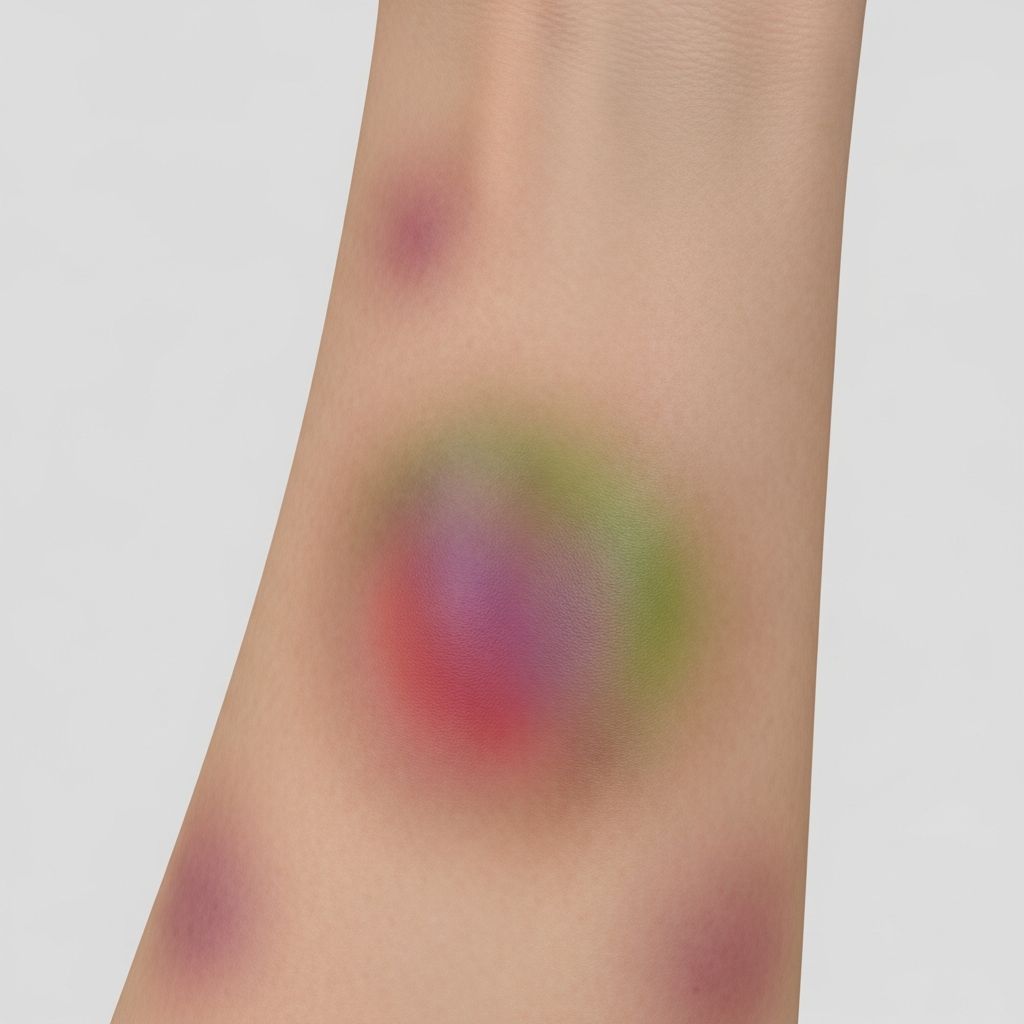
The appearance of your bruise changes dramatically during the healing process. Initially, bruises typically appear red or purplish as fresh blood pools beneath the skin. If you have darker skin tones, bruises may appear as purple, dark brown, or black marks. As your body reabsorbs the blood over several days, the bruise transitions through various colors—typically turning greenish or yellowish-brown before fading completely.
Related Stories



When to Seek Medical Attention
While most bruises are harmless and heal on their own, certain situations warrant professional medical evaluation. You should consult a healthcare provider if you experience:
- Very painful swelling in the bruised area
- Bruises that appear without a known cause
- Frequent, large, or unusually painful bruises
- Pain that persists longer than three days after a minor injury
- Bruising that seems to develop without explanation or occurs spontaneously
- A personal or family history of easy bruising or bleeding disorders
- A noticeable lump forming over the bruise, suggesting a hematoma
- Unusual bleeding from other areas, such as the nose or gums
- Bruises accompanied by headache, dizziness, or vision changes
- Reduced function or inability to use the bruised body part
Additionally, seek emergency care immediately if you’ve experienced significant trauma such as a severe fall or car accident, particularly if you feel sharp, intense pain that appears to originate from a bone.
Diagnosing Bruises
Healthcare providers typically diagnose bruises through a combination of physical examination and imaging tests. During your visit, your doctor will:
- Examine your injured area and surrounding tissue
- Ask about the circumstances of the injury
- Inquire about medications you’re taking
- Review your personal and family medical history
- Test your range of motion and pain response
- Ask about activities that worsen or improve your symptoms
Your provider may order imaging tests if they suspect a more serious underlying condition. These tests might include X-rays to check for bone fractures, MRI scans to visualize soft tissue damage, CT scans for more detailed imaging, or ultrasound to assess blood vessel integrity. While X-rays cannot directly show bone bruises, they’re useful for ruling out fractures and other bone damage.
Treatment Options for Bruises
Most bruises respond well to conservative home treatment using the RICE method, which stands for Rest, Ice, Compression, and Elevation.
The RICE Method
Rest: Avoid activities that stress the injured area. Limiting movement prevents additional trauma and allows healing to progress more quickly.
Ice: Apply ice to the bruised area for 30 to 60 minutes at a time, several times daily for the first two to three days. Always wrap ice in a towel to prevent direct contact with your skin, which can cause damage. Ice reduces bleeding beneath the skin and minimizes swelling.
Compression: Wrap the injured area with an elastic bandage to reduce swelling. Ensure the bandage is snug but not so tight that it cuts off circulation.
Elevation: Keep the bruised area elevated above heart level when possible. This helps reduce swelling by preventing fluid from pooling in the injured tissue.
Additional Treatment Measures
Beyond the RICE method, several other approaches can help manage bruise symptoms:
- Over-the-counter pain relievers such as acetaminophen or ibuprofen to manage discomfort
- Supportive devices like splints, braces, or casts for more serious bruises or injuries to joints and bones
- Topical creams or ointments designed to reduce bruising and promote healing
- Heat therapy after the initial swelling subsides to improve circulation and healing
For more severe bruises or those accompanied by significant swelling, your healthcare provider may recommend additional interventions based on the specific circumstances of your injury.
Medications That Increase Bruising Risk
Certain medications can increase your tendency to bruise more easily by affecting blood clotting or blood vessel integrity. These include:
- Over-the-counter pain relievers like aspirin and ibuprofen
- Prescription blood thinners such as Coumadin (warfarin) and Plavix (clopidogrel)
- Certain antidepressants and other psychiatric medications
- Nonsteroidal anti-inflammatory drugs (NSAIDs)
If you’re taking any of these medications and notice an increase in bruising frequency or severity, discuss this with your healthcare provider. They can perform a risk-benefit analysis to determine whether continuing the medication is appropriate or if alternatives might be better suited to your needs.
Underlying Conditions Associated with Easy Bruising
Frequent, unexplained bruising may indicate an underlying health condition requiring medical attention. Possible causes include:
- Blood clotting disorders such as hemophilia or von Willebrand disease
- Platelet disorders affecting blood cell function
- Liver disease, which impacts clotting factor production
- Vitamin K deficiency affecting blood coagulation
- Autoimmune conditions like idiopathic thrombocytopenic purpura
- Certain cancers that affect bone marrow function
- Scurvy, resulting from severe vitamin C deficiency
If you develop frequent bruising without clear causes, your healthcare provider will likely order blood work to check for platelet problems, clotting abnormalities, or other blood disorders.
Bruise Healing Timeline
Understanding the typical progression of bruise healing can help you know what to expect. Most bruises follow a predictable healing timeline:
- Days 1-3: Bruise appears red or purplish, with maximum swelling
- Days 4-7: Color changes to blue or dark purple
- Days 8-10: Bruise turns greenish or yellowish as reabsorption begins
- Days 11-14: Color becomes light brown or tan as healing progresses
- After 2 weeks: Most bruises fade completely, though some may take up to three weeks
Individual healing times vary based on factors including the bruise’s severity, your age, overall health status, and circulation quality. Darker skin tones may show different color progression patterns but follow the same general healing timeline.
Prevention Tips
While not all bruises are preventable, taking certain precautions can reduce your injury risk:
- Wear protective equipment during sports and physical activities
- Ensure adequate lighting in your living spaces to prevent falls
- Remove tripping hazards from walkways and stairs
- Wear appropriate footwear with good traction
- Practice fall prevention strategies, especially if you’re older or have balance issues
- Use handrails and grab bars in bathrooms and on stairs
- Stay physically active to maintain strength and balance
When to Seek Emergency Care
Certain situations require immediate emergency medical attention. Visit the emergency room if you:
- Experience severe trauma such as a fall from height or car accident
- Feel sharp, intense bone pain
- Develop bruising accompanied by severe swelling that limits function
- Notice signs of internal bleeding, including abdominal pain or chest pain
- Have fever (101°F or higher) with no clear cause
- Experience dizziness, confusion, or loss of consciousness
- Notice significant vision changes
- Have bruises that rapidly worsen or spread
Frequently Asked Questions
Q: How long do bruises typically take to heal?
A: Most bruises heal within one to three weeks. The exact timeline depends on the bruise’s severity, location, your age, and overall health. Deeper bruises in muscles or bones may take longer than surface bruises.
Q: Is it safe to use heat on a bruise?
A: Apply ice for the first 2-3 days to reduce swelling and bleeding. After this initial period, heat can improve circulation and promote healing. Avoid heat immediately after injury.
Q: Can bruises indicate a serious condition?
A: While most bruises are harmless, frequent or unexplained bruising may indicate blood clotting disorders, liver disease, or other health conditions requiring medical evaluation.
Q: What’s the difference between a bruise and a hematoma?
A: A bruise is visible discoloration from blood pooling beneath the skin. A hematoma is a larger collection of pooled blood that may form a noticeable lump and often indicates a more serious injury.
Q: Should I apply compression to a bruise?
A: Yes, gentle compression with an elastic bandage helps reduce swelling. Ensure the bandage isn’t too tight, as this can impair circulation.
Q: Can aspirin or ibuprofen worsen bruising?
A: These medications can increase bruising tendency by affecting blood clotting. Discuss pain management options with your healthcare provider if you notice increased bruising.
References
- Bone Bruise (Bone Contusion): What It Is & Recovery Time — Cleveland Clinic. 2024. https://my.clevelandclinic.org/health/diseases/bone-bruise-bone-contusion
- Bruise: First Aid — Mayo Clinic. 2024. https://www.mayoclinic.org/first-aid/first-aid-bruise/basics/art-20056663
- Do You Bruise Easily? When to Get It Checked Out — Cleveland Clinic. 2024. https://health.clevelandclinic.org/do-you-bruise-easily-when-to-get-it-checked
- Bleeding Into the Skin: Symptoms, Causes & Treatment — Cleveland Clinic. 2024. https://my.clevelandclinic.org/health/diseases/22820-bleeding-into-the-skin
- Bruises — EBSCO Health. 2024. https://www.ebsco.com/research-starters/health-and-medicine/bruises
Similar Articles








Read full bio of Sneha Tete