Brunsting-Perry Cicatricial Pemphigoid: Diagnosis & Care
Rare autoimmune blistering disorder causing scarring blisters on head and neck with effective treatments available.
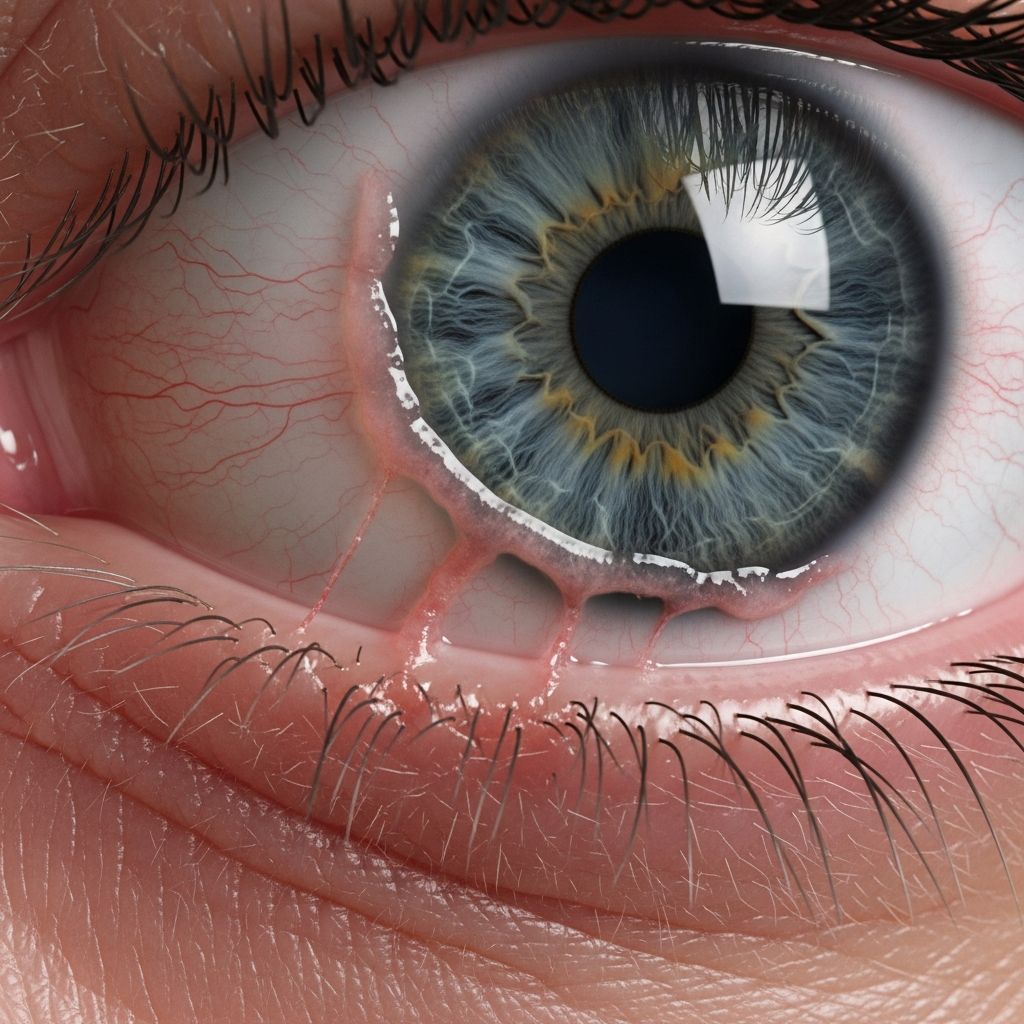
Brunsting-Perry cicatricial pemphigoid is a rare autoimmune blistering skin disorder primarily affecting the head and neck region, characterized by tense blisters that heal with significant scarring. Unlike classic mucous membrane pemphigoid, which often involves mucous membranes with scarring, this variant shows limited mucosal involvement and focuses on cutaneous lesions. First described in 1957 by Brunsting and Perry, it represents a distinctive subtype within the pemphigoid spectrum, overlapping features with bullous pemphigoid, cicatricial pemphigoid, and epidermolysis bullosa acquisita.
What is Brunsting-Perry Cicatricial Pemphigoid?
Brunsting-Perry cicatricial pemphigoid (BPP) manifests as recurrent vesicles, bullae, erosions, and crusts predominantly on the scalp, face, and neck, evolving into atrophic scars and milia. The condition arises from an autoimmune attack on components of the dermal-epidermal junction, leading to subepidermal blister formation and subsequent fibrosis. It typically affects older adults, with a predilection for males over 60 years, though cases in females and younger patients occur. Lesions are often pruritic or tender, and sun exposure or trauma may trigger flares. With fewer than 100 cases reported worldwide, BPP remains a diagnostic challenge, frequently misdiagnosed as nonmelanoma skin cancer.
Who Gets Brunsting-Perry Cicatricial Pemphigoid?
BPP predominantly impacts individuals over 60 years, with a male-to-female ratio skewed toward males, though female cases are documented, particularly emphasizing its consideration in women with scalp cicatricial lesions. Risk factors include photodamaged skin, as lesions favor sun-exposed areas like the scalp vertex. Associations with internal malignancies, medications, or mechanical trauma have been proposed but not firmly established. Genetic predispositions are unclear, but the autoimmune nature suggests interplay of environmental triggers and immune dysregulation.
- Age: Primarily >60 years
- Gender: More common in males, but females affected
- Predisposing factors: Sun exposure, trauma
Clinical Features
The hallmark of BPP is the development of tense, pruritic bullae on the head and neck that rupture to form erosions, crusts, and heal with scarring, often leading to cicatricial alopecia on the scalp. Lesions may appear as solitary plaques or multiple, with erythematous bases, central erosion, peripheral atrophy, hypopigmentation, and prominent vasculature. Mucosal involvement is rare and non-scarring, distinguishing it from classic cicatricial pemphigoid. Progression can mimic squamous cell carcinoma, prompting unnecessary excisions.
Symptoms
- Tense blisters filled with clear fluid
- Itching or tenderness
- Weeping or crusted erosions
- Milia formation within scars
- Cicatricial alopecia
Complications
Scarring leads to permanent hair loss and cosmetic disfigurement, impacting psychosocial health. Secondary bacterial infections from erosions occur infrequently. Unlike mucous membrane pemphigoid, ocular or severe oral scarring is absent.
Diagnosis
Diagnosis relies on clinical presentation, histopathology, and immunofluorescence. Biopsy reveals subepidermal blisters with eosinophilic infiltrate, resembling bullous pemphigoid but with scarring absent in early lesions. Direct immunofluorescence (DIF) shows linear IgG and C3 along the basement membrane zone (BMZ), epidermal side on salt-split skin. Indirect immunofluorescence detects circulating antibodies in 20-30% of cases, targeting BP180, BP230, laminin 332, or collagen VII. Negative DIF does not exclude BPP.
| Diagnostic Feature | Findings |
|---|---|
| Clinical | Head/neck blisters with scarring |
| Histology | Subepidermal bulla, mixed infiltrate |
| DIF | Linear IgG/C3 at BMZ |
| Serology | Anti-BP180/230 in 20-30% |
Related Stories



Differential Diagnosis
- Bullous pemphigoid: Generalized blisters, less scarring, elderly
- Cicatricial pemphigoid: Mucosal scarring predominant
- Epidermolysis bullosa acquisita: Trauma-induced, collagen VII antibodies
- Nonmelanoma skin cancer: Scaly plaques mimicking SCC
- Discoid lupus erythematosus: Scarring alopecia without blisters
Treatment
Treatment aims to suppress autoimmunity, promote healing, and prevent scarring, mirroring cicatricial pemphigoid protocols. Mild cases respond to ultra-potent topical steroids like clobetasol propionate 0.05% ointment. Systemic corticosteroids (prednisone 0.5-1 mg/kg/day) are used for moderate disease, tapered with steroid-sparing agents.
- First-line: Clobetasol propionate topical
- Systemic: Prednisone, dapsone
- Immunosuppressants: Azathioprine, mycophenolate mofetil, methotrexate, cyclophosphamide
- Biologics: Rituximab (intralesional or IV), dupilumab
- Other: Intralesional steroids, antihistamines
Combination therapy yields 31% complete remission; topical monotherapy suffices for mild forms. Rituximab shows promise in refractory cases.
Prognosis and Prevention
BPP has a better prognosis than classic cicatricial pemphigoid or EBA, with many achieving remission, though scarring persists. Relapses occur upon tapering therapy. Sun protection prevents flares. Regular monitoring for new lesions is advised.
Frequently Asked Questions (FAQs)
What causes Brunsting-Perry cicatricial pemphigoid?
Autoantibodies target BMZ proteins like laminin 332, BP180/230.
Is Brunsting-Perry pemphigoid curable?
Not curative, but manageable with remission in many cases.
Can it affect mucous membranes?
Rarely, and without scarring, unlike classic forms.
How is it diagnosed?
By biopsy, DIF showing linear IgG/C3 at BMZ.
What is the best treatment?
Topical steroids for mild; systemic for severe.
References
- Brunsting-Perry cicatricial pemphigoid — DermNet NZ. 2023. https://dermnetnz.org/topics/brunsting-perry-cicatricial-pemphigoid
- Brunsting-Perry Pemphigoid as Differential Diagnosis of Nonmelanoma Skin Cancer — NIH PMC. 2019-10-01. https://pmc.ncbi.nlm.nih.gov/articles/PMC6793596/
- Brunsting–Perry pemphigoid: case report and review — NIH PMC. 2024. https://pmc.ncbi.nlm.nih.gov/articles/PMC11732643/
- A Case of Sloughing Brunsting-Perry Cicatricial Pemphigoid — University of Nebraska Medical Center. 2024. https://digitalcommons.unmc.edu/cgi/viewcontent.cgi?article=1281&context=gmerj
- A rare case of cicatricial pemphigoid confined to the scalp — Wiley Online Library. 2021. https://onlinelibrary.wiley.com/doi/full/10.1002/ccr3.9281
- Brunsting-Perry Pemphigoid Successfully Treated with Intralesional Rituximab — Authorea. 2023. https://www.authorea.com/users/442069/articles/661641-brunsting-perry-pemphigoid-successfully-treated-with-intralesional-rituximab
Similar Articles








Read full bio of Sneha Tete