Buccal Midazolam for Seizures in Children (Buccolam)
Learn about Buccolam, the effective buccal midazolam treatment for stopping prolonged seizures in children safely at home or in community settings.
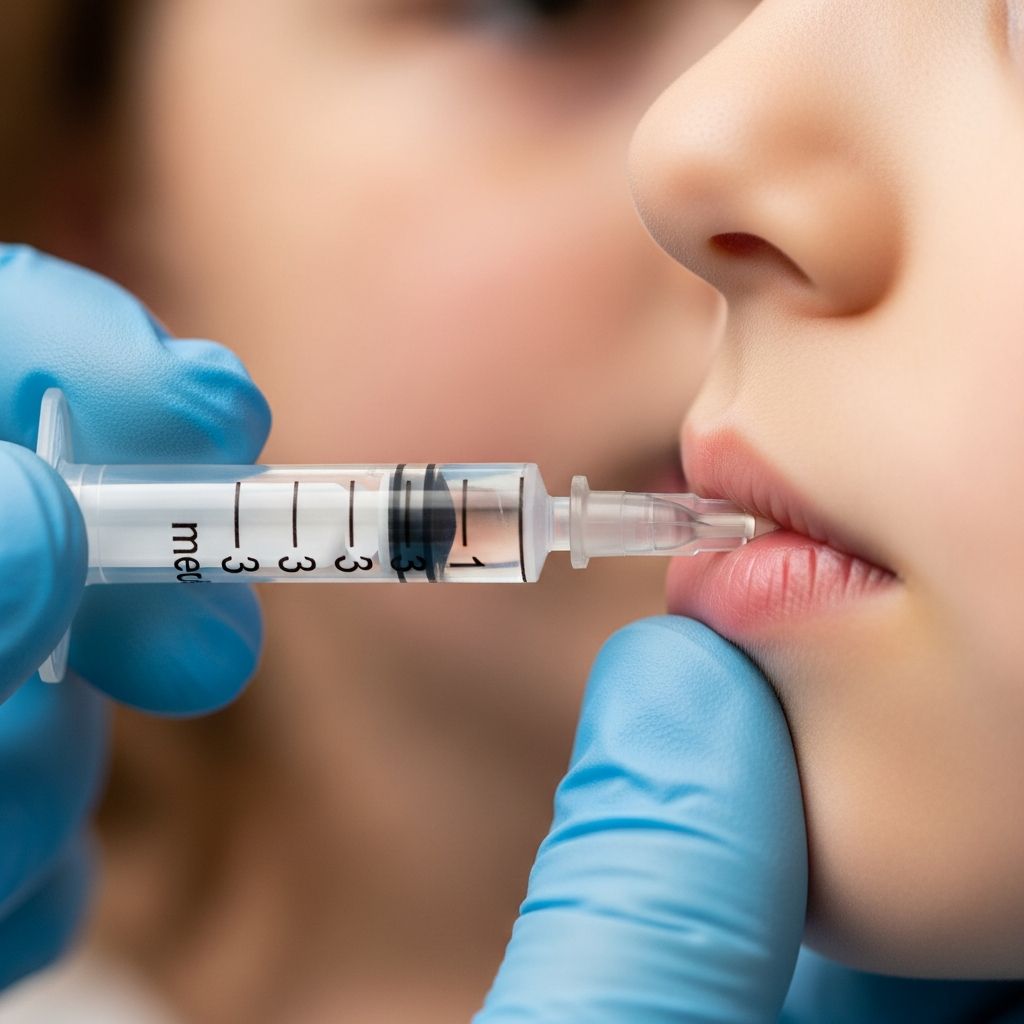
Buccal midazolam, available as Buccolam, is a pre-filled syringe medication designed to rapidly stop prolonged seizures in children. Administered between the cheek and gum, it offers a non-invasive alternative to rectal diazepam, making it suitable for home or community use by trained caregivers.
About Buccal Midazolam
Buccal midazolam belongs to the benzodiazepine class of medicines, which calm the brain and nerves to halt ongoing seizures. It is specifically licensed for children aged 6 months to less than 18 years experiencing prolonged or repeated seizures not responding to standard treatments. Unlike intravenous options, buccal administration allows quick delivery without needles, ideal for emergencies outside hospitals.
The medication works by enhancing the effect of the neurotransmitter GABA, rapidly suppressing seizure activity. Clinical studies show it achieves therapeutic plasma levels faster via the buccal route compared to some alternatives, with onset typically within minutes.
Buccolam is supplied in age-appropriate pre-filled syringes (2.5mg, 5mg, 7.5mg, or 10mg), ensuring accurate dosing. It has been granted Paediatric Use Marketing Authorisation by the European Medicines Agency, highlighting its safety and efficacy profile for pediatric use.
When to Use It
Use buccal midazolam for seizures lasting longer than 5 minutes or clusters of seizures where the child does not fully recover between episodes. It is recommended in epilepsy care plans for children with a history of prolonged seizures. Always follow your doctor’s prescribed protocol.
- Prolonged convulsive seizures: Tonic-clonic or other types exceeding 5 minutes.
- Status epilepticus: Continuous seizures without recovery.
- Repeated seizures: Three or more in an hour with incomplete recovery.
Do not use for seizures under 5 minutes, absence seizures, or myoclonic jerks, as these often self-resolve. If the seizure stops before administration, discard the syringe.
Dosage
Dosage is weight-based and provided in pre-filled syringes matched to the child’s age and weight ranges:
| Age Group | Weight Range | Dose (Buccolam Syringe) |
|---|---|---|
| 6 months to 1 year | 6-10 kg | 2.5 mg |
| 1 to 5 years | 10-25 kg | 5 mg |
| 5 to 10 years | 25-50 kg | 7.5 mg |
| 10 to 18 years | 50 kg and over | 10 mg |
These doses approximate 0.3 mg/kg, shown effective in studies terminating 75-84% of seizures within 10 minutes. Check the syringe label against your child’s prescribed dose and expiry date before use.
How to Use Buccolam
Your healthcare team will provide hands-on training. Key steps include:
- Prepare: Confirm dose and expiry. Remove syringe from packaging.
- Position child: Place in recovery position (on side) to protect airway. Gently open mouth if clenched.
- Administer: Insert syringe nozzle between cheek and lower gum. Slowly push plunger to deliver half dose in one side, then the other. Give over 10-20 seconds to avoid swallowing.
- Monitor: Time the administration. Observe for seizure cessation (usually within 5 minutes).
- Aftercare: Keep in recovery position. Call 999 if first use, no response in 5 minutes, breathing issues, or seizure recurs.
If jaws are clenched, do not force; use first aid and call emergency services. Record details: time, dose, seizure observations.
Cautions
- Do not repeat dose within 24 hours without medical advice.
- Avoid if child has severe breathing problems, sleep apnea, or known allergy to midazolam.
- If swallowed, it may delay effect but causes no harm.
- Store at room temperature, away from light and children.
- Inform school/nursery; provide spare syringe if needed.
Side Effects
Common effects are mild and short-lived due to rapid metabolism:
- Drowsiness/sedation: Child may sleep for 1-2 hours post-seizure.
- Disorientation/agitation: Temporary confusion or restlessness.
- Amnesia: Forgets the event.
- Rare serious: Breathing depression (monitor closely; seek help if occurs).
Related Stories



Studies report no significant differences in oxygen saturation or blood pressure vs. alternatives.
Comparison with Rectal Diazepam
| Aspect | Buccal Midazolam | Rectal Diazepam |
|---|---|---|
| Efficacy | 75% termination (6 min median) | 59% (8 min median) |
| Administration | Easy, discreet (mouth) | Invasive, stigmatizing (rectal) |
| Acceptability | High for caregivers/children | Often unacceptable, esp. older kids |
| Onset | Rapid absorption | Slower, variable |
Buccal route preferred in community settings; avoids abuse allegations and social embarrassment.
Training and Rescue Medication Plans
Training is mandatory: covers recognition of prolonged seizures, administration technique, recovery position, and when to call ambulance. Epilepsy care plans detail triggers, doses, and contacts. Schools must have protocols; parents supply medication.
Buccal midazolam improves quality of life by empowering families.
Evidence and Effectiveness
Trials confirm 84% success in seizures <30 min (median 3 min cessation); 50% in status epilepticus. Superior plasma levels vs. buccal lorazepam. Included in UK guidelines.
Frequently Asked Questions (FAQs)
What if the seizure doesn’t stop after 5 minutes?
Call 999 immediately. Do not give second dose without advice.
Can I give Buccolam if my child is unconscious?
Yes, position safely and administer as trained. Monitor breathing.
How quickly does it work?
Usually within 5 minutes; up to 10 minutes in studies.
Is training required?
Yes, provided by medical team. Practice on models.
What if some medicine is swallowed?
It may take longer but is safe.
References
- Use of Buccal Midazolam in Childhood Seizures — American Academy of Family Physicians. 1999-05-01. https://www.aafp.org/pubs/afp/issues/1999/0501/p2623.html
- Buccal midazolam for pediatric convulsive seizures — PubMed Central (PMC). 2013. https://pmc.ncbi.nlm.nih.gov/articles/PMC3546805/
- Buccal midazolam for treatment of prolonged seizures in children — PubMed. 2003. https://pubmed.ncbi.nlm.nih.gov/12767460/
- Administration of Buccal Midazolam to Children — East Sussex Healthcare NHS Trust. 2018-02. https://www.esht.nhs.uk/wp-content/uploads/2018/02/0683.pdf
- Buccal (oromucosal) midazolam — Great Ormond Street Hospital. Accessed 2026. https://www.gosh.nhs.uk/conditions-and-treatments/medicines-information/medicines-directory/buccal-oromucosal-midazolam/
Similar Articles








Read full bio of Sneha Tete