Budesonide Oral Therapy: 5 Key Dosage Recommendations
Comprehensive insights into oral budesonide for managing inflammatory gut conditions and its safe usage protocols.
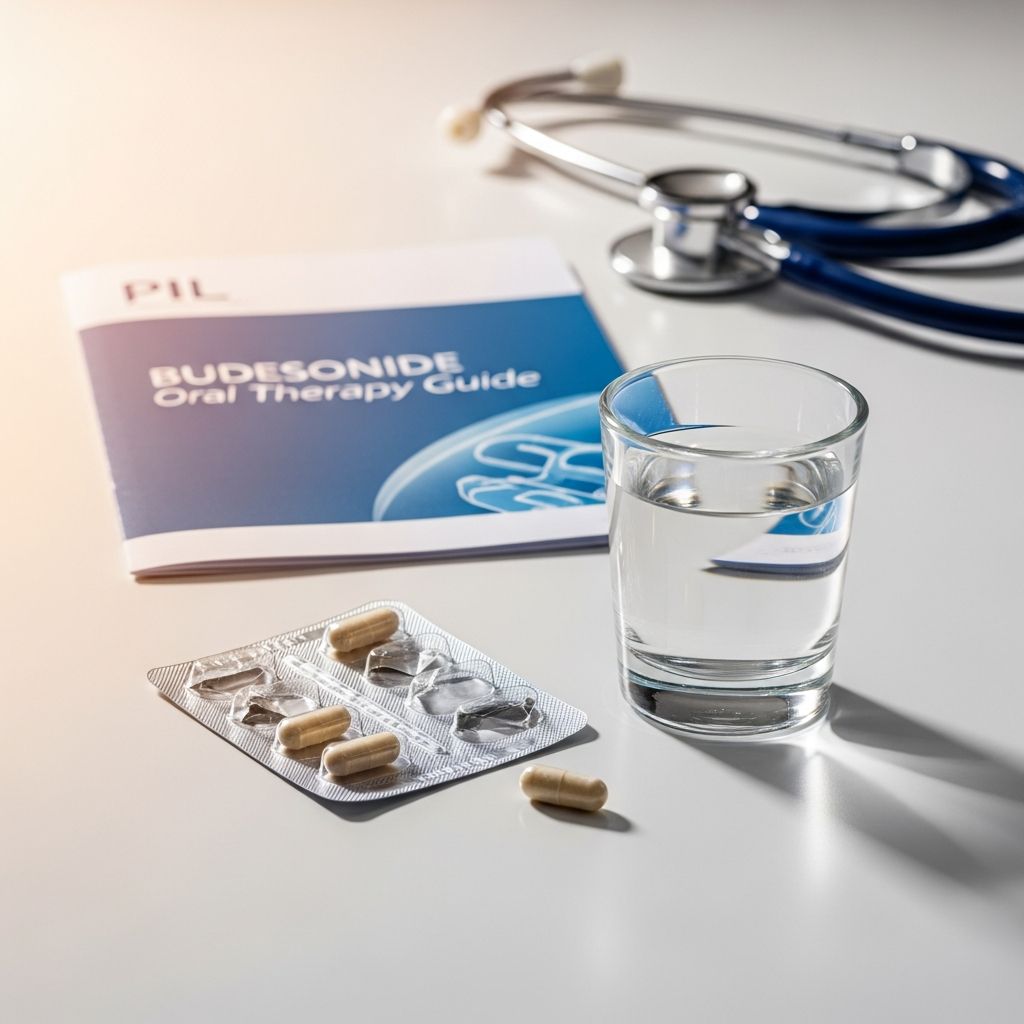
Oral budesonide serves as a potent corticosteroid designed to combat inflammation primarily in the gastrointestinal tract, offering relief for conditions such as Crohn’s disease and ulcerative colitis through its localized action and reduced systemic exposure.
Understanding Budesonide’s Role in Treatment
Budesonide belongs to the corticosteroid class, renowned for its glucocorticoid properties that mitigate inflammatory responses. Unlike traditional steroids, its formulation allows for high topical potency at inflammation sites while minimizing absorption into the bloodstream, which lowers the risk of widespread side effects. This makes it particularly suitable for managing chronic inflammatory conditions affecting the digestive system.
In clinical practice, oral budesonide targets the ileum and ascending colon in Crohn’s patients, promoting remission and mucosal repair. For ulcerative colitis, extended-release versions help induce and sustain symptom relief in mild to moderate cases. Its mechanism involves binding to glucocorticoid receptors, altering gene expression to suppress pro-inflammatory cytokines like interleukins and TNF-alpha, while boosting anti-inflammatory mediators such as interleukin-10.
Approved Indications for Oral Administration
The primary FDA-approved uses for oral budesonide center on inflammatory bowel diseases (IBD). Extended-release capsules are indicated for inducing remission in mild to moderate active Crohn’s disease involving the ileum or ascending colon, typically administered at 9 mg daily for up to 8 weeks. Maintenance therapy may involve 6 mg daily for several months, with gradual tapering.
- Crohn’s Disease: Effective for active flares and recurrence prevention, with studies showing superior mucosal healing compared to placebo.
- Ulcerative Colitis: Extended-release tablets at 9 mg daily for induction, particularly beneficial for left-sided disease.
- Eosinophilic Esophagitis (EoE): Orodispersible tablets at 1 mg twice daily for 6-12 weeks in adults and older children, reversing histological inflammation.
Beyond these, rectal formulations like foam or enemas (2 mg daily) target distal ulcerative colitis, not extending beyond 40 cm from the anal verge, achieving remission in 4-8 weeks.
Off-Label Applications and Emerging Uses
Clinicians often employ oral budesonide off-label for various inflammatory conditions. High-volume sinonasal irrigations manage chronic rhinosinusitis without significant adrenal suppression, even over two years. For lymphocytic esophagitis, refractory celiac disease, microscopic colitis, and autoimmune hepatitis, it provides symptomatic and histological improvements.
In pediatric care, nebulized budesonide (2 mg) alleviates mild to moderate croup, reducing hospitalization rates and enhancing recovery when combined with oral dexamethasone. Its role in primary biliary cholangitis further highlights its versatility in hepatobiliary inflammation.
Dosage Recommendations Across Conditions
| Condition | Formulation | Adult Dose | Duration |
|---|---|---|---|
| Crohn’s (Induction) | Extended-release capsules | 9 mg once daily | Up to 8 weeks |
| Crohn’s (Maintenance) | Extended-release capsules | 6 mg once daily | Up to 3 months, taper |
| Ulcerative Colitis (Induction) | Extended-release tablets | 9 mg once daily | 6-8 weeks |
| EoE | Orodispersible tablets | 1 mg twice daily | 6-12 weeks |
| Distal UC (Rectal) | Foam/Enema | 2 mg daily | 4-8 weeks |
Doses should be taken before meals to optimize gut targeting. Pediatric dosing requires weight-based adjustments, and all regimens demand gradual reduction to prevent rebound inflammation.
Pharmacological Action and Systemic Impact
Budesonide’s efficacy stems from inhibiting phospholipase A2, reducing arachidonic acid derivatives, and blocking NF-kappa B transcription factors, which curbs leukocyte migration and eosinophil activation. Short-term, it decreases capillary permeability; long-term, it fosters anti-inflammatory gene expression. Its high first-pass metabolism in the liver—over 90%—results in minimal plasma levels, conferring a safer profile than systemic steroids.
Related Stories



Despite this, prolonged use can elevate sodium retention via mineralocorticoid effects at high doses, potentially affecting electrolyte balance.
Potential Adverse Effects and Monitoring
Common side effects include headache, nausea, abdominal pain, nasopharyngitis, and cough, often mild and transient. Immunosuppression heightens infection risk, including serious ones like chickenpox or measles; patients should avoid exposure and report symptoms promptly.
Serious concerns with extended use encompass adrenal suppression, osteoporosis (30-50% fracture risk in chronic users), myopathy, hypertension, hyperglycemia, glaucoma, cataracts, and psychiatric changes like mood swings or depression. Osteoporosis preferentially impacts vertebral trabecular bone, necessitating bone density scans for long-term users. Children face growth retardation risks, while older adults are prone to bone loss and confusion.
- Local GI Effects: Indigestion, bloating.
- Systemic Steroid Signs: Moon face, weight gain, bruising, hirsutism, menstrual irregularities.
- Musculoskeletal: Muscle weakness, fractures.
Regular monitoring includes blood glucose, bone health, eye exams, and infection vigilance. Taper doses slowly to avoid withdrawal symptoms like pseudotumor cerebri.
Critical Precautions and Contraindications
Avoid in active untreated infections, latent TB without prophylaxis, or hypersensitivity. Use cautiously in diabetes, hypertension, osteoporosis, or psychiatric history. Inform surgeons of use pre-procedure due to delayed healing. Pregnancy category B; breastfeeding data limited—consult providers.
Vaccinations: Live vaccines contraindicated during therapy. Drug interactions include CYP3A4 inhibitors (e.g., ketoconazole) boosting levels, requiring dose adjustments.
Patient Guidance for Optimal Outcomes
Swallow capsules whole; do not crush. Store at room temperature. Report infections, vision changes, or bone pain immediately. Lifestyle supports like calcium/vitamin D intake aid bone health. Diet modifications and smoking cessation enhance efficacy in IBD.
For missed doses, take as soon as remembered unless near next; never double. Overdose may mimic steroid excess—seek emergency care.
Frequently Asked Questions (FAQs)
What conditions does oral budesonide treat?
It primarily manages mild to moderate Crohn’s disease, ulcerative colitis, and eosinophilic esophagitis.
Are there differences between oral and inhaled budesonide?
Yes; oral targets the gut with enteric coating, while inhaled focuses on airways for asthma/COPD.
Does budesonide cause weight gain?
Less likely than other steroids due to low systemic absorption, but possible with long-term use.
Can I drink alcohol while on budesonide?
Moderation advised; excess may worsen GI irritation.
How long until budesonide works for IBD?
Symptom relief often within days, full remission in 2-4 weeks.
Special Considerations for Vulnerable Groups
Pregnant Women: Generally safe but monitor fetal growth.
Children: Growth monitoring essential; shortest effective duration.
Elderly: Heightened osteoporosis and infection risks.
Integrate with IBD maintenance therapies for sustained control.
References
- Budesonide – StatPearls – NCBI Bookshelf — UK Kalola, National Center for Biotechnology Information. 2023. https://www.ncbi.nlm.nih.gov/books/NBK563201/
- Budesonide: Uses, Interactions, Mechanism of Action — DrugBank Online. Accessed 2026. https://go.drugbank.com/drugs/DB01222
- Budesonide Tablet – Oral – My Health Alberta — Alberta Health Services. Accessed 2026. https://myhealth.alberta.ca/Health/medications/pages/conditions.aspx?Hwid=fdb2332
- Budesonide: Uses & Dosage — MIMS Indonesia. Accessed 2026. https://www.mims.com/indonesia/drug/info/budesonide?mtype=generic
- Budesonide Extended-Release Tablets: Uses & Side Effects — Cleveland Clinic. Accessed 2026. https://my.clevelandclinic.org/health/drugs/18690-budesonide-extended-release-tablets
Similar Articles








Read full bio of medha deb