Bulgarian Split Squats: Form, Benefits & Variations
Master Bulgarian split squats: Learn proper form, benefits, and variations for stronger legs and glutes.
What Is a Bulgarian Split Squat?
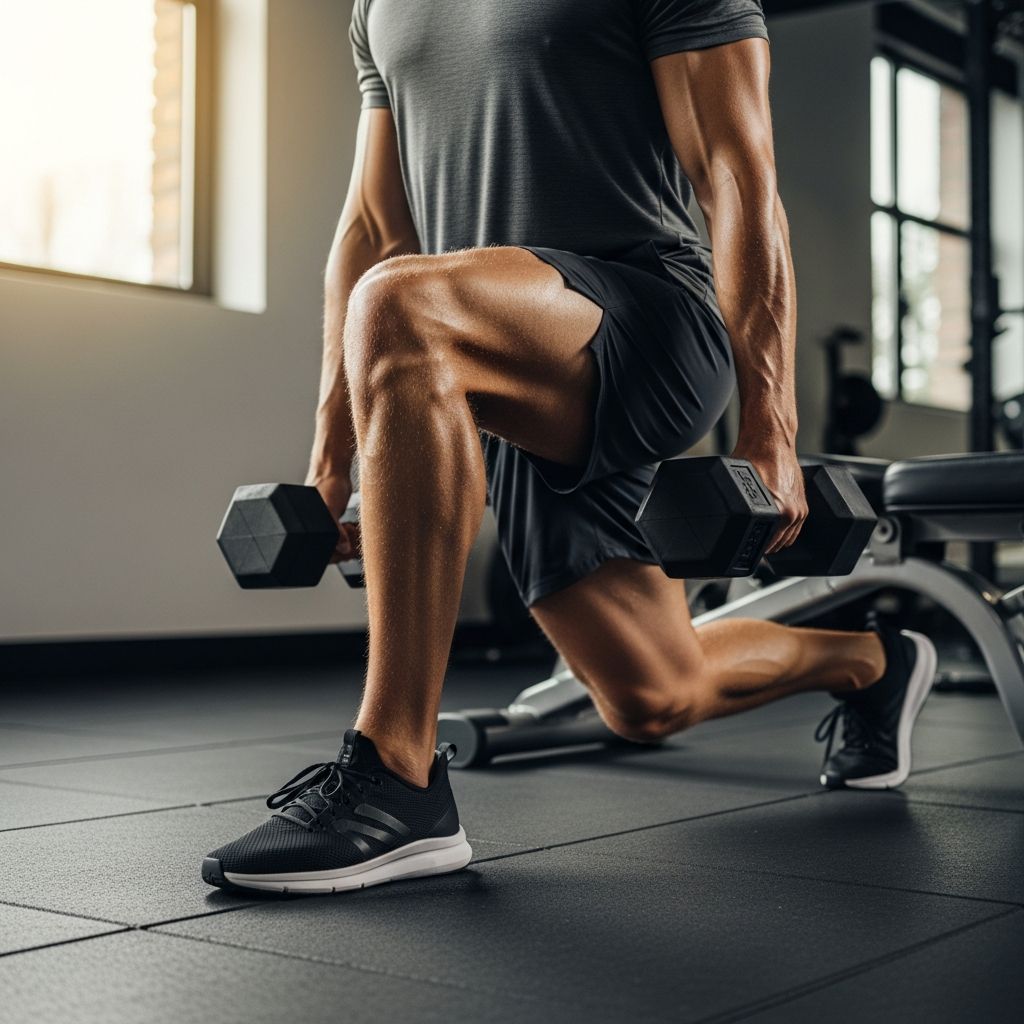
The Bulgarian split squat is a powerful unilateral leg exercise that involves placing one leg behind you on an elevated surface, such as a bench, step, or chair, while the other leg remains planted in front of you on the ground. This single-leg squat variation has become increasingly popular among fitness enthusiasts and athletes due to its remarkable ability to build strength, improve balance, and enhance overall lower body development.
Unlike traditional bilateral squats that work both legs simultaneously, the Bulgarian split squat focuses on training one side of the body at a time. This unique approach makes it an excellent choice for those looking to correct strength imbalances, rehabilitate from injuries, or simply add variety to their workout routine. The exercise was invented by Angel Spassov, former coach of the Bulgarian National Weightlifting Team, who introduced this variation in the 1980s to improve lower-body strength, muscularity, and single-leg stability. It quickly became adopted by strength and conditioning coaches across North America and has since become a staple in fitness programs worldwide.
Muscles Worked by Bulgarian Split Squats
The Bulgarian split squat is a comprehensive lower body exercise that engages multiple muscle groups simultaneously, making it an efficient choice for those seeking maximum muscle recruitment with minimal equipment.
- Quadriceps (Front of Thighs): The primary movers in this exercise, the quadriceps bear much of the load during the pressing phase of the movement.
- Glutes (Buttocks): Heavily engaged throughout the movement, the glutes are responsible for hip extension and contribute significantly to the pushing power of the exercise.
- Hamstrings (Back of Thighs): Work synergistically with the glutes to extend the hips and control the descent into the squat position.
- Core Muscles: The stabilizing muscles of the core, including the rectus abdominis, obliques, and transverse abdominis, work to maintain an upright posture and balance on one leg.
- Shin Muscles and Calves: These smaller lower leg muscles provide stability and control throughout the movement.
Research published in the International Journal of Exercise Science indicates that the Bulgarian split squat activates the lower body musculature similarly to bilateral back squats while using approximately half the load. This efficiency makes it particularly valuable for those with limited equipment or those seeking to maximize muscle activation relative to the weight used.
How to Perform a Bulgarian Split Squat: Step-by-Step Instructions
Proper form is essential for maximizing the benefits of the Bulgarian split squat while minimizing injury risk. Follow these detailed instructions to execute the movement correctly:
- Set Up Your Position: Stand facing away from a sturdy bench, step, or elevated surface that is approximately knee height. The elevated surface should be stable enough to support your body weight comfortably.
- Position Your Feet: Shift your weight to your front leg and raise your back leg, placing the top of your foot or the laces of your shoe on the elevated surface behind you. Your front foot should be positioned approximately 12 to 18 inches away from the bench, allowing adequate space for a full range of motion.
- Achieve the Proper Stance: Aim for a shoulder-width stance with a 90-degree bend in both knees and feet positioned parallel to each other. This alignment ensures balanced distribution of forces and proper muscle engagement throughout the movement.
- Maintain an Upright Torso: Keep your chest up and shoulders back throughout the entire movement. Your torso should remain relatively vertical, with only a slight forward lean from the hips if necessary for balance.
- Lower Into the Squat: Keeping your hips square and core engaged, slowly lower your body by bending your front knee. Continue descending until your front thigh is approximately parallel to the ground and your back knee nearly touches the floor.
- Press Back Up: Drive through the heel of your front foot to return to the starting position. Maintain control throughout the ascent and avoid locking out your knees at the top of the movement.
- Complete Your Reps: Perform all repetitions on one leg before switching to the other leg, ensuring balanced development on both sides of your body.
Bulgarian Split Squat vs. Traditional Split Squat: Key Differences
While similar in appearance, the Bulgarian split squat and traditional split squat have important distinctions that affect how they work your muscles and the benefits they provide.
| Feature | Bulgarian Split Squat | Traditional Split Squat |
|---|---|---|
| Back Leg Position | Elevated on a bench or step behind you | Flat on the floor behind you |
| Range of Motion | Greater depth possible due to elevation | More limited range of motion |
| Load Distribution | More emphasis on front leg (quad and glute dominant) | More balanced load distribution |
| Stability Requirements | Higher balance demand; rear foot acts as kickstand | More stable position overall |
| Strength Requirements | Allows lifting of heavier loads | May limit load capacity compared to Bulgarian version |
| Beginner-Friendly | Slightly more challenging due to balance | More accessible for beginners |
Related Stories



The elevated rear foot position in the Bulgarian split squat creates a more challenging stability demand while allowing greater depth and increased loading of the front leg. This makes it an excellent choice for athletes and experienced lifters, though it can also be modified for beginners by reducing the height of the elevated surface.
Key Benefits of the Bulgarian Split Squat
Strengthens Legs and Core
The Bulgarian split squat is an exceptional exercise for building comprehensive leg strength while simultaneously strengthening your core. By requiring you to balance on one leg, the movement engages your core muscles to maintain upright posture and stability. This dual benefit targets the same muscle groups as a traditional squat—glutes, quads, and hamstrings—while adding the additional challenge of single-leg stabilization.
Corrects Muscle Imbalances
As a unilateral exercise, the Bulgarian split squat exposes weaknesses and prevents your dominant side from doing all the work. Many people develop strength disparities between their left and right legs due to daily movement patterns, sports-specific movements, or previous injuries. The Bulgarian split squat addresses this issue directly by isolating each leg individually. This unilateral approach is especially important for athletes in field sports and running activities, where one foot being on the ground at a time is the norm, making strength parity essential for optimal performance and injury prevention.
Improves Hip Extension and Mobility
The Bulgarian split squat better targets hip extension, flexibility, and range of motion compared to traditional bilateral squats. The elevated position of the rear foot combined with the depth achievable in the movement creates an excellent stretch for the hip flexors and promotes greater mobility through the hips. This enhanced mobility can translate to improved movement quality in daily activities and athletic performance.
Enhances Athletic Performance
Unilateral exercises like the Bulgarian split squat have been shown to improve athletic performance involving jumping, changing directions, swimming, and running. By training each leg independently and improving single-leg stability and strength, athletes can develop better power output, coordination, and injury resilience in sport-specific movements.
Reduces Knee Joint Stress
Unlike traditional squats, Bulgarian split squats place less stress on the knee joints, making them an excellent choice if you’re rehabilitating from a knee injury or working around knee pain. The staggered stance and reduced overall load per leg can allow individuals to build strength while minimizing joint stress during the recovery process.
Boosts Core Strength and Stability
The rear foot of the Bulgarian split squat acts like a kickstand, providing minimal stabilization assistance and requiring your core to work harder to maintain balance and upright posture. This places significant demand on the approximately 35 muscles that make up your core, specifically the small stabilizers around the hips and waistline. This core engagement creates structural balance that extends far beyond the gym, improving posture and reducing injury risk in daily life.
Common Form Mistakes to Avoid
Proper form is critical for both safety and effectiveness. Be aware of these common mistakes and how to correct them:
- Rounding Your Back: Avoid hunching or rounding your spine during the movement. Keep your chest up, shoulders back, and maintain a neutral spine throughout all phases of the exercise.
- Allowing Knees to Cave Inward: Your front knee should track over your toes and not collapse inward during the descent. Keep your core tight and glutes engaged to prevent this compensation pattern.
- Placing Too Much Weight on the Rear Foot: The rear foot should serve primarily as a balance point, not as a crutch to push off from. Focus most of your effort on driving through the front heel.
- Inadequate Range of Motion: Lower fully until your front thigh is approximately parallel to the ground. Partial reps limit the effectiveness of the exercise and reduce muscle activation.
- Poor Bench Height Selection: Choose a bench or surface that is approximately knee height. Surfaces that are too high or too low can compromise your range of motion and mechanics.
- Losing Balance or Stability: If you struggle with balance, use a wall, rack, or light handholds for support while you develop the stabilizing strength needed for the movement.
Bulgarian Split Squat Variations
Variations allow you to modify the difficulty, change the emphasis on different muscles, or keep your workouts fresh and engaging.
Quad-Dominant vs. Glute-Dominant Variations
Your foot position determines which muscles receive the greatest emphasis. If your front foot is positioned farther from the elevated surface, you’ll place more emphasis on your glutes and hamstrings. If it’s closer to the elevated surface, you’ll target your quads more intensely. This flexibility allows you to tailor the exercise to your specific training goals.
Dumbbell Bulgarian Split Squats
Hold a dumbbell in one or both hands while performing the Bulgarian split squat to increase the load and challenge your muscles further. This variation is excellent for building strength and muscle mass while maintaining the balance and stability demands of the original movement.
Barbell Bulgarian Split Squats
For advanced lifters, placing a barbell across your shoulders while performing the Bulgarian split squat significantly increases the load and intensity of the exercise. This variation demands substantial strength and stability but offers exceptional strength and hypertrophy benefits.
Tempo-Based Bulgarian Split Squats
Manipulate the speed of movement to increase time under tension. For example, lower slowly over three seconds, pause briefly at the bottom, then press up explosively. This variation can increase muscle activation and metabolic stress.
How to Incorporate Bulgarian Split Squats Into Your Workout
Lower Body Day
Add Bulgarian split squats to a dedicated lower body training session to focus on balance, core strength, and single-leg development. Perform 3 sets of 10-12 repetitions per leg, resting 60 seconds between sets. You might pair this exercise with other compound movements like deadlifts or leg presses for a comprehensive lower body workout.
Full Body Workout
Bulgarian split squats can be incorporated into full body training sessions by pairing them with upper body exercises in a superset format. For example, perform a set of Bulgarian split squats immediately followed by a set of push-ups, then rest. This approach maximizes training efficiency and allows you to train more muscle groups in less time.
Unilateral Training Focus
Create entire training sessions dedicated to unilateral movements, using Bulgarian split squats as a cornerstone exercise. This approach can be particularly valuable for correcting strength imbalances and improving athletic performance.
Frequently Asked Questions
Q: What equipment do I need for Bulgarian split squats?
A: Minimal equipment is required. Any sturdy elevated surface approximately knee height works—a bench, step, box, chair, or even a sturdy couch will suffice. For weighted variations, dumbbells or a barbell can be added as strength improves.
Q: How many reps and sets should I perform?
A: A typical recommendation is 3 sets of 10-12 repetitions per leg with 60 seconds of rest between sets. Beginners might start with lighter loads and fewer reps, while advanced lifters can increase load, reduce reps, or add additional sets.
Q: Can beginners perform Bulgarian split squats?
A: Yes, beginners can perform this exercise, though it may require some practice to master the balance and stability demands. Starting with a lower elevated surface and bodyweight only can make the movement more accessible for those new to the exercise.
Q: Are Bulgarian split squats safe for people with knee pain?
A: Bulgarian split squats typically place less stress on the knees than traditional squats, making them potentially suitable for those managing knee pain. However, always consult with a healthcare professional or physical therapist before beginning any new exercise program, especially if you have joint concerns.
Q: How often should I perform Bulgarian split squats?
A: Bulgarian split squats can be performed 1-3 times per week depending on your training program and recovery capacity. Most people benefit from 1-2 sessions weekly as part of a balanced training program.
Q: What’s the difference between a Bulgarian split squat and a lunge?
A: While both are unilateral lower body exercises, the main difference is the position of the rear foot. In a Bulgarian split squat, the rear foot is elevated behind you, while in a lunge, both feet are on the ground, but you step forward or backward into the movement. The elevated position in the Bulgarian split squat allows greater depth and increased loading of the front leg.
Q: Can I use Bulgarian split squats for athletic training?
A: Absolutely. Bulgarian split squats are excellent for athletes as they improve single-leg strength, balance, and stability—all crucial for sport-specific movements. Research suggests that improvements in Bulgarian split squat strength correlate with improved running speed and jumping ability.
References
- Bulgarian Split Squat Muscles Worked and How to Perform It — Women’s Health Magazine UK. Accessed January 2026. https://www.womenshealthmag.com/uk/fitness/a35768186/bulgarian-split-squat/
- How to Do a Bulgarian Split Squat the Right Way — Healthline. Accessed January 2026. https://www.healthline.com/health/fitness-exercise/bulgarian-split-squat
- How to Do the Bulgarian Split Squat with Perfect Form — Men’s Health UK. Accessed January 2026. https://www.menshealth.com/uk/how-tos/a735581/barbell-bulgarian-split-squat1/
- My Love Affair with the Bulgarian Split Squat — SimpliFaster. Accessed January 2026. https://simplifaster.com/articles/bulgarian-split-squat/
- How to Do a Split Squat: A Hinge Health Guide — Hinge Health. Accessed January 2026. https://www.hingehealth.com/resources/articles/split-squat/
Similar Articles








Read full bio of Sneha Tete