Bullous Drug Eruptions: Causes, Diagnosis, Management Guide
Comprehensive guide to bullous drug eruptions: causes, symptoms, diagnosis, and management of severe medication-induced blistering disorders.
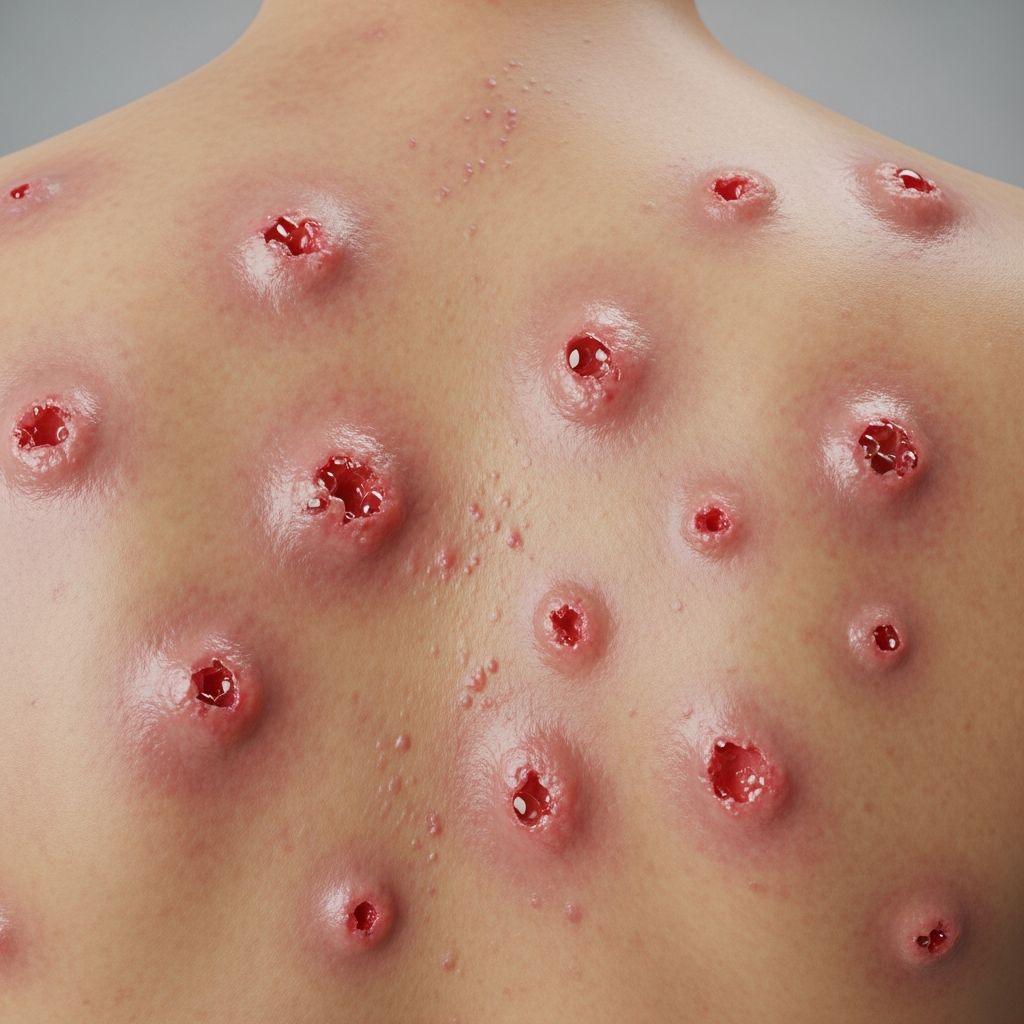
Bullous drug eruptions represent a heterogeneous group of severe cutaneous adverse reactions to medications, characterized by the formation of blisters (bullae) and erosions on the skin and mucous membranes. These reactions range from localized blistering to life-threatening conditions involving extensive epidermal detachment. Prompt recognition is critical, as they can mimic infectious or autoimmune blistering diseases and require immediate drug discontinuation and supportive care.
What are the clinical features of bullous drug eruptions?
Bullous drug eruptions typically manifest 1–3 weeks after initiating the culprit medication, though onset can be as rapid as 48 hours in rechallenge cases. Early prodromal symptoms include fever, malaise, sore throat, and burning eyes, progressing to cutaneous and mucosal involvement.
- Skin lesions: Initial erythematous or violaceous macules and plaques evolve into atypical target lesions (dusky centers with surrounding erythema, lacking the classic three-zone appearance of erythema multiforme). Lesions coalesce, leading to widespread erythema, flaccid bullae, and epidermal detachment. Nikolsky sign (epidermal dislodgement with lateral pressure) is positive in severe cases.
- Mucosal involvement: Affects >90% of patients, primarily oral cavity (hemorrhagic erosions, pseudomembranes, crusted lips), eyes (conjunctivitis, photophobia), and genitals (painful erosions). Multi-site involvement distinguishes severe forms.
- Systemic symptoms: High fever, hypotension, elevated liver enzymes, and eosinophilia in some cases. Detached skin creates painful erosions prone to secondary infection.
Severity correlates with body surface area (BSA) detachment: <10% SJS, 10–30% SJS/TEN overlap, >30% TEN.
Which drugs cause bullous drug eruptions?
Over 100 medications implicated, with antibiotics, antiepileptics, NSAIDs, and allopurinol most common. High-risk drugs exhibit dose-independent reactions via immune mechanisms.
| Drug Category | Common Culprits | Associated Reaction Type |
|---|---|---|
| Antibiotics | Sulfonamides, penicillins, cephalosporins, fluoroquinolones | SJS/TEN, AGEP with bullae |
| Antiepileptics | Carbamazepine, phenytoin, lamotrigine, phenobarbital | SJS/TEN (high risk in HLA-B*1502 carriers) |
| NSAIDs | Oxicams (piroxicam), diclofenac | SJS/TEN, bullous pemphigoid |
| Others | Allopurinol, acetaminophen, contrast media | GBFDE, pseudoporphyria |
Fixed drug eruptions triggered by paracetamol, NSAIDs, β-lactams; vaccines rarely implicated.
Types of bullous drug eruptions
Stevens-Johnson syndrome / Toxic epidermal necrolysis (SJS/TEN)
SJS/TEN spectrum represents the most severe form, with mortality 10–50% depending on BSA and comorbidities. Incidence 1–6 per million person-years. Lesions begin on face/trunk, spreading cranio-caudally within hours–days.
- Pathophysiology: Full-thickness epidermal necrosis due to cytotoxic T-cells and granzyme B, triggered by HLA-restricted drug presentation.
- Prognostic factors: SCORTEN score (age, heart rate, BSA, glucose, bicarbonate, urea, malignancy).
Generalized bullous fixed drug eruption (GBFDE)
Affects ≥10% BSA with blisters/erosions in ≥3 sites (head/neck, trunk, extremities, genitalia). More circumscribed lesions than SJS/TEN, less mucosal involvement, rapid onset (48h). Recurs identically on rechallenge; 50% progress to generalized form.
Common triggers: Antibiotics, analgesics (paracetamol), NSAIDs. Older patients at higher risk from repeated exposure.
Drug-induced autoimmune bullous diseases
Mimic idiopathic pemphigoid/pemphigus but resolve on drug withdrawal.
- Bullous pemphigoid: Tense bullae on urticarial plaques in flexures; elderly. Triggers: diuretics, neuroleptics.
- Linear IgA bullous dermatosis (LABD): “string of pearls” vesicles; vancomycin, diclofenac.
- Pemphigus: Flaccid bullae, erosions; penicillamine, captopril.
Other types
- Drug-induced pseudoporphyria: Photo-distributed fragility/blisters; furosemide, naproxen.
- AGEP with bullae: Pustular eruption ± blisters; antibiotics.
Diagnosis
Clinical diagnosis paramount; supported by:
- Histopathology: SJS/TEN shows full-thickness necrosis, sparse lymphocytic infiltrate; GBFDE interface dermatitis with vacuolar change.
- Immunofluorescence: Negative in SJS/TEN/GBFDE; positive in autoimmune types (IgG/C3 at BMZ in pemphigoid).
- Patch testing: Positive in 30–50% fixed eruptions (24–48h reading).
- Drug causality: ALDEN score (time to onset, drug notoriety, exclusion alternatives).
Related Stories



Differentiate from staphylococcal scalded skin syndrome (superficial split, children), erythema multiforme (typical targets, HSV-associated), and infections.
Differential diagnosis
| Condition | Key Distinguishers |
|---|---|
| Erythema multiforme major | Typical targets, acral, HSV/EBV trigger, minimal mucosal |
| Staphylococcal scalded skin syndrome | Superficial split, no necrosis, +ve Tzanck (acantholytic cells absent) |
| Paraneoplastic pemphigus | Severe mucosal, anti-plakin Abs, malignancy assoc. |
| Bullous pemphigoid | Tense bullae, elderly, +ve DIF (linear IgG/C3) |
Management
1. Immediate drug withdrawal: Most critical step; identify culprit via history/timing.
- Supportive care: Burn unit transfer for >10% BSA; fluid/electrolyte replacement, wound care (non-adherent dressings), infection prevention, nutrition, pain control.
- Symptomatic: Ophthalmologic consult (lubricants, amnion grafts), mouthwashes.
- Immunomodulation (controversial): IVIG (0.4g/kg/day ×4d), cyclosporine, cyclophosphamide in severe TEN; glucocorticoids contraindicated acutely.
Prognosis: SJS <5% mortality, TEN >30%. Long-term: Scarring, uveitis, gynae sequelae.
Frequently Asked Questions (FAQs)
What is the most common cause of bullous drug eruptions?
Antibiotics (sulfonamides) and antiepileptics (carbamazepine) top the list, accounting for >50% cases.
How quickly do symptoms appear after taking a drug?
Typically 1–3 weeks for first exposure; 24–48 hours on rechallenge.
Is bullous drug eruption contagious?
No, it’s a hypersensitivity reaction, not infectious.
Can bullous drug eruptions be prevented?
HLA screening (B*1502 for carbamazepine in Asians), avoid known culprits, low threshold for discontinuation.
What is the mortality rate of TEN?
Approximately 30–50%, higher in elderly/comorbid.
References
- Bullous drug eruption — VisualDx. Accessed 2026. https://www.visualdx.com/visualdx/diagnosis/bullous+drug+eruption?diagnosisId=52965&moduleId=102
- Generalized bullous fixed drug eruption — Wikipedia (sourced from peer-reviewed refs). Accessed 2026. https://en.wikipedia.org/wiki/Generalized_bullous_fixed_drug_eruption
- Bullous Drug Reactions — PubMed Central / NIH. 2022-05-15. https://pmc.ncbi.nlm.nih.gov/articles/PMC9128954/
- Bullous Pemphigoid — Mayo Clinic. Accessed 2026. https://www.mayoclinic.org/diseases-conditions/bullous-pemphigoid/symptoms-causes/syc-20350414
- Bullous Pemphigoid — Cleveland Clinic. Accessed 2026. https://my.clevelandclinic.org/health/diseases/15855-bullous-pemphigoid
Similar Articles








Read full bio of medha deb