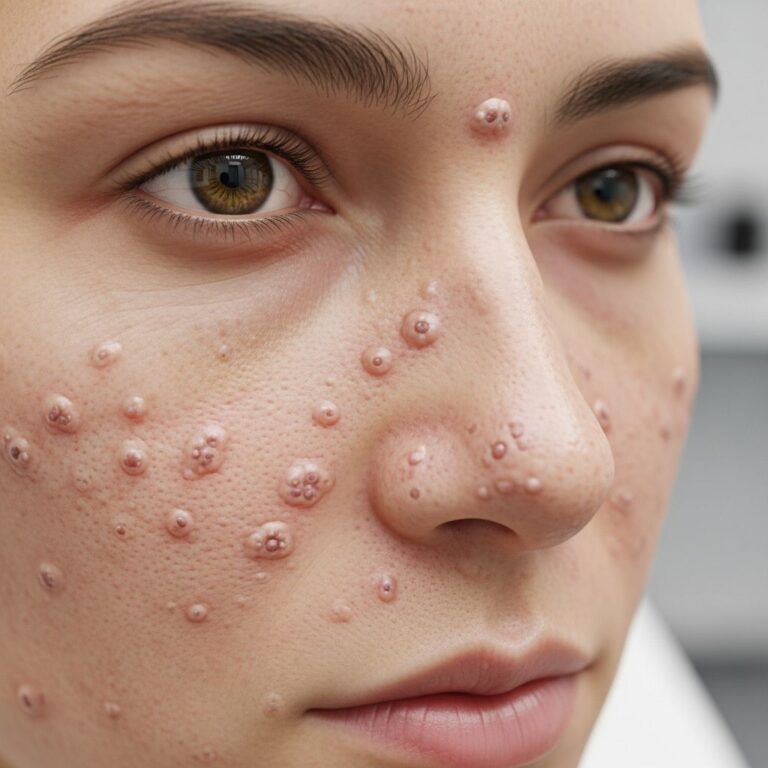
Bullous Pemphigoid Pathology: Key Histologic Features
Detailed histopathological and immunopathological insights into bullous pemphigoid, the common autoimmune blistering disorder.
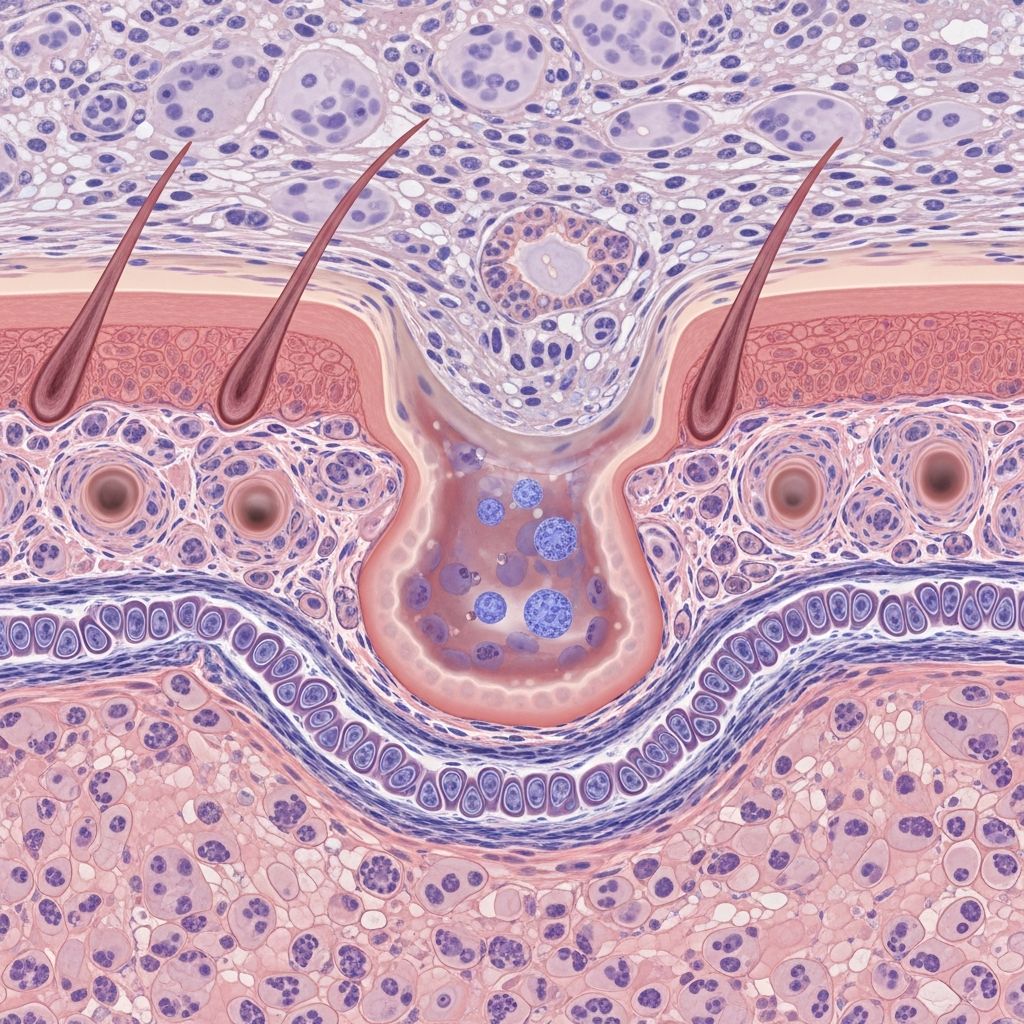
Bullous pemphigoid is a chronic autoimmune subepidermal blistering disease that mainly affects older people. It is characterised clinically by tense bullae and severe pruritus, and histologically by subepidermal blisters with a rich mixed inflammatory infiltrate. This chapter details the pathological features of bullous pemphigoid.
Histopathology
The hallmark of bullous pemphigoid is a subepidermal blister, with separation occurring within the lamina lucida of the basement membrane zone. This split creates a clean separation between the epidermis and dermis, filled with a mixed inflammatory infiltrate predominantly composed of eosinophils, alongside neutrophils, lymphocytes, and occasionally histiocytes.
In early lesions, before frank blister formation, there is often marked papillary dermal oedema with a perivascular and interstitial infiltrate of eosinophils. This eosinophilic spongiosis can mimic eczematous conditions, leading to diagnostic challenges. As the disease progresses, microvesicles form at the tips of rete ridges, coalescing into larger tense bullae.
The blister cavity contains fibrin, scattered acantholytic keratinocytes, and numerous eosinophils. The dermal papillae project into the blister base, maintaining their architecture, which distinguishes it from intraepidermal blistering disorders like pemphigus vulgaris. Eosinophils may align along the blister roof and floor, a feature termed “eosinophilic microabscesses.”
- Key histopathologic features:
- Subepidermal blister with lamina lucida cleavage
- Rich eosinophilic infiltrate in blister and dermis
- Papillary dermal oedema
- Preserved dermal papillae projecting into blister
- Fibrin deposition in blister floor
- Mast cell degranulation
Older lesions show ruptured bullae with crusting, erosions, and secondary changes like hyperkeratosis or parakeratosis. Neutrophilic infiltrates may predominate in some cases, overlapping with bullous lupus erythematosus or dermatitis herpetiformis.
Immunofluorescence
Direct immunofluorescence (DIF) is the gold standard for confirming the diagnosis of bullous pemphigoid. It reveals linear deposition of IgG and C3 along the basement membrane zone (BMZ). IgG is typically more intense than C3, though occasionally C3 predominates in early disease.
Indirect immunofluorescence (IIF) on patient serum demonstrates circulating IgG anti-BMZ antibodies, often at titres correlating with disease activity. Salt-split skin IIF is highly specific: bullous pemphigoid antibodies bind to the epidermal roof of the split, distinguishing it from dermal-binding disorders like epidermolysis bullosa acquisita (EBA).
| Test | Finding in Bullous Pemphigoid | Differential Diagnosis Distinction |
|---|---|---|
| DIF | Linear IgG ± C3 at BMZ | Vs. Pemphigus (epidermal intercellular IgG) |
| IIF salt-split | Epidermal roof | Vs. EBA (dermal floor) |
| IIF monkey oesophagus | Negative | Vs. Pemphigus (positive) |
Immunoelectron microscopy shows antibody deposition within the lamina lucida, targeting hemidesmosomal proteins BP180 and BP230. Advanced techniques like ELISA for anti-BP180 NC16A domain antibodies provide quantitative serology for monitoring treatment response.
Electron microscopy
Ultrastructural examination reveals cleavage through the lamina lucida, with hemidesmosomes intact on the epidermal side but absent or damaged on the dermal side. Electron-dense immune deposits are visible along the BMZ, accompanied by inflammatory cells breaching the basement membrane.
Related Stories



The target antigens—BP180 (type XVII collagen) and BP230—are components of hemidesmosomes anchoring basal keratinocytes to the dermis. Autoantibody binding disrupts these junctions, activating complement and recruiting eosinophils via cytokine release, culminating in proteolytic enzyme-mediated blister formation.
Differential diagnosis
Histopathologic overlap exists with several entities:
- Epidermolysis bullosa acquisita (EBA): Similar subepidermal blister but with more scarring, fewer eosinophils, and dermal salt-split binding.
- Dermatitis herpetiformis: Neutrophilic papillary microabscesses, granular IgA DIF.
- Bullous lupus erythematosus: Neutrophilic infiltrate, lupus band on DIF.
- Porphyria cutanea tarda: Cell-poor blister, caterpillar bodies, PAS-positive material.
- Arthropod bite reaction: Superficial and deep perivascular infiltrate, flame figures.
Correlation with clinical presentation, DIF, and serology is essential. In atypical non-bullous cases presenting as prurigo or eczema, high clinical suspicion prompts biopsy of perilesional skin.
Pathogenesis
Bullous pemphigoid arises from autoantibodies targeting hemidesmosomal proteins BP180 and BP230, predominantly in the NC16A domain of BP180. These intracellular and transmembrane proteins maintain dermo-epidermal adhesion. Genetic predisposition (HLA-DR4) and triggers like drugs (diuretics, neuroleptics), UV exposure, or vaccinations precede disease onset in susceptible elderly individuals.
Autoantibody binding activates complement (C3), recruits eosinophils and neutrophils via chemokines (e.g., eotaxin), and induces protease release (elastase, MMP-9). Mast cell degranulation amplifies inflammation. T-cell involvement, particularly Th2 skewing, sustains the humoral response. Recent studies highlight anti-inflammatory regulatory T-cells’ failure in disease perpetuation.
Clinical features relevant to pathology
Understanding pathology informs clinical recognition: prodromal pruritus with eczematous/urticarial plaques precedes tense bullae on flexor limbs and trunk. Mucosal involvement is rare (10-20%). Severe cases show erythroderma or generalised exfoliative dermatitis. Histology from early erythematous plaques reveals eosinophilic spongiosis without blisters.
Investigations
- Skin biopsy for H&E: Perilesional skin for early changes; lesional for blisters.
- DIF: Fresh frozen biopsy transported in Michel medium.
- IIF: Serum for anti-BMZ antibodies; salt-split for specificity.
- ELISA/IP: Anti-BP180/230 for serology.
- Salt-split skin biopsy: For ambiguous DIF.
Management correlation
Pathologic severity guides therapy: mild localised disease responds to superpotent topical corticosteroids; extensive cases require systemic steroids, immunosuppressants (azathioprine, mycophenolate), or biologics (dupilumab, rituximab). Serologic titres track response, with rapid decline predicting remission.
Frequently asked questions
What is the most characteristic histopathologic finding in bullous pemphigoid?
A subepidermal blister with prominent eosinophils and preserved dermal papillae projecting into the cavity.
Describe the DIF pattern.
Linear IgG and C3 along the BMZ; IgG often brighter.
How does salt-split skin IIF distinguish BP from EBA?
BP antibodies bind epidermal roof; EBA to dermal floor.
Can bullous pemphigoid be diagnosed without blisters?
Yes, via DIF on perilesional skin showing eosinophilic spongiosis and linear BMZ immunofluorescence.
What are the autoantigens?
BP180 (type XVII collagen, NC16A domain) and BP230 (plakin).
Prognosis and complications
Mortality is elevated in the first year (up to 40% in severe cases), linked to infections, skin failure, and comorbidities. Long-term remission occurs in 50-60%, but relapses are common. Pathologic monitoring aids in tapering therapy safely.
This comprehensive pathologic profile equips clinicians for precise diagnosis and management of bullous pemphigoid, improving outcomes in this vulnerable population.
References
- Bullous Pemphigoid – StatPearls – NCBI Bookshelf — Baigrie D et al. 2023-10-01. https://www.ncbi.nlm.nih.gov/books/NBK535374/
- Updated S2 K guidelines for the management of bullous pemphigoid — Borradori L et al. Journal of the European Academy of Dermatology and Venereology. 2022-11-01. https://onlinelibrary.wiley.com/doi/10.1111/jdv.18220
- Bullous Pemphigoid — DermNet NZ. Last updated 2023. https://dermnetnz.org/topics/bullous-pemphigoid
- Bullous pemphigoid: Overview — American Academy of Dermatology. 2024. https://www.aad.org/public/diseases/a-z/bullous-pemphigoid-overview
- Bullous Pemphigoid — Applegarth Dermatology. 2023. https://www.applegarthdermatology.com/articles/aad_education_library/920190-bullous-pemphigoid/
Similar Articles








Read full bio of Sneha Tete