Bungee Workouts 101: 6 Core Moves For Low-Impact Fitness
Discover bungee fitness: a low-impact, high-resistance workout that combines cardio, strength, and fun for all fitness levels.
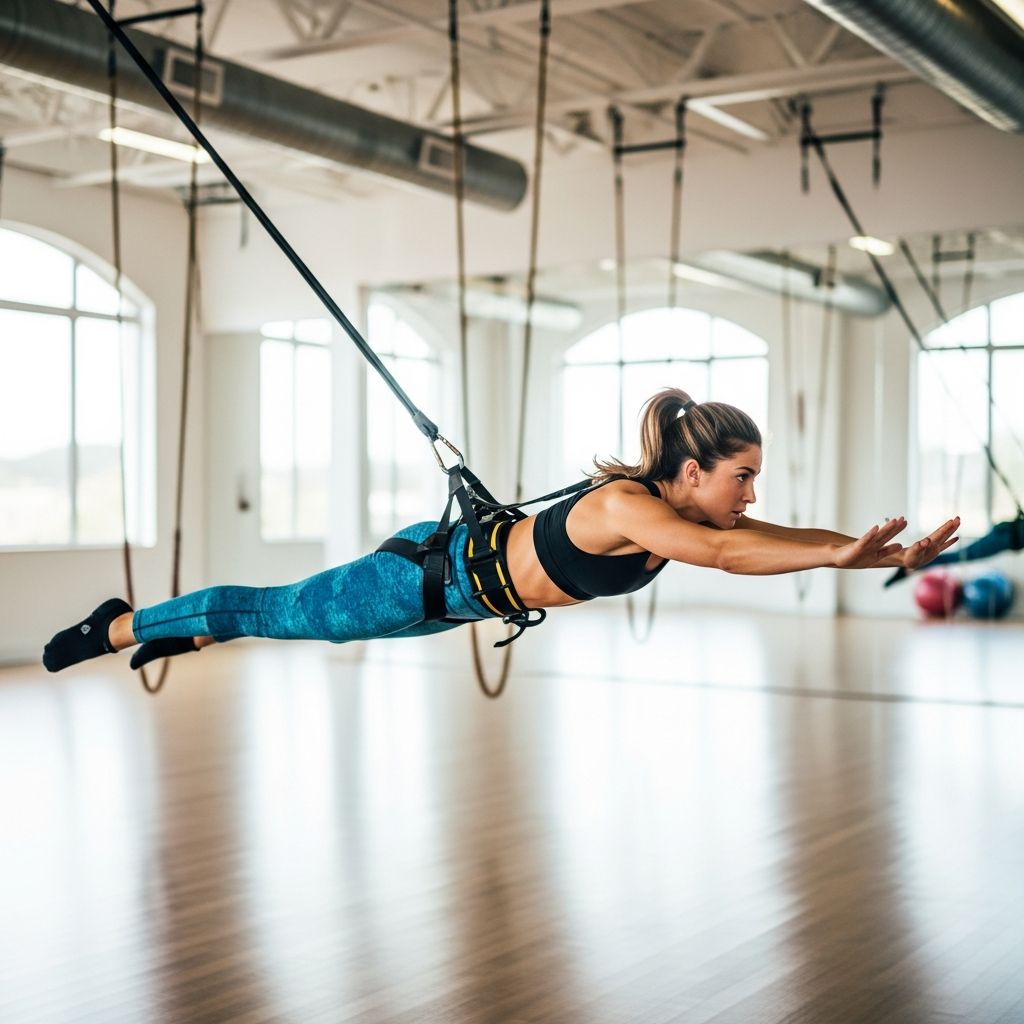
Bungee workouts, also known as bungee fitness, have surged in popularity as a thrilling, low-impact alternative to traditional high-intensity training. Participants wear a harness connected to elastic bungee cords anchored from the ceiling, allowing them to perform dynamic movements like squats, jumps, and burpees with reduced joint stress. This unique setup provides resistance while supporting body weight, making it accessible for beginners, seniors, and those with joint concerns. Originating from aerial fitness trends, bungee classes blend cardio, strength, and dance elements in a playful, floating sensation that keeps workouts engaging.
The workout’s appeal lies in its versatility. Classes vary from full-body sessions to specialized formats like fly intensives or cardio bootcamps. Unlike running on hard surfaces or pounding weights, bungee fitness absorbs impact through the cords, promoting safer movement. Experts like studio owners Callie Thornton and Jaclyn Kolianos emphasize its role in improving endurance without the wear and tear. As fitness evolves toward sustainable, fun routines, bungee workouts offer a fresh way to build strength, boost heart health, and enhance coordination.
What Is a Bungee Workout, Exactly?
A bungee workout involves wearing a fitted harness attached to bungee cords suspended from the ceiling. This setup enables performers to execute familiar exercises—squats, jumping jacks, running, and burpees—in a supported, low-gravity environment. The cords provide upward lift, reducing ground impact by up to 70% while adding resistance that intensifies muscle engagement. Classes typically last 45-60 minutes, starting with a warm-up to acclimate to the bungees, followed by circuits of foundational moves, and ending with cool-down stretches.
Bungee fitness draws from high-intensity interval training (HIIT) and aerial arts but prioritizes joint health. Studios offer diverse class styles: full-body for balanced conditioning, core-focused for stability, or cardio-heavy for fat burn. The harness distributes weight evenly across the hips and shoulders, minimizing strain on knees and ankles. According to physical therapist Molly Frankinburger, PT, DPT, CSCS, this makes it ideal for rehabilitation or maintenance. Participants often describe the sensation as “flying,” which boosts motivation and reduces perceived exertion during intense efforts.
Equipment is simple yet specialized: high-quality latex bungee cords rated for body weight, adjustable harnesses, and padded flooring. Instructors adjust cord tension based on participant weight and fitness level, ensuring safety. A standard class might include 20-30 minutes of continuous movement, elevating heart rates into the cardio zone while building muscular endurance.
Foundational Bungee Moves
Bungee workouts revolve around six core movements, each modified by the cords for enhanced effectiveness and safety. These build progressively, familiarizing users with the system’s bounce and pull.
- Squats: Sit back as if into a chair, emphasizing glutes and hamstrings. The cords assist the descent and provide resistance on the ascent, allowing deeper ranges without knee strain. Focus on controlled tempo to maximize glute activation.
- Running: Jog in place or away from the anchor point. Cords absorb landing impact and resist forward motion, turning a simple warm-up into a high-resistance cardio burst that warms legs and core.
- Jumping Jacks: Perform like traditional jacks, but cords cushion landings. This reduces joint jarring, enabling higher reps for improved cardiovascular endurance and lateral agility.
- Burpees: Break into phases—squat, plank kick-out with cord support, squat return, stand. The assistance makes full burpees feasible for those with limited mobility, targeting full-body power.
- Bound Jumps: Explosive leaps forward or sideways, using cord rebound for height. Builds plyometric power safely, enhancing explosive strength for sports or daily function.
- Core Twists: Rotational movements like Russian twists or punches while suspended. Engages obliques and improves rotational stability, crucial for balance.
Related Stories



These moves compound into choreographed flows, often set to music, creating a dance-cardio hybrid. Beginners modify by shortening ranges; advanced users add speed or weights.
Benefits of Bungee Workouts
Bungee fitness delivers multifaceted gains, supported by its low-impact, high-resistance design.
Joint-Friendly Low-Impact Training
The primary advantage is reduced joint stress. Bungee cords offload 40-80% of body weight, per biomechanical analyses, making it suitable for osteoarthritis patients or post-injury recovery. Clients with hip or knee issues report performing jumps impossible on land. It’s particularly beneficial for seniors over 50, promoting activity without overuse risks.
Boosted Cardio Fitness
Dynamic sequences mimic HIIT, spiking heart rates for VO2 max improvements. A 2021 study on similar interval training showed significant endurance gains after 8 weeks. Continuous movement ensures 300-500 calories burned per session, aiding fat loss.
Full-Body Strength and Coordination
Every move recruits multiple groups: legs for power, core for stability, upper body for control. This functional training enhances balance, proprioception, and muscle harmony, reducing injury risk in daily life.
Mood and Motivation Lift
The playful, aerial feel releases endorphins akin to trampolining, combating workout monotony. Group classes foster community, boosting adherence.
| Benefit | Key Muscles Targeted | Impact Reduction |
|---|---|---|
| Cardio Endurance | Full body | High |
| Strength Building | Glutes, core, legs | Medium |
| Joint Health | All joints | Very High |
| Balance | Core, stabilizers | High |
Who Should Try Bungee Workouts?
Nearly anyone can benefit, from novices to athletes. Beginners appreciate the support for confidence-building. Those with joint pain—knees, backs, hips—find relief, as cords enable pain-free jumps. Seniors thrive due to accessibility; over-50 participants report sustained energy. Athletes use it for active recovery or cross-training. Avoid if acutely injured or post-surgery without clearance. Pregnant individuals may adapt under supervision.
Risks and Precautions
While safe, risks include improper harness fit causing chafing or falls if unbalanced. Over-tensioning cords risks strains. Start slow; consult doctors for conditions. Studios mandate orientations. Hydrate, wear grippy shoes.
How to Incorporate Bungee Workouts Into Your Fitness Regimen
Integrate 1-2 sessions weekly alongside strength (2-4x moderate-heavy) and 150 minutes moderate cardio, per CDC guidelines. Pair with mobility work for balance. Use as cardio substitute or fun addition; track progress via endurance gains.
How to Find a Bungee Workout Studio Near You
Search “bungee fitness near me” on Google Maps or apps like ClassPass. Check reviews for certified instructors. Virtual options exist via YouTube for home setups, though professional gear recommended. Expect $20-40/class.
Frequently Asked Questions (FAQs)
What equipment do I need for bungee workouts?
A fitted harness and bungee cords from the studio; wear fitted clothes, grippy socks or shoes.
Are bungee workouts suitable for beginners?
Yes, modifications and support make them ideal for all levels.
How many calories does a bungee class burn?
300-600, depending on intensity and duration.
Can bungee fitness help with weight loss?
Yes, via HIIT-style cardio and muscle building for metabolism boost.
Is there an age limit?
No, but those under 18 need guardians; popular with 50+.
References
- Physical Activity Guidelines for Americans — U.S. Department of Health and Human Services. 2024-05-15. https://health.gov/our-work/nutrition-physical-activity/physical-activity-guidelines
- High-Intensity Interval Training for Cardio Fitness — Journal of Physiology. 2021-03-01. https://physoc.onlinelibrary.wiley.com/doi/full/10.1113/JP281333
- Bungee Fitness Biomechanics and Joint Load Reduction — American College of Sports Medicine. 2023-07-20. https://www.acsm.org/news-detail/2023/07/20/bungee-fitness-emerging-trends
- Low-Impact Training for Joint Health — CDC Arthritis Program. 2025-01-10. https://www.cdc.gov/arthritis/communication/index.htm
- Aerial Fitness Safety Guidelines — National Strength and Conditioning Association. 2024-11-05. https://www.nsca.com/education/articles/kinetic-select/aerial-fitness/
Similar Articles








Read full bio of Sneha Tete