Burning Breast Pain Misdiagnosed as Mastitis
How inflammatory breast cancer mimics infections, leading to dangerous delays in diagnosis and treatment.
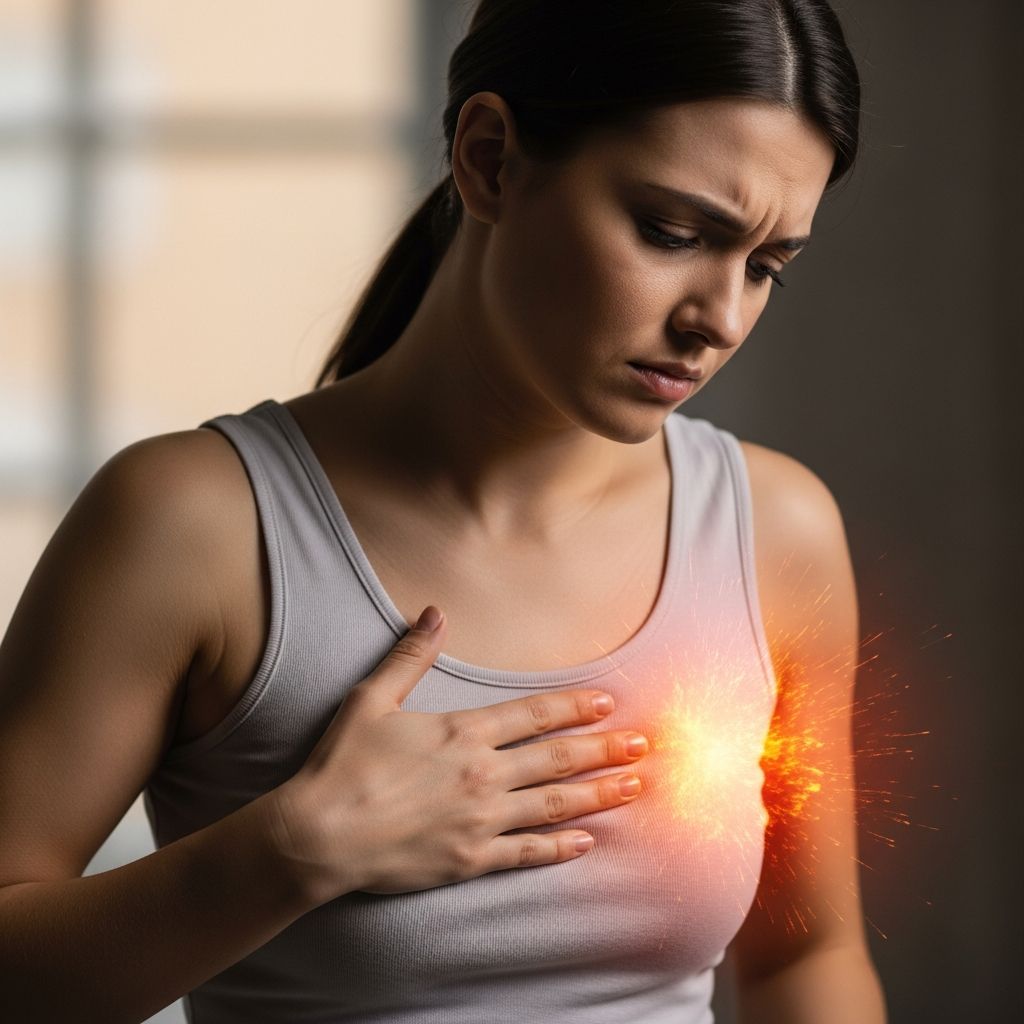
A 45-year-old woman’s persistent
burning breast pain
was repeatedly attributed to mastitis, an infection treatable with antibiotics. Multiple doctors dismissed her symptoms over months, prescribing rounds of medication that failed to help. It wasn’t until she insisted on further imaging that doctors uncoveredinflammatory breast cancer (IBC)
, a rare and aggressive form that had already spread. This story highlights a dangerous diagnostic pitfall: confusing cancer symptoms with benign conditions.IBC accounts for 1-5% of breast cancers but grows rapidly, blocking lymph vessels and causing inflammation that mimics infection. Early misdiagnosis can delay critical treatment, worsening outcomes. Below, we explore symptoms, risks, diagnosis hurdles, and prevention strategies.
What Is Inflammatory Breast Cancer?
**Inflammatory breast cancer (IBC)** is a rare, aggressive cancer where malignant cells infiltrate the skin’s lymph vessels, causing rapid swelling and redness without a distinct lump. Unlike typical breast cancers, IBC spreads quickly, often reaching lymph nodes or distant sites by diagnosis.
Symptoms emerge suddenly, sometimes overnight, affecting one breast. Cancer cells clog dermal lymphatics, trapping fluid and triggering inflammation. The breast enlarges, skin reddens (or darkens on deeper tones), and feels warm. IBC disproportionately affects younger women and those of African ancestry.
- Blocks breast lymph vessels, leading to fluid buildup and skin changes.
- Grows faster than other breast cancers; symptoms present within 6 months of onset.
- 5-year survival rate: 40-50%, lower due to advanced stage at diagnosis.
Symptoms of Inflammatory Breast Cancer: Beyond the Burning Pain
IBC rarely forms a palpable lump, making it harder to detect via self-exam. Instead, skin changes dominate. Key symptoms include:
- Redness or discoloration: Pink, red, purple, or bruised appearance covering >1/3 of the breast.
- Swelling and firmness: Breast feels heavy, enlarged, or tender.
- Burning, itching, or pain: Persistent warmth; one breast hotter than the other.
- Peau d’orange: Pitted, orange-peel texture from swollen lymphatics.
- Nipple changes: Inversion, flattening, or discharge.
- Lymph node swelling: Underarm, collarbone area.
These mimic mastitis or dermatitis, especially the rash-like redness and burning. Rashes may itch, bruise-like, and persist or worsen.
Why Burning Breast Pain Gets Misdiagnosed
Breast pain alone rarely signals cancer—most cases are benign, cyclical (hormonal) or non-cyclical (musculoskeletal). However,
persistent, unexplained burning pain
with skin changes demands scrutiny.Common misdiagnoses:
| Condition | Similar Symptoms | Key Differences from IBC |
|---|---|---|
| Mastitis | Redness, swelling, pain, warmth | Usually post-lactation; responds to antibiotics; no peau d’orange |
| Infection/Cellulitis | Rash, burning, fever | Bilateral possible; improves with treatment |
| Paget’s Disease | Nipple burning, scaling | Localized to nipple/areola; slower onset |
| Mastalgia (Benign) | Tenderness, burning | No skin changes; cyclical |
In the featured case, antibiotics failed because no infection existed. IBC pain arises from tumor pressure on tissue and inflammation. Delays average 3-6 months, allowing spread.
The Real Story: Lisa’s Battle with Misdiagnosis
Related Stories



Lisa, 45, noticed burning pain and redness in her left breast in early 2024. Her primary doctor diagnosed mastitis, prescribing antibiotics. Symptoms persisted; a second round followed. Pain intensified, with swelling and peau d’orange emerging.
After three months, she saw a breast specialist. Ultrasound showed skin thickening; biopsy confirmed IBC, stage IIIB. Chemotherapy, mastectomy, and radiation ensued. “I felt dismissed,” Lisa shared. “The burning was constant, like fire under my skin.” Her story echoes thousands: 20-30% of IBC cases initially treated as infection.
Experts stress: If symptoms don’t resolve in 1-2 weeks of antibiotics, escalate imaging.
Risks and Who Is Most Vulnerable
IBC strikes unpredictably but risks include:
- Obesity (increases by 50%).
- BRCA mutations (rarely).
- Younger age (<50); African American women (2x risk).
- No pregnancy/children history.
Annual U.S. cases: ~5,000 of 250,000 breast cancers.
Diagnosis: From Misstep to Confirmation
Standard mammograms miss 20-30% of IBC due to density. Triple assessment is key:
- Clinical exam: Assess redness extent, warmth.
- Imaging: Ultrasound/MRI for skin thickening; mammogram rules out lump.
- Biopsy: Punch biopsy confirms cancer cells in lymphatics.
Prompt punch biopsy differentiates IBC from infection.
Treatment for Inflammatory Breast Cancer
Multimodal, starting neoadjuvant chemotherapy to shrink tumor.
- Chemo: Anthracyclines + taxanes (4-6 cycles).
- Surgery: Mastectomy (lumpectomy rare); no reconstruction initially.
- Radiation: Post-surgery to chest wall.
- Targeted therapy: HER2+ cases get trastuzumab.
Response rates: 80-90% shrink pre-surgery; survival improves with early intervention.
Prevention and Early Detection Tips
No sure prevention, but:
- Monthly self-exams post-20; know your normal.
- Annual clinical exams + mammograms from 40 (earlier if high-risk).
- Report new pain/redness persisting >2 weeks.
- Maintain healthy weight; limit alcohol.
For burning pain: Track duration, associated changes. Insist on imaging if antibiotics fail.
Frequently Asked Questions (FAQs)
Can breast cancer cause burning pain?
Yes, especially IBC and Paget’s disease. Pain from tumor pressure or inflammation; seek care if persistent.
Does IBC rash appear suddenly?
Yes, often overnight, covering >1/3 breast.
How is IBC different from mastitis?
IBC doesn’t respond to antibiotics; features peau d’orange, no fever typically.
What if antibiotics don’t work for breast infection?
Reevaluate for cancer; request ultrasound/biopsy.
Is breast pain ever cancer?
Rarely early on, but with skin changes, yes—don’t ignore.
Advocacy: Don’t Let Pain Be Dismissed
Patients like Lisa urge: “Advocate fiercely. Burning pain isn’t normal.” Oncologists agree—prompt action saves lives. Consult breast specialists for suspicious symptoms.
References
- Inflammatory Breast Cancer: Symptoms, Diagnosis, Treatment — National Breast Cancer Foundation. 2023. https://www.nationalbreastcancer.org/inflammatory-breast-cancer/
- Signs and Symptoms of Breast Cancer — BreastCancer.org. 2024-01-13. https://www.breastcancer.org/signs-symptoms
- Inflammatory Breast Cancer — Canadian Cancer Society. 2024. https://cancer.ca/en/cancer-information/cancer-types/breast/what-is-breast-cancer/cancerous-tumours/inflammatory-breast-cancer
- Inflammatory Breast Cancer – Symptoms and Causes — Mayo Clinic. 2024-09-12. https://www.mayoclinic.org/diseases-conditions/inflammatory-breast-cancer/symptoms-causes/syc-20355413
- Symptoms of Breast Cancer — Cancer Research UK. 2024. https://www.cancerresearchuk.org/about-cancer/breast-cancer/symptoms
- Breast Pain & Cancer — UHSWV. 2023. https://www.uhswv.com/conditions-we-treat/womens-services/breast-pain-cancer
Similar Articles








Read full bio of Sneha Tete