Burns: Symptoms, Degrees, Treatment & Healing
Comprehensive guide to understanding burn injuries, classifications, treatment options, and recovery processes.
Understanding Burns: A Comprehensive Guide
Burns are a type of tissue damage that typically occurs because of extreme temperatures, chemical exposure, or other heat sources. The severity of a burn depends on several critical factors, including the size of the affected area and the depth of the damage to your skin and underlying tissues. Burns can range from minor superficial injuries that heal quickly to severe wounds requiring specialized medical intervention and extended recovery periods.
Every year, thousands of people experience burn injuries, making it essential to understand the different types of burns, their symptoms, appropriate treatment approaches, and potential complications. Whether you’re dealing with a minor kitchen burn or a more serious injury, knowing how to respond appropriately can significantly impact healing outcomes and reduce the risk of infection and scarring.
What Are Burns?
A burn is damage to your skin or underlying tissue resulting from exposure to extreme heat, chemicals, electricity, radiation, or friction. The damage occurs when the intense temperature or caustic substance destroys the cellular structure of your skin and potentially deeper tissues. Burns can affect just the outermost layer of skin or penetrate through all layers, affecting muscles, nerves, and other vital structures beneath.
The body’s skin serves as a protective barrier against infections and environmental hazards. When burns damage this barrier, your body becomes vulnerable to serious complications including infection, fluid loss, and shock. Understanding the depth and extent of a burn helps healthcare providers determine the appropriate treatment and predict healing timelines.
Burn Severity and Degrees
Burns are classified into different degrees based on how deeply they penetrate the skin and how much damage they cause. This classification system helps medical professionals determine treatment urgency and approach.
First-Degree Burns
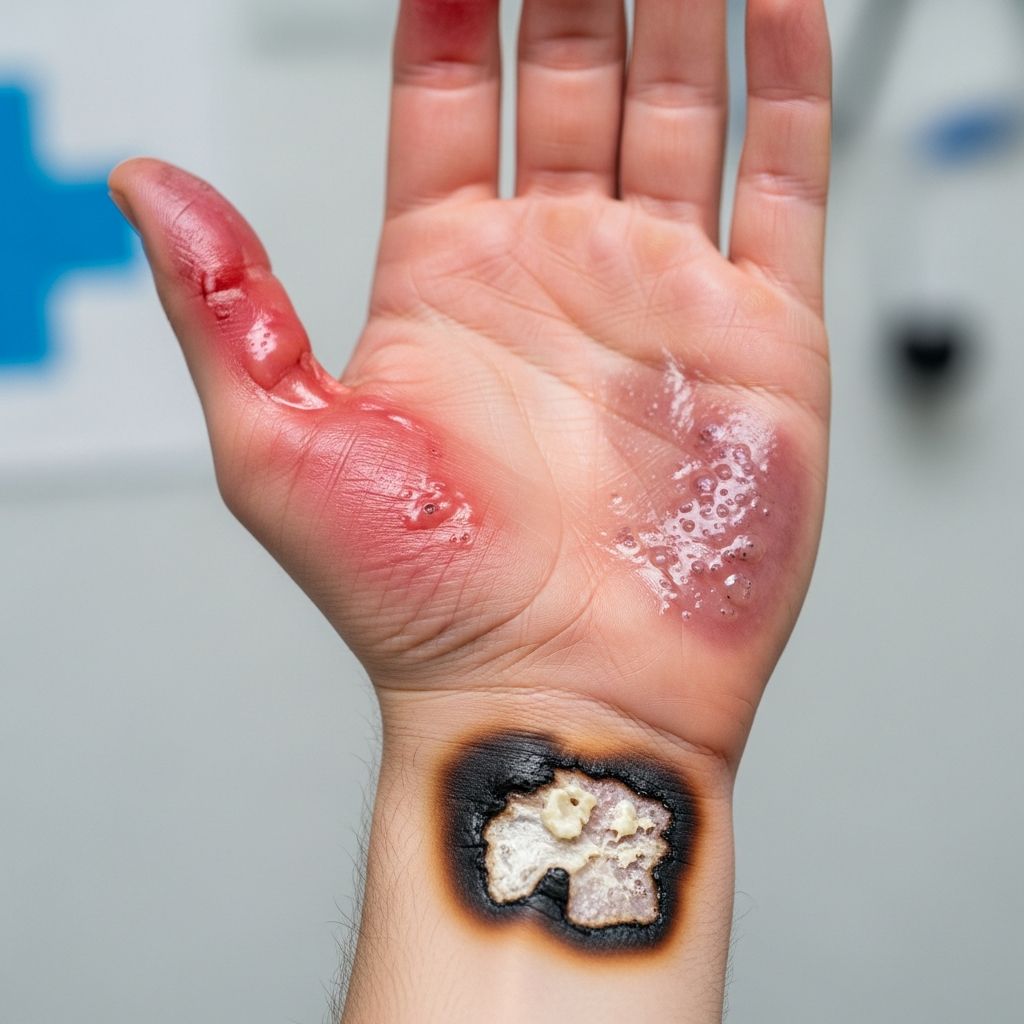
First-degree burns, also called superficial burns, affect only the epidermis, which is the outermost layer of your skin. These burns are the mildest type and typically appear red and painful but do not form blisters. Common causes include sunburns and minor kitchen burns from touching a hot surface briefly. First-degree burns usually heal within 7 to 14 days without scarring and can typically be treated at home with cool water, moisturizer, and nonstick bandages.
Second-Degree Burns
Second-degree burns penetrate through the epidermis into the dermis, the layer of skin beneath the surface. These burns are the most common type and cause blistering, shiny skin, intense pain, and skin discoloration ranging from red to splotchy appearances. The blisters form as fluid accumulates between the skin layers in response to the heat damage. Second-degree burns require more careful treatment than first-degree burns and may need medical attention to prevent infection and promote proper healing.
Third-Degree Burns
Third-degree burns are the most serious type, as they damage all three layers of your skin—the epidermis, dermis, and the fatty tissue layer beneath. These burns require immediate medical attention and professional treatment. Third-degree burns may appear white, charred, or leathery and often cause less pain than lower-degree burns because the nerve endings are destroyed. These severe burns typically require hospitalization, specialized wound care, and often surgical intervention including skin grafting.
Related Stories



Symptoms and Signs of Burns
Recognizing burn symptoms helps you determine the appropriate response and when to seek medical care. Burn symptoms vary significantly depending on the degree of injury.
Common Burn Symptoms Include:
– Red, blistered, or blackened skin- Pain ranging from mild to severe- Swelling and inflammation around the affected area- Peeling skin as the burn begins to heal- Scarring or permanent discoloration- Numbness or tingling sensations- Difficulty moving affected joints or areas
An important consideration: pain severity does not correlate with burn severity. The most serious burns can actually be painless because the nerve endings are destroyed. If you cannot determine burn severity or feel uncertain about appropriate treatment, seek professional medical evaluation immediately.[10]
When to Seek Medical Care
Not all burns require professional medical treatment, but knowing when to seek help is crucial for preventing complications. Any burn worse than a first-degree burn should be evaluated by a medical professional immediately. Do not attempt to treat second-degree or third-degree burns at home, as improper treatment can lead to infection, delayed healing, and increased scarring.
Seek emergency medical care if:
– The burn covers a large area of your body- The burn is on your face, hands, feet, genitals, or joints- The burn appears deep with charred or white skin- You cannot determine the burn’s severity- The burn involves chemicals or electrical injury- You or a child experience difficulty breathing- The person who is burned is elderly or very young- You suspect the burn caused by abuse or neglect
First Aid Treatment for Burns
Immediate response to a burn can significantly impact healing outcomes. Proper first aid helps reduce pain, prevent infection, and minimize scarring.
Immediate First Aid Steps:
– Stop the burning process by removing the heat source- Cool the burned area with cool (not cold) water for 10-20 minutes- Remove tight clothing or jewelry before swelling occurs- Cover the burn with a nonstick bandage or clean cloth- Take over-the-counter pain medication if needed- Keep the burn clean and dry- Avoid applying ice directly to the burn- Do not use butter, oil, or other home remedies
For first-degree burns specifically, cool water, moisturizer, and nonstick bandages provide adequate treatment. However, remember that the more time you spend treating a second or third-degree burn at home without professional evaluation, the higher your risk of infection and mismanagement of the injury.
Professional Burn Treatment
Treatment approaches vary significantly based on burn severity, location, and extent of injury. Healthcare providers develop individualized treatment plans for each patient.
Treatment May Include:
– Wound cleaning and debridement (removal of dead tissue)- Specialized dressings and topical medications- Pain management and medications- Intravenous fluids to prevent dehydration and shock- Antibiotics to prevent infection- Tetanus protection if needed- Surgical intervention and skin grafting for severe burns- Reconstructive surgery to restore appearance and function- Physical therapy to maintain mobility and prevent complications- Psychological support and counseling
Burn Complications
More severe complications can develop when burns are deeper and cover larger portions of your body’s surface area. These serious complications may include shock, severe dehydration, organ damage from fluid loss, life-threatening infections like sepsis, respiratory complications from smoke inhalation, permanent scarring and contractures that limit movement, and psychological trauma from the injury experience.
The specific complications likely in your case depend on many individual factors, and your healthcare provider can explain what to expect based on your particular burn characteristics and overall health status.
Diagnosis of Burns
Healthcare providers diagnose burns primarily through physical examination of the injury and detailed questions about what caused the burn. If you cannot answer questions, providers rely on information from first responders or witnesses present at the time of injury.
While lab and imaging tests don’t typically diagnose burns themselves, they can help identify complications before they become severe. Blood and urine tests are particularly important for detecting signs of organ damage or infections. CT scans and magnetic resonance imaging may help detect deeper tissue damage in some cases, though these aren’t usually necessary for routine burn diagnosis.
Burn Healing and Recovery
Healing timelines vary dramatically based on burn degree and extent. First-degree burns typically heal completely within 7-14 days. Second-degree burns may take several weeks to heal, while third-degree burns require months or years for complete healing, often involving multiple surgeries and rehabilitation.
During healing, it’s essential to keep burns clean, follow your healthcare provider’s wound care instructions carefully, take prescribed medications as directed, attend all follow-up appointments, and report any signs of infection immediately. Proper nutrition supports healing, and avoiding sun exposure to healing burns prevents additional damage and hyperpigmentation.
Special Types of Burns
Chemical Burns
Chemical burns result from contact with harsh or corrosive substances and range from mild to severe. Mild chemical burns usually heal relatively quickly, but severe chemical burns can cause permanent tissue damage, significant scarring, and in extreme cases, death. Chemical burns require immediate medical treatment to prevent ongoing tissue damage. Rinse chemical burns with cool water for at least 15-20 minutes and seek emergency care immediately.
Friction Burns
Friction burns occur when an object or surface rubs hard enough against your skin to generate heat and forcefully damage tissue. These burns typically result from falling onto pavement, rope burns, or similar friction injuries. Treatment depends on the friction burn’s depth and extent, ranging from home care for minor injuries to professional medical treatment for more serious cases.
Prevention Strategies
Preventing burns is significantly more effective than treating them. Important prevention measures include installing and maintaining smoke detectors, setting water heater temperatures to safe levels below 120°F (49°C), keeping flammable materials away from heat sources, wearing appropriate protective equipment in high-risk environments, teaching children about fire and heat safety, and never leaving cooking food unattended.
Frequently Asked Questions
How can I tell if my burn needs medical attention?
Any burn that causes blistering, affects a large area, involves your face or hands, appears deep with charred skin, or causes severe pain should receive professional medical evaluation. When in doubt, seek medical care rather than risk complications.
What should I do immediately after getting burned?
Stop the burning source, cool the area with cool water for 10-20 minutes, remove tight clothing before swelling occurs, and cover the burn with a clean bandage. Avoid ice, butter, oil, or other home remedies that can cause additional damage.
How long do burns take to heal?
First-degree burns typically heal in 7-14 days. Second-degree burns may take several weeks, while third-degree burns require months or years for complete healing with multiple surgeries and rehabilitation.
Will my burn leave a scar?
First-degree burns typically do not scar. Second-degree burns may cause minor scars depending on severity and proper wound care. Third-degree burns almost always result in significant scarring, making reconstructive surgery often necessary.
When should I seek emergency care for a burn?
Seek emergency care immediately for deep burns, burns covering large areas, burns on sensitive locations like face or hands, difficulty breathing, signs of shock, or any burn you cannot evaluate confidently yourself.
References
- Burns: Symptoms, Degrees, How To Treat & Healing — Cleveland Clinic. 2025. https://my.clevelandclinic.org/health/diseases/12063-burns
- First Aid for First-, Second- and Third-Degree Burns — Cleveland Clinic Health Essentials. 2025. https://health.clevelandclinic.org/how-to-treat-a-burn
- First-Degree Burn Treatment & Prevention — Cleveland Clinic. 2025. https://my.clevelandclinic.org/health/symptoms/first-degree-burn
- 2nd-Degree Burn: What It Looks Like, Treatment & Healing — Cleveland Clinic. 2022. https://my.clevelandclinic.org/health/symptoms/24527-second-degree-burn
- 3rd-Degree Burn: What It Is, Treatment & Healing — Cleveland Clinic. 2022. https://my.clevelandclinic.org/health/symptoms/24531-third-degree-burn
- Chemical Burns: Symptoms, Causes & Treatment — Cleveland Clinic. 2022. https://my.clevelandclinic.org/health/diseases/22350-chemical-burns
- Friction Burn Causes & Treatment — Cleveland Clinic. 2025. https://my.clevelandclinic.org/health/diseases/friction-burn
Similar Articles








Read full bio of medha deb