Butter Vs Ghee: Nutrition, Benefits, And How To Choose
Comparing butter and ghee: nutrition, health benefits, cooking uses, and which is healthier for your diet.
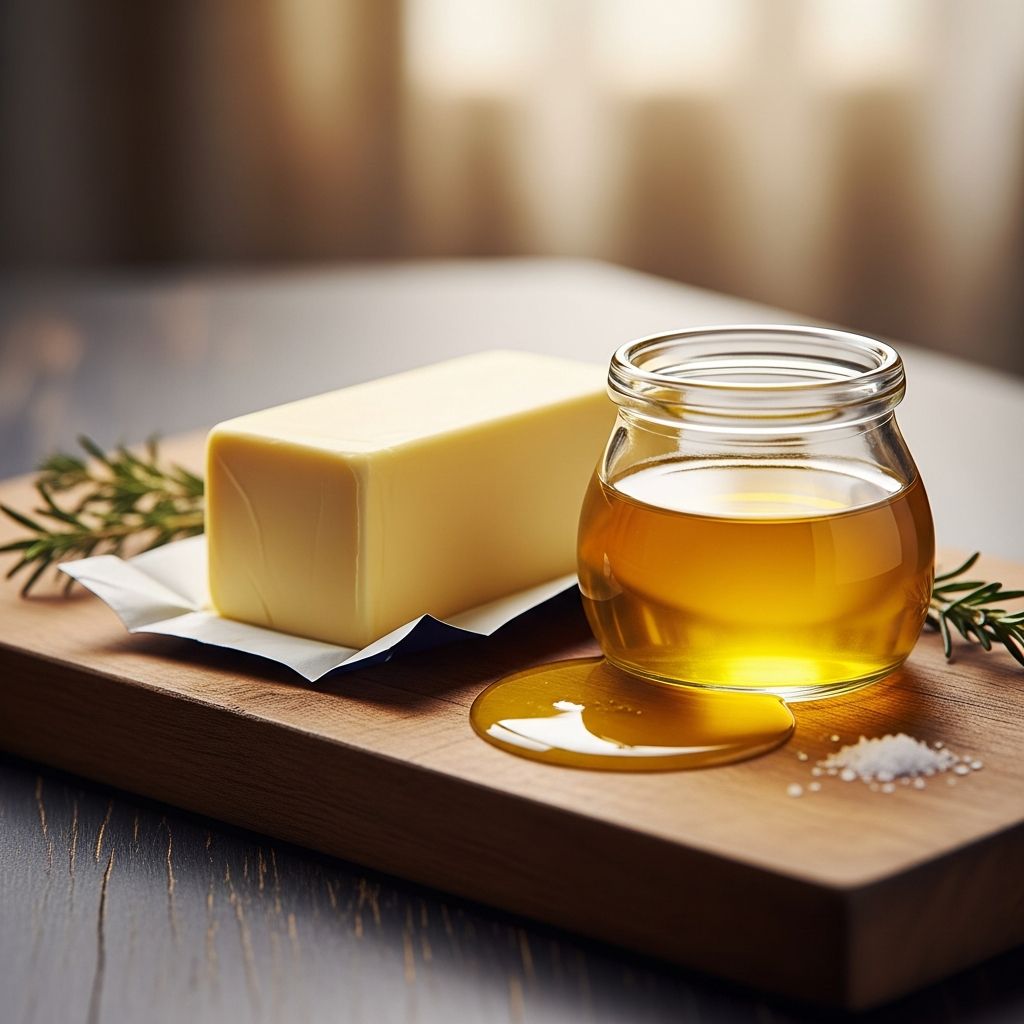
Butter and ghee are both popular fats used in cooking and baking, but they differ in production, nutritional profile, and suitability for various diets. Ghee, a form of clarified butter, offers advantages like higher smoke points and lower lactose, making it preferable for high-heat cooking and lactose-sensitive individuals.
What Is Butter?
Butter is made by churning cream or milk until the fat solids separate from the liquid buttermilk. It contains butterfat along with water, milk solids, and sometimes salt in salted varieties. Traditional butter has about 80-82% fat, with the remainder being water, lactose, and proteins like casein.
Butter provides a creamy texture and rich flavor due to its milk solids, making it ideal for baking where these components contribute to structure and taste. However, its lower smoke point limits high-heat applications, as it burns around 350°F (177°C).
What Is Ghee?
Ghee is clarified butter produced by simmering butter to evaporate water and remove milk solids and impurities, leaving nearly pure butterfat (99-99.5% fat). This process, often done at higher temperatures (100-140°C), gives ghee a nutty flavor and golden hue.
Originating from Indian and Ayurvedic traditions, ghee is used in cooking, massages, and herbal remedies. Its removal of dairy components reduces lactose and casein, benefiting those with sensitivities.
Butter vs. Ghee: Nutrition Comparison
Both are calorie-dense fats with similar profiles, primarily saturated fats, but ghee is more concentrated. Per teaspoon servings highlight minor differences.
| Nutrient (per 1 tsp) | Butter | Ghee |
|---|---|---|
| Calories | 36 | 45 |
| Total Fat | 4.1g | 5g |
| Saturated Fat | 2.5g | 3g |
| Protein | 0.04g | 0g |
| Carbs | 0g | 0g |
| Sodium | 1mg | 0mg |
| Vitamin A | 125 IU | 200 IU |
Ghee contains slightly more calories and fat due to concentration, plus vitamin E, conjugated linoleic acid (CLA) for potential cancer protection, and butyrate for gut health. Butter matches in vitamin A but retains more dairy proteins.
Health Benefits and Risks
Heart Health
Both are high in saturated fats, linked to heart disease risks, yet recent data shows nuance. A 2018 study in northern India found higher ghee intake (vs. mustard oil) correlated with lower LDL and higher HDL cholesterol. Traditional ghee use may lower heart risks, per Cleveland Clinic experts, though overall fat content remains similar.
Digestive Health and Lactose
Ghee’s butyrate supports colon health and reduces inflammation, aiding digestion. With minimal lactose and casein, it’s suitable for lactose-intolerant people, unlike butter.
Other Benefits
CLA in ghee may protect against colorectal and breast cancers. Both provide fat-soluble vitamins, but moderation is key due to calorie density.
- Saturated fat concerns: Ghee’s role in India’s rising coronary disease noted, but evidence mixed.
- Anti-inflammatory potential: Butyrate in ghee from bacterial fermentation, not solely saturated fat.
Cooking and Smoke Point
Ghee excels with a 485°F (252°C) smoke point vs. butter’s 350°F, preventing burning in frying or sautéing. Its nutty taste enhances dishes.
Related Stories



- Best for butter: Baking, low-heat sautéing, spreading.
- Best for ghee: High-heat stir-fries, deep-frying, Indian curries.
Who Should Choose Ghee Over Butter?
- Lactose-intolerant or casein-sensitive: Ghee’s low dairy content.
- High-heat cooking enthusiasts: Superior stability.
- Kosher/dairy-avoidant: Ghee isn’t fully dairy-free; check labels.
- Flavor seekers: Ghee’s richer profile.
For allergies, neither is safe. Use sparingly for satiety in calorie-controlled diets.
How to Make Ghee at Home
- Start with unsalted butter.
- Melt slowly in a saucepan over medium heat.
- Skim foam; cook until solids sink and liquid clears (30-40 minutes).
- Strain through cheesecloth; cool and store.
Homemade ghee lasts months refrigerated.
Butter vs. Ghee in Recipes
Substitute 1:1. Ghee adds depth to curries, popcorn, or coffee; butter suits pastries. A little enhances satisfaction, reducing overall intake.
Expert Advice
Dietitians like Bonnie Taub-Dix and Candace O’Neill note no major health edge; choose based on needs. Limit both in balanced diets.
Frequently Asked Questions
What is the main difference between butter and ghee?
Ghee is clarified butter with milk solids and water removed, resulting in higher fat purity, lower lactose, and better heat stability.
Is ghee healthier than butter?
Similar nutritionally; ghee suits lactose issues and high-heat cooking, but both require moderation due to saturated fat.
Can I use ghee if I’m lactose intolerant?
Yes, its low lactose makes it tolerable for most.
Does ghee have a higher smoke point?
Yes, 485°F vs. butter’s 350°F.
Is ghee dairy-free?
No, it’s derived from dairy but lacks milk proteins.
References
- Ghee Vs. Butter: Which Is Healthier? — Women’s Health Magazine. 2019-05-01. https://www.womenshealthmag.com/food/a28591108/ghee-vs-butter/
- Ghee vs butter: What are the differences? — Medical News Today. 2018-05-25. https://www.medicalnewstoday.com/articles/321707
- Better Than Butter? Separating Ghee Fact From Fiction — Cleveland Clinic. 2023-10-12. https://health.clevelandclinic.org/better-than-butter-separating-ghee-fact-from-fiction
- A Comparative Analysis of Butter, Ghee, and Margarine and Its… — National Institutes of Health (PMC). 2024-01-15. https://pmc.ncbi.nlm.nih.gov/articles/PMC11666836/
Similar Articles








Read full bio of medha deb