Butterfly Needle: How They Work for Blood Draws
Learn how butterfly needles work for blood draws, IV fluids, and medications with expert guidance.
Understanding Butterfly Needles
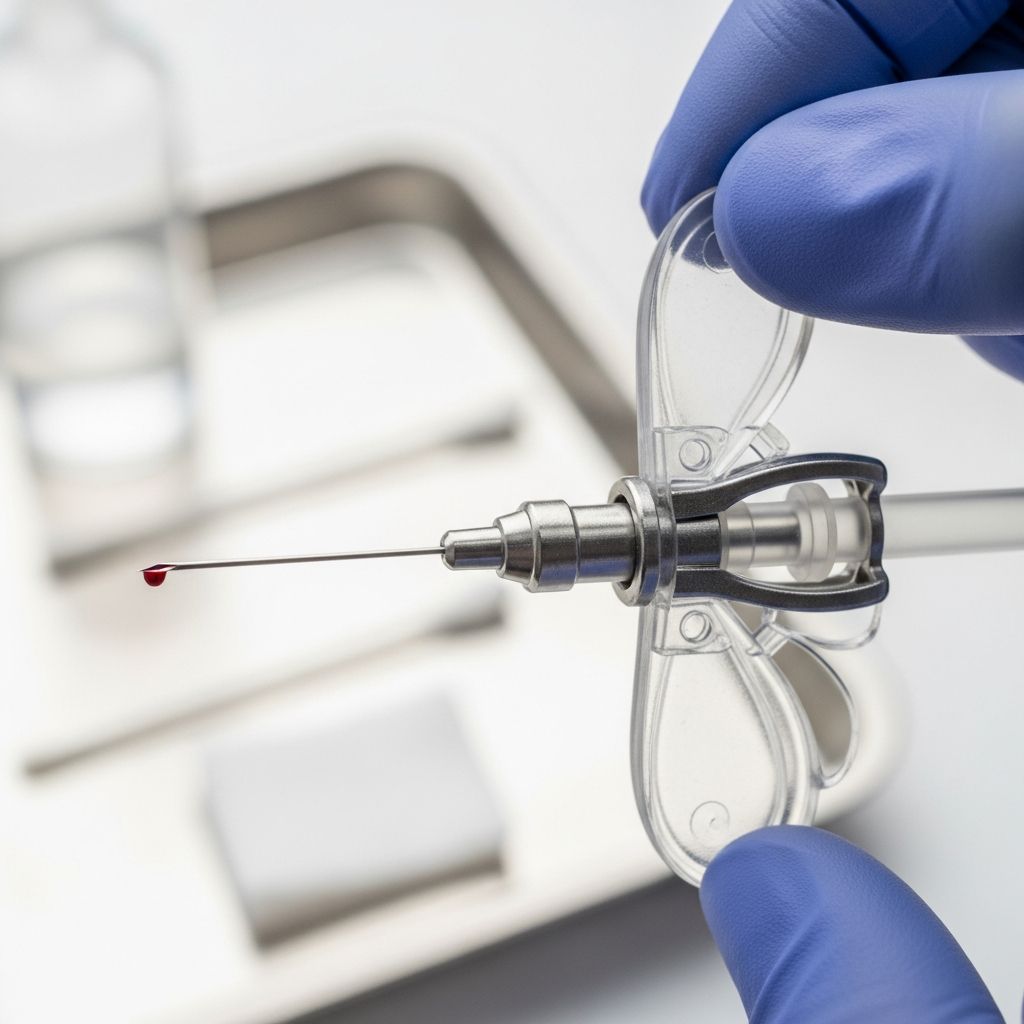
A butterfly needle is a specialized medical device that healthcare providers use to draw blood from your vein or deliver fluids and medications directly into your bloodstream. Also known as a winged infusion set or scalp vein set, this needle has become an essential tool in modern phlebotomy and intravenous therapy. The butterfly needle gets its distinctive name from the two plastic “wings” on either side of the needle shaft, which serve important functional purposes during medical procedures.
The design of a butterfly needle is specifically engineered to address the challenges healthcare providers face when accessing difficult or fragile veins. Unlike traditional straight needles, the butterfly needle offers enhanced control and precision, making it an ideal choice for patients with specific vascular challenges. Understanding how these needles work and when they are used can help patients feel more informed and comfortable during medical procedures.
Design and Components of Butterfly Needles
The structure of a butterfly needle consists of several key components that work together to facilitate safe and effective blood collection or medication delivery. Each component plays a vital role in the needle’s functionality and ease of use.
The Needle and Wings
At the center of a butterfly needle is a thin, sharp needle tip that is angled at the end to facilitate easier insertion into the skin and vein. The needle is attached to two flexible plastic wings on either side, which your healthcare provider holds during insertion. These wings serve as gripping points, allowing the provider to guide the needle into your vein with greater accuracy and control. The wings also help stabilize the needle once it is positioned in the vein, reducing the risk of movement during blood collection or fluid delivery.
Needle Gauge and Size
Butterfly needles come in various gauges, or sizes, ranging from 18 to 27 gauge. The gauge number indicates the needle’s thickness: the higher the number, the thinner the needle. A 27-gauge needle is considered ultra-fine and is typically used for patients with very delicate or small veins, such as infants or elderly patients. Smaller gauge needles cause less tissue trauma but may take longer to collect blood samples. The choice of gauge depends on the patient’s vein size, the type of procedure, and the urgency of the blood collection.
Flexible Tubing System
Connected to the needle is clear, flexible tubing that typically ranges from about 8 inches to 15 inches (20 to 35 centimeters) in length. This tubing provides a flexible connection between the needle and the collection or delivery device. The tubing usually features a twisting lock or adapter at its end, ensuring a leak-proof connection. Some adapters include ports where healthcare providers can insert a syringe to administer medications or withdraw blood samples directly through the tubing.
Primary Uses of Butterfly Needles
Healthcare providers employ butterfly needles for several important medical applications. Understanding these uses helps patients recognize when and why their healthcare provider might choose this particular device for their procedure.
Blood Collection and Phlebotomy
One of the most common applications of butterfly needles is drawing blood samples for laboratory testing, blood donations, or diagnostic procedures. The needle’s design makes it particularly valuable when collecting blood from patients with difficult-to-access veins.
Intravenous Fluid Delivery
Butterfly needles are frequently used to deliver intravenous fluids directly into the patient’s bloodstream. This application is common in hospital settings, emergency rooms, and outpatient facilities where patients require hydration or electrolyte replacement.
Related Stories



Medication Administration
Healthcare providers use butterfly needles to administer medications intravenously, allowing for rapid drug delivery and precise dosing. The flexible tubing allows medical staff to administer medications while maintaining patient comfort and mobility.
Advantages of Butterfly Needles
Butterfly needles offer several significant benefits that make them the preferred choice for many clinical situations. These advantages contribute to both patient comfort and healthcare provider efficiency.
Enhanced Comfort and Precision
The wings on a butterfly needle provide healthcare providers with superior grip and control compared to straight needles. This improved handling translates to greater accuracy during insertion, which can reduce the number of attempts needed to locate the vein successfully. Fewer insertion attempts mean less pain and tissue trauma for the patient.
Ideal for Difficult Veins
Butterfly needles are particularly beneficial for patients with small, fragile, or hard-to-access veins. These include elderly patients, infants, patients undergoing chemotherapy, and those with conditions that make their veins difficult to locate or puncture. The needle’s thin design and precise angle allow providers to access veins that might be impossible to reach with standard needles.
Reduced Patient Anxiety
Because butterfly needles often require fewer insertion attempts due to improved provider control, patients experience less discomfort during the procedure. This can reduce overall anxiety associated with blood draws and intravenous procedures, particularly for individuals who have experienced multiple failed attempts in the past.
Flexibility in Positioning
The flexible tubing attached to butterfly needles provides freedom of movement for both the patient and healthcare provider. Patients can position their arm more comfortably during blood collection, and providers have more flexibility in positioning themselves and the collection equipment.
Limitations and Considerations
While butterfly needles offer many advantages, they do have certain limitations that healthcare providers must consider when selecting the appropriate needle for a procedure.
Cost Considerations
Butterfly needles cost substantially more than traditional straight needles or vacutainer systems. This increased expense is a significant factor for healthcare facilities, particularly when performing high-volume blood collections. The higher cost must be weighed against the benefits provided, especially for patients with easily accessible veins who could be served effectively by less expensive alternatives.
Potential for Hemolysis
Historically, concerns have been raised about butterfly needles potentially causing hemolysis—the breakdown of red blood cells in the collected blood sample. More recent advances in manufacturing have allowed production of smaller-gauge butterfly needles that do not necessarily increase hemolysis rates. Clinical guidelines have been updated to reflect that only some 25-gauge needles increase hemolysis risk, rather than all small-gauge needles.
Limited Blood Collection Volume
Butterfly needles may not be ideal when large volumes of blood need to be collected or when multiple tubes must be filled. The needle’s smaller size and the flexible tubing can make it less efficient for extensive blood draws compared to straight needles with larger bores.
Safety Device Considerations
Proper use of butterfly needle safety devices is essential to minimize occupational exposure risks for healthcare workers. Not all butterfly needles include safety features, and staff training is critical to ensure that safety mechanisms are used correctly.
Butterfly Needles vs. Straight Needles
Understanding the differences between butterfly needles and traditional straight needles helps explain why healthcare providers choose one over the other in different clinical situations.
| Feature | Butterfly Needle | Straight Needle |
|---|---|---|
| Design | Two plastic wings for gripping | No wings; straight shaft only |
| Best For | Difficult or fragile veins | Easily accessible veins |
| Blood Volume | Smaller collections | Large volume collections |
| Tubing | 8-15 inches of flexible tubing | No tubing; direct connection |
| Cost | Higher cost per unit | Lower cost per unit |
| Precision | Enhanced grip and control | Standard handling |
Straight needles tend to be better for patients with easily accessible veins and are more cost-effective for routine blood draws from cooperative patients with good venous access. Your healthcare provider will select the most appropriate needle based on your specific vein characteristics, the procedure being performed, and your comfort level.
Proper Technique and Safety
Healthcare providers follow specific protocols when using butterfly needles to ensure patient safety and obtain quality blood samples. During insertion, the provider holds the needle by the wings or needle body to maintain control and direct the needle into the vein accurately. Before attaching the collection tube, the provider confirms correct venous access by observing blood in the chamber to ensure proper placement.
For healthcare workers using butterfly needles, proper safety device activation is essential to minimize occupational exposure risks. Modern butterfly needles with push-button retractable safety devices can be as safe as traditional vacutainer needles when used correctly. Staff training on proper activation technique—ensuring the safety device is engaged before withdrawing the needle from the patient’s arm—is critical for workplace safety.
Who Benefits Most from Butterfly Needles
Certain patient populations benefit particularly from butterfly needle use. Infants and young children often have very small, delicate veins that are easier to access with butterfly needles. Elderly patients may have fragile veins that are prone to collapse or bruising with standard needles. Patients undergoing chemotherapy often have compromised veins from previous treatments, making butterfly needles a more comfortable option. Patients with chronic conditions, severe dehydration, or poor circulation may also benefit from the precision and gentleness of butterfly needle placement.
Recent Advances in Butterfly Needle Technology
Manufacturing advances have improved butterfly needle performance and safety. Development of 25-gauge needles with wider bores has reduced concerns related to excess hemolysis in blood samples. Implementation of push-button retractable safety devices has significantly reduced percutaneous needle exposures among healthcare workers. These technological improvements continue to expand the appropriate use cases for butterfly needles while maintaining high standards of safety and sample quality.
When Your Healthcare Provider Chooses a Butterfly Needle
Your healthcare provider makes the decision to use a butterfly needle based on several factors. They assess your vein accessibility and size, consider the volume of blood needed or fluids to be delivered, evaluate your comfort level and history with previous procedures, and determine whether your specific medical condition warrants the use of specialized equipment. While butterfly needles cost more than standard needles, the benefits for patients with difficult veins often justify the expense in clinical settings.
Frequently Asked Questions About Butterfly Needles
Q: Are butterfly needles more painful than straight needles?
A: Butterfly needles are often less painful than straight needles, particularly for patients with difficult veins. The enhanced control provided by the wings typically allows for more accurate placement on the first attempt, reducing the need for multiple insertions and associated discomfort.
Q: Why do butterfly needles have wings?
A: The wings serve as gripping points that allow healthcare providers to hold and manipulate the needle with greater precision during insertion into the vein. This design feature improves accuracy and reduces the likelihood of vein damage.
Q: Can butterfly needles be used for all types of blood collection?
A: While butterfly needles are versatile, they are not ideal for all situations. They work best for smaller blood collections and patients with difficult veins. For large volume collections or patients with easily accessible veins, straight needles may be more appropriate and cost-effective.
Q: How long is the tubing on a butterfly needle?
A: Butterfly needle tubing typically ranges from about 8 inches to 15 inches (20 to 35 centimeters) in length, providing flexibility for various clinical settings and patient positioning.
Q: Are there safety concerns with butterfly needles?
A: Modern butterfly needles with push-button retractable safety devices significantly reduce occupational exposure risks for healthcare workers and can be as safe as standard vacutainer needles when used correctly. Proper staff training on safety device activation is essential.
Q: What gauge butterfly needle is best for infants?
A: Healthcare providers typically use higher-gauge butterfly needles (such as 25 or 27 gauge) for infants, as these ultra-fine needles are designed for very small and delicate veins.
Q: Do butterfly needles cause hemolysis in blood samples?
A: Not all butterfly needles increase hemolysis risk. Recent manufacturing advances have produced smaller-gauge butterfly needles that do not necessarily cause hemolysis. Current clinical guidelines reflect that only some 25-gauge needles increase hemolysis risk.
References
- Top Gun Phlebotomy – Butterfly Use: The Good, the Bad, and the Ugly — Mayo Clinic Laboratories. 2020-02-17. https://news.mayocliniclabs.com/2020/02/17/top-gun-phlebotomy-butterfly-use-the-good-the-bad-and-the-ugly/
- Butterfly Needle: How They Work for Blood Draws — Cleveland Clinic. 2025-08-01. https://my.clevelandclinic.org/health/drugs/butterfly-needle
- Standards and Practice Guidelines for Venous Blood Collection — National Institutes of Health, National Center for Biotechnology Information. 2024. https://pmc.ncbi.nlm.nih.gov/articles/PMC12187494/
- Proper Needle Selection for Blood Collection — Medical Laboratory Management & Administration. https://www.medlabmag.com/article/1592
Similar Articles








Read full bio of medha deb