Butternut Squash vs Spaghetti Squash: Differences & Nutrition
Explore the key differences between butternut and spaghetti squash including nutrition, taste, uses, and cooking methods.
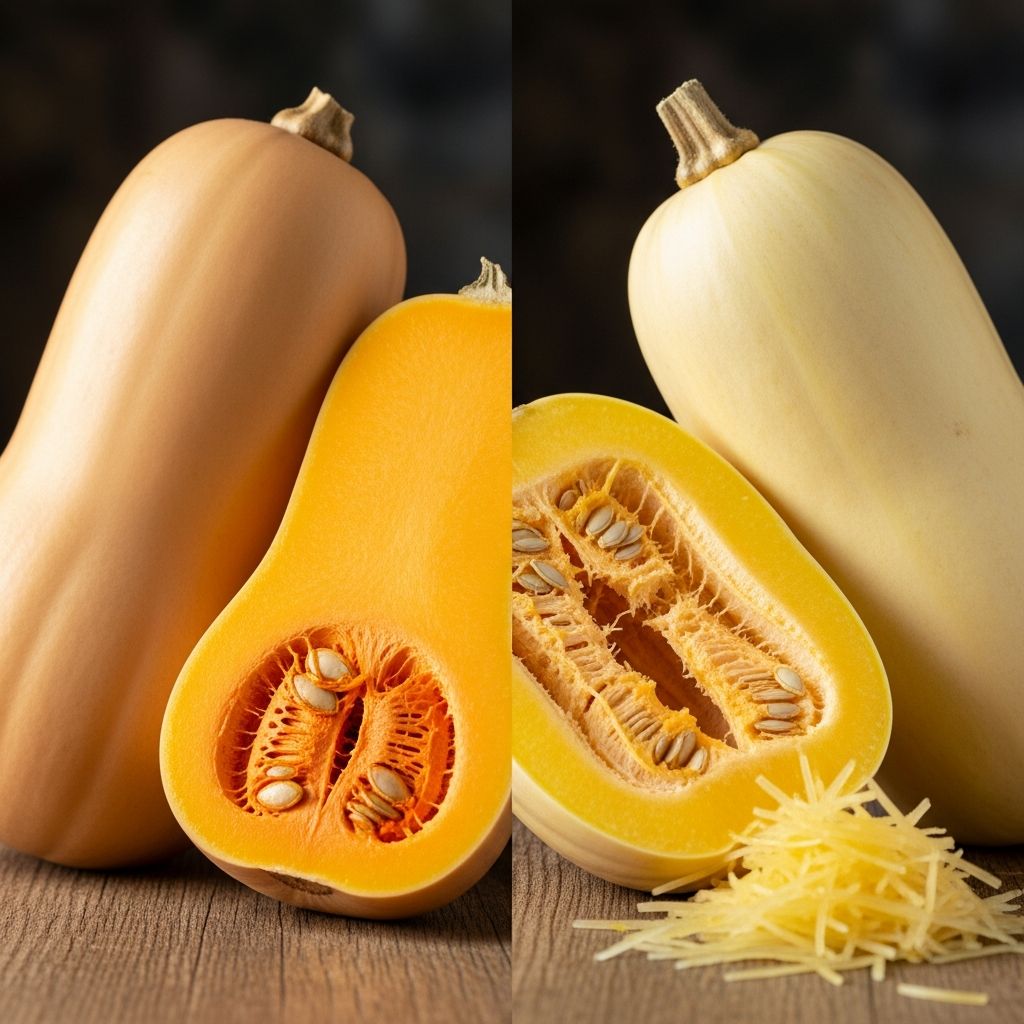
Butternut Squash vs Spaghetti Squash: A Comprehensive Comparison
Butternut squash and spaghetti squash are two popular winter vegetables that appear frequently in grocery stores and home gardens. While both belong to the Cucurbita plant family and are classified as winter squashes, they are distinctly different vegetables with unique characteristics, nutritional profiles, and culinary applications. Understanding the differences between these two squashes can help you choose the right option for your meal planning and dietary needs.
Classification and Botanical Differences
Although butternut squash and spaghetti squash both belong to the Cucurbita genus, they represent different species within this plant family. Spaghetti squash belongs to the Cucurbita pepo species, while butternut squash belongs to the Cucurbita moschata species. Despite this subtle botanical difference, it leads to significant variations in appearance, flavor, texture, and nutritional content that make each squash unique in the kitchen.
Physical Description and Appearance
The most obvious differences between these two squashes become immediately apparent when you place them side by side.
Butternut Squash Characteristics:
- Features a distinctive bell-shaped silhouette with a thin neck and enlarged bulbous bottom half
- Exterior skin is smooth and tan or beige in color
- Interior flesh is bright orange, resembling pumpkin flesh in appearance
- Contains large seeds and pulp throughout the cavity
- Skin remains relatively thin compared to other winter squash varieties
Spaghetti Squash Characteristics:
- Maintains a uniform, oval, or round shape throughout
- Available in multiple color varieties including white, yellow, and orange
- Exterior remains relatively smooth without the distinctive neck feature
- Interior flesh is pale yellow or cream-colored and stringy in texture
- Contains large seeds distributed throughout, similar to butternut squash
- Raw flesh appears compacted and hard until cooking breaks it down
Flavor Profiles and Taste Comparison
The flavor differences between these squashes make them suitable for different types of dishes and culinary applications. Butternut squash is renowned for its sweet, nutty flavor with subtle hints of pumpkin, making it naturally suited to both savory and sweet preparations. The sweetness of butternut squash is comparable to sweet potatoes, which is why many cooks use it as a substitute in traditional sweet potato recipes.
Spaghetti squash, by contrast, features a mild and fairly neutral flavor. This delicate taste profile makes spaghetti squash an excellent vehicle for sauces and seasonings without overwhelming other ingredients. The stringy texture combined with mild flavor creates an ideal canvas for various toppings and preparations, from marinara sauce to Asian-inspired seasonings.
Texture and Flesh Structure
The internal texture of each squash fundamentally determines how it should be prepared and used:
| Characteristic | Butternut Squash | Spaghetti Squash |
|---|---|---|
| Raw Flesh Texture | Hard and compacted | Hard and stringy |
| Cooked Flesh Texture | Soft, creamy, dense | Separates into spaghetti-like strands |
| Primary Component | Solid flesh | Stringy fibers |
| Seed Preparation | Seeds rarely eaten | Seeds often roasted like pumpkin seeds |
Related Stories



Nutritional Profile Comparison
Both squashes offer impressive nutritional benefits, though with different strengths. Butternut squash is significantly more nutrient-dense overall, containing higher concentrations of vitamins A, C, and other essential nutrients including fiber, thiamin, vitamin B6 (biotin), magnesium, and potassium. These nutrients make butternut squash an excellent choice for supporting immune function, vision health, and overall wellness.
Spaghetti squash excels in vitamin B and fiber content, making it particularly valuable for energy metabolism and digestive health. As a low-calorie alternative to pasta noodles, spaghetti squash provides approximately 31 calories per cup when cooked, compared to regular pasta’s much higher caloric density. This makes spaghetti squash an exceptional choice for individuals following low-carb, keto-friendly, or calorie-conscious diets.
The following nutrients are particularly abundant in each variety:
- Butternut Squash: Vitamin A, Vitamin C, potassium, magnesium, fiber, and thiamin
- Spaghetti Squash: Vitamin B, fiber, and minimal carbohydrates for a vegetable
Culinary Uses and Cooking Applications
Butternut Squash Uses
Butternut squash’s naturally sweet flavor and creamy texture when cooked make it incredibly versatile in the kitchen. Popular preparations include:
- Roasted as a side dish with olive oil and seasonings
- Pureed into soups, bisques, and cream sauces
- Mashed as a healthier alternative to mashed potatoes
- Incorporated into pasta dishes, risottos, and baked goods
- Used in sweet applications like pies, breads, and desserts
- Combined with grains in grain bowls and salads
Spaghetti Squash Uses
Spaghetti squash’s unique stringy texture when cooked makes it the primary choice for pasta substitutes. Ideal applications include:
- As a base for marinara sauce and traditional pasta toppings
- Mixed with vegetables and proteins in stir-fries
- Stuffed with various fillings and baked
- Combined with chili and hearty proteins
- Made into fritters or latkes for appetizers
- Used in baked ziti preparations
- Served with pesto, olive oil, or light seasonings
Cooking Methods and Preparation
Butternut Squash Preparation
Butternut squash requires more effort to prepare due to its hard exterior skin. The thin skin can typically be removed with a vegetable peeler before cooking, or left intact during roasting. Common cooking methods include baking, roasting at 375-400 degrees, boiling, and sautéing. Roasting is particularly popular as it caramelizes the natural sugars and enhances the sweet, nutty flavor.
Spaghetti Squash Preparation
Spaghetti squash offers more cooking flexibility. The easiest method involves cutting the squash in half lengthwise, scooping out seeds, placing it in a baking dish, and roasting at 375-400 degrees for at least 45 minutes until the flesh is soft. Once cooked, simply scrape the flesh with a fork and it naturally separates into spaghetti-like strands. Alternative methods include steaming, boiling, and microwaving, making spaghetti squash extremely convenient for busy cooks.
Harvest Time and Seasonality
Understanding when each squash reaches peak harvest helps with purchasing the freshest produce:
- Butternut Squash: Technically considered a winter squash but harvested in fall (September-October)
- Spaghetti Squash: Also harvested in fall, typically September-October
When shopping, look for squashes that are firm on the outside with few dents or dark spots. Both varieties store well through winter when kept in cool, dark conditions, making them valuable pantry staples.
Historical Context and Popularity
Butternut squash has an interesting modern history—despite its current popularity, it was only developed and introduced commercially in the 1940s. Despite its relatively recent creation, butternut squash has become the most popular winter squash variety consumed worldwide, second only to pumpkins in winter squash consumption.
Spaghetti squash earned its name due to its popularity as a vegetable pasta substitute, also known as “vegetable spaghetti.” This marketing-friendly name has contributed to its growing popularity among health-conscious consumers seeking low-carb and gluten-free pasta alternatives.
Choosing Between Butternut and Spaghetti Squash
Your choice between these two squashes should depend on your specific culinary goals and nutritional priorities:
Choose Butternut Squash if you:
- Want maximum nutritional density and vitamin A content
- Prefer naturally sweet flavors
- Are making soups, purees, or creamy dishes
- Seek a lower-calorie alternative to potatoes or sweet potatoes
- Enjoy both savory and sweet preparations
Choose Spaghetti Squash if you:
- Follow a low-carb or keto diet
- Want a pasta substitute with minimal calories
- Prefer mild flavors that pair well with sauces
- Need quick cooking times and convenience
- Enjoy versatile vegetable preparations
Frequently Asked Questions
Q: Can I eat the skin of butternut squash?
A: Yes, butternut squash skin is edible and becomes tender when cooked. Many people remove it before cooking with a vegetable peeler, but you can also roast the squash whole and scoop the flesh from the softened skin after cooking.
Q: Is spaghetti squash really a good pasta substitute?
A: Yes, spaghetti squash provides a vegetable-based, low-carb alternative to traditional pasta. While the texture differs from pasta, it works well with sauces and offers significant nutritional benefits with far fewer calories and carbohydrates.
Q: Which squash has more fiber?
A: Spaghetti squash contains notably more fiber relative to its calorie content, making it excellent for digestive health and satiety. Butternut squash also provides substantial fiber along with additional vitamins and minerals.
Q: How long do these squashes store?
A: Both butternut and spaghetti squash store well for several weeks to months when kept in a cool, dark location with good air circulation. Proper storage extends their shelf life significantly beyond fresh consumption.
Q: Can I grow both squashes in my garden?
A: Yes, both varieties are home-gardener friendly. They require similar growing conditions—warm weather, sunlight, and well-draining soil. Harvest when the exterior color deepens and the rind resists puncturing with a fingernail.
Q: What’s the main difference in how I should cook these?
A: Butternut squash is typically cooked until soft and creamy for mashing, pureeing, or roasting as chunks. Spaghetti squash is cooked until tender and then scraped with a fork to create the characteristic strands.
References
- Spaghetti Squash vs Butternut Squash: What’s the Difference? — A-Z Animals. Accessed January 2026. https://a-z-animals.com/blog/spaghetti-squash-vs-butternut-squash-whats-the-difference/
- Winter Squash 101: A Deep Dive Into 13 Varieties — Running to the Kitchen. Accessed January 2026. https://www.runningtothekitchen.com/guide-to-winter-squash/
- Acorn, Butternut, & Spaghetti Squash Guide — Farm Bureau Direct. September 2021. https://www.fbd.org/wp-content/uploads/2021/09/Edited-Squash-CSA-Adult.pdf
Similar Articles








Read full bio of Sneha Tete