Butternut Squash Vs. Sweet Potato: Nutrition & Cooking Guide
Compare nutrition, health benefits, taste, cooking tips, and when to choose butternut squash or sweet potato for your meals.
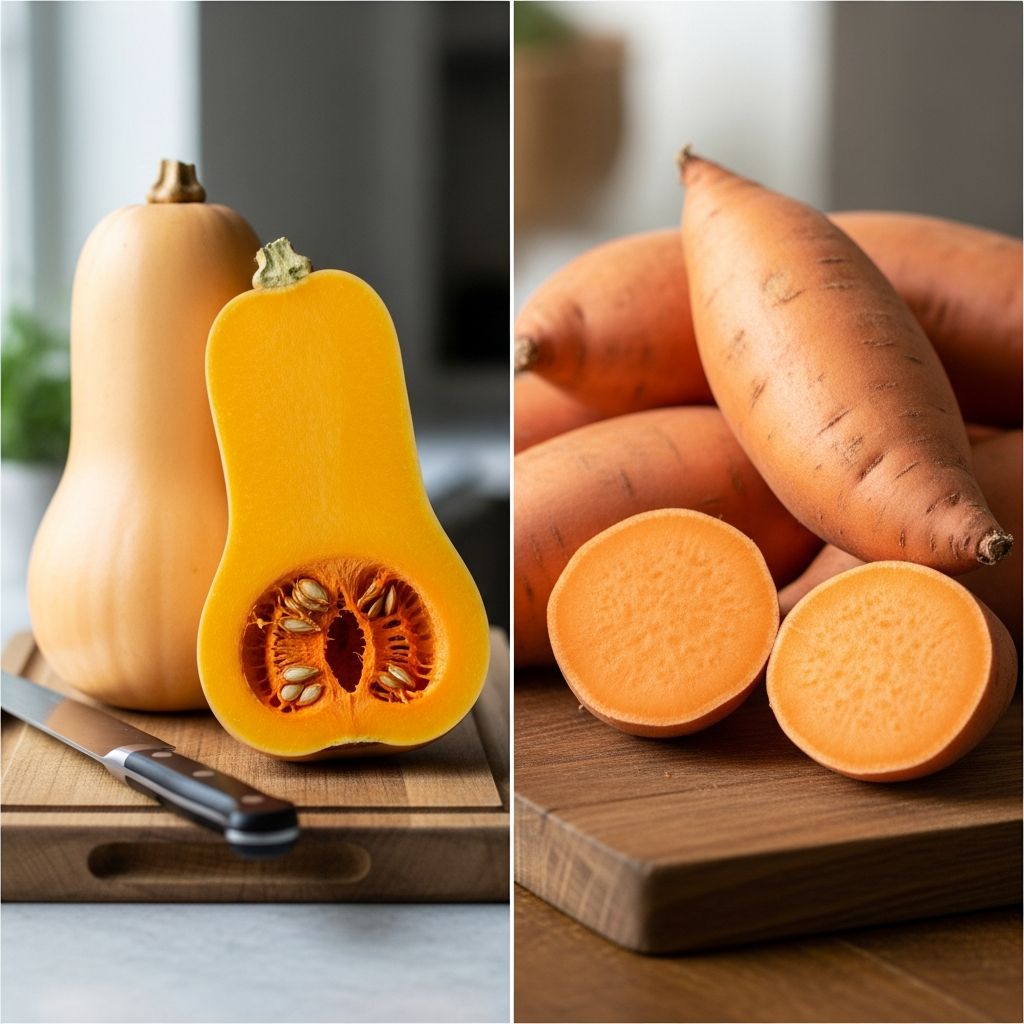
Butternut squash and sweet potatoes are both fall favorites packed with nutrients, but they differ significantly in calories, vitamins, fiber, glycemic index, and culinary performance. This comprehensive comparison helps you decide which to choose based on health goals, recipes, and budget.
Nutrition Comparison
Per 100g serving, butternut squash is lower in calories and carbs, making it ideal for weight management and blood sugar control, while sweet potatoes provide more vitamin A but higher sugar content.
| Nutrient | Butternut Squash (100g) | Sweet Potato (100g) |
|---|---|---|
| Calories | 45 kcal | 86 kcal |
| Carbohydrates | 12g | 20g |
| Dietary Fiber | 2g | 3g |
| Sugars | 2g | 4.2g |
| Vitamin A (RAE) | 457mcg (51% DV) | 709mcg (79% DV) |
| Vitamin C | 31mg (34% DV) | 2.4mg (3% DV) |
| Potassium | 352mg | 337mg |
| Glycemic Index | 51 (Medium) | 70 (High) |
Data from USDA FoodData Central shows butternut squash edges out in vitamin C and lower glycemic impact, supporting immune health and diabetes management. Sweet potatoes excel in vitamin A for eye health and immunity.
For a 1-cup serving, butternut squash has about 63 calories and 16g carbs, compared to 130 calories and 33g carbs in a medium sweet potato. Both are low in fat and sodium.
Health Benefits
Both vegetables are antioxidant powerhouses due to beta-carotene, but their profiles target different needs. Butternut squash’s high vitamin C and fiber aid immunity, digestion, and blood pressure control via 582mg potassium per cup—more than a banana.
- Butternut Squash Benefits: Antioxidants may reduce cancer risk (e.g., pancreatic via vitamin C and beta-carotene per meta-analysis of 18 studies); protects against cognitive decline, hypertension, obesity, and inflammation; high fiber lowers cholesterol and promotes satiety for weight loss.
- Sweet Potato Benefits: Superior beta-carotene converts efficiently to vitamin A, vital for vision and immunity (American Journal of Clinical Nutrition); higher fiber (4g vs. 2.8g per cup) and protein support digestion; potassium aids muscle function.
Neither is a ‘bad carb’—butternut squash’s fiber makes it suitable for low-carb diets, with 40% fewer carbs than sweet potatoes or regular potatoes, ideal for type 2 diabetes. Choose based on needs: squash for low-GI, potatoes for vitamin A boost.
Taste and Texture Differences
Butternut squash offers a nutty, subtly sweet flavor with smooth, dense texture when cooked—perfect for silky purees. Sweet potatoes are earthier and sweeter, with moist, sometimes fibrous texture that caramelizes beautifully.
- Roasting: Squash holds shape better, less soggy; potatoes caramelize but need drying to avoid mushiness.
- Purees: Squash is silkier (less fat needed); potatoes richer for desserts.
- Raw: Squash tougher to peel; microwave softening helps.
These differences influence recipe success—squash for neutral savory bases, potatoes for natural sweetness reducing added sugars.
Which Is Healthier?
Both are nutritious fall stars, but butternut squash wins for lower calories (60-82 per cup vs. 130), carbs (16g vs. 33g), and sugars (3g vs. 7g), plus more calcium, magnesium, vitamin E, B6, and folate. Sweet potatoes lead in fiber, protein, and vitamin A.
For diabetes or weight loss, choose squash’s lower GI (51 vs. 70). For eye health or vitamin A deficiency, opt for sweet potatoes. Diets high in either reduce chronic disease risk via antioxidants and potassium balancing sodium intake to lower heart disease/stroke odds.
Related Stories



When to Choose Butternut Squash vs. Sweet Potato
Select based on goals and recipes:
Choose Butternut Squash When:
- Managing carbs/diabetes (lower GI, fewer carbs).
- Immune boost (higher vitamin C).
- Savory dishes: soups, risottos, sauces (neutral flavor).
- Budget/storage: cheaper ($1.29/lb), lasts 2-3 months.
Choose Sweet Potatoes When:
- Maximizing vitamin A (79% DV).
- Sweet recipes: desserts, muffins, breakfast (higher natural sugars).
- Muscle health (potassium).
- Year-round availability, peaks Oct-Dec.
Substitution Guide
Swap 1:1 but adjust for differences:
| Use Case | Substitution Tips |
|---|---|
| Savory | Replace potatoes with squash; reduce sweeteners 25%. |
| Baking | Squash for potatoes: add 15-20% more sweetener + 1/8 tsp cinnamon/cup. |
| Purees | Squash needs less liquid. |
| Roasting | Potatoes cook 5-7 min faster at 400°F. |
Pro tip: 60:40 squash-to-potato blend balances nutrition, sweetness, and texture for versatile sides.
Seasonal Availability and Storage
Butternut squash peaks Sep-Jan ($1.29/lb); sweet potatoes year-round, peak Oct-Dec ($1.59/lb). Store unwashed in cool, dark, ventilated spots: squash 2-3 months, potatoes 3-5 weeks. Avoid light to prevent sprouting.
Cooking Tips
Prep: For squash, cut ends, microwave 2-3 min to soften peel; slice, remove seeds.Roast: 400°F, 25-35 min (potatoes faster). Soup/Puree: Steam/boil then blend. Experiment with spices—squash loves sage, potatoes cinnamon.
Frequently Asked Questions
Which has more calories, butternut squash or sweet potato?
Sweet potatoes have nearly double the calories (86-130 per 100g/cup) vs. butternut squash (45-63).
Is butternut squash good for diabetes?
Yes, lower carbs (40% less than potatoes), GI 51, and fiber make it excellent for blood sugar control.
Which is better for weight loss?
Butternut squash, due to fewer calories, carbs, sugars, and high fiber for satiety.
Can I substitute one for the other?
Yes, 1:1 with adjustments for sweetness and cooking time as noted above.
Are both high in vitamin A?
Yes, but sweet potatoes provide more (79% DV vs. 51%).
References
- Butternut Squash vs Sweet Potato: Nutritional & Cooking Guide — Alibaba Spice Basics. 2023. https://spice.alibaba.com/spice-basics/butternut-squash-vs-sweet-potato
- Orange Vegetables – An Ode To Butternut Squash and Sweet Potatoes — Eat Flavorly. 2023. https://www.eatflavorly.com/orange-vegetables-an-ode-to-butternut-squash-and-sweet-potatoes/
- Butternut Squash Nutrition and Health Benefits — Good Housekeeping. 2023. https://www.goodhousekeeping.com/health/diet-nutrition/a28859191/butternut-squash-nutrition/
- Dangerous Curves Ahead: Why Butternut Squash Is the New Sweet Potato — Edible Sema. 2023. https://ediblesema.com/bits-and-bytes/dangerous-curves-ahead-why-butternut-squash-is-the-new-sweet-potato/
- Is Butternut Squash Okay to Eat With Type 2 Diabetes? — Type2Diabetes.com. 2023. https://type2diabetes.com/nutrition/squash
Similar Articles








Read full bio of Sneha Tete