Cachexia: Symptoms, Causes, Diagnosis, Treatment
Understanding cachexia: the complex syndrome of muscle wasting in chronic illness, its causes, diagnosis, and emerging treatments.
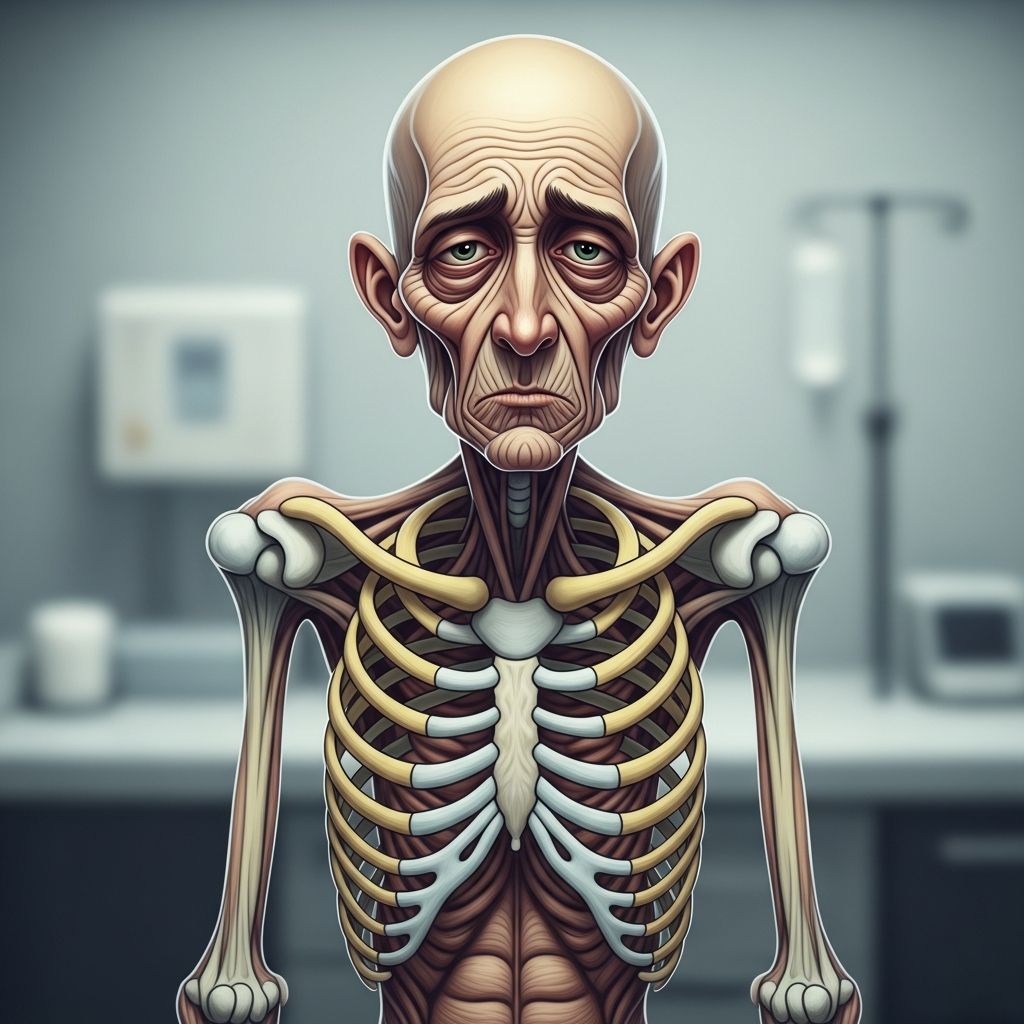
Cachexia is a multifactorial syndrome defined by an ongoing loss of skeletal muscle mass (with or without loss of fat mass) that cannot be fully reversed by conventional nutritional support and leads to progressive functional impairment. Its pathophysiology involves a negative protein and energy balance driven by reduced food intake and abnormal metabolism. This condition commonly affects patients with cancer, chronic kidney disease, heart failure, and other chronic illnesses, significantly impacting quality of life and survival.
What Is Cachexia?
Cachexia represents a distinct metabolic derangement beyond simple malnutrition or starvation. Unlike typical weight loss from caloric deficit, cachexia persists despite adequate nutrition due to underlying hypermetabolism, inflammation, and catabolic processes. The international consensus definition, established by experts including Ken Fearon, emphasizes three core features: weight loss, altered body composition (particularly skeletal muscle depletion), and functional decline.
In cancer patients, cachexia is particularly prevalent, affecting up to 80% in advanced stages. It correlates strongly with reduced survival; for instance, patients with over 15% weight loss have a median survival of just 4.4 months compared to 17.3 months for those with less than 2.5% loss. Body mass index (BMI) also plays a role, with BMI below 20 linked to 4.7-month median survival versus 13.1 months above 28.
Cachexia is not reversible by nutrition alone because of systemic factors like inflammatory cytokines (TNF-alpha, IL-6), myostatin, activin, and neuroendocrine changes leading to insulin resistance and hypermetabolism. Early intervention during a ‘window of anabolic potential’ may halt progression, as shown in CT imaging studies.
Symptoms of Cachexia
Symptoms arise from muscle atrophy, fatigue, and systemic inflammation. Common signs include:
- Unintentional weight loss: Often >5% in 6 months or >2% in patients with BMI <20.
- Muscle weakness and fatigue: Reduced grip strength and difficulty with daily activities.
- Anorexia: Loss of appetite despite nutritional availability.
- Physical factors: Swallowing difficulties in head/neck cancers post-radiation.
- Functional impairment: Decline in physical performance, increasing fall risk and dependency.
Advanced cachexia leads to sarcopenia-like frailty, breathlessness, and poor tolerance to cancer therapies. Patient-reported outcomes often highlight diminished quality of life.
Causes and Risk Factors
Cachexia stems from a combination of reduced food intake and metabolic abnormalities. Key drivers include:
- Cancer-related inflammation: Tumor-secreted factors and cytokines promote catabolism.
- Hypermetabolism: Elevated energy expenditure despite anorexia.
- Neuroendocrine alterations: Stress response activates catabolic pathways.
- Comorbidities: Seen in chronic kidney disease (renal cachexia), heart failure, COPD, and AIDS.
Studies show cachexia independently predicts mortality, though causality is debated—underlying disease may confound outcomes. Observational data link it to cardiovascular death in renal patients via inflammation and platelet activation. Prognostic variables include weight loss percentage, BMI, and inflammatory markers, with all three present yielding 8.4-month survival versus over 28 months if absent.
Cachexia vs. Sarcopenia vs. Malnutrition
| Condition | Key Features | Reversibility | Primary Cause |
|---|---|---|---|
| Cachexia | Muscle ± fat loss, hypermetabolism, inflammation | Not fully by nutrition | Disease-driven catabolism |
| Sarcopenia | Age-related muscle loss | Partially with exercise/nutrition | Aging, inactivity |
| Malnutrition | Caloric/protein deficit, reversible weight loss | Yes, with refeeding | Inadequate intake |
Cachexia uniquely resists nutritional repletion due to ongoing catabolism.
Related Stories



Diagnosis of Cachexia
Diagnosis relies on clinical history, body composition analysis, and functional tests. Consensus criteria include:
- Weight loss >5% over 6 months (or >2% if BMI <20).
- Plus low muscle mass (via CT, DEXA, or bioimpedance).
- Evidence of systemic inflammation (elevated CRP, IL-6).
Staging: Pre-cachexia (appetite loss), cachectic (>5% loss), refractory (>15% loss, end-stage). Nutritional screening tools like MUST or SGA guide early detection. Response criteria for trials must address weight, body composition, and function.
Treatment and Management
Treatment is multimodal, targeting inflammation, metabolism, nutrition, and exercise. No single agent fully reverses cachexia, but combinations show promise.
Nutritional Interventions
High-protein supplements (1.5-2g/kg/day) with omega-3s can stabilize weight. Guidelines recommend screening and intervention to preserve muscle. Despite definition, early nutrition exploits anabolic windows.
Pharmacologic Approaches
- Anamorelin (ghrelin agonist): ROMANA trials in NSCLC showed LBM increase (+0.99kg vs. placebo decline) over 12 weeks, though grip strength unchanged.
- Anti-inflammatories: NSAIDs, corticosteroids for short-term appetite stimulation.
- Metabolic modulators: Targeting myostatin/activin pathways in trials.
Exercise and Rehabilitation
Resistance training preserves muscle function. Multimodal trials like MENAC combine nutrition, exercise, and pharma for synergistic effects.
Prognosis and Monitoring
Endpoints: LBM change, handgrip, patient-reported outcomes, survival. Simple metrics like weight and intake remain valid. Cachexia worsens therapy tolerance and survival.
Frequently Asked Questions (FAQs)
What is the main cause of death in cachexia?
Cachexia contributes via muscle loss, weakness, and complications like infections, though underlying disease drives causality. It independently predicts poor outcomes.
Can cachexia be reversed?
Not fully by nutrition alone, but multimodal therapy can halt progression and improve function, especially early.
How is cachexia diagnosed?
Via weight loss thresholds, muscle mass assessment (CT/DEXA), and inflammation markers per consensus criteria.
Is cachexia only in cancer patients?
No, it occurs in heart failure, CKD, COPD, and more, but cancer cachexia is most studied.
What are the best treatments for cachexia?
Multimodal: nutrition, exercise, anamorelin; ongoing trials target cytokines and metabolism.
Prevention Strategies
Early nutritional screening, exercise programs, and anti-inflammatory diets. Monitor high-risk patients (advanced cancer, low BMI) closely to intervene before refractory stage.
Cachexia management requires interdisciplinary care involving oncologists, dietitians, and physiatrists. Future therapies aim at precise pathway inhibition for better reversibility.
References
- What are the criteria for response to cachexia treatment? — Crawford. Annals of Palliative Medicine. 2016-01-01. https://apm.amegroups.org/article/view/23242/html
- Why cachexia kills: examining the causality of poor outcomes in wasting conditions — Kalantar-Zadeh K et al. Journal of Cachexia, Sarcopenia and Muscle. 2013-06-01. https://onlinelibrary.wiley.com/doi/10.1007/s13539-013-0111-0
Similar Articles








Read full bio of Sneha Tete