Cachexia (Wasting Syndrome): Causes, Symptoms & Treatment
Understanding cachexia: A comprehensive guide to wasting syndrome, its causes, symptoms, and evidence-based treatment options.
Understanding Cachexia (Wasting Syndrome)
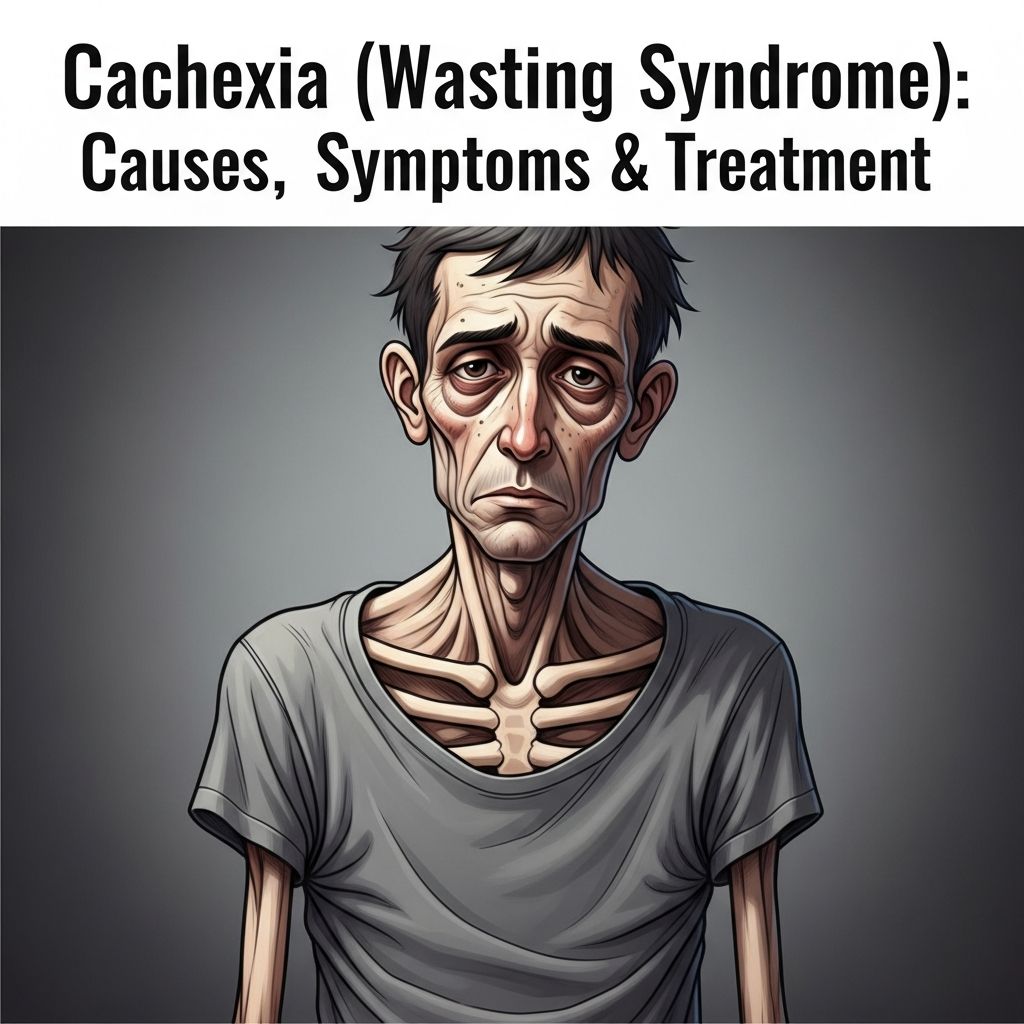
Cachexia, commonly referred to as wasting syndrome, is a serious medical condition characterized by significant weight loss and muscle wasting that occurs involuntarily. This complex syndrome affects millions of people worldwide and represents a major complication of severe chronic diseases. Unlike simple weight loss from reduced food intake, cachexia involves a fundamental disconnect between the body’s energy demands and its energy supply, resulting in dramatic physical changes and functional decline.
Cachexia is estimated to affect approximately 9 million people worldwide, making it a significant global health concern. The condition carries serious implications for patients’ quality of life, treatment tolerance, and overall survival rates. A cachexia diagnosis often signals that individuals are dealing with advanced stages of underlying chronic illnesses, and in many cases, it indicates that the end of life may be approaching.
What Causes Cachexia?
The underlying mechanism of cachexia involves a fundamental imbalance between energy demand and energy supply. When a person is very sick with a chronic medical condition, their metabolism speeds up significantly as the immune system reacts to the disease, creating an ongoing and increased demand for energy from food intake. However, the same chronic condition that accelerates metabolism often affects appetite and the ability to eat adequately.
Without sufficient energy supply from food consumption, the body responds by breaking down its own muscle tissue and fat stores to meet metabolic demands. This process of self-cannibalization leads to progressive muscle mass loss and weight reduction. The condition is particularly complex because it cannot be simply reversed through increased caloric intake alone.
Specific Causes of Cachexia
Cancer is the most common cause of cachexia. Research demonstrates that 40% of people with cancer develop cachexia at the time of initial diagnosis, while 70% of individuals with advanced or late-stage cancer experience this condition. Cachexia accounts for approximately 20% of all cancer-related deaths, underscoring its serious impact on survival outcomes.
Other chronic diseases that may lead to cachexia development include:
- Advanced heart failure and cardiac disease
- Chronic obstructive pulmonary disease (COPD)
- Alzheimer’s disease and dementia
- Severe chronic kidney disease
- HIV/AIDS
- Severe sepsis and chronic infections
Recognizing the Symptoms of Cachexia
Cachexia manifests through multiple interconnected symptoms that affect both physical and mental wellbeing. Healthcare providers may use the medical term “cachectic” when describing individuals experiencing cachexia symptoms.
Primary physical symptoms include:
- Significant unintentional weight loss
- Progressive loss of skeletal muscle mass
- Loss of body fat
- Pronounced weakness and fatigue
- Decreased muscle strength and functional capacity
- Difficulty performing daily activities
Associated symptoms and complications:
- Loss of appetite (anorexia)
- Early satiety (feeling full quickly)
- Changes in taste perception
- Reduced ability to take care of oneself
- Changes in physical appearance
- Decreased quality of life
Beyond the physical manifestations, cachexia carries significant psychological and social impacts. Weight loss and visible muscle wasting can cause individuals to feel self-conscious about their appearance. The condition may create tension between patients and their caregivers, who may feel helpless watching their loved ones experience progressive functional decline and loss of independence.
Related Stories



Mental and Emotional Effects
A cachexia diagnosis often triggers substantial mental health concerns. Patients frequently experience anxiety and depression upon learning of their condition, particularly when they understand that cachexia often indicates advanced disease. The visible physical changes and progressive loss of independence can significantly impact self-esteem and emotional wellbeing. Healthcare providers should address these psychological aspects as part of comprehensive cachexia management.
How Healthcare Providers Diagnose Cachexia
Diagnosing cachexia involves a comprehensive evaluation combining patient history, physical examination, and objective testing. Healthcare providers follow a systematic approach to confirm the diagnosis and assess the severity of the condition.
The diagnostic process typically includes:
- Physical examination: A thorough clinical assessment to evaluate overall health status and observable signs of muscle wasting
- Medical history review: Detailed discussion of overall health and specifically whether the patient is receiving treatment for chronic diseases known to cause cachexia
- Fitness and strength testing: Objective measures to evaluate muscular fitness and functional capacity
- Blood tests: Comprehensive metabolic panel (CMP) to assess nutritional status and metabolic markers
- Imaging studies: Computed tomography (CT) scans to evaluate body composition and muscle mass
In cardiac cachexia specifically, healthcare providers may perform right heart catheterization to assess excess fluid volume and determine how much weight loss is attributable to fluid loss versus actual muscle and fat loss.
Understanding the Serious Health Implications
Cachexia is a life-threatening condition with significant consequences for health and survival. The muscle loss associated with cachexia can directly affect vital organs, particularly the heart and respiratory muscles, impairing both cardiac function and breathing capacity. The progressive loss of muscle tissue undermines overall physical resilience and increases vulnerability to complications.
Beyond the physiological dangers, cachexia can lead to several serious conditions and complications. Progressive muscle loss may result in sarcopenia, a condition characterized by severe loss of muscle mass and strength. In cardiac cachexia, heart muscle scarring can occur. The weakness and frailty caused by cachexia increase risks of falls and injuries, particularly in elderly patients.
Additionally, cachexia can lead to osteoporosis, a condition involving decreased bone density that further increases fracture risk. Loss of appetite associated with cachexia may cause electrolyte and fluid imbalances that can be medically serious. In all cases, cachexia can progressively worsen and ultimately become fatal.
Treatment Options for Cachexia
Currently, there are no FDA-approved medications specifically targeting cachexia’s underlying cause. Treatment focuses on managing the underlying chronic disease and implementing nutritional interventions. Researchers are actively investigating medications that may prevent cachexia symptoms from worsening, though definitive treatments remain limited.
Standard treatment approaches include:
- Managing and treating the underlying chronic disease condition
- Improving nutritional intake through dietary modifications
- Consuming small, frequent meals with adequate protein
- Using nutritional supplements as recommended by healthcare providers
- Implementing appropriate exercise programs when feasible
Important Considerations About Feeding Methods
Healthcare providers typically do not recommend tube feeding (enteral nutrition) or parenteral nutrition (intravenous nutrition) for cachexia management. Research has shown these interventions do not improve cachexia symptoms or extend survival. Tube feeding involves delivering liquid nutrition through a flexible tube inserted through the nose or directly into the stomach or small intestine, while parenteral nutrition provides nutrition through an IV line. Despite the appeal of these methods in providing nutrition, they have not proven effective in the cachexia population.
Living with Cachexia
While there is no standardized comprehensive guidance for living with cachexia, several suggestions may help improve quality of life and maintain function:
- Work closely with your healthcare team to manage the underlying chronic disease
- Focus on consuming nutrient-dense foods, particularly those rich in protein
- Eat small, frequent meals rather than large ones that may feel overwhelming
- Maintain light physical activity as tolerated to preserve remaining muscle function
- Address mental health concerns such as anxiety and depression with appropriate support
- Communicate openly with caregivers and loved ones about needs and concerns
- Participate in support groups or counseling if available
It is important to recognize that cachexia progression and prognosis vary significantly depending on individual circumstances and underlying conditions. While cachexia diagnosis often indicates advanced disease, the specific timeline and trajectory differ considerably from person to person. Your healthcare team remains your best resource for understanding what to expect in your particular situation.
Frequently Asked Questions About Cachexia
Q: What is the difference between cachexia and simple weight loss?
A: Cachexia is not simply weight loss from inadequate food intake. It involves a complex metabolic dysfunction where the body breaks down muscle tissue and fat even when nutritional intake increases. In cachexia, the metabolic changes are driven by the underlying disease process, not merely by insufficient calories.
Q: Is cachexia always a sign that death is imminent?
A: While cachexia often indicates advanced disease and can be associated with poor prognosis, the specific timing varies considerably among individuals. Cachexia affects people with different underlying conditions at different disease stages. Your healthcare provider can discuss your particular situation and what cachexia means for your specific circumstances.
Q: Can cachexia be reversed?
A: Complete reversal of cachexia is extremely difficult because the underlying disease must be addressed. Current treatments focus on managing the chronic disease, improving nutrition, and preventing further deterioration rather than achieving complete resolution of cachexia.
Q: Why don’t tube feeding or IV nutrition help cachexia patients?
A: These feeding methods do not address the fundamental metabolic dysfunction underlying cachexia. Research has shown they do not improve symptoms or extend survival, which is why healthcare providers typically recommend oral nutrition instead when possible.
Q: How much does protein intake matter for cachexia patients?
A: Adequate protein intake is important to support whatever muscle mass remains and to provide essential nutrients. However, protein alone cannot prevent the metabolic breakdown that characterizes cachexia, so it must be combined with management of the underlying disease.
Q: What can caregivers do to help someone with cachexia?
A: Caregivers can help by supporting nutritional efforts, assisting with meal preparation and consumption, providing emotional support, helping maintain safe physical activity when appropriate, and communicating openly with healthcare providers about the patient’s needs and changes.
References
- Cachexia and Wasting in Chronic Illness: Regulatory and Clinical Perspectives — PubMed Central, National Institutes of Health. 2024-10. https://pubmed.ncbi.nlm.nih.gov/41305948/
- Cachexia (Wasting Syndrome): Symptoms & Treatment — Cleveland Clinic. 2024. https://my.clevelandclinic.org/health/diseases/cachexia-wasting-syndrome
- What is Cancer Anorexia-Cachexia Syndrome? A Historical Perspective — PubMed Central, National Institutes of Health. 2010-08. https://pubmed.ncbi.nlm.nih.gov/20608345/
- Cardiac Cachexia: Symptoms & Treatment Options — Cleveland Clinic. 2024. https://my.clevelandclinic.org/health/diseases/24770-cardiac-cachexia
- Cancer Cachexia: Symptoms, Treatment & Prognosis — Cleveland Clinic. 2024. https://my.clevelandclinic.org/health/diseases/cancer-cachexia
- Pursuing the Next Breakthrough in Cancer Cachexia — Pfizer. 2024. https://www.pfizer.com/news/articles/pursuing_the_next_breakthrough_in_cancer_cachexia
Similar Articles








Read full bio of medha deb