Café-au-lait Macule: Causes, Diagnosis, and Management
Common birthmark: hyperpigmented patch >0.5 cm with sharp border. Often benign but may signal genetic syndromes like NF1.
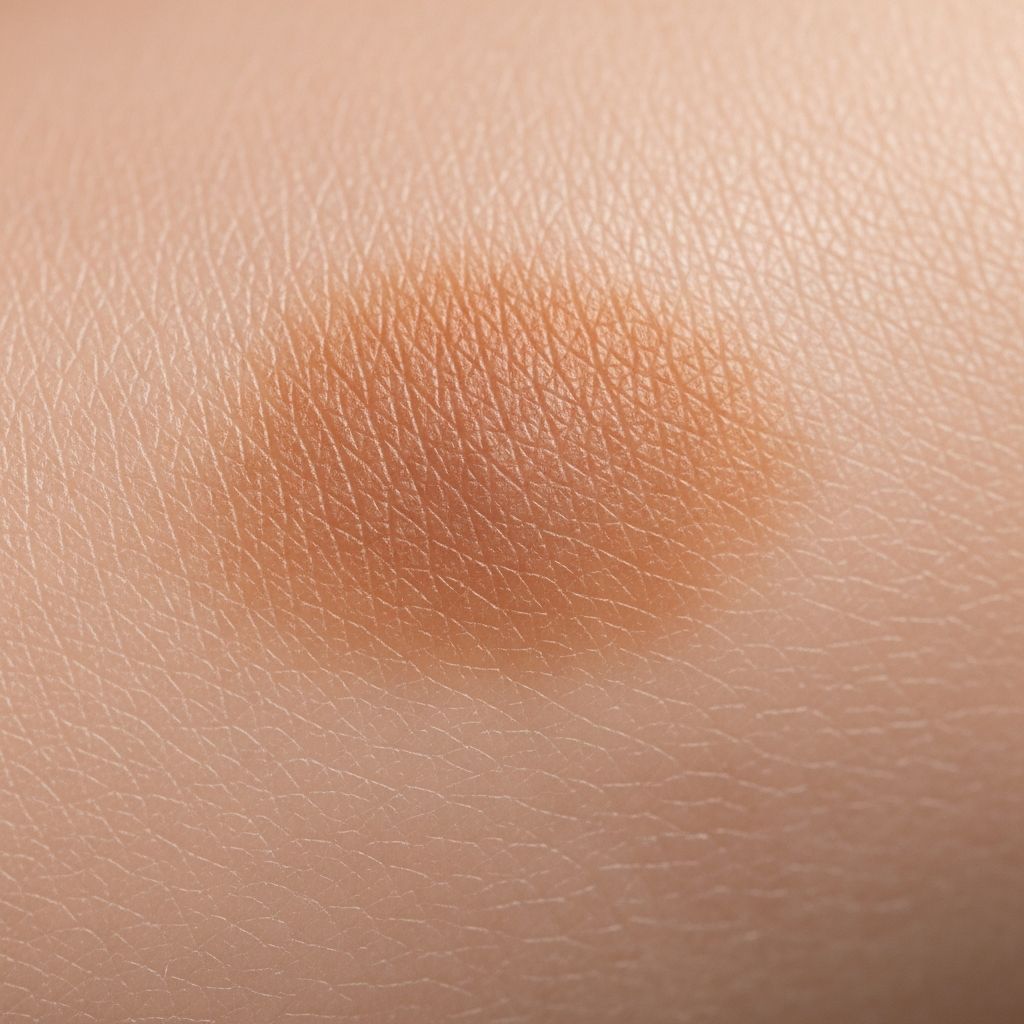
A café-au-lait macule is a common birthmark, presenting as a hyperpigmented skin patch with a sharp border and diameter of > 0.5 cm.
What is a café-au-lait macule?
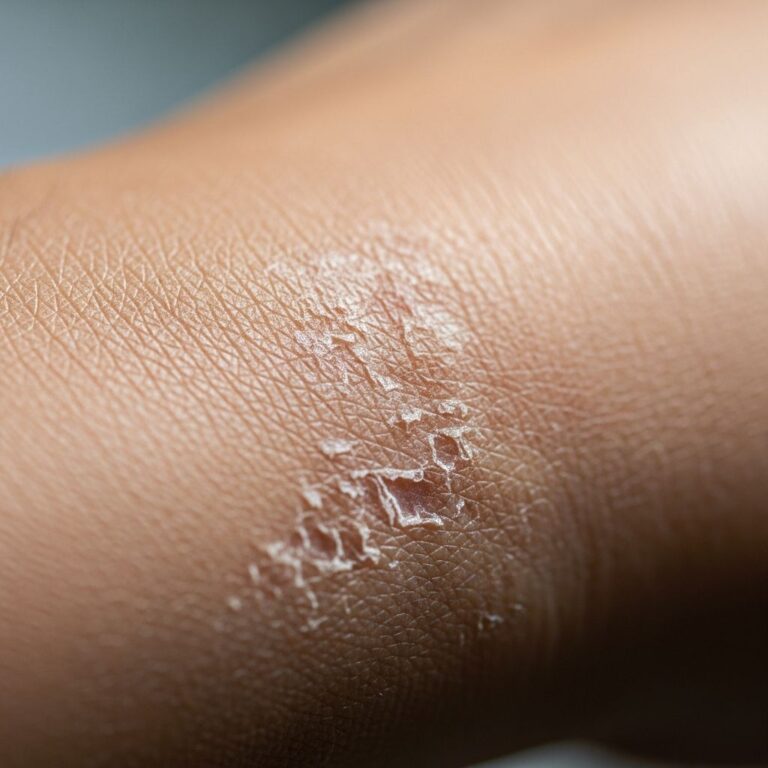
A café-au-lait macule — also known as circumscribed café-au-lait hypermelanosis, von Recklinghausen spot, or abbreviated as ‘CALM’ — is a pigmented skin lesion that appears flat and evenly coloured. The name derives from its coffee-with-milk hue (French: café au lait). These macules result from localized melanin overproduction by melanocytes in the epidermis.
Café-au-lait macules are benign, with no malignant potential on their own. However, multiple lesions can indicate underlying genetic conditions requiring evaluation.
Demographics
Café-au-lait macules affect all races and ages, with prevalence varying by ethnicity:
- 10–20% of Caucasians have at least one.
- Higher rates (up to 25%) in African Americans and Asians.
- Isolated macules are common; >3 in Caucasians or >5 in darker skin types prompts investigation.
They occur equally in males and females, often noted at birth or infancy, and may darken post-sun exposure.
Causes
The brown colour stems from excess melanin, produced by melanocytes. Pathophysiology involves:
- Increased melanin in basal keratinocytes and melanocytes.
- Giant melanosomes and elevated stem cell factor in NF1-associated cases.
- Somatic mutations (e.g., postzygotic in GNAS for McCune-Albright) or germline defects in syndromes.
Isolated CALMs arise sporadically without known triggers. Multiple CALMs link to genetic syndromes (see below).
Syndromes associated with multiple café-au-lait macules
| Syndrome | Key features | Diagnostic criteria involving CALMs |
|---|---|---|
| Neurofibromatosis type 1 (NF1) | Neurofibromas, Lisch nodules, optic glioma, skeletal dysplasia | >6 CALMs >0.5 cm prepubertal (>1.5 cm postpubertal) |
| McCune-Albright syndrome | Polyostotic fibrous dysplasia, precocious puberty, endocrine hyperfunction | Large, irregular ‘coast of Maine’ CALMs |
| Legius syndrome | NF1-like without tumours; SPRED1 mutation | Multiple CALMs, freckling |
| Noonan syndrome with multiple lentigines | Cardiac defects, short stature, lentigines | Multiple CALMs + lentigines |
| Others | Fanconi anaemia, Bloom syndrome, tuberous sclerosis, constitutional mismatch repair deficiency | Various numbers/sizes |
NF1 involves NF1 gene mutations on chromosome 17q11.2, coding for neurofibromin (tumour suppressor). Half are inherited; half sporadic.
Clinical features
Café-au-lait macules are:
- Hyperpigmented: Light to dark brown (matches coffee with milk).
- Flat macules/patches: Uniform colour, no surface change.
- Well-circumscribed: Smooth (‘coast of California’) or irregular (‘coast of Maine’) borders.
- Size: >0.5 cm diameter (diagnostic threshold); up to >20 cm.
- Sites: Trunk, buttocks, legs; rarely face/neck. Solitary or multiple.
They are asymptomatic, non-tender, and persist lifelong, growing proportionally with the body. Sunlight may darken them.
See more images of café-au-lait macules in clinical resources.
Diagnosis
Diagnosis is clinical, based on characteristic appearance. No biopsy needed for typical cases.
When to investigate
- >3 CALMs in Caucasians or >5 in African Americans.
- Any in infants with family history of NF1 or related syndromes.
- Associated features: freckling, nodules, bone issues.
Related Stories



Diagnostic approach
- History/exam: Count, measure, note borders/distribution.
- Wood lamp: Enhances visibility in light skin.
- Referral: To dermatology/genetics if multiple/suspicious.
- Genetic testing: For NF1 (NF1 gene), McCune-Albright (GNAS).
- Screening: Ophthalmology (Lisch nodules), neurology (MRI if needed).
Differential diagnosis: Lentigo simplex, Becker naevus, postinflammatory hyperpigmentation, junctional naevus.
Treatment
Isolated CALMs require no treatment — they are cosmetic concerns only.
Cosmetic options
- Laser therapy: Q-switched ruby, Nd:YAG, or picosecond lasers. Partial fading (50–75%), but recurrence common (up to 50%).
- Topicals: Hydroquinone, retinoids — limited efficacy.
- Camouflage makeup: Effective non-invasive option.
Avoid sun exposure to prevent darkening. Sunscreen recommended.
For syndromic CALMs, treat underlying condition (e.g., NF1 surveillance).
Outcome
Benign with excellent prognosis for isolated lesions — no morbidity/mortality. Multiple CALMs signal potential syndromes:
- NF1: 10% malignancy risk (MPNST); lifelong monitoring.
- McCune-Albright: Endocrine/bone complications.
Enhance outcomes via interprofessional care: dermatologist, geneticist, paediatrician, ophthalmologist. Annual follow-up for at-risk patients.
Frequently asked questions
Q: Are café-au-lait spots harmful?
A: Isolated spots are harmless birthmarks. Multiple may indicate genetic syndromes needing evaluation.
Q: Will café-au-lait macules fade?
A: No, they persist lifelong but may lighten slightly with age. Laser offers partial cosmetic improvement.
Q: How many café-au-lait spots is too many?
A: >3 in Caucasians or >5 in darker skin; consult a doctor.
Q: Can café-au-lait macules turn into cancer?
A: No, but associated NF1 increases tumour risk.
Q: When to see a doctor for a birthmark?
A: If increasing in number/size, irregular borders, or family history of NF/syndromes.
Q: Are they preventable?
A: No, as they are developmental. Genetic counselling for familial syndromes.
Word count: 1678 (excluding metadata/HTML tags).
References
- Cafe Au Lait Macules – StatPearls — de SK Jha et al. NCBI Bookshelf. 2023-04-23. https://www.ncbi.nlm.nih.gov/books/NBK557492/
- Café-au-lait macule — DermNet NZ. 2023. https://dermnetnz.org/topics/cafe-au-lait-macule
- Café-au-lait macules (CALMs) — AboutKidsHealth. 2023. https://www.aboutkidshealth.ca/fr/santeaz/dermatology/taches-cafe-au-lait/?language=en
Similar Articles








Read full bio of medha deb