Calciphylaxis Pathology: Causes, Diagnosis, Treatment Overview
Detailed pathology of calciphylaxis: vascular calcification, thrombosis, and tissue necrosis in end-stage kidney disease patients.
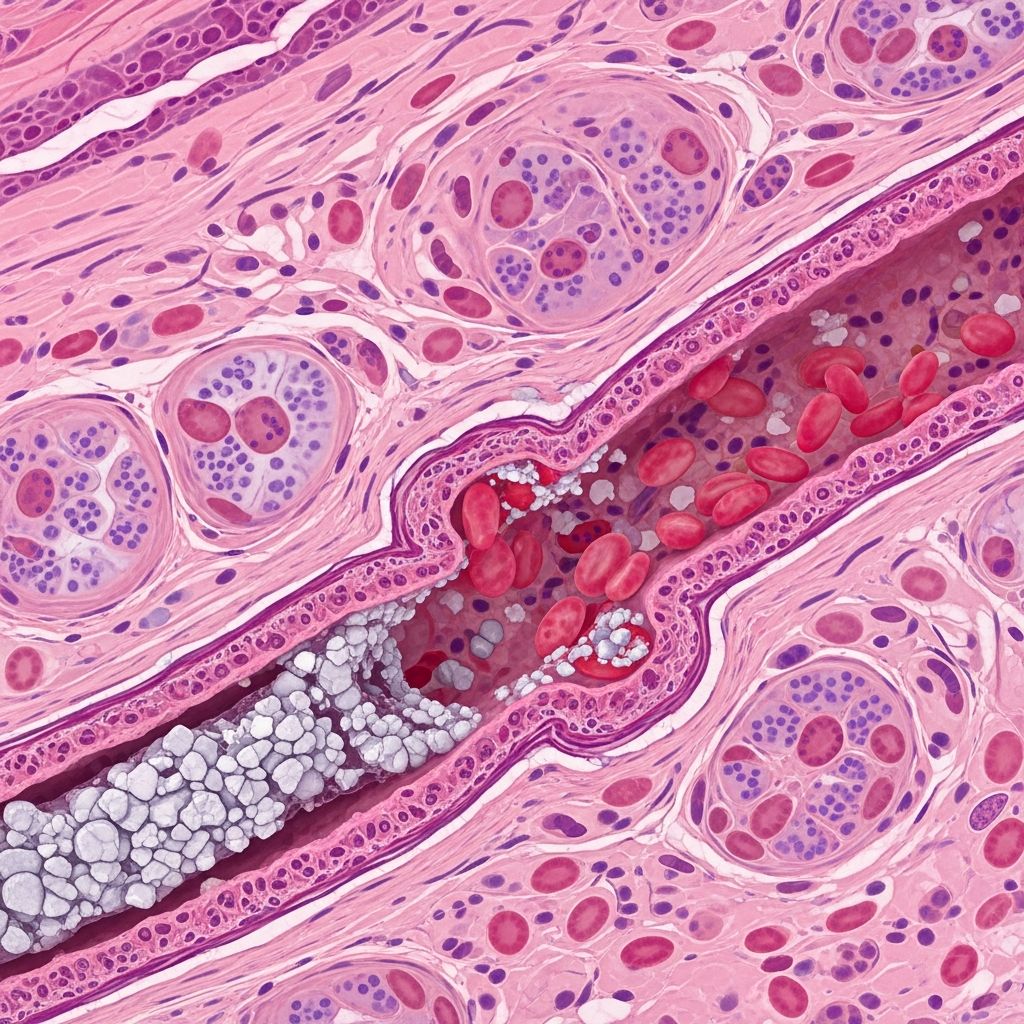
Calciphylaxis, also known as calcific uremic arteriolopathy, is a rare and severe condition characterized by calcification of small blood vessels in the skin and subcutaneous tissues, leading to ischemia, thrombosis, and necrosis. It predominantly affects patients with end-stage kidney disease (ESKD) on dialysis, though non-uremic forms exist. The pathology involves medial calcification of arterioles, intimal fibrosis, and thrombus formation, resulting in painful skin lesions and high mortality rates.
Introduction
Calciphylaxis manifests as necrosis of the skin and subcutaneous fat due to vascular occlusion. First described in the 1970s, it has an incidence of 1-4% in dialysis patients, with mortality exceeding 50% within one year, often from sepsis or cardiovascular events. The hallmark is calcification of dermal and subcutaneous arterioles, distinguishing it from other vasculopathies. Pathophysiologically, hyperparathyroidism, hyperphosphatemia, and elevated calcium-phosphate product in ESKD promote vascular smooth muscle cell transdifferentiation into osteoblast-like cells, depositing calcium hydroxyapatite crystals in vessel walls. This narrows lumens, triggers thrombosis, and causes tissue infarction. Risk amplifiers include obesity, female sex, warfarin use, diabetes, and corticosteroid therapy.
Demographics
Calciphylaxis primarily strikes adults aged 40-60 with ESKD, affecting 1-4% of hemodialysis patients annually. Women comprise 70-80% of cases, linked to higher adiposity. Prevalence rises with dialysis vintage; obese patients (BMI >30) face 15-fold increased risk due to abundant subcutaneous fat vulnerable to ischemia. Non-uremic calciphylaxis (10-20% of cases) occurs in normal renal function, often with malignancy, primary hyperparathyroidism, or connective tissue diseases. Racial disparities show higher incidence in Caucasians.
- Dialysis patients: 90% of cases, median duration 2-3 years on dialysis.
- Gender bias: Female predominance (3:1 ratio).
- Comorbidities: Obesity (most significant), diabetes (50%), liver disease, steroids.
- Non-ESKD: 10%, associated with cancer (breast, myeloma), alcoholic liver disease.
Causes
The etiology is multifactorial, centered on disordered calcium-phosphate metabolism in ESKD. Elevated parathyroid hormone (PTH) drives vascular calcification via osteogenic signaling. Hyperphosphatemia induces sodium-dependent phosphate cotransporter upregulation in vascular smooth muscle cells (VSMCs), promoting apoptosis and matrix vesicle release for crystal nucleation. Warfarin inhibits matrix Gla protein (MGP), a calcification inhibitor, by blocking vitamin K-dependent carboxylation. Protein C deficiency and endothelial injury from dialysis contribute to a pro-thrombotic state. Genetic factors like MGP polymorphisms increase susceptibility. In non-uremic cases, local hypercalcemia from malignancy or hyperparathyroidism predominates.
| Category | Examples | Mechanism |
|---|---|---|
| Renal | ESKD, long-term dialysis | Ca-P imbalance, secondary hyperparathyroidism |
| Metabolic | Obesity, diabetes, hyperparathyroidism | Increased adiposity, insulin resistance, PTH excess |
| Medications | Warfarin, corticosteroids | MGP inhibition, immunosuppression |
| Other | Female sex, liver disease, malignancy | Hormonal, prothrombotic states |
Clinical Features
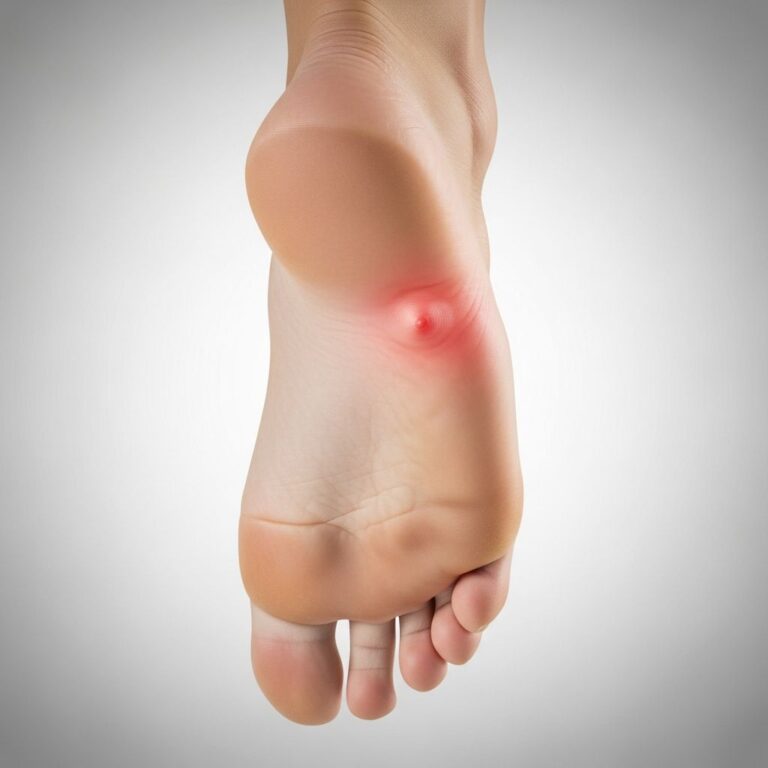
Patients present with excruciating pain, often the first symptom, preceding visible changes by weeks. Early lesions show livedo reticularis—a purple, net-like mottling—on adipose-rich areas: thighs, abdomen, buttocks (proximal predominant, worse prognosis). Distal lower legs may mimic blue toe syndrome. Lesions evolve: violaceous plaques → indurated nodules → hemorrhagic bullae → stellate purpura → necrotic ulcers with black eschar. Pain is burning, intractable, unresponsive to opioids. Systemic involvement includes myopathy, pancreatitis, or cardiac ischemia.
- Early: Painful livedo reticularis, tender subcutaneous nodules.
- Progressive: Retiform purpura, bullae, stellate black necrosis.
- Late: Foul-smelling ulcers, secondary infection.
- Sites: Proximal > distal; trunk lesions more lethal.
Related Stories



Complications
Mortality reaches 80% at 6 months from sepsis (most common), cardiovascular collapse, or multiorgan failure. Wound infections with Pseudomonas, Staphylococcus lead to bacteremia. Chronic pain causes debility, depression, opioid dependence. Non-healing ulcers foster myonecrosis, osteomyelitis. Sepsis risk escalates with immunocompromise from ESKD/malnutrition.
- Sepsis/bacteremia (50-70% mortality driver).
- Chronic pain and immobility.
- Secondary infections, gangrene.
- Visceral involvement (heart, lungs, GI).
Diagnosis
Clinical suspicion in at-risk patients with painful necrotic lesions suffices for presumptive diagnosis; biopsy confirms. Deep incisional biopsy (4-6mm punch) reveals medial arteriolar calcification, intimal hyperplasia, fibrin thrombi, and fat necrosis. Von Kossa stain highlights calcium deposits. Extravasated red cells, endothelial swelling support ischemia. Imaging: X-rays show vascular calcifications; mammography-like views aid. Labs: Elevated Ca-P product (>55-70), high PTH (>300 pg/mL), normal/inflamed ESR/CRP. Rule out differentials: warfarin necrosis, cholesterol emboli, vasculitis, ecthyma gangrenosum.
Histopathology Key Features:
- Medial calcification of dermal/subcutaneous arterioles.
- Fibrointimal thickening, thrombosis.
- Ischemic panniculitis, epidermal necrosis.
- Extravasated erythrocytes, sparse inflammation.
Treatment
Multimodal, urgent: wound care, pain control, metabolic correction. Sodium thiosulfate (STS) 25g IV 3x/week post-dialysis—antioxidant, calcium chelator (evidence from case series). Cinacalcet/parathyroidectomy for hyperparathyroidism. Discontinue warfarin, switch to heparin. Debridement cautious (risks worsening); NPWT for select ulcers. Pain: opioids, ketamine, bisphosphonates. Hyperbaric oxygen experimental. Dialysis intensification targets phosphate <5.5 mg/dL.
| Intervention | Dose/Method | Evidence |
|---|---|---|
| Sodium Thiosulfate | 25g IV post-HD, 3x/wk | Case series, retrospective studies |
| Cinacalcet | 30-180mg daily | PTH reduction |
| Parathyroidectomy | Surgical | For refractory hyperparathyroidism |
| Wound Care | Debridement, NPWT | Multidisciplinary |
Prevention
Aggressive CKD-MBD management: phosphate binders, vitamin D analogs, cinacalcet to maintain Ca-P <55, PTH 150-300 pg/mL. Avoid warfarin if possible; monitor adiposity. Early dialysis initiation, nutritional optimization (albumin >3.5 g/dL). Screen high-risk patients for livedo.
Outlook
Prognosis poor: 1-year survival 40-60%, worse with proximal lesions, sepsis. Survivors face recurrent ulcers, pain. Transplant improves outcomes in select cases.
Frequently Asked Questions (FAQs)
Q: What is the hallmark symptom of calciphylaxis?
A: Severe, intractable pain in the affected skin areas, often preceding visible lesions.
Q: Who is most at risk for calciphylaxis?
A: Dialysis patients with obesity, female sex, hyperparathyroidism, and warfarin use.
Q: How is calciphylaxis diagnosed?
A: Clinical suspicion confirmed by skin biopsy showing arteriolar calcification and thrombosis.
Q: What is the first-line treatment?
A: Intravenous sodium thiosulfate combined with wound care and metabolic correction.
Q: Can calciphylaxis be prevented?
A: Yes, through strict control of calcium-phosphate levels and avoiding triggers like warfarin.
References
- Do I Have Calciphylaxis? — JAMA Dermatology. 2019-04-01. https://jamanetwork.com/journals/jamadermatology/fullarticle/2733227
- Calciphylaxis: Causes, Symptoms, and Management — DermNet NZ. 2016 (updated). https://dermnetnz.org/topics/calciphylaxis
- Uremic Calciphylaxis — Palliative Care Network of Wisconsin. 2023. https://www.mypcnow.org/fast-fact/uremic-calciphylaxis/
- Calciphylaxis — StatPearls, NCBI Bookshelf, NIH. 2023-08-08. https://www.ncbi.nlm.nih.gov/books/NBK519020/
- Can You Diagnose This Rare Skin Condition? — Stanford Medicine 25. 2016. https://med.stanford.edu/stanfordmedicine25/blog/archive/2016/can-you-diagnose-this-rare-skin-condition.html
- Calciphylaxis: Causes, Symptoms & Treatment — Cleveland Clinic. 2023. https://my.clevelandclinic.org/health/diseases/22359-calciphylaxis
Similar Articles








Read full bio of Sneha Tete