Calcium Supplements: Adcal, Calcichew, Phosex
Comprehensive guide to Adcal, Calcichew, and Phosex for calcium deficiency, osteoporosis prevention, and kidney disease management.
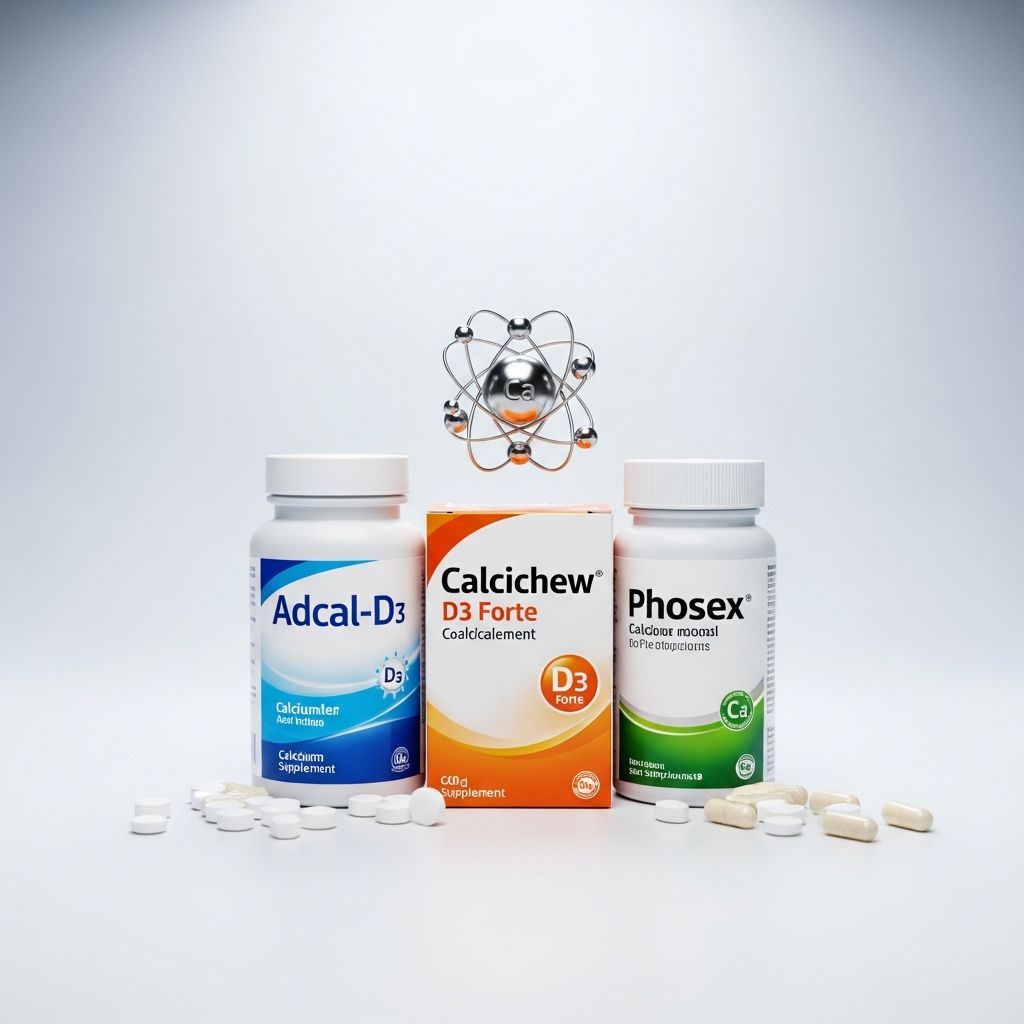
Calcium supplements such as
Adcal
,Calcichew
, andPhosex
are widely used to address calcium deficiency, support bone health, and manage conditions like osteoporosis and chronic kidney disease. These medications provide elemental calcium in forms like calcium carbonate, often combined with vitamin D3 for better absorption. Available on prescription or over-the-counter, they help prevent bone thinning and control phosphate levels in renal patients.About calcium supplements
Calcium is a vital mineral essential for strong bones, teeth, muscle function, nerve signaling, and blood clotting. The body cannot produce calcium, so it must be obtained from diet or supplements. Deficiency can lead to osteoporosis, muscle cramps, and fatigue, particularly in postmenopausal women, the elderly, or those with malabsorption issues.
| Type of medicine | Calcium supplement |
|---|---|
| Used for | Calcium deficiency, osteoporosis prevention, phosphate binding in kidney disease |
| Also called | Adcal®, Calcichew®, Calcichew Forte®, Phosex®, Renacet®, Calcium-500®, AaceCa®, A1-Cal® |
| Available as | Chewable tablets, effervescent tablets, dispersible tablets |
**Adcal** and
Calcichew
typically contain calcium carbonate (e.g., Adcal-D3: 1500mg calcium carbonate = 600mg elemental calcium + 400 IU vitamin D3; Calcichew-D3 Forte: 1250mg calcium carbonate = 500mg elemental calcium + 400 IU vitamin D3). These are chewable tablets for vitamin D/calcium deficiency treatment and prevention.Phosex
(calcium acetate) binds dietary phosphate in chronic kidney disease, preventing hyperphosphatemia.Calcium supplements are often paired with vitamin D to enhance absorption, especially in osteoporosis management. Clinical evidence supports higher doses like 1200mg calcium carbonate (as in Adcal-D3) over 1000mg for better outcomes in bone health.
Before taking calcium supplements
Consult a healthcare professional before starting these supplements, especially if you have:
- Kidney stones or history of hypercalcaemia (high blood calcium).
- Severe kidney impairment (without monitoring).
- Hyperparathyroidism or sarcoidosis.
- Conditions affecting vitamin D metabolism.
Inform your doctor if:
- You are pregnant, breastfeeding, or planning pregnancy. Calcium needs increase during these periods, but excess can harm the fetus.
- You have ever had an allergic reaction to calcium products or ingredients like aspartame (in some chewables).
- You are taking other medications, as calcium can interfere with absorption.
Key interactions:
- Levothyroxine (for hypothyroidism): Take calcium at least 4 hours apart.
- Bisphosphonates (e.g., alendronate for osteoporosis): Separate by 30-60 minutes.
- Antibiotics (tetracyclines, quinolones): Reduce antibiotic efficacy; space doses.
- Iron supplements: Calcium inhibits iron absorption.
- Phosphate binders: Phosex specifically binds phosphate but monitor calcium levels.
Regular blood tests for calcium, phosphate, PTH, and vitamin D levels are recommended, particularly for long-term use in kidney disease.
How and when to take calcium supplements
Follow your doctor’s or package instructions precisely. General guidelines:
- Dosage: Typically 500-600mg elemental calcium twice daily for deficiency/osteoporosis. Phosex: 1-2 tablets with meals for phosphate control.
- Timing: Split doses (e.g., morning and evening) for optimal absorption. Take with or after food to improve uptake and reduce stomach upset. Avoid taking with high-fiber meals or oxalates (spinach, rhubarb).
- Administration:
- Chewables (Adcal, Calcichew): Chew thoroughly, do not swallow whole. Follow with water.
- Effervescent/dispersible: Dissolve in water, drink immediately.
- Duration: Long-term for chronic conditions; reassess periodically.
Related Stories



For best results, combine with a balanced diet rich in calcium (dairy, leafy greens) and vitamin D sources (sunlight, fortified foods). Elemental calcium content varies: calcium carbonate provides ~40% elemental calcium, citrate ~21%.
Getting the most from your treatment
- Adhere to prescribed doses to avoid hypercalcaemia.
- Monitor for symptoms of excess calcium: thirst, frequent urination, constipation, confusion.
- Lifestyle tips: Weight-bearing exercise, quit smoking, limit alcohol/caffeine.
- Diet: Aim for 1000-1200mg daily calcium from food + supplements. Vitamin D 800-2000 IU/day if deficient.
- Storage: Keep in cool, dry place; discard if past expiry.
Patient preference studies show variations: A crossover trial (n=102) found Calcichew-D3 preferred by some over Adcal-D3 for taste and texture, though doses differ (500mg vs 600mg elemental calcium). Higher calcium content in Adcal may offer clinical benefits.
Side-effects
Most people tolerate calcium supplements well, but side effects can occur, especially at high doses or with poor tolerance.
| Common side-effects | What can I do if I experience this? |
|---|---|
| Feeling sick (nausea), stomach upset, constipation, bloating, or diarrhoea | Stick to simple foods, drink plenty of water, try splitting doses or switching formulations (e.g., citrate if carbonate causes issues) |
| Wind (flatulence) | Avoid fizzy drinks; chew slowly |
| Hypercalcaemia (rare, from overdose) | Seek medical help: symptoms include nausea, vomiting, weakness |
Rare effects include allergic reactions (rash, swelling). In kidney patients, monitor for vascular calcification with long-term use. Side effects often resolve as body adjusts; consult pharmacist if persistent.
Comparison of Common Calcium Supplements
| Product | Form | Elemental Calcium | Vitamin D | Main Use |
|---|---|---|---|---|
| Adcal-D3 | Chewable tablet | 600mg (1500mg carbonate) | 400 IU | Osteoporosis, deficiency |
| Calcichew-D3 Forte | Chewable tablet | 500mg (1250mg carbonate) | 400 IU | Osteoporosis, deficiency |
| Phosex (Calcium acetate) | Tablet | Varies (phosphate binder) | None | Kidney disease phosphate control |
| Calcichew Plain | Chewable | 500mg | None | General supplementation |
Calcium carbonate (Adcal, Calcichew) requires stomach acid for absorption, best with food. Calcium citrate absorbs better on empty stomach but has less elemental calcium per dose.
Frequently Asked Questions (FAQs)
Q: Who should take calcium supplements?
A: Those with diagnosed deficiency, osteoporosis risk, postmenopausal women, or kidney patients needing phosphate binders. Not routine for everyone; assess via blood tests.
Q: Can I take Adcal or Calcichew with vitamin D?
A: Yes, many formulations like Adcal-D3 and Calcichew-D3 include 400-800 IU vitamin D3 to boost absorption.
Q: Is Calcichew better than Adcal?
A: Preference varies; studies show Calcichew preferred for palatability by ~80% in one trial, but Adcal provides higher calcium dose with potential clinical advantages.
Q: How does Phosex work in kidney disease?
A: It binds phosphates in the gut, reducing absorption into blood, taken with meals.
Q: What if I miss a dose?
A: Take as soon as remembered unless near next dose; do not double up.
Q: Are there dietary alternatives?
A: Yes, dairy, fortified plant milks, greens; supplements if diet insufficient.
Clinical Evidence and Considerations
Randomized crossover studies confirm good tolerability, with sensory attributes like grittiness influencing preference. Elemental calcium equivalence is key: 1250mg carbonate = 500mg elemental. For kidney disease, calcium salts like Phosex are first-line phosphate binders per guidelines.
In osteoporosis, combined calcium-vitamin D reduces fracture risk, supported by trials favoring adequate dosing. Always prioritize food sources and professional advice for personalized use.
References
- PMCPA Code Review August 1825 — PMCPA. 2001-08. https://www.pmcpa.org.uk/media/1071/1825-august.pdf
- Calcium supplements – Patient.info — Patient.info. Accessed 2026. https://patient.info/medicine/calcium-supplements-adcal-calcichew-phosex
- Calcichew D3 Preference Study — ClinicalTrials.gov. 2015. https://clinicaltrials.gov/study/NCT02457247
- A randomised, single-blind, crossover comparison — PubMed. 2001-04-01. https://pubmed.ncbi.nlm.nih.gov/11268708/
- Calcium salts for kidney disease — Medicines for Children. 2021-08. https://www.medicinesforchildren.org.uk/wp-content/uploads/sites/8/2021/08/Calcium-salts-for-kidney-disease-1.pdf
- Calcium Citrate vs. Calcium Carbonate — GoodRx. Recent access 2026. https://www.goodrx.com/calcium-carbonate/calcium-carbonate-vs-calcium-citrate
- Chewable calcium carbonate tablets — CUH NHS. Recent. https://www.cuh.nhs.uk/patient-information/chewable-calcium-carbonate-tablets/
Similar Articles








Read full bio of Sneha Tete