Calculating Your Monthly Fertility Window
Master fertility tracking: Learn to identify and calculate your fertile window each month.
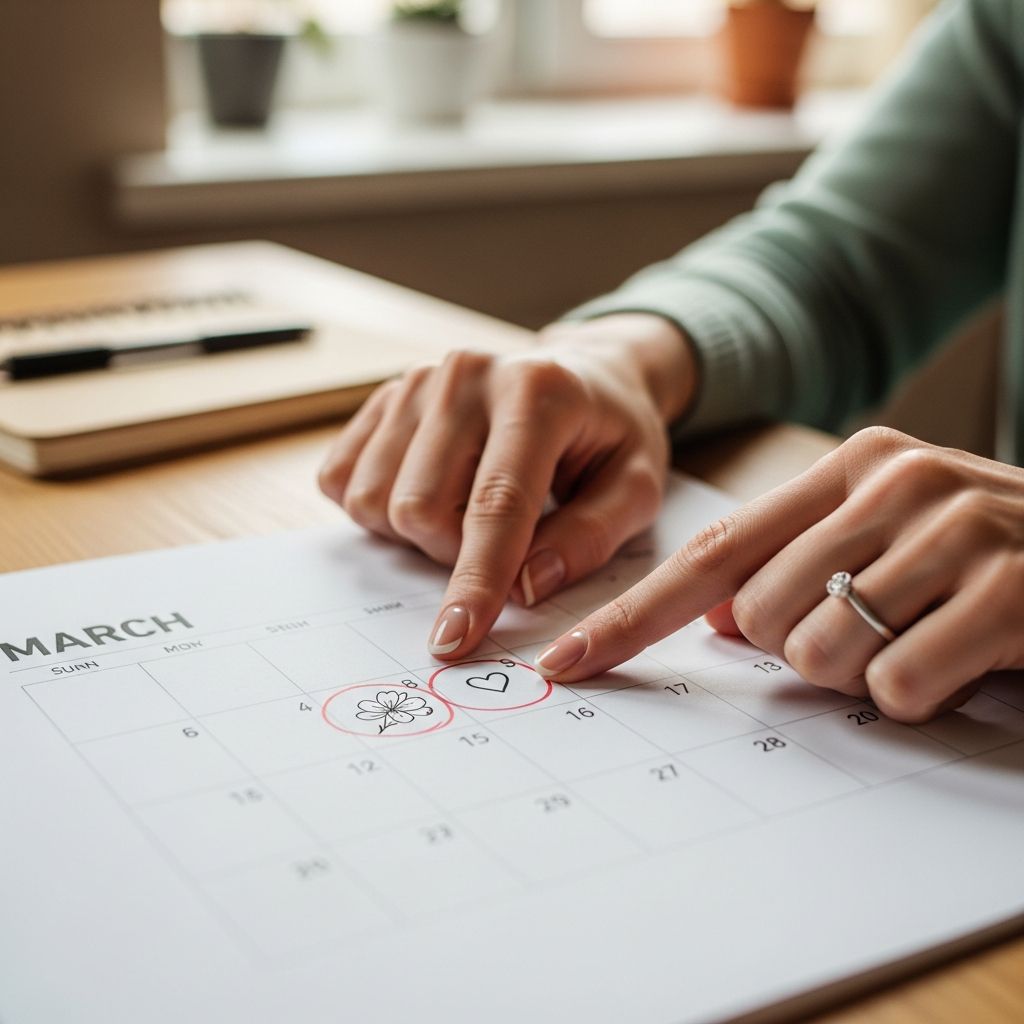
Understanding when you are most likely to conceive is essential for anyone trying to become pregnant. The foundation of this knowledge lies in calculating your monthly fertility window—the period during your menstrual cycle when pregnancy is most likely to occur. Whether you are just beginning your fertility journey or have been trying to conceive for some time, learning to identify and track your fertile window can significantly improve your chances of success.
Understanding Your Menstrual Cycle and Ovulation
The menstrual cycle is a monthly process that prepares your body for potential pregnancy. A typical menstrual cycle lasts approximately 28 days, though cycles can range from 21 to 35 days for most women. To effectively calculate your fertility window, you must first understand the phases of your cycle and when ovulation occurs.
Ovulation is the moment when one of your ovaries releases an egg, typically occurring around day 14 of a standard 28-day cycle. However, this timing can vary significantly from person to person and even from cycle to cycle. The egg that is released remains viable for up to 24 hours after ovulation. This is why understanding the exact timing of ovulation is crucial for conception planning.
What many people don’t realize is that sperm can survive in your body for up to five days after intercourse. This extended sperm viability is what creates the fertile window—a period that extends well beyond the single day of ovulation.
What is the Fertile Window?
The fertile window is the period during your menstrual cycle when intercourse is most likely to result in pregnancy. According to research, natural conception requires intercourse to occur during the fertile window of a woman’s menstrual cycle. This window comprises the five days preceding ovulation as well as the day of ovulation itself. Together, these six days form your monthly fertile window.
In an average 28-day cycle, this typically means your fertile window falls approximately one week after the end of your period. However, because every cycle is different, the exact timing can vary. The fertile window can change every cycle, making consistent tracking valuable for those trying to conceive.
How to Calculate Your Fertile Window: Step-by-Step Guide
Calculating your fertility window requires some basic cycle math and consistent tracking. Follow these steps to determine when you are most fertile:
Step 1: Track Your Period
Begin by noting the first day of your menstrual cycle, which is the first day of your period. This is your starting point for all calculations. Write down this date using a notebook, calendar, or cycle-tracking app.
Step 2: Determine Your Cycle Length
Continue tracking until the first day of your next period arrives. The number of days between the first day of one period and the first day of your next period is your cycle length. Most cycles last 28 days, but yours may be longer or shorter. Record this information for at least two to three cycles to identify your pattern.
Related Stories



Step 3: Estimate Your Ovulation Day
Once you know your average cycle length, you can estimate your ovulation day. For a standard 28-day cycle, ovulation typically occurs around day 14. If your cycle is longer or shorter, subtract 14 from your cycle length to find your approximate ovulation day. For example, if you have a 30-day cycle, ovulation would occur around day 16.
Step 4: Count Your Fertile Days
Once you know the day you ovulated, count back five days before and one day after to identify your fertile window for that cycle. This means if you ovulate on day 14, your fertile window would be days 9 through 15. However, it’s important to note that knowing your fertile window retrospectively is much easier than predicting it before it happens.
Recognizing the Signs of Ovulation
While cycle math provides a foundation for tracking fertility, your body also sends signals about ovulation. Learning to recognize these signs can help you pinpoint your fertile window more accurately:
Basal Body Temperature
Your basal body temperature—your temperature at rest—rises slightly (about 0.5 to 1 degree Fahrenheit) after ovulation. By tracking your temperature each morning before getting out of bed, you can identify the temperature shift that indicates ovulation has occurred.
Cervical Mucus Changes
As you approach ovulation, your cervical mucus becomes clearer, stretchy, and more abundant—often described as having an egg-white consistency. This change in mucus texture facilitates sperm movement and indicates approaching fertility.
Cervical Position Changes
Your cervix changes position throughout your cycle. During the fertile window, it becomes higher, softer, and more open. Learning to recognize these changes through self-examination can provide additional fertility indicators.
Other Physical Signs
Some women experience mild pain or cramping on one side of the abdomen during ovulation, known as mittelschmerz. Mild breast tenderness, slight bloating, or increased energy can also accompany the fertile window.
Using Technology to Track Your Fertility
Modern technology offers several tools to help you calculate and predict your fertility window more accurately:
Fertility Tracking Apps
Ovulation-tracking apps like Flo can simplify the process significantly. You simply log your period dates for a couple of cycles, and the app’s algorithm predicts your ovulation days for you. These apps often include additional features for logging symptoms, cervical mucus changes, and basal body temperature readings.
Ovulation Predictor Tests
Ovulation tests look for luteinizing hormone (LH), the hormone that triggers your ovaries to release an egg. LH surges 24 to 48 hours before you ovulate, and these tests can alert you when this surge occurs. If used correctly, ovulation tests can be up to 99% accurate.
More advanced home-based fertility tracking systems can measure multiple hormones. For instance, specialized monitors track elevations in both luteinizing hormone and estradiol metabolite (estrone-3-glucuronide or E3G). This dual-hormone approach can more accurately predict the fertile window, as E3G levels rise in the five days preceding ovulation while LH surges closer to ovulation.
Connected Fertility Monitors
Some fertility monitors connect via Bluetooth to smartphone apps, recording information about your menstrual cycle and determining when urine tests should be conducted. These systems provide three fertility levels: low fertility when hormone levels are at baseline, high fertility when increasing E3G levels are detected, and peak fertility upon detection of the LH surge.
Factors That Affect Your Fertility Window
While the general fertile window lasts approximately six days, several factors can influence this timeline:
Cycle Irregularity
Women with irregular cycles face greater challenges in predicting ovulation. If your cycle length varies significantly from month to month, calculating a consistent fertile window becomes more difficult. In these cases, relying on ovulation tests or apps that adjust to your individual patterns proves more effective.
Sperm Health
The health of your partner’s sperm can impact how long your fertile window is. If sperm are unhealthy or are prematurely dying, the length of time available for conception, specifically at the beginning of the fertile window, would be reduced.
Hormonal Variations
Hormonal imbalances, stress, illness, or lifestyle factors can affect the timing of ovulation. Keeping detailed records helps identify any patterns in your cycle.
Timing Intercourse During Your Fertile Window
Simply identifying your fertile window is only part of the equation—timing intercourse appropriately is equally important. Research indicates that natural conception requires intercourse to occur during the fertile window of a woman’s menstrual cycle. Moreover, studies have shown that conceptions distant from the estimated day of ovulation carry a higher risk of miscarriage.
For couples trying to conceive, having intercourse regularly during the fertile window—ideally every day or every other day—maximizes the chances of conception. Some research has even suggested optimal timing based on desired offspring sex, though the most important factor remains timing intercourse within the fertile window itself.
Is Your Fertile Window After Your Period?
In an average 28-day cycle with a period lasting around five days, and assuming ovulation occurs mid-cycle on day 14, the five days before and day after ovulation are considered most fertile. This typically means your fertile window begins several days after your period ends. However, it can be difficult to give a one-size-fits-all answer because every woman and every cycle is different.
Can You Get Pregnant Outside the Fertile Window?
Technically, conception outside the traditional fertile window is highly unlikely but not entirely impossible in exceptional circumstances where ovulation timing is atypical. However, because ovulation dates can fluctuate each cycle, relying on fertile window calculations alone is not a reliable form of birth control. If you do not want to become pregnant, you should use other forms of contraception like condoms.
Benefits of Tracking Your Fertility
Understanding and tracking your fertility window offers numerous advantages beyond simply timing intercourse. Research has demonstrated that using home-based fertility tracking monitors increased the likelihood of achieving conception during the first two cycles of use in women attempting to conceive. Moreover, improved conception rates translated to an increased likelihood of having a pregnancy that led to a live birth, particularly in the first cycle of use.
Tracking your fertility also provides valuable insights into your menstrual health, helps identify any irregularities, and gives you a sense of control and understanding over your reproductive biology.
Frequently Asked Questions About Fertility Window Calculation
Q: How long does the fertile window last?
A: The fertile window typically lasts around 6 days, comprising the 5 days before ovulation plus the day of ovulation itself. This duration accounts for sperm viability of up to 5 days and egg viability of up to 24 hours.
Q: Can I predict my fertile window with 100% accuracy?
A: No, predicting your fertile window with complete certainty is challenging because cycle timing can vary. However, tracking multiple cycles and using ovulation tests can provide accuracy rates of up to 99%, significantly improving prediction reliability.
Q: What if I have an irregular cycle?
A: With an irregular cycle, traditional calculation methods become less reliable. Instead, focus on recognizing physical signs of ovulation like cervical mucus changes and use ovulation predictor tests or apps designed to accommodate irregular cycles.
Q: How many times should we have intercourse during the fertile window?
A: Having intercourse every day or every other day throughout your fertile window maximizes conception chances. This ensures sperm is present throughout the window to meet the released egg.
Q: When should I take an ovulation test?
A: Most ovulation tests work best when used on urine collected in the afternoon or evening. For the most accurate results, test around the same time each day and follow the specific instructions provided with your test kit.
Q: Do fertility apps work?
A: Yes, fertility apps can be effective, especially once you have tracked your cycle for several months and provided the app with enough data to identify your personal patterns and predict ovulation accurately.
Q: Does the fertile window feel different each month?
A: Many women notice different physical symptoms during different cycles, though ovulation typically occurs at a similar point in each cycle. This variation is normal and often depends on stress, nutrition, exercise, and other lifestyle factors.
References
- Increased Chance of Live Birth Following Use of Connected Ovulation Test System — National Center for Biotechnology Information (NCBI). 2022. https://pmc.ncbi.nlm.nih.gov/articles/PMC8812496/
- When is your fertile window? Everything you need to know — Flo Health. 2024. https://flo.health/getting-pregnant/trying-to-conceive/fertility/fertile-window
- Scientific Secrets of Getting Pregnant — Johns Hopkins Public Health. 2004. https://publichealth.jhu.edu/2004/wilcox-pregnancy
- Timing Clinic Visits to Phases of the Menstrual Cycle by Using a Fertility Monitor — American Journal of Epidemiology, Oxford Academic Press. 2008. https://academic.oup.com/aje/article/169/1/105/211287
Similar Articles








Read full bio of medha deb