Can Apps Really Help With Diabetes Management?
Discover how diabetes management apps improve glycemic control, self-care, and patient outcomes through evidence from clinical studies.
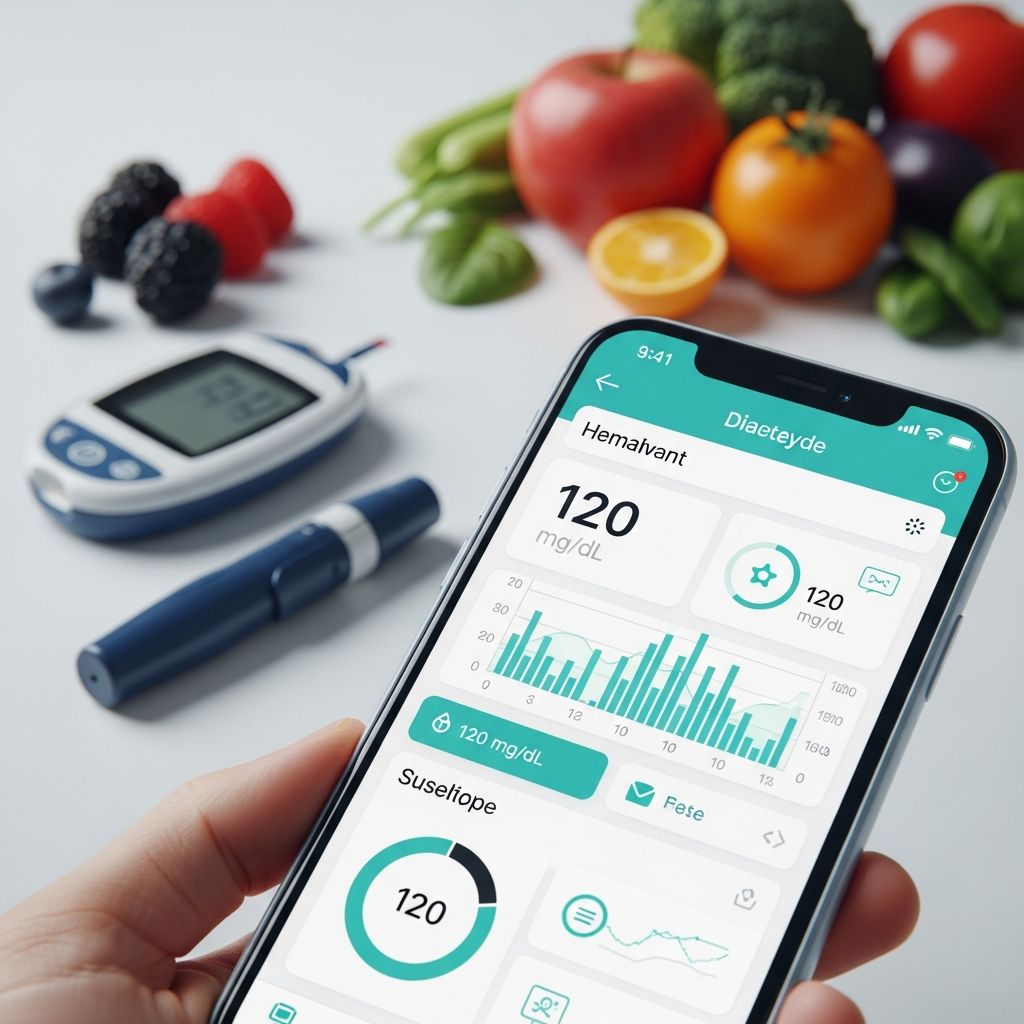
Diabetes management apps demonstrate significant potential in improving glycemic control and self-care for patients with type 1 and type 2 diabetes, with clinical studies showing HbA1c reductions ranging from 0.4% to 1.1%. These mobile health (mHealth) tools track blood glucose, medication, diet, and exercise, often integrating healthcare professional feedback for enhanced outcomes.
What do diabetes management apps offer?
Diabetes apps provide comprehensive tools for daily self-management, including blood glucose logging, insulin dose calculators, carb counters, and reminders for medications and appointments. Popular features also encompass graphical feedback on trends, automated alerts for hypo/hyperglycemia, and integration with continuous glucose monitors (CGMs). Studies highlight that apps with interactive elements, such as personalized feedback from healthcare professionals (HCPs), yield greater HbA1c improvements (mean reduction of 0.58%) compared to automated-only feedback (0.44%). For instance, eight evaluated apps tracked outcomes like blood glucose (all 8), medication adherence (5), and body weight (3), with intervention durations of 3-12 months.
Users benefit from real-time data visualization, which fosters better decision-making. Apps like those studied in JMIR reviews enable patients to monitor diet, physical activity, and blood pressure alongside glucose levels, promoting holistic care. Over 2.7 billion smartphone users worldwide have access to such tools, with about 0.5 billion already employing apps for chronic disease management.
How effective are they? Evidence from clinical studies
Meta-analyses confirm diabetes-specific mHealth apps significantly reduce HbA1c in both type 1 diabetes mellitus (T1DM) and type 2 diabetes mellitus (T2DM) patients. One review of multiple studies reported mean HbA1c differences of -0.57% for T2DM and notable improvements in T1DM, with interactive features and HCP feedback amplifying results. The Community Preventive Services Task Force (CPSTF) recommends apps within healthcare systems, noting a median 0.4% A1c reduction across 9 studies, greater in patients ≤55 years (1.03%) versus >55 (0.41%).
For T2DM, seven studies showed a mean inter-group difference of -0.78%, with one achieving -1.1% (mean HbA1c 7.64%). In T1DM, apps increased daily blood glucose readings and lowered HbA1c (P<0.001). Apps excelling in feedback mechanisms, especially from HCPs, proved most effective, with higher satisfaction correlating to better outcomes.
| Study Focus | HbA1c Reduction | Key Features | Population |
|---|---|---|---|
| JMIR mHealth (2021) | -0.57% (T2DM), significant in T1DM | Interactive feedback, HCP input | T1DM & T2DM |
| CPSTF Recommendation | Median 0.4%, up to 1.03% (<55 yrs) | HCP feedback, tracking | T2DM |
| JMIR Diabetes (2023) | Supported control & self-management | Education, lifestyle tracking | T2DM |
Patient perspectives: What do people with diabetes think?
Patients view diabetes apps positively, with personal health as the primary motivator for adoption. A JMIR Diabetes study found high performance expectations, believing apps improve glucose control via knowledge on diet-exercise links. Over one-third (35%) of diabetic smartphone users currently employ mHealth apps for self-management, and more than half express interest in future use. Users report boosted self-confidence, better monitoring of diet/activity, and improved patient-HCP communication.
Challenges include initial learning curves, though most anticipate low effort post-familiarization. Younger patients (<55) show stronger responses, but cultural adaptation enhances accessibility in diverse settings. Participants in qualitative studies value apps for data analysis reports and competence-building in self-management.
- High acceptability due to health benefits and insights into blood glucose patterns.
- Performance expectancy: Positive impact on diabetes control and lifestyle.
- Effort expectancy: Moderate initial hurdle, but user-friendly designs prevail.
- Future intent: >50% willing to integrate apps long-term.
Popular diabetes apps and their features
Leading apps include mySugr, Glucose Buddy, and Dexcom, offering CGM integration, bolus calculators, and community forums. mySugr provides pattern recognition and doctor reports; Glucose Buddy logs meals and exercise with trend graphs. Evidence supports apps with multifunctionality: medication adjustment (3/8 apps), graphical/automated feedback (5-6/8), and HCP feedback (6/8). Small-scale trials show benefits in glucose control, adherence, weight loss, and quality of life.
Related Stories



Effectiveness hinges on features like 2-way communication, tailored education, and data analysis. Patients prefer apps aligning with routines, emphasizing usability and reliability.
Limitations and considerations
While promising, gaps persist: app store availability lacks robust evidence; factors like functionalities, demographics (race, income, literacy), and feedback types need exploration. Older adults (>55) see lesser gains (0.41% vs. 1.03%). Implementation barriers include HCP digital skills deficits and integration into care pathways. Cultural contexts influence adoption, necessitating localized designs.
Higher-quality, long-term research is essential to confirm sustained HbA1c reductions and broad applicability. Privacy concerns and data accuracy also warrant attention.
Recommendations for healthcare professionals and patients
HCPs should integrate apps into care, providing guidance on selection and use, prioritizing those with HCP feedback. Guidelines recommend digital skills training for professionals and app inclusion in standard protocols. Patients: Choose evidence-backed apps, use consistently, and share data with providers for optimal results.
- Select apps with proven features (tracking, feedback, education).
- Combine with HCP oversight for best outcomes.
- Monitor engagement; high satisfaction predicts success.
Frequently Asked Questions (FAQs)
Can diabetes apps lower HbA1c levels?
Yes, studies show median reductions of 0.4%, up to 1.1% with HCP feedback, in T1DM and T2DM.
Are apps more effective for younger patients?
Patients ≤55 years experience greater A1c drops (1.03%) than those >55 (0.41%).
What features make apps most effective?
HCP feedback, graphical trends, medication support, and tracking of glucose, weight, and diet.
How many diabetes patients use apps?
About 35% currently use them, with >50% interested in future adoption.
Should HCPs recommend diabetes apps?
Yes, CPSTF recommends them within healthcare systems for improved outcomes.
References
- Effectiveness of Disease-Specific mHealth Apps in Patients With Diabetes Mellitus — JMIR mHealth and Uhealth. 2021-02-26. https://mhealth.jmir.org/2021/2/e23477/
- Diabetes Management: Mobile Phone Applications Used Within Healthcare Systems – Type 2 — The Community Guide. Accessed 2026. https://www.thecommunityguide.org/findings/diabetes-management-mobile-phone-applications-used-within-healthcare-systems-type-2.html
- Mobile Health Apps for the Control and Self-management of Type 2 Diabetes — JMIR Diabetes. 2023-01-01. https://diabetes.jmir.org/2023/1/e41076/
- A mobile health application use among diabetes mellitus patients — Frontiers in Endocrinology. 2024. https://www.frontiersin.org/journals/endocrinology/articles/10.3389/fendo.2024.1481410/full
- Diabetes Digital App Technology: Benefits, Challenges, and Recommendations — Diabetes Care (ADA). 2020-01-01. https://diabetesjournals.org/care/article/43/1/250/35864/Diabetes-Digital-App-Technology-Benefits
Similar Articles








Read full bio of medha deb