Supplements For Diabetes: 10 Evidence-Based Options
Explore whether dietary supplements can effectively support diabetes management alongside standard treatments and lifestyle changes.
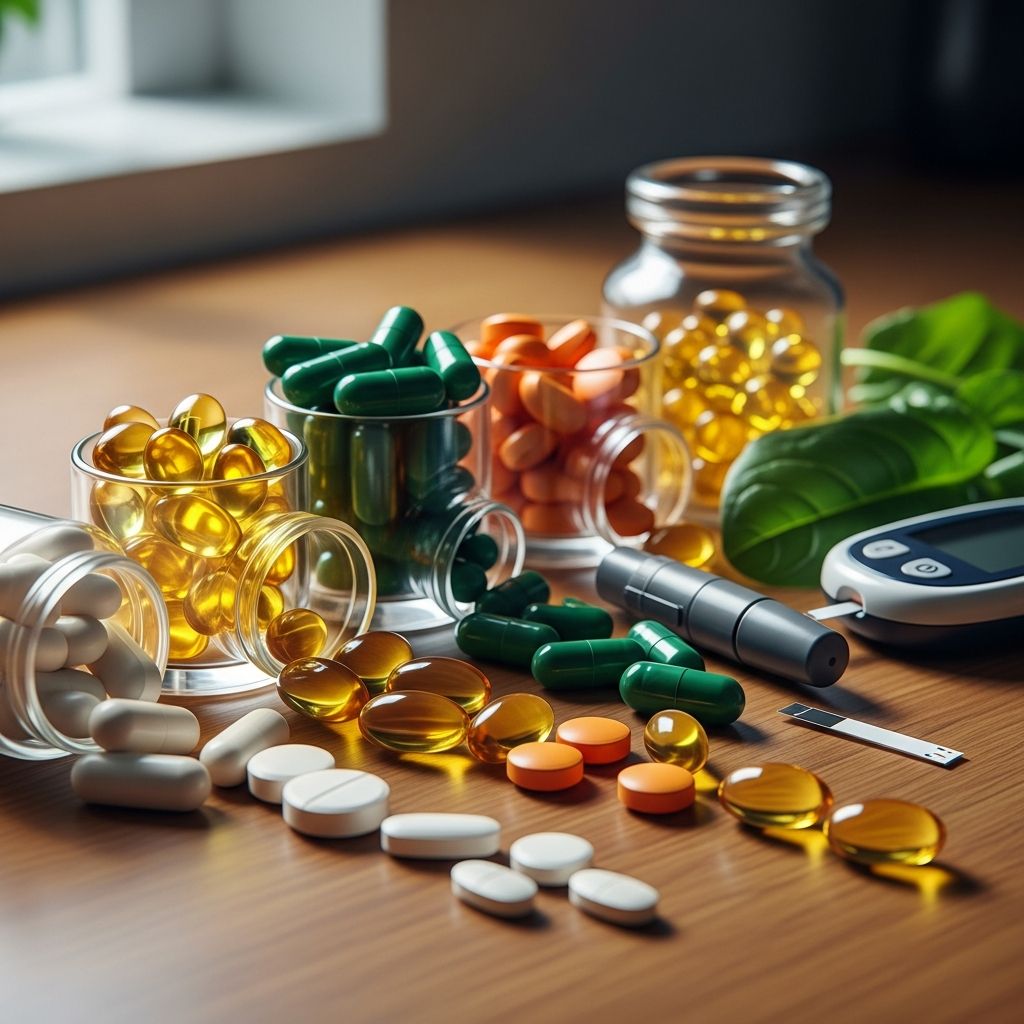
Many people with diabetes wonder if dietary supplements can help control blood sugar levels, reduce complications, or improve overall health. While supplements are popular, evidence varies widely, and they should never replace prescribed medications or lifestyle changes like diet and exercise.
What are dietary supplements?
Dietary supplements include vitamins, minerals, herbs, amino acids, and other products intended to supplement the diet. They come in forms like pills, capsules, powders, or liquids and are widely available over-the-counter. In the UK, they are regulated as foods rather than medicines, meaning claims about treating diseases like diabetes are not allowed. People with diabetes often use them for blood glucose control, neuropathy relief, cholesterol improvement, or insulin sensitivity enhancement. However, the American Diabetes Association states that supplements are not proven effective for lowering blood glucose or managing diabetes.
Why do people with diabetes take supplements?
Patients report taking supplements to lower blood glucose, blood pressure, improve cholesterol profiles, address insulin resistance, or manage neuropathy. Surveys show many take 2-3 supplements simultaneously, often unaware of interactions with diabetes medications. Deficiencies in magnesium, calcium, potassium, and vitamin D are common in diabetes patients, prompting supplementation. Despite popularity, clinical evidence is limited for most.
Common supplements used for diabetes
Several supplements are frequently tried for diabetes management. Below, we review key ones with available evidence.
Magnesium
Magnesium supplementation shows promise for type 2 diabetes. A 2020 systematic review of 26 studies found it reduced fasting plasma glucose, fasting insulin, insulin resistance, triglycerides, and blood pressure. A 2021 meta-analysis of 25 studies confirmed reductions in fasting plasma glucose, especially in those at high diabetes risk, improving insulin sensitivity. Another 2021 review noted significant LDL reductions but no major effects on other lipids. Doses around 360 mg daily for 4-16 weeks improved fasting blood glucose by 0.56 mmol/L. Safety note: Large doses (>5,000 mg/day) can be deadly; common side effects include diarrhea.
Vitamin D and Calcium
Vitamin D deficiency is linked to type 2 diabetes risk. Clinical trials show vitamin D with calcium may improve insulin secretion, glucose tolerance, and lower A1C. A 2007 meta-analysis suggested benefits for beta-cell function and insulin sensitivity when combined with calcium. However, a systematic review found no glycemic effects in type 2 diabetes patients. Supplementation is recommended if deficient.
Berberine
Berberine, a plant compound, is studied at 0.9–1.5 g daily. A meta-analysis showed reductions in fasting plasma glucose (15 mg/dL), postprandial glucose (34 mg/dL), and A1C (0.7%) versus lifestyle alone. A 2022 review of 37 studies (3,048 patients) confirmed significant glucose reductions without increased adverse events or hypoglycemia risk. It may increase insulin sensitivity and reduce postprandial glucose. Potential interactions with medications like warfarin; monitor for hypoglycemia.
Alpha-lipoic acid (ALA)
ALA acts as an antioxidant, potentially improving insulin sensitivity. An RCT with 300 mg daily for 8 weeks reduced fasting blood glucose from 185 to 156 mg/dL. Used for neuropathy, but glycemic evidence is preliminary.
Ginseng (American)
American ginseng is the most studied, safe up to 3 g for 12 weeks, potentially lowering blood sugar. It may stimulate insulin release with immunomodulatory effects. Few adverse effects reported.
Gymnema sylvestre
This herb (500 mg twice daily for 60 days) reduced fasting and postprandial glucose by 43 and 55 mg/dL. No side effects noted; it prolongs insulin receptor action.
Cinnamon
Evidence is mixed. One meta-analysis of 10 RCTs found no A1C effect but borderline fasting glucose reduction. Another of 8 RCTs (250 mg-6 g daily, 4-16 weeks) showed significant fasting glucose improvement.
Related Stories



Probiotics
Probiotics improve glucose metabolism. A 2016 meta-analysis showed reductions in fasting glucose and A1C. Effects are stronger with ≥8 weeks and multiple strains. One meta-analysis reported A1C drop by 0.81%. They also lower cholesterol and blood pressure. More large RCTs needed.
Fiber supplements
ADA recommends 25-35 g daily fiber. Supplementation (avg 15 g) improved A1C by 0.26% and fasting glucose. Psyllium shows greatest benefit in treated type 2 diabetes.
Omega-3 fatty acids
No significant effects on A1C or fasting glucose, but reduces triglycerides.
Evidence summary table
| Supplement | Dose/Duration | Key Findings | Safety Notes |
|---|---|---|---|
| Magnesium | 360 mg daily, 4-16 weeks | ↓ Fasting glucose, insulin resistance, triglycerides, BP | Diarrhea at high doses |
| Berberine | 0.9-1.5 g daily | ↓ FPG 15 mg/dL, PPG 34 mg/dL, A1C 0.7% | Generally safe; monitor hypoglycemia |
| Probiotics | ≥8 weeks, multi-strain | ↓ FBG, A1C, cholesterol | Well-tolerated |
| Fiber (Psyllium) | 15 g daily avg | ↓ A1C 0.26%, FBG | Safe |
| Cinnamon | 250 mg-6 g, 4-16 weeks | Mixed: some ↓ FBG | Safe |
| Vitamin D + Calcium | Varies | May improve insulin sensitivity if deficient | Safe |
Do supplements work for diabetes?
Overall, insufficient evidence shows any supplement reliably manages or prevents type 2 diabetes. Some like magnesium, berberine, probiotics, and fiber show modest benefits in meta-analyses, particularly for glycemic control. Others like cinnamon and omega-3 have inconsistent results. Benefits are adjunctive, not replacement therapy. NCCIH notes more high-quality research needed. ADA does not endorse supplements for blood sugar control.
Safety and risks
Most are safe short-term, but risks include:
- Drug interactions (e.g., berberine with warfarin)
- Hypoglycemia risk with antidiabetics
- GI upset (magnesium, fiber)
- Liver/kidney issues with some herbs
- Unregulated quality; contamination possible
Patients often unaware of interactions. Always inform your doctor.
Should you take supplements for diabetes?
Consult a healthcare professional before starting. Test for deficiencies (e.g., vitamin D, magnesium). Prioritize evidence-based lifestyle: diet, exercise, medications. Supplements may complement but not substitute. UK regulations limit health claims; choose reputable brands.
Frequently Asked Questions (FAQs)
Can magnesium supplements lower blood sugar?
Yes, meta-analyses show magnesium reduces fasting glucose and insulin resistance in type 2 diabetes.
Is berberine better than metformin?
Berberine shows similar glucose-lowering effects in studies, but not a replacement; more research needed.
Are probiotics helpful for diabetes?
They reduce A1C and fasting glucose, especially long-term multi-strain.
Do vitamin D supplements help diabetes?
Potentially if deficient, improving insulin sensitivity with calcium.
Can supplements cure diabetes?
No, none cure diabetes; they may support management.
Final thoughts
While intriguing, supplements’ role in diabetes is supportive at best. Focus on proven strategies; use supplements judiciously under guidance. Ongoing research may clarify benefits.
References
- Safety and Efficacy of Dietary Supplements for Diabetes — PMC – NIH. 2021-02-26. https://pmc.ncbi.nlm.nih.gov/articles/PMC7887529/
- The Role of Supplements in Diabetes Management — U.S. Pharmacist. 2023. https://www.uspharmacist.com/article/the-role-of-supplements-in-diabetes-management
- Type 2 Diabetes and Dietary Supplements: What the Science Says — NCCIH.nih.gov. 2023. https://www.nccih.nih.gov/health/providers/digest/type-2-diabetes-and-dietary-supplements-science
- Supplements to Lower Blood Sugar — VA.gov Whole Health Library. 2023. https://www.va.gov/WHOLEHEALTHLIBRARY/tools/supplements-to-lower-blood-sugar.asp
- Six Popular Supplements Used for Diabetes Management — MPR. 2023. https://www.empr.com/home/features/six-popular-supplements-used-for-diabetes-management/2/
- Blood Sugar Supplements: Backed by Science or Driven by Hype? — Sarah Hormachea. 2025-01-14. https://www.sarahhormachea.com/2025/01/14/blood-sugar-supplements-backed-by-science-or-driven-by-hype/
- Vitamins, Minerals, and Supplements — American Diabetes Association. 2025. https://diabetes.org/food-nutrition/diabetes-vitamins-supplements
Similar Articles








Read full bio of medha deb