Ultraviolet Light: Expert Guide To Killing Germs Safely
Discover if UV light effectively kills germs, the risks involved, and safe disinfection alternatives for everyday use.
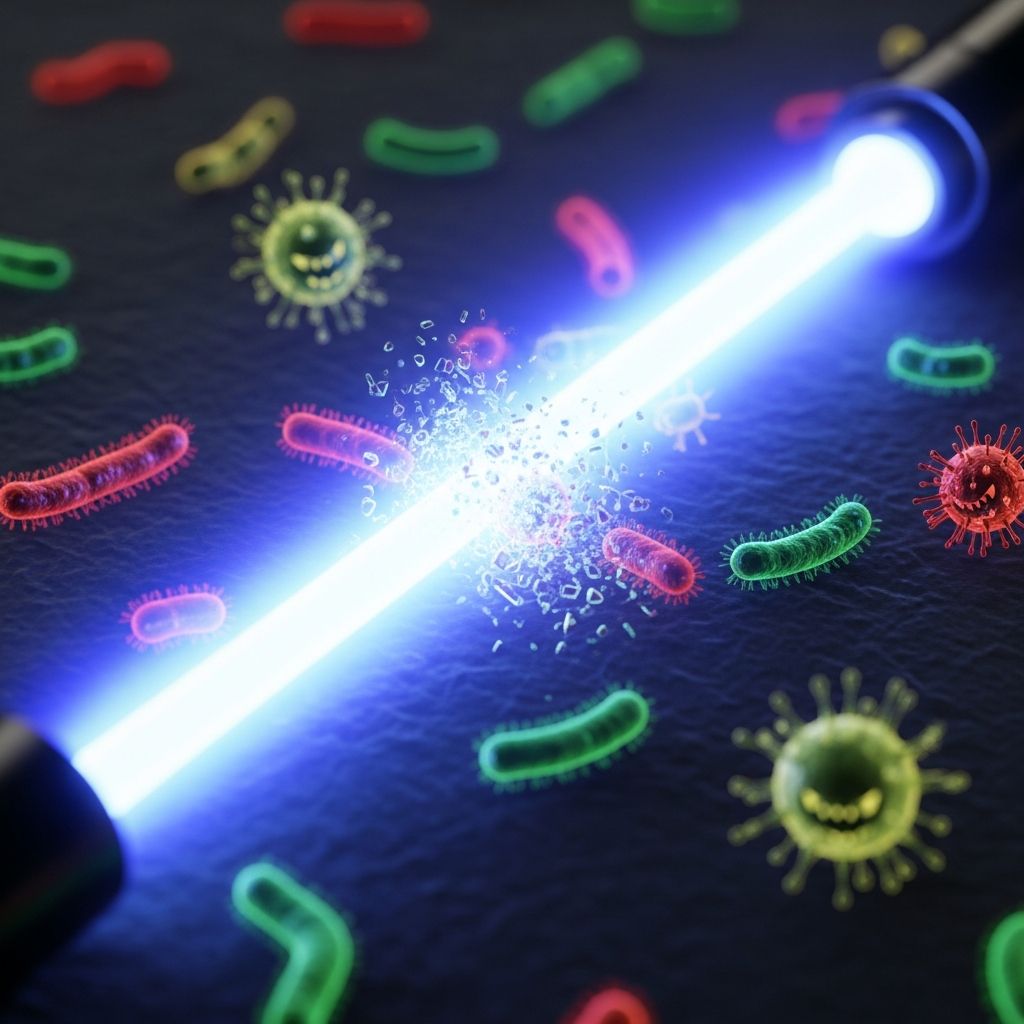
Ultraviolet (UV) light has gained attention for its potential to disinfect surfaces and air by inactivating microorganisms like bacteria, viruses, and fungi. While UV-C light is well-established for germicidal irradiation (UVGI), primarily damaging microbial DNA through thymine dimerization, emerging research explores UVA’s role. However, UV exposure poses significant risks, including skin cancer, prompting warnings from health authorities.
How Does Ultraviolet Light Kill Germs?
UV light inactivates germs by disrupting their genetic material. UV-C (100-280 nm) is most effective, peaking at 265 nm on the germicidal effectiveness curve, where it causes adjacent thymine bases in DNA to bond, halting replication. Dosages of 2,000-8,000 μJ/cm² achieve 90% kill rates for many bacteria and viruses.
UVA (315-400 nm), traditionally tanning radiation, also shows antimicrobial effects. A study using narrow-band UVA (peak 343 nm) at 2000-3000 μW/cm² for 20-40 minutes significantly reduced bacteria like E. coli, Pseudomonas aeruginosa, and yeast Candida albicans in dose-dependent manner. Broad-band UVA (325-400 nm) similarly decreased colony sizes and counts.
- UV-C mechanism: Direct DNA damage via photodimers, effective against exposed genetic material in bacteria/viruses.
- UVA mechanism: Generates reactive oxygen species (ROS) indirectly damaging cells; optimal at 2000 μW/cm² for 20-40 min.
- Limitations: Effectiveness depends on dose (intensity × time), distance, wavelength, and surface porosity; ineffective on shadowed or ridged areas.
UV-C Light: Proven Disinfection Power
UV-C is the gold standard for UVGI, used in water treatment, HVAC systems, and hospital room sterilization. Low-pressure mercury lamps emit at 254 nm, reducing pathogens like tuberculosis and SARS-coronavirus variants. Studies confirm 99.99% elimination of harmful microbes with proper equipment.
CDC endorses upper-room GUV (germicidal UV) for air disinfection, safely used for decades when direct exposure is avoided. Robots emitting UV-C sterilize hospital rooms, cutting superbug transmission by 30%.
| Pathogen | UV-C Dose for 90% Inactivation (μJ/cm²) | Source |
|---|---|---|
| E. coli | 2,000-8,000 | |
| P. aeruginosa | Dose-dependent reduction | |
| SARS-CoV (protein coat) | Effective destruction | |
| Cryptosporidium | Somewhat effective |
UVA Light: A Surprising Contender Against Pathogens
Recent research challenges UVA’s sole association with tanning and aging. In controlled experiments, narrow-band UVA LEDs (343±3 nm) at 1 cm distance and 2000 μW/cm² for 20 minutes reduced E. coli GFP fluorescence and viable cells significantly (p<0.05). Extending to 40 minutes at higher intensities (3000 μW/cm²) yielded greater reductions in liquid cultures of E. coli and P. aeruginosa.
Against viruses, UVA pretreated HeLa cells resisted coxsackievirus B (CVB) transfection, with daily 20-minute exposures maintaining cell viability over 96 hours. Broad-band UVA mercury lamps also curbed Klebsiella pneumoniae, Enterococcus faecalis, and Clostridioides difficile. Factors like irradiance, exposure time, and distance optimize outcomes.
- BB-UVA: Significant microbial reduction at multiple time points.
- NB-UVA: Dose-dependent bactericidal effects, feasible for internal applications.
Related Stories



The Serious Risks: UV Light and Skin Cancer
While UV kills germs, it causes skin cancer in humans. UV-C is absorbed by the ozone layer but artificial sources emit hazardous levels. UVA penetrates deeper, contributing to melanoma and aging via DNA damage and immunosuppression.
Skin Cancer Foundation warns against UV wands marketed for home use; FDA issued safety communications prohibiting them due to unsafe radiation exposure. Direct skin/eye contact causes burns, photokeratitis, and long-term cancer risk. Unlike germs, human cells repair UV damage inefficiently, especially in fair-skinned individuals.
Upper-room GUV avoids direct exposure, but consumer devices often underperform claims, achieving <50% kill rates.
Why Consumer UV Devices Often Fail
Many home UV wands are underpowered, poorly designed, and dangerous. FDA tests revealed excessive UV-C output risking burns. Porous surfaces, shadows, and organic matter shield germs, reducing efficacy.
Professional systems succeed via high-dose, controlled application; consumer versions prioritize portability over power, leading to false security.
Safe Alternatives to UV Disinfection
Opt for EPA-registered disinfectants, which match UV-C efficacy without radiation risks. Enhanced cleaning protocols, HEPA filtration, and ventilation outperform unreliable UV gadgets.
- Chemical disinfectants: Proven against broad spectra.
- Steam cleaning: Kills without residues.
- Alcohol wipes (70%): Fast virus inactivation.
Frequently Asked Questions (FAQs)
Is UV light safe for home disinfection?
No. FDA warns against UV wands due to unsafe radiation levels that can cause skin burns and eye damage. Use only in unoccupied spaces with safeguards.
Does UVA kill germs like UV-C?
Yes, studies show UVA reduces bacteria (E. coli, P. aeruginosa) and viruses dose-dependently, but requires precise control and poses skin cancer risks.
How long for UV to kill germs?
UV-C: Seconds to minutes at proper doses. UVA: 20-40 minutes at 2000 μW/cm². Effectiveness varies by microbe and conditions.
Can UV light treat COVID-19 or flu viruses?
UV-C destroys SARS-CoV protein coats; effective against similar viruses but not for internal human use.
What’s the best UV wavelength for germs?
265 nm (UV-C) per germicidal curve; 254 nm common in lamps.
Conclusion: Balance Efficacy with Safety
UV light effectively kills germs—UV-C proven, UVA promising—but human health risks outweigh benefits for casual use. Prioritize evidence-based, safe methods over trendy devices.
References
- Ultraviolet A light effectively reduces bacteria and viruses including Pseudomonas aeruginosa and Coxsackievirus — Narayanan et al. 2020-07-02. https://pmc.ncbi.nlm.nih.gov/articles/PMC7365468/
- The Truth About UV-C Light and Its Effectiveness Against Germs — UVSmart. 2023. https://www.uvsmart.nl/articles/the-truth-about-uv-c-light-and-its-effectiveness-against-germs
- Ultraviolet germicidal irradiation — Wikipedia (citing primary studies). 2024. https://en.wikipedia.org/wiki/Ultraviolet_germicidal_irradiation
- Does UV Light Actually Disinfect and Kill Viruses? — University of California, Irvine. 2023. https://bli.uci.edu/does-uv-light-actually-disinfect-and-kill-viruses/
- UV Light Disinfection Effectiveness, Safety, and Lamp Types — Light Sources. 2022. https://www.light-sources.com/blog/uv-light-disinfection-effectiveness-safety-and-lamp-types/
- About Germicidal Ultraviolet (GUV) — CDC. 2024-05-15. https://www.cdc.gov/niosh/ventilation/germicidal-ultraviolet/index.html
- What is the Effectiveness of Using UV Disinfection? — Pritchard Industries. 2023. https://www.pritchardindustries.com/effectiveness-of-using-uv-disinfection/
- Do Not Use Ultraviolet (UV) Wands That Give Off Unsafe Levels of Radiation — FDA. 2022-02-10. https://www.fda.gov/medical-devices/safety-communications/do-not-use-ultraviolet-uv-wands-give-unsafe-levels-radiation-fda-safety-communication
Similar Articles








Read full bio of medha deb