Can Walking Really Help You Lose Weight?
Discover if walking can lead to meaningful weight loss, how to optimize your routine, and the science-backed strategies for success.
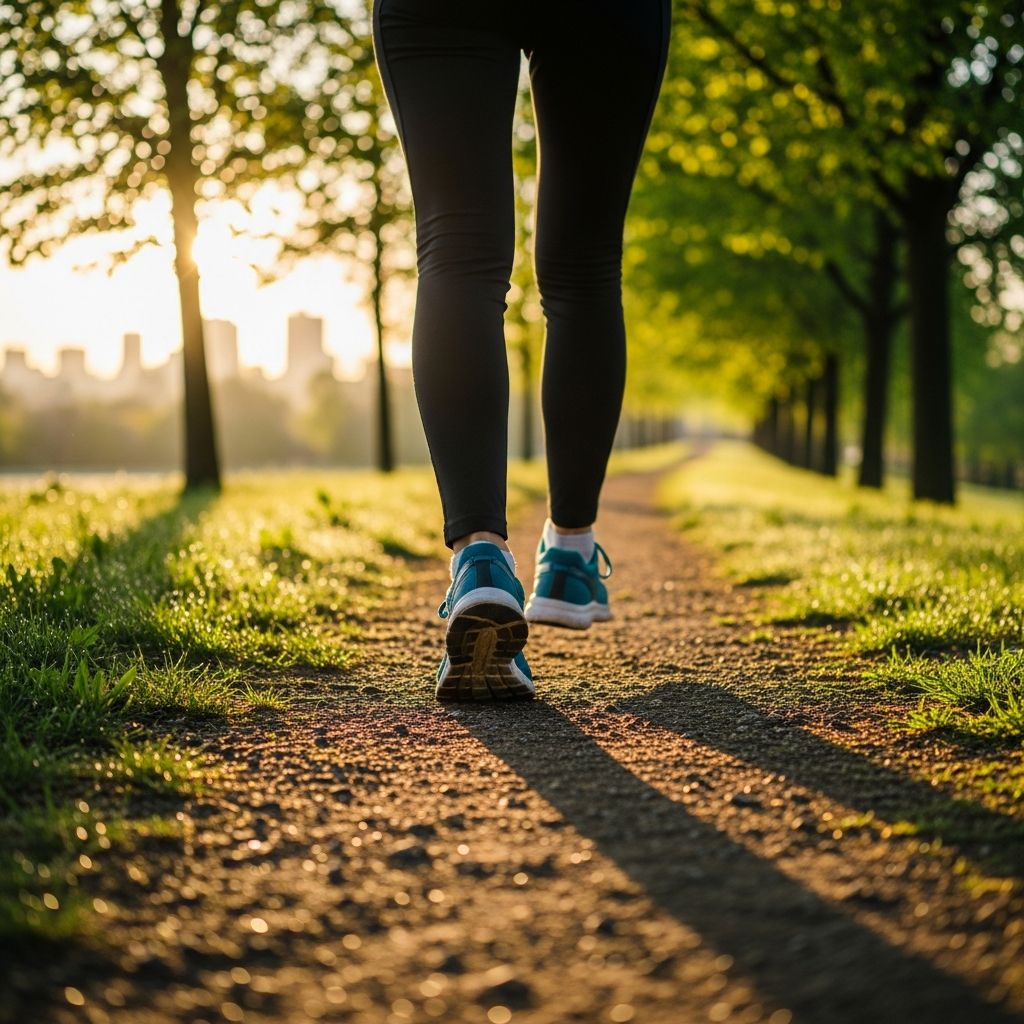
Walking is one of the most accessible forms of exercise, requiring no equipment, gym membership, or special skills. But does it actually lead to weight loss? Yes, walking can help you lose weight by burning calories, reducing body fat, and supporting overall health when done consistently and paired with a balanced diet. Research confirms that moderate-intensity walking promotes fat loss, preserves lean muscle, and enhances long-term weight management.
Unlike high-intensity workouts, walking is sustainable for most people, making it ideal for beginners or those with joint issues. Studies show that adding 30 minutes of brisk walking daily can burn about 150 extra calories, contributing to a calorie deficit essential for weight loss. However, results depend on pace, duration, frequency, and dietary habits. This article breaks down the science, optimal strategies, and practical tips to maximize walking’s weight loss potential.
How Many Calories Does Walking Burn?
The number of calories burned while walking varies based on your weight, pace, terrain, and duration. A general rule: a 155-pound person burns approximately 100-200 calories per 30-minute walk, depending on intensity.
| Weight (lbs) | Slow Pace (2 mph, 30 min) | Moderate Pace (3 mph, 30 min) | Brisk Pace (4 mph, 30 min) |
|---|---|---|---|
| 125 | 135 | 180 | 225 |
| 155 | 167 | 222 | 278 |
| 185 | 200 | 266 | 333 |
Data adapted from metabolic equivalents (METs) research; brisk walking yields higher burns. To lose 1 pound of fat, you need a 3,500-calorie deficit. Walking 30 minutes daily at moderate pace could contribute 1,500 calories weekly toward that goal, accelerating loss when combined with diet.
Factors like hills or inclines increase calorie burn by 50% or more. Track with apps or wearables for precision. Consistency matters: aim for 150-300 minutes weekly of moderate aerobic activity, as recommended by health guidelines.
Does Walking Speed Matter for Weight Loss?
Walking speed significantly impacts fat loss. Surprisingly, slower, longer walks may produce greater total body fat reduction than faster, shorter ones for the same distance, especially in overweight individuals. A study on healthy adults found slow walking (lower speed, extended duration over 4.8 km) led to more rapid and substantial fat loss initially compared to fast walking.
- Slow Walking Benefits: Enhances total body fat reduction (e.g., 5.7% loss after 30 weeks).
- Fast Walking Benefits: Targets abdominal subcutaneous fat more effectively and supports bone health.
- Optimal Approach: Mix speeds—moderate (3-3.5 mph) preserves muscle while burning fat.
Brisk walking (3.5+ mph) burns more calories per minute but may increase hunger or fatigue. Moderate pace sustains longer sessions, creating larger overall deficits. Research supports progressive programs: starting slow and building intensity yields better weight reduction (mean -0.58 kg vs. -0.39 kg for non-progressive).
Brisk Walking vs. Leisurely Strolling: Which Burns More Fat?
Brisk walking outperforms leisurely strolling for fat loss due to higher intensity. At 4 mph, you burn 1.5 times more calories than at 2 mph. However, slow strolling over longer periods can match or exceed fat loss in total body composition changes.
A 30-week study showed slow walkers progressively lost 7.5% body fat, while fast walkers saw initial increases or plateaus before declines. For belly fat, higher speeds preferentially reduce subcutaneous abdominal fat. Key takeaway: brisk for efficiency, slow for sustainability.
Related Stories



- Brisk (100+ steps/min): Maximizes calorie burn, heart health.
- Leisurely (<80 steps/min): Builds habit, reduces injury risk.
Intensity also lowers dementia and heart disease risk; 9,800 steps/day at higher intensity cuts dementia by 50%.
How Many Steps Should You Take to Lose Weight?
The 10,000-steps goal is popular but not magic—9,800 steps daily links to lower dementia and cardiovascular risks, with every 2,000 steps reducing premature death by 8-11%. For weight loss, 7,000-10,000 steps combined with diet drives results.
Progress to 10,000 steps enhances long-term loss and prevents regain. Beginners: Start at 5,000, add 1,000 weekly. Track via phone or pedometer.
| Steps/Day | Approx. Miles | Calories Burned (155 lbs) | Weight Loss Potential (w/ diet) |
|---|---|---|---|
| 5,000 | 2.5 | 200-250 | Maintenance |
| 7,500 | 3.75 | 300-400 | 0.5 lb/week |
| 10,000 | 5 | 400-500 | 1 lb/week |
Studies confirm step-based walking aids fat loss and muscle preservation.
A Walking Workout Plan for Weight Loss
Build a plan: 5-6 days/week, 30-60 minutes. Pair with 500-calorie daily deficit for 1 lb/week loss.
- Weeks 1-2: 30 min moderate pace, 5,000 steps. Flat terrain.
- Weeks 3-4: 40 min, add hills, 7,000 steps. Include intervals (2 min brisk/3 min moderate).
- Weeks 5+: 45-60 min, 10,000 steps. Mix slow/long and brisk/short sessions.
Progression prevents plateaus, boosts adherence. Warm-up 5 min, cool-down stretches.
5 Ways to Burn More Calories When You Walk
- Incorporate Intervals: Alternate brisk (4 mph) and recovery pace; burns 20% more calories.
- Add Inclines: Hills engage more muscles, increasing burn by 50%.
- Use Arm Motion: Pump arms vigorously to activate upper body.
- Walk with Weights: 2-5 lb hand/ankle weights (consult doctor); adds 10-15% burn.
- Choose Varied Terrain: Sand, grass, or trails demand more energy than pavement.
These tweaks make walks efficient fat-burners without high impact.
Why Combine Walking with a Healthy Diet
Exercise alone rarely suffices; diet creates the deficit. Walking + calorie restriction enhances fat loss while sparing muscle. A study showed combined approach reduced fat mass more than diet alone. Focus on whole foods, protein (1.6g/kg body weight), veggies, and portion control. You can’t out-walk a bad diet.
Frequently Asked Questions
Can you lose weight walking 30 minutes a day?
Yes, 30 minutes brisk walking burns ~150-300 calories, aiding 0.5-1 lb/week loss with diet.
Is 10,000 steps enough for weight loss?
Yes, especially with calorie control; it supports sustained loss and health benefits.
Does slow walking burn more fat than fast?
Slow, longer walks often yield greater total fat loss initially.
How long to see weight loss from walking?
1-4 weeks with consistency and diet; 3-7% fat loss in 15-30 weeks.
Is walking better than running for weight loss?
Walking is more sustainable, preserves muscle; both work if calories burned exceed intake.
References
- Effects of Walking Speed on Total and Regional Body Fat in Healthy Adults — PMC/NCBI. 2022-02-10. https://pmc.ncbi.nlm.nih.gov/articles/PMC8840715/
- Walking for Weight Loss — Howdy Health, Texas A&M University. 2024. https://howdyhealth.tamu.edu/walking-for-weight-loss/
- 10,000 Steps Might Really Be the ‘Magic Pill’ — University of Kansas Medical Center. 2022-09. https://www.kumc.edu/about/news/news-archive/jama-study-ten-thousand-steps.html
- Walking: Is it Enough for Weight Loss? — Mayo Clinic. 2023. https://www.mayoclinic.org/healthy-lifestyle/weight-loss/expert-answers/walking/faq-20058345
- Aerobic Exercise and Weight Loss in Adults: A Systematic Review — JAMA Network Open. 2024-10-28. https://jamanetwork.com/journals/jamanetworkopen/fullarticle/2828487
Similar Articles








Read full bio of medha deb