Can You Eat Honey if You Have a Bee Allergy?
Understanding the connection between bee allergies and honey consumption safely.
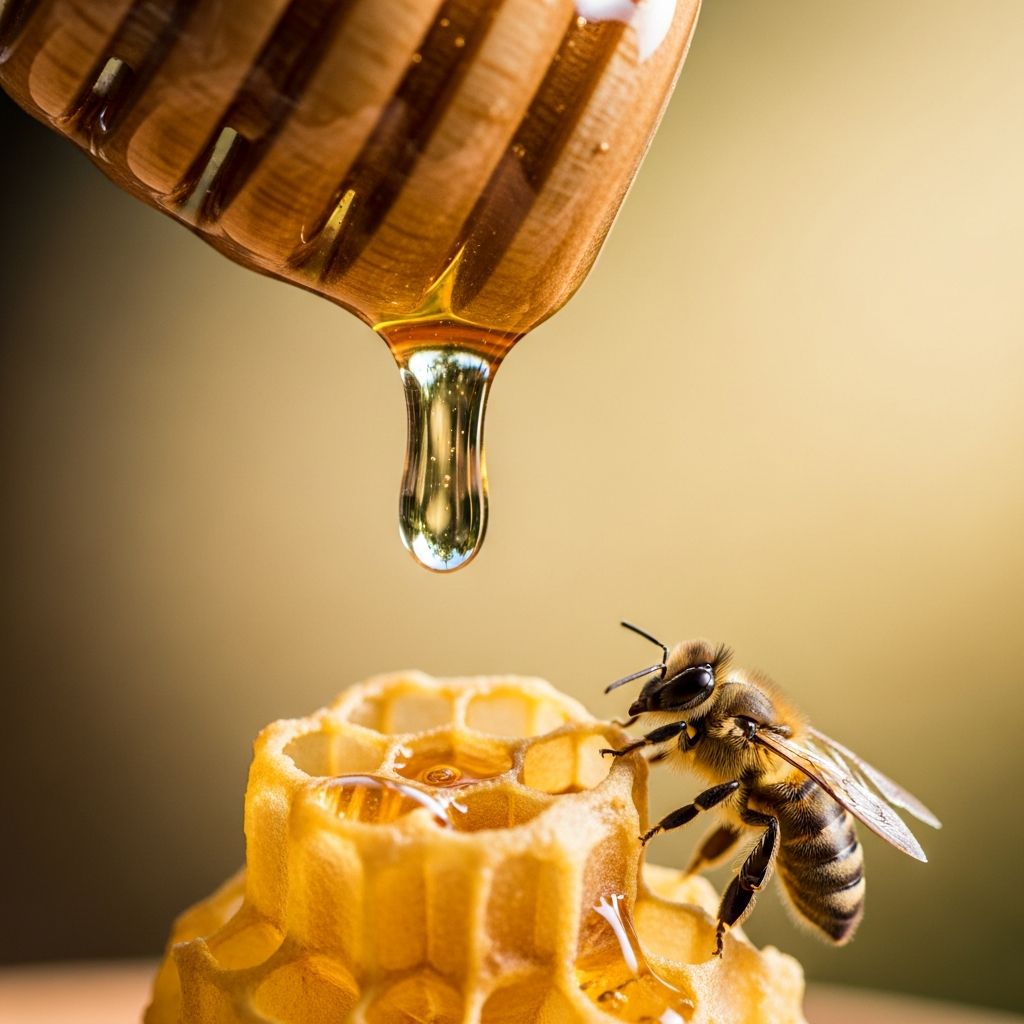
The relationship between bee allergies and honey consumption is more complex than many people realize. While honey is produced by bees, having a bee sting allergy does not automatically mean you cannot consume honey. However, understanding the nuances of different types of bee allergies and how they relate to honey is essential for making safe dietary choices.
Understanding Different Types of Bee Allergies
Before determining whether honey is safe for you, it’s important to understand that there are several distinct types of bee-related allergies. These are not interchangeable, and having one type does not necessarily mean you have another.
Bee Sting Allergies
A bee sting allergy, also called a Hymenoptera sting allergy, is an allergic reaction to the venom injected during a bee sting. This reaction can range from mild localized swelling to severe systemic anaphylaxis. People with this type of allergy may experience hives, swelling of the throat, difficulty breathing, or loss of consciousness in severe cases.
Pollen Allergies
Pollen allergies occur when your immune system reacts to pollen particles in the air or in food products. Bees collect pollen while visiting flowers, and some of this pollen can end up in honey. If you have an allergy to specific pollen types, you may react to honey containing those pollens.
Honey Allergies
True honey allergies are incredibly rare. However, honey can cause allergic reactions through its protein content, including bee proteins from salivary and pharyngeal gland secretions, or through pollen proteins contained within the honey. Reactions can range from mild symptoms like cough to severe anaphylaxis in uncommon cases.
Can You Eat Honey With a Bee Sting Allergy?
The answer depends on the severity of your bee sting allergy and the type of honey you’re considering. Honey does not contain bee venom in amounts sufficient to trigger a typical sting allergy reaction when consumed orally. However, caution is warranted, particularly with raw or unfiltered honey.
Raw or unfiltered honey may contain bee body parts and proteins that could potentially trigger a reaction in individuals with severe bee venom allergies. Medical experts recommend that people with bee sting allergies exercise particular caution when consuming raw or unfiltered honey, as these products have higher concentrations of bee-related proteins.
For individuals with mild to moderate bee sting allergies, commercially processed and filtered honey is generally considered safe. The processing removes most bee proteins and other bee-related components that might cause a reaction.
The Role of Pollen in Honey and Allergies
One significant concern for people with allergies considering honey consumption is pollen content. Bees collect pollen from flowers as they travel, and this pollen can remain in the honey they produce. The pollen composition in honey varies depending on which flowers the bees visited.
Which Pollens Are Actually in Honey?
A critical point often overlooked in discussions about honey and allergies is that the pollen found in honey may not be the same pollen triggering your allergies. Most plants that cause seasonal allergic rhinitis, commonly known as hay fever, are pollinated by wind, not by bees. Plants like ragweed and trees produce pollen that travels through the air rather than being carried by bees on their legs.
Related Stories



Bees are attracted to brightly colored flowers and visit plants that produce nectar. These plants typically have heavier, stickier pollen designed for insect pollination, not wind dispersal. Therefore, the pollen in honey is fundamentally different from the pollen causing many people’s seasonal allergies.
Local Honey and Allergen Exposure
Even if honey contains some of the pollen you’re allergic to, the concentration and consistency are insufficient for meaningful desensitization. Unless bees are limited to a specific pollen source, the exact pollen composition in honey is unpredictable and varies from batch to batch and season to season. This inconsistency makes it impossible to reliably use honey as an allergy treatment, despite the popular theory that local honey can help build tolerance to local allergens.
Medical Expert Recommendations
Medical professionals have clear guidance on honey consumption for people with bee allergies. According to allergy specialists, honey is generally safe and well-tolerated at typical consumption levels for the general population. However, specific precautions apply to those with bee-related allergies.
Key Safety Guidelines
- Avoid raw or unfiltered honey if you have a bee sting allergy, as these products contain higher concentrations of bee proteins that could trigger a reaction
- Processed and pasteurized honey is safer because heat treatment and filtration remove most bee-related proteins and particles
- Consult your allergist before consuming any honey product if you have a severe bee allergy or have experienced anaphylaxis from bee stings
- Be cautious with pollen allergies if you know you’re allergic to pollen types commonly found in local honey
Special Populations and Honey Safety
Beyond bee allergies, certain groups should avoid or limit honey consumption entirely.
Infants Under One Year
Children younger than one year old should never be given honey, whether raw or processed. Honey can contain bacterial spores that cause botulism, a serious and potentially life-threatening condition in infants whose digestive systems are not yet fully developed to handle these bacteria. This restriction applies regardless of allergy status.
People With Diabetes
Individuals with uncontrolled or poorly managed diabetes should be cautious about honey consumption. Honey is a concentrated source of carbohydrates and natural sugars, which can significantly impact blood glucose levels. Those with well-controlled diabetes may consume honey in moderation under medical supervision.
Distinguishing Between Reactions
If you experience an allergic reaction after eating honey, determining the cause is important for future dietary decisions. Research has shown that when bee-venom allergic patients are exposed to honey extracts, some show IgE antibody binding to bee-specific components, indicating a potential reaction to bee proteins rather than true bee venom sting sensitivity.
Studies examining allergic reactions to honey have found that many reactions are actually caused by pollen sensitivity rather than honey or bee proteins themselves. In one study of 22 patients who experienced allergic reactions after eating honey, 75 percent were sensitive to dandelion pollen and 59 percent were sensitive to Compositae (daisy family) pollen found within the honey.
The Myth of Honey as Allergy Treatment
Despite widespread belief that consuming local raw honey can desensitize you to seasonal allergies, scientific evidence does not support this claim. The theory suggests that small amounts of local pollen in honey would gradually build tolerance, similar to allergy immunotherapy. However, this mechanism doesn’t work in practice for several reasons.
First, the pollen in honey is generally not the same pollen causing seasonal allergies. Second, oral exposure to pollen is far less effective than subcutaneous immunotherapy (allergy shots) for building tolerance. Third, the pollen concentration in honey is inconsistent and unpredictable, making any potential desensitization impossible to control or measure.
While some individuals report improved allergy symptoms after consuming raw honey, controlled scientific studies have failed to demonstrate that honey provides greater allergy relief than placebo treatments.
What You Should Do
If you have a bee allergy and are considering consuming honey, follow these steps:
- Identify the specific type of bee allergy you have through allergy testing with a qualified allergist
- Discuss honey consumption with your allergist before trying any honey products
- If approved, start with small amounts of processed, pasteurized honey rather than raw or unfiltered varieties
- Monitor yourself carefully for any allergic symptoms, including itching, swelling, coughing, or difficulty breathing
- Have an epinephrine auto-injector available if you have a severe bee allergy
- Avoid honey products altogether if your allergist recommends against it
Frequently Asked Questions
Q: If I’m allergic to bee stings, am I definitely allergic to honey?
A: Not necessarily. Bee sting allergies involve venom injected during a sting, while honey contains minimal venom. However, raw or unfiltered honey may contain bee proteins that could trigger a reaction in people with severe bee allergies. Processed honey is generally safer for those with sting allergies.
Q: Can I use local honey to treat my seasonal allergies?
A: Scientific evidence does not support using honey to treat seasonal allergies. The pollen in honey is typically not the same pollen causing hay fever, and the pollen concentration is too inconsistent for effective desensitization.
Q: What’s the difference between raw and processed honey for allergy purposes?
A: Raw honey contains higher concentrations of bee proteins, pollen, and other bee-related particles. Processed honey has been filtered and heated, removing most of these components, making it safer for people with bee allergies.
Q: Are true honey allergies common?
A: True honey allergies are incredibly rare. Most reactions people experience after eating honey are actually caused by pollen sensitivities or bee protein sensitivities rather than true honey allergy.
Q: Is it safe to give honey to children if they have a bee allergy?
A: Children under one year old should never consume honey due to botulism risk, regardless of allergy status. For older children with bee allergies, consult an allergist before offering any honey product.
Q: What should I do if I have a severe reaction after eating honey?
A: Seek immediate medical attention, especially if you experience swelling of the throat, difficulty breathing, or other signs of anaphylaxis. Contact emergency services if symptoms are severe. Once stabilized, work with an allergist to identify what component caused the reaction.
References
- Can Local Honey Help Ease Seasonal Allergies? — University Hospitals. 2025. https://www.uhhospitals.org/blog/articles/2025/12/can-local-honey-help-ease-seasonal-allergies
- Anaphylaxis caused by honey: a case report — National Center for Biotechnology Information (NCBI/NLM). https://pmc.ncbi.nlm.nih.gov/articles/PMC5287071/
- Can You Be Allergic to Honey? — Bee Aware Allergy. https://www.beeawareallergy.com/bee-stings/allergy-testing/allergic-to-honey/
- No, eating honey won’t help your seasonal allergies — McGill University Office for Science and Society. https://www.mcgill.ca/oss/article/medical/no-eating-honey-wont-help-your-seasonal-allergies
- Allergy sufferers may bee helped by honey — U.S. Army. https://www.army.mil/article/58925/allergy_sufferers_may_bee_helped_by_honey
Similar Articles








Read full bio of medha deb