Candida Infection: Causes, Symptoms, And Treatment Guide
Comprehensive guide to identifying, diagnosing, and managing Candida infections of skin and mucosal surfaces.
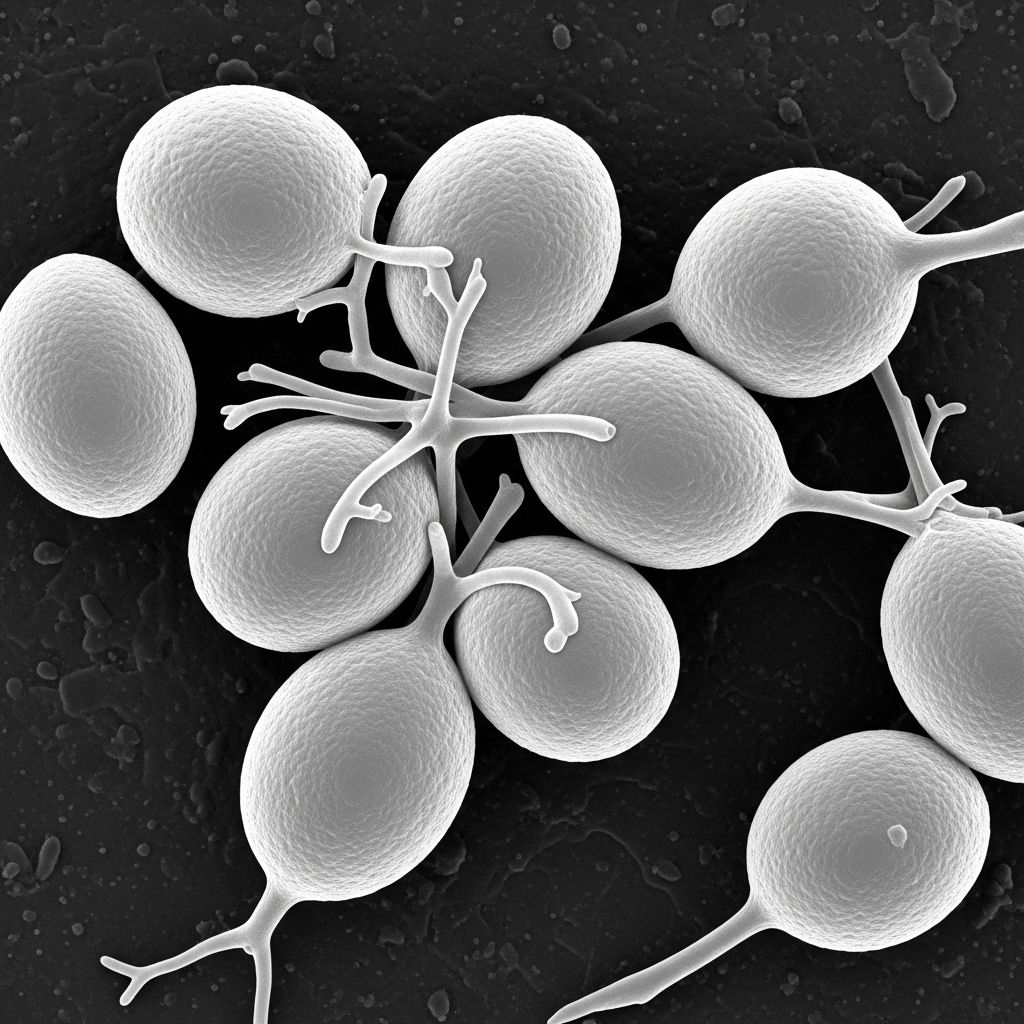
Candida species are yeasts that commonly cause infections of the skin, mucous membranes, and occasionally nails or deeper tissues, particularly in individuals with predisposing factors such as diabetes, immunosuppression, or moisture exposure.
Introduction
Candida albicans is the most frequent species causing human infections, acting as a normal commensal in the human digestive tract from infancy, present in about 50% of healthy mouths without harm. When host defenses weaken—due to antibiotics, steroids, obesity, diabetes, or immunosuppression—Candida invades mucosal surfaces or skin, leading to candidiasis or thrush. Non-albicans species like C. glabrata, C. tropicalis, and C. parapsilosis are less common but may show antifungal resistance.
Infections manifest as red/white patches on mucosa or moist, fissured plaques with satellite papules on skin. Diagnosis relies on clinical features corroborated by microscopy showing budding yeast and pseudohyphae, though positive cultures alone do not confirm active disease as Candida can colonize harmlessly or secondarily infect conditions like psoriasis.
Predisposing Factors
Several factors increase susceptibility to Candida overgrowth:
- Immunosuppression (HIV, chemotherapy, transplants)
- Diabetes mellitus (high glucose favors yeast growth)
- Broad-spectrum antibiotics (disrupt normal flora)
- Inhaled/topical corticosteroids
- Dentures, smoking, dry mouth (xerostomia)
- Obesity and warm, moist environments (promotes skin-fold infections)
- Pregnancy or hormonal changes (for vaginal candidiasis)
- Occupation with wet hands (e.g., gardeners, fishers)
These compromise local immunity or create favorable growth conditions.
Clinical Features
Candida infections vary by site, with characteristic appearances aiding diagnosis.
Oral Candidiasis (Thrush)
Affects 50% of healthy mouths asymptomatically, but invasion causes white plaques on erythematous mucosa, removable to reveal raw surface. Subtypes include:
- Pseudomembranous: Classic white curd-like patches on tongue, cheeks, palate.
- Erythematous: Red, atrophic patches, common in denture wearers.
- Hyperplastic: White, adherent plaques on tongue sides, in smokers.
- Median rhomboid glossitis: Red, smooth mid-tongue patch.
Symptoms: soreness, burning, altered taste. Extensive cases may require endoscopy.
Skin (Flexural) Candidiasis / Intertrigo
Thrives in moist folds, causing bright red plaques, fissures, maceration, and satellite pustules. Common sites:
- Inframammary folds
- Axillae
- Groin (inguinal folds)
- Abdominal creases
- Interdigital (web spaces)
- Perianal, gluteal cleft
More prevalent in obesity, warm weather, or diabetes. Differentiate from inverse psoriasis or bacterial intertrigo.
Napkin (Diaper) Candidiasis
In infants, presents as bright red patches in groin/perineum with satellite lesions, often post-antibiotics or amid teething.
Vaginal (Vulvovaginal) Candidiasis
Affects 75% of women once; C. albicans in 90%, cultured in 10% asymptomatically. Symptoms: thick white discharge, vulval itching/burning, labial edema, dyspareunia. Recurrent in cycles, with irritant dermatitis.
Balanitis / Balanoposthitis
Male equivalent: red, glazed glans/prepuce with soreness, discharge; precipitated by intercourse or poor hygiene.
Paronychia and Onychomycosis
Chronic paronychia: tender, boggy nail folds, transverse ridging, nail dystrophy in wet-work occupations. Acute bacterial form differs (rapid, pus, fever). Nail involvement: onycholysis (nail lifting), green nail from Pseudomonas co-infection.
Diagnosis
Primarily clinical, confirmed by lab.
Related Stories



- Microscopy: KOH prep shows budding yeasts, pseudohyphae (pseudomycelium). Gram stain for bacteria.
- Culture: Swabs/scrapings on Sabouraud agar; chromagar speciates. Negative doesn’t exclude.
- Histology: Spongiosis, neutrophils in stratum corneum (spongiform pustules), yeasts penetrating epidermis (vs. dermatophytes in cornified layer). PAS/GMS stains.
- Other: PCR, germ tube test for species ID; blood cultures for systemic (low sensitivity).
Correlate with history; culture positives may indicate colonization.
Treatment
Address predispositions; topical antifungals first-line.
General Measures
- Dry skin folds, avoid occlusion/obesity.
- Emollients/soap substitutes, thorough drying.
- Good hygiene: denture cleaning, breathable fabrics.
Topical Therapy
| Site | Treatments |
|---|---|
| Oral | |
| Skin folds | |
| Vaginal | |
| Paronychia |
Continue 1-4 weeks or 7 days post-clearance.
Systemic Therapy
For extensive/recalcitrant cases: fluconazole 150-200mg daily 1-2 weeks (oral thrush, esophageal); itraconazole alternative. Monitor resistance in non-albicans.
Special Cases
- Recurrent vaginal: Rule out diabetes/immunodeficiency; maintenance fluconazole.
- Nail: Dermatologist-referred oral therapy.
- Immunosuppressed: Prompt empiric antifungals if febrile neutropenia.
No strong evidence for yogurt prophylaxis.
Frequently Asked Questions (FAQs)
Q: Is Candida contagious?
A: Limited; spreads in moist environments or via sex, but requires predisposition. Not person-to-person like viruses.
Q: Can Candida affect nails?
A: Yes, causing chronic paronychia and onycholysis, especially in wet occupations; treat topically, severe cases orally.
Q: How to prevent diaper candidiasis?
A: Frequent changes, barrier creams, avoid antibiotics unless needed; treat early with antifungals.
Q: Does diet cure Candida?
A: No evidence; manage blood sugar in diabetics, but antifungals essential.
Q: When to see a doctor for thrush?
A: If recurrent, persistent >2 weeks, or with systemic symptoms/immunosuppression.
References
- Fungal skin infections. Candida – DermNet — DermNet NZ. 2023. https://dermnetnz.org/cme/fungal-infections/candida-infection
- Candida (Candidiasis, Thrush, Yeast Infection) – DermNet — DermNet NZ. 2023. https://dermnetnz.org/topics/candida
- Candidiasis: Causes, Symptoms, and Treatment — Patient.info. 2024-01-15. https://patient.info/doctor/dermatology/candidiasis
- Intertrigo – StatPearls — NCBI Bookshelf / NIH. 2023-07-17. https://www.ncbi.nlm.nih.gov/books/NBK531489/
- Oral candidiasis – DermNet — DermNet NZ. 2023. https://dermnetnz.org/topics/oral-candidiasis
Similar Articles








Read full bio of Sneha Tete