Cannabinoids In Dermatology: Evidence, Uses, And Safety
Exploring the therapeutic potential of cannabinoids in treating skin conditions like pruritus, acne, psoriasis, and inflammatory disorders.
Cannabinoids in Dermatology
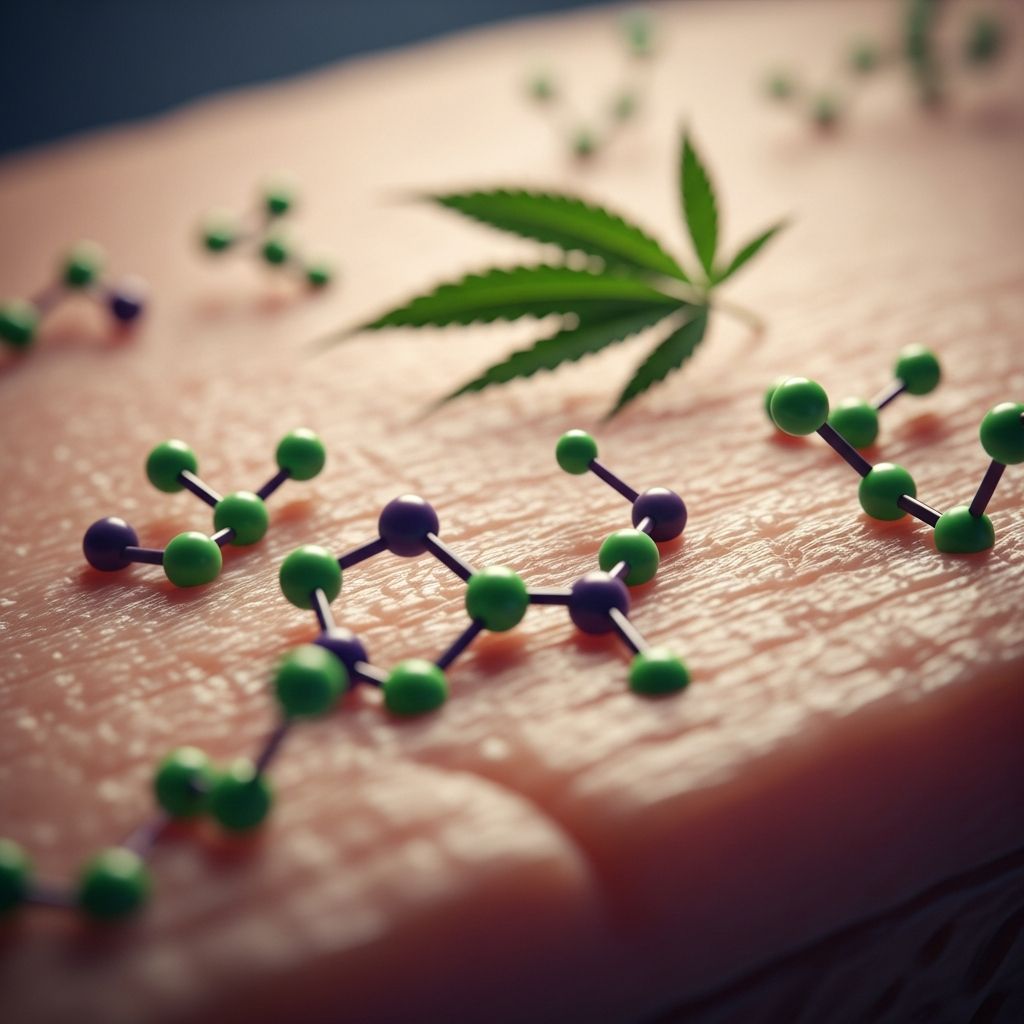
Cannabinoids, including endogenous, plant-derived, and synthetic forms, are increasingly investigated for their therapeutic potential in dermatology due to their anti-inflammatory, antipruritic, and immunomodulatory properties. Topical applications offer targeted relief for conditions like pruritus, acne, and inflammatory skin diseases while minimizing systemic psychoactive effects.
What are cannabinoids?
Cannabinoids encompass a diverse group of chemical compounds that interact with the body’s endocannabinoid system (ECS). The ECS comprises cannabinoid receptors CB1 and CB2, endocannabinoids like anandamide and 2-arachidonoylglycerol, and metabolic enzymes. Endogenous cannabinoids are naturally produced by the body, while exogenous ones derive from Cannabis sativa (phytocannabinoids such as Δ9-tetrahydrocannabinol [THC], cannabidiol [CBD], cannabigerol [CBG]) or are synthetically produced.
In the skin, CB1 receptors are predominantly expressed in nerve fibers and hair follicles, mediating analgesia and sebum production regulation. CB2 receptors are found on keratinocytes, immune cells, and sebaceous glands, contributing to anti-inflammatory effects. Activation of CB1 inhibits adenylyl cyclase and neurotransmitter release, while CB2 modulates cytokine production and immune cell migration.
Endocannabinoid system in the skin
The skin hosts a fully functional ECS that regulates homeostasis, proliferation, differentiation, and immune responses. CB1 and CB2 receptors are localized in keratinocytes, sebocytes, sweat glands, hair follicles, and melanocytes. Dysregulation of the cutaneous ECS is implicated in disorders like atopic dermatitis, psoriasis, acne, and pruritus.
For instance, in atopic dermatitis, elevated anandamide levels correlate with disease severity, suggesting ECS involvement in barrier dysfunction and inflammation. Phytocannabinoids like CBD restore ECS balance by inhibiting pro-inflammatory pathways such as NF-κB, reducing cytokine release (e.g., TNF-α, IL-6), and promoting keratinocyte differentiation.
Topical cannabinoids
Topical cannabinoids include creams, ointments, gels, lotions, and patches containing phytocannabinoids (e.g., CBD, THC), endocannabinoid-like compounds (e.g., palmitoylethanolamide [PEA]), or synthetics. These formulations enable localized delivery through the stratum corneum, achieving high skin concentrations with low systemic absorption and reduced psychoactivity compared to oral or inhaled routes.
Advantages of topical use include sustained release, improved bioavailability, and fewer adverse effects. Studies demonstrate that CBD-enriched ointments improve skin hydration, elasticity, and barrier function in atopic dermatitis patients.
Pruritus
Pruritus, or itch, affects millions and significantly impairs quality of life. Topical cannabinoids alleviate pruritus via CB1-mediated neuronal inhibition and CB2 anti-inflammatory actions. Clinical trials show PEA-containing creams reduce itch in atopic dermatitis, lichen simplex chronicus, nodular prurigo, and uraemic pruritus, with good tolerability.
CBD suppresses histamine-induced itch and neuropathic pruritus by modulating TRPV1 channels and adenosine A2A receptors. A study reported 60-80% itch reduction with 1% CBD gel in chronic pruritus.
Who is at risk of pruritus?
- Patients with atopic dermatitis, psoriasis, or contact dermatitis
- Those with systemic diseases like renal failure, liver disease, or malignancy
- Individuals with neuropathic conditions or drug-induced itch
Inflammatory skin diseases
Cannabinoids exhibit immunosuppressive and anti-inflammatory properties beneficial for dermatitis, psoriasis, acne, and scleroderma. In psoriasis, CB2 activation inhibits keratinocyte hyperproliferation and Th17 cytokine production. Topical CBD reduces plaque severity and scaling in small trials.
For atopic dermatitis, cannabinoids restore barrier function, decrease Staphylococcus aureus colonization, and suppress IL-4/IL-13 signaling. CBG and CBDV show sebosuppressive effects in acne by inhibiting lipogenesis in sebocytes.
| Condition | Cannabinoid | Mechanism | Evidence Level |
|---|---|---|---|
| Atopic Dermatitis | CBD, PEA | Anti-inflammatory, barrier repair | Clinical trials |
| Psoriasis | THC, CBD | Proliferation inhibition | Preclinical |
| Acne | CBG, CBDV | Sebum reduction | In vitro |
Acne
Acne vulgaris affects 85% of adolescents. Cannabinoids like CBD, CBG, CBGV, CBC, CBDV, and THCV exhibit anti-lipogenic, anti-inflammatory, and antimicrobial effects. CBD reduces sebaceous gland activity by 50% in organ-cultured models and inhibits Propionibacterium acnes growth.
A Phase II trial with topical CBD gel showed significant lesion reduction without irritation.
Skin cancer
The role of cannabinoids in skin cancer is dual-edged. Immunosuppressive effects may promote viral oncogenesis or UV-induced transformation via ECS activation. Conversely, CB1/CB2 agonists induce apoptosis in melanoma and keratinocyte carcinoma cells via ceramide accumulation and autophagy, sparing normal cells.
In vivo models demonstrate tumor growth inhibition with Δ9-THC or synthetic cannabinoids. Clinical data is limited, but intratumoral CBD shows promise in cutaneous T-cell lymphoma.
Other uses
- Wound healing: Cannabinoids accelerate re-epithelialization and reduce scarring in epidermolysis bullosa via anti-pruritic and anti-fibrotic effects.
- Hyperhidrosis: Topical CBD reduces sweat production immediately.
- Anti-aging: CBD prevents senescence in dermal fibroblasts, boosting collagen and reducing wrinkles.
- Antimicrobial: CBD/CBG combat MRSA and Candida albicans biofilms without disrupting microbiota.
- Pain: Topical formulations alleviate neuropathic pain in post-herpetic neuralgia.
Benefits of cannabinoids
Beyond dermatology-specific effects, cannabinoids offer antioxidant protection against UV damage, anti-microbial activity, and symptom relief in chronic conditions. They improve sleep, anxiety, and overall well-being in skin disease patients.
Side effects and risks
Topical cannabinoids are generally safe, with rare contact dermatitis or irritation. Systemic absorption risks include drowsiness, dry mouth, or psychoactivity with high-THC products. Long-term safety data is lacking; avoid in pregnancy or with CYP450-metabolized drugs.
Regulatory concerns persist due to varying THC limits in cosmetics (e.g., <0.3% in US hemp-derived products).
Future directions
High-quality RCTs are needed to validate efficacy. Dermatologists show interest in therapeutic cannabinoids, with surveys indicating willingness to recommend. Advances in nano-formulations may enhance penetration and specificity.
Frequently Asked Questions
What are the most studied cannabinoids in dermatology?
CBD and THC are most researched, with emerging data on CBG, PEA, and synthetics for itch and inflammation.
Are topical cannabinoids legal?
Legality varies; hemp-derived CBD (<0.3% THC) is federally legal in many countries, but check local regulations for THC products.
Can cannabinoids cure skin cancer?
No, they show preclinical anti-tumor effects but are not curative; consult oncologists for evidence-based treatments.
Who should avoid cannabinoids?
Pregnant individuals, children, and those with psychosis history; always patch-test topicals.
How do I choose a cannabinoid product?
Opt for third-party tested, full-spectrum or isolate products from reputable sources with clear labeling.
References
- The Skin and Natural Cannabinoids–Topical and Transdermal Delivery Considerations — Gallo F, et al. 2023-07-26. https://pmc.ncbi.nlm.nih.gov/articles/PMC10386449/
- Cannabinoids in dermatology — DermNet NZ. 2023. https://dermnetnz.org/topics/cannabinoids-in-dermatology
- Cannabinoids in Dermatology: Hope or Hype? — Brown SJ, et al. 2020-12-01. https://pmc.ncbi.nlm.nih.gov/articles/PMC7759267/
- Providers Show Interest in Prescribing Therapeutic Cannabinoids — George Washington University School of Medicine. 2023. https://smhs.gwu.edu/news/providers-show-interest-prescribing-therapeutic-cannabinoids
- Cannabinoids: The Next Big Therapy in Dermatology? — Consultant360. 2023. https://www.consultant360.com/exclusive/consultant360/dermatology/cannabinoids-next-big-therapy-dermatology
Similar Articles



Read full bio of medha deb