Cantharidin: Non-Scarring Treatment For Warts, Molluscum
Vesicant from blister beetles used to treat warts and molluscum contagiosum by inducing controlled skin blistering.
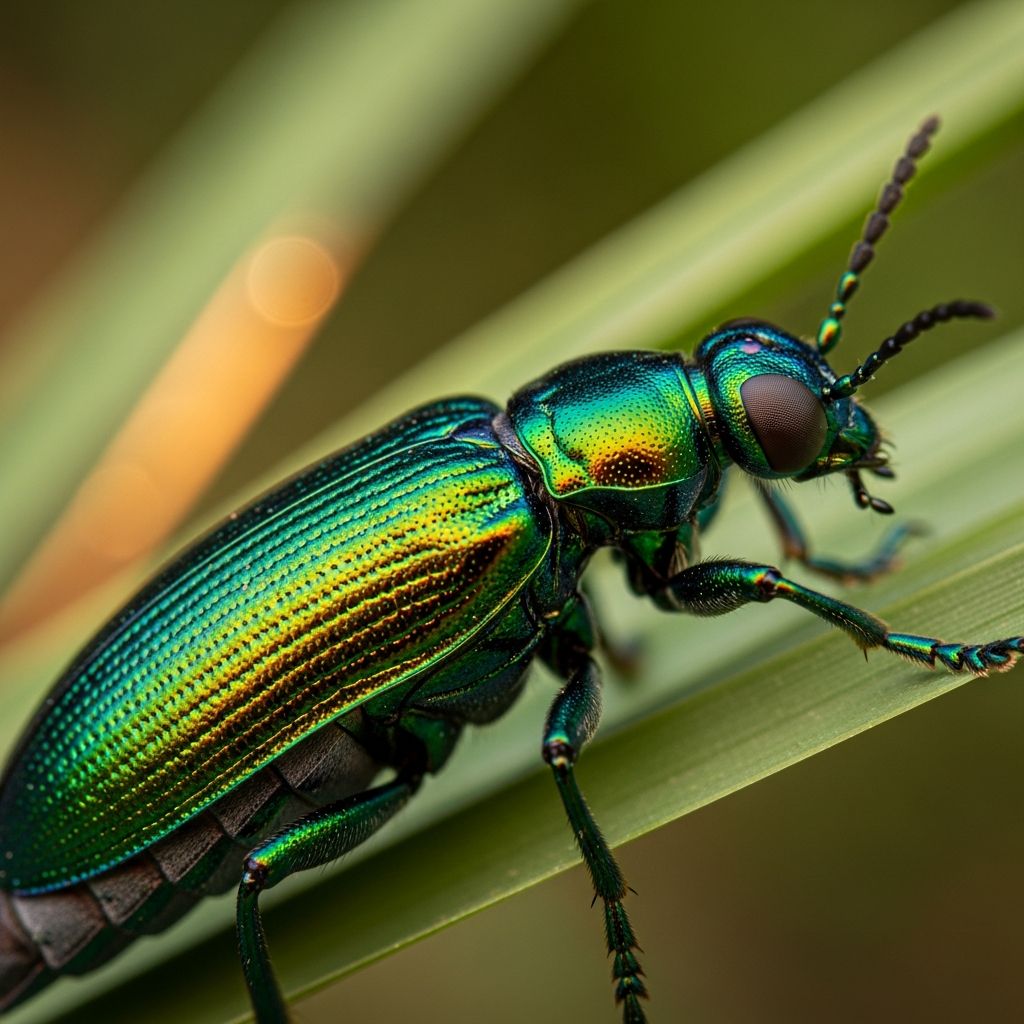
Cantharidin is a naturally occurring vesicant substance extracted from blister beetles, primarily used in dermatology to treat viral skin infections such as common warts and molluscum contagiosum. This potent chemical induces controlled blistering that lifts lesions off the skin without scarring, making it a valuable tool for non-invasive lesion removal.
What is cantharidin?
Cantharidin is an odorless, colorless, lipid-soluble terpenoid produced by blister beetles of the family Meloidae, such as Epicauta and Lytia species. Male beetles synthesize it in their reproductive accessory glands and transfer it to females during mating as a copulatory gift, where females apply it to eggs for predator protection. In humans, accidental contact causes blister beetle dermatosis, a vesiculobullous eruption appearing hours after exposure.
Historically revered in traditional Chinese medicine for over 2,000 years as ‘bang pian’ for treating ulcers, tumors, and inflammation, cantharidin gained Western recognition in the 16th century but was banned as an aphrodisiac in the 20th century due to toxicity. Dermatological use revived in the 1950s for warts and molluscum, leveraging its selective intraepidermal action.
What is cantharidin used for?
Cantharidin’s primary applications target benign viral and hyperproliferative skin lesions:
- Common warts (Verruca vulgaris): Caused by human papillomavirus (HPV), especially effective on recalcitrant plantar and periungual warts.
- Molluscum contagiosum: Poxvirus infection common in children, where cantharidin cures up to 90% of cases in 2-3 applications.
- Other indications: Flat warts, anogenital warts, calluses, acne, and emerging uses in perforating dermatoses, herpes zoster, and leishmaniasis.
Comprehensive reviews confirm high efficacy: one analysis of 37 studies showed consistent success for warts and molluscum with minimal scarring.
How does cantharidin work?
Cantharidin acts as a potent inhibitor of protein phosphatases 1 and 2A (PP1 and PP2A), absorbed via epidermal keratinocyte lipid membranes. This triggers neutral serine protease release, degrading desmosomal dense plaques—key cell adhesion structures—causing tonofilament detachment, acantholysis (loss of intercellular cohesion), and intraepidermal blistering.
The process confines to the epidermis: blisters form in 24-48 hours, peak at 72 hours, and resolve in 4-7 days with lesion sloughing. The basal layer remains intact, preventing scarring or dermal damage. Additional effects include vasoconstriction and inotropic activity via phosphatase inhibition, though systemic use is prohibited due to toxicity.
| Step | Mechanism | Timeline |
|---|---|---|
| 1. Application | Lipid absorption into keratinocytes | Immediate |
| 2. Enzyme activation | PP1/PP2A inhibition, serine protease release | Hours |
| 3. Acantholysis | Desmosome degeneration | 24 hours |
| 4. Blistering & Resolution | Intraepidermal cleft, sloughing | 2-7 days |
Preparation and application
Pharmaceutical cantharidin is a 0.7%-0.9% solution in a film-forming vehicle (e.g., collodion, ether-free formulations), avoiding direct contact. Application follows a standardized protocol:
- Preparation: Degrease and pare lesion with 40% salicylic plaster or file; apply petroleum under occlusion for 1 day if needed.
- Office procedure: Physician applies thinly to lesion plus 1-2mm margin using a toothpick, air-dries 1-2 minutes to polymerize vehicle, no occlusion unless specified.
- Post-care: Leave intact 4-8 hours (up to 24), then wash off. Expect burning/erythema at 24 hours; apply soaks/Vaseline.
- Follow-up: Reassess 1-2 weeks; repeat if needed. Home kits require training.
Related Stories



Pediatric dosing starts low (0.7%), limited area. Combination with salicylic acid or podophyllotoxin enhances efficacy for genital warts.
Precautions when using canantaridin
As an FDA-unapproved but widely used drug (compounded), strict precautions minimize risks:
- Contraindications: Pregnancy/breastfeeding, near eyes/genitals/mucous membranes, active eczema, immunosuppression.
- Adverse effects: Common—burning, blisters, erosions, hyperpigmentation; rare—scarring, infection, lymphangitis.
- Monitoring: Limit to 20cm², avoid ingestion (lethal dose 10-60mg). Remove excess immediately with acetone.
- Special populations: Safe in children >1 year with low concentration; dilute for sensitive skin.
Toxicity from mishandling mimics Spanish fly poisoning: gastrointestinal hemorrhage, renal failure, death. Blister beetles require careful handling—blow, don’t crush.
Alternatives to cantharidin
For warts/molluscum:
- Physical: Cryotherapy, curettage, laser, electrodessication.
- Topical: Salicylic acid, imiquimod, podophyllin, tretinoin, 5-FU.
- Immunotherapy: Candida/squaric acid sensitization, diphencyprone.
Cantharidin excels in painlessness, high clearance (80-95%), and cosmesis, especially pediatrics.
Frequently Asked Questions
Is cantharidin painful?
Application is painless; mild burning starts ~24 hours later, manageable with soaks.
Does cantharidin cause scarring?
No, as action is intraepidermal, sparing dermis.
How many treatments for molluscum?
Typically 2-3 sessions, 3 weeks apart, clears 90%.
Can I use cantharidin at home?
Only with physician-prescribed kits and training; office use preferred.
Is cantharidin safe for children?
Yes, first-line for pediatric molluscum; use lowest effective dose.
Conclusion
Cantharidin remains a cornerstone in dermatology for its targeted vesicant action against viral lesions, balancing efficacy, safety, and patient tolerance. Ongoing research into stabilized formulations promises broader access.
References
- Cantharidin: Uses, Interactions, Mechanism of Action — DrugBank Online. 2023-10-15. https://go.drugbank.com/drugs/DB12328
- Cantharidin Revisited: A Blistering Defense of an Ancient Medicine — JAMA Dermatology. 2009-09-21. https://jamanetwork.com/journals/jamadermatology/fullarticle/478535
- Cantharidin: a comprehensive review of the clinical literature — eScholarship, University of California. 2009-01-01. https://escholarship.org/uc/item/45r512w0
- Topical Cantharidin in the Management of Molluscum Contagiosum — PMC / National Library of Medicine. 2019-03-13. https://pmc.ncbi.nlm.nih.gov/articles/PMC6415708/
- Cantharidin as an Alternative Treatment for Genital Warts — Acta Dermato-Venereologica. 2023-01-01. https://www.medicaljournals.se/acta/content/html/10.2340/00015555-3623
- Cantharidin: Uses and Precautions — DermNet NZ. 2023-01-01. https://dermnetnz.org/topics/cantharidin
Similar Articles








Read full bio of medha deb