Capillaries: 3 Types, Structure, Function, And Health
Understanding capillaries: the vital blood vessels delivering oxygen and nutrients throughout your body.
Capillaries: The Essential Network of Your Circulatory System
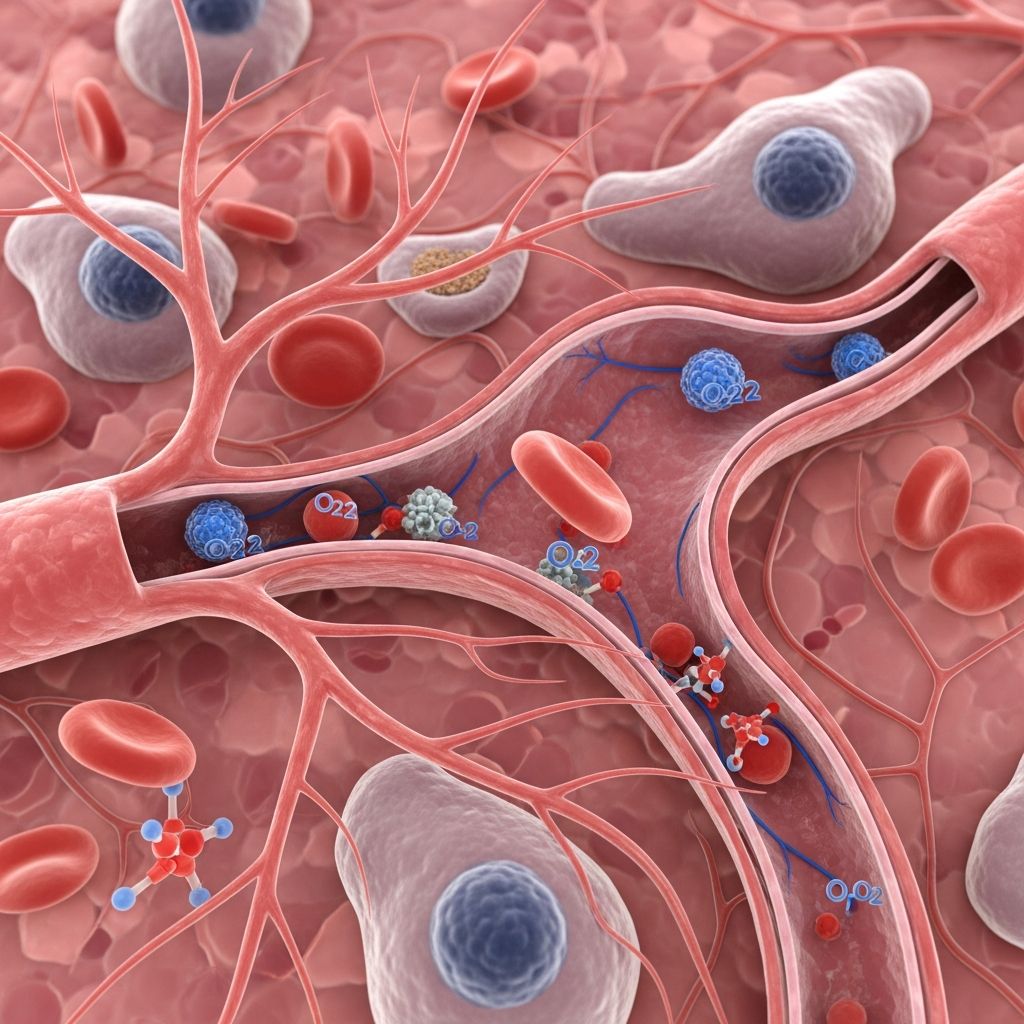
Capillaries are delicate blood vessels that form an intricate network throughout your entire body, serving as the critical connection between your larger arteries and veins. These microscopic tubes are responsible for one of the most vital functions in your body: delivering oxygen and nutrients directly to your cells while simultaneously removing waste products and carbon dioxide. Understanding how capillaries work and their importance to your overall health provides valuable insight into how your circulatory system maintains the functioning of every organ and tissue.
The significance of capillaries cannot be overstated. Without these tiny vessels, oxygen and nutrients would never reach your cells, and waste products would accumulate, leading to cellular dysfunction and death. Capillaries represent the final stage of blood circulation, where the actual exchange of materials between blood and body tissues occurs. This remarkable system works silently and continuously, often going unnoticed until problems arise.
Understanding Capillary Structure and Size
Capillaries are extraordinarily small, measuring only about 3 to 10 micrometers in diameter—roughly the width of a single human hair or a thread in a spider’s web. To put this in perspective, red blood cells must pass through these vessels in a single-file line, demonstrating just how narrow these passages truly are. Despite their minuscule size, capillaries possess a highly specialized structure that enables them to perform their critical functions.
The walls of capillaries are remarkably thin, measuring just 1 micrometer in thickness. This thinness is not a weakness but rather a brilliant evolutionary adaptation that allows substances to pass through efficiently. The capillary wall consists of two distinct layers of cells that work in harmony to facilitate transport and maintain structural integrity.
Cellular Composition of Capillaries
Capillaries contain two essential layers of cells that form their basic structure:
- Endothelial cells — These specialized cells form the inner lining of the capillary and are directly in contact with the blood. They facilitate the transport of oxygen, nutrients, and waste products across the capillary wall.
- Epithelial cells — Also called the basement membrane, this outer layer provides structural support and helps regulate what substances can pass through the capillary wall.
This two-layer arrangement creates a selective barrier that allows beneficial substances to pass through while preventing harmful materials from entering the surrounding tissues. The coordination between these two cell types is essential for maintaining both the structural integrity of the capillary and its ability to function as a transport system.
The Critical Functions of Capillaries
Capillaries serve multiple interconnected functions that are essential for maintaining life. Their primary role is to facilitate the exchange of gases, nutrients, and waste products between the bloodstream and the surrounding tissues.
Oxygen and Nutrient Delivery
The most vital function of capillaries is delivering oxygen-rich blood to every cell in your body. When blood arrives at capillaries after traveling through arteries and arterioles, it carries oxygen picked up from your lungs and nutrients absorbed from your digestive system. The thin capillary walls allow oxygen to diffuse from the blood into the surrounding tissue cells, ensuring that every organ and tissue receives the oxygen necessary for survival.
Related Stories



Simultaneously, capillaries transport essential nutrients including glucose, amino acids, vitamins, and minerals to support cellular metabolism, growth, and repair. This nutrient delivery system is so efficient that virtually no cell in your body is more than a few cells away from a capillary.
Waste Product Removal
As cells metabolize nutrients and produce energy, they generate waste products, most notably carbon dioxide. Capillaries collect these metabolic waste products from the surrounding tissues and transport them back through the venous system to the heart and lungs, where they are eventually expelled through respiration. This waste removal function is equally important as nutrient delivery, as the accumulation of metabolic waste would quickly poison cells and impair organ function.
Fluid Balance and Pressure Regulation
Capillaries play a crucial role in maintaining fluid balance between the bloodstream and the interstitial fluid that surrounds cells. This process is governed by hydrostatic pressure and osmotic pressure, which work together to move fluid out of the capillary at the arterial end and reabsorb it at the venous end. This finely tuned mechanism ensures that cells remain properly hydrated while preventing excessive fluid accumulation in tissues.
Types of Capillaries in Your Body
While all capillaries share the basic function of substance exchange, your body contains different types of capillaries specialized for specific tissues and functions. Understanding these variations helps explain how different organs perform their unique roles.
Continuous Capillaries
Continuous capillaries are the most abundant type found throughout your body. These capillaries are called “continuous” because their endothelial cells sit close together in an uninterrupted line, creating a more selective barrier. Continuous capillaries are particularly important in supporting your brain, endocrine system, kidneys, lungs, and small intestines. Within the continuous category, there are two subtypes: continuous nonfenestrated capillaries and continuous fenestrated capillaries, each with specialized functions.
Fenestrated Capillaries
Fenestrated capillaries feature small pores or “windows” in their walls that increase the flow of nutrients, waste products, and other substances between the blood and surrounding tissues. These pores allow for more rapid exchange of materials compared to continuous nonfenestrated capillaries. Fenestrated capillaries are found in areas where high rates of substance exchange are required, such as the kidneys where they help filter waste from the blood.
Sinusoidal Capillaries
Sinusoidal capillaries represent the most permeable type, featuring even larger gaps and pores than fenestrated capillaries. These highly specialized vessels are found in your liver, spleen, lymph nodes, bone marrow, and endocrine glands. The increased permeability of sinusoidal capillaries allows for more extensive exchange of substances, including large molecules like proteins and cells.
How the Blood-Brain Barrier Functions
One of the most remarkable specializations of continuous capillaries is their role in forming the blood-brain barrier. Continuous nonfenestrated capillaries in the brain create an exceptionally selective barrier that strictly controls the movement of water, oxygen, and other essential substances between the blood and brain tissue. This barrier prevents toxins and potentially harmful substances from entering the brain, providing critical protection against injury and disease. This sophisticated filtering system explains why certain medications cannot easily cross into the brain—a consideration that pharmaceutical researchers must carefully navigate when developing treatments for neurological conditions.
Common Capillary Issues and Concerns
Despite their robust design, capillaries can experience various problems that affect their function and your overall health.
Broken Capillaries
Broken capillaries are relatively common occurrences. Severe coughing or vomiting can rupture these delicate vessels, causing bleeding into surrounding tissues. The visible result of capillary bleeding is petechiae—small dots of discoloration that appear on your skin where blood has leaked from the capillary into surrounding tissue. In most cases, these minor bleeds heal on their own without intervention, though the discoloration may take several days to weeks to fade completely.
Capillary Rarefaction
Capillary rarefaction represents a more serious condition where capillaries lose their density—the amount of mass compared to volume. People with chronic kidney disease often experience this problem, particularly affecting peritubular capillaries that normally filter waste from the kidneys. When these capillaries lose density due to vitamin D deficiency, inflammation, or disease, they cannot work as they should, leading to hypertension and other serious health problems.
Capillary Leak Syndrome
Capillary leak syndrome is a more severe condition where blood plasma escapes through capillary walls, causing a rapid drop in blood pressure. This life-threatening condition requires immediate treatment to prevent serious complications. There are two major types: systemic capillary leak syndrome, which is extremely rare affecting fewer than 500 people worldwide, and secondary capillary leak syndrome, which can develop in people of any age due to infections, diseases, or medications.
Conditions Affecting Capillary Health
Both genetic and nongenetic conditions can impact capillary function. Genetic conditions may be inherited from parents, while nongenetic conditions develop due to lifestyle factors, disease, or environmental influences. Managing these conditions often requires working closely with healthcare providers to prevent complications and maintain vascular health.
Maintaining Healthy Capillaries
Preserving the health and function of your capillaries involves both preventive measures and active management of risk factors. Several strategies can help protect your capillaries and support overall vascular health.
Lifestyle Modifications for Capillary Health
- Regular physical activity — Exercise promotes healthy blood circulation and strengthens the cardiovascular system, including capillaries.
- Balanced nutrition — A diet rich in antioxidants, vitamins, and minerals supports vascular health and reduces inflammation.
- Blood pressure management — Maintaining healthy blood pressure reduces stress on capillary walls and prevents damage.
- Adequate hydration — Proper fluid intake supports healthy blood volume and capillary function.
- Smoking cessation — Avoiding tobacco products protects capillaries from damage and supports overall vascular health.
- Skin protection — Preventing damage to capillaries under your skin involves protecting your skin from excessive sun exposure and trauma.
Working with Healthcare Providers
You can work with your healthcare provider to manage conditions that affect vascular health, including high blood pressure, diabetes, high cholesterol, and inflammatory diseases. Regular monitoring and appropriate medical treatment can help prevent capillary complications and maintain overall circulatory health.
The Importance of Capillaries in Overall Health
Understanding the critical role capillaries play in your body underscores the importance of maintaining vascular health throughout your life. These microscopic vessels represent the actual site where your cardiovascular system delivers its essential function—supplying cells with oxygen and nutrients while removing waste. Any disruption in capillary function can cascade into broader health problems affecting multiple organ systems.
Your capillaries work tirelessly, often without recognition, maintaining the delicate balance necessary for all cells to function optimally. By appreciating their complexity and taking steps to protect them through healthy lifestyle choices and appropriate medical management, you can support your overall health and well-being for years to come.
Frequently Asked Questions About Capillaries
Q: How small are capillaries?
A: Capillaries are extraordinarily small, measuring only about 3 to 10 micrometers in diameter—approximately the width of a single human hair or cotton fiber. Their thin walls measure just 1 micrometer thick.
Q: What is the main function of capillaries?
A: The primary function of capillaries is to facilitate the exchange of oxygen, nutrients, and waste products between the bloodstream and surrounding body tissues. They deliver oxygen and nutrients to cells and collect metabolic waste for removal.
Q: Are broken capillaries serious?
A: Minor broken capillaries that cause petechiae (small red or purple dots on the skin) are usually not serious and heal on their own. However, broken capillaries in internal organs or widespread capillary damage may indicate a more serious condition requiring medical attention.
Q: What causes capillary damage?
A: Capillary damage can result from various causes including severe coughing or vomiting, chronic diseases like diabetes or kidney disease, inflammation, vitamin D deficiency, high blood pressure, and infections. Genetic conditions can also affect capillary structure and function.
Q: How can I keep my capillaries healthy?
A: You can maintain capillary health through regular exercise, maintaining a balanced diet rich in nutrients, managing blood pressure and other chronic conditions, staying hydrated, avoiding smoking, protecting your skin from sun damage and trauma, and working with your healthcare provider to manage any vascular risk factors.
Q: What is the blood-brain barrier?
A: The blood-brain barrier is formed by continuous nonfenestrated capillaries in the brain. It acts as a selective filter that controls which substances can pass from the blood into brain tissue, protecting the brain from harmful toxins while allowing essential oxygen and nutrients to reach brain cells.
Q: How many types of capillaries exist?
A: There are three main types of capillaries: continuous capillaries (the most common), fenestrated capillaries (with small pores for increased exchange), and sinusoidal capillaries (with the largest pores and highest permeability).
References
- Fenestrated Capillaries: Types, Function and Anatomy — Cleveland Clinic. 2021-11-10. https://my.clevelandclinic.org/health/body/21940-fenestrated-capillaries
- Peritubular Capillaries: Location, Anatomy & Function — Cleveland Clinic. 2024-10-22. https://my.clevelandclinic.org/health/body/21914-peritubular-capillaries
- Continuous Capillaries: Anatomy and Function — Cleveland Clinic. 2021-10-05. https://my.clevelandclinic.org/health/body/21788-continuous-capillaries
- Capillary Leak Syndrome: What It Is, Causes, Symptoms & Treatment — Cleveland Clinic. https://my.clevelandclinic.org/health/diseases/22712-capillary-leak-syndrome
- Capillaries: Function & Anatomy — Cleveland Clinic. 2024-12-03. https://my.clevelandclinic.org/health/body/21988-capillaries
Similar Articles








Read full bio of medha deb