Capillary Vascular Malformations: Overview, Diagnosis & Treatment
Understanding port wine stains: Causes, clinical features, diagnosis methods, and modern treatment options.
What is a Capillary Vascular Malformation?
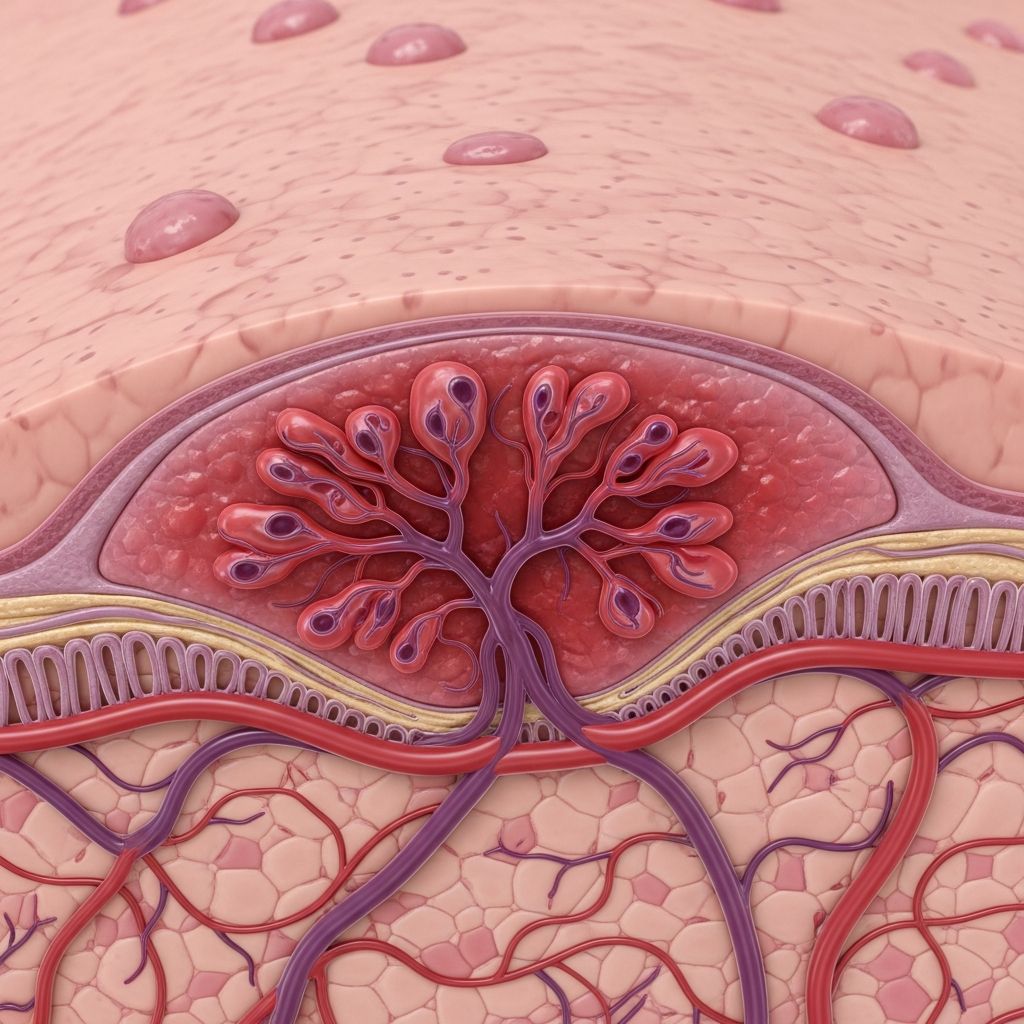
Capillary vascular malformations, commonly referred to as port wine stains, are congenital vascular anomalies characterized by an overgrowth of small blood vessels known as capillaries and venules. These lesions represent errors in vascular development during embryogenesis and are among the most common vascular anomalies encountered in clinical practice. Capillary malformations (CMs) or port wine birthmarks occur in approximately 0.1%–2% of newborns, with no significant differences between males and females.
These malformations appear as flat patches of pink, red, or purple discoloration on the skin, typically present at birth. The characteristic color is due to dilated capillary vessels located just beneath the skin surface. While small symmetrically distributed capillary malformations on the mid-face (such as “angel kiss” marks) and the nape of the neck (“stork bite” marks) often fade naturally over time, larger capillary malformations tend to persist and may undergo progressive changes.
Clinical Presentation and Features
Capillary vascular malformations present with distinct clinical characteristics that evolve over time. At birth, these lesions typically appear as flat patches without any raised component or texture difference. The initial appearance is usually pink or light red, though the exact shade can vary depending on the depth and density of the affected vessels.
As individuals age, capillary malformations undergo significant changes:
- Progressive darkening of the lesion from pink to deeper purple or red tones
- Gradual thickening and potential nodule formation
- Growth proportionate to the child’s overall growth, though not spreading to unaffected skin
- Possible development of a raised or bumpy appearance over decades
The location of capillary malformations varies widely, though they most commonly appear on the face and neck regions. However, these lesions can occur anywhere on the head, body, and extremities. Patients with capillary malformations localized on the forehead face an increased risk of developing associated neurological conditions, particularly Sturge-Weber syndrome (SWS).
Associated Syndromes and Conditions
While most individuals with capillary malformations have isolated lesions without systemic involvement, certain presentations warrant investigation for underlying syndromes. Several rare conditions may be associated with capillary vascular malformations:
Sturge-Weber Syndrome (SWS)
Sturge-Weber syndrome is a significant neurocutaneous disorder associated with facial capillary malformations, particularly those located on the forehead. This condition involves vascular abnormalities affecting the brain and meninges. Brain involvement in SWS can manifest as seizures, headaches, stroke-like episodes, developmental delays, cognitive limitations, and attention difficulties. Additional complications may include glaucoma and vision loss. Imaging studies in SWS patients often reveal leptomeningeal enhancement on contrast MRI, cortical atrophy, and intracranial calcifications. Vascular abnormalities such as choroid plexus enlargement and deep draining vessels may also be present.
Capillary Lymphatic Venous Malformations (CLVMs)
Capillary lymphatic venous malformations are rare blood vessel abnormalities involving capillaries, veins, and lymphatic vessels simultaneously. Patients with CLVMs present with a capillary malformation, also known as a port wine birthmark, located adjacent to or covering abnormal veins and lymphatic vessels. These complex malformations can result in soft tissue and bone overgrowth issues, including different lengths or girths of limbs, enlarged fingers or toes, and spinal abnormalities such as scoliosis.
Other Associated Conditions
Capillary malformations may also be associated with:
- Klippel-Trenaunay syndrome – characterized by the triad of capillary malformation, venous abnormalities, and limb overgrowth
- Proteus syndrome – a rare overgrowth disorder that may include vascular malformations
- Diffuse capillary vascular malformation with overgrowth (DCMO) – characterized by multiple port wine stains affecting more than one anatomical region with associated limb enlargement
- Diffuse capillary vascular malformation with undergrowth (DCMU) – featuring multiple port wine stains with proportional body region reduction, such as limb shortening or thinning
Related Stories



Pathophysiology and Molecular Basis
Understanding the molecular mechanisms underlying capillary malformations has advanced significantly with recent genetic discoveries. In 2013, groundbreaking research revealed causative activating somatic mutations in the GNAQ gene in capillary malformation and Sturge-Weber syndrome patient tissues. This gene encodes guanine nucleotide–binding protein Q subunit α (Gαq), which is essential for normal vascular development.
The histopathological characteristics of capillary malformations reveal important structural features:
- Dilated vessels with irregular shapes primarily located in the papillary layer and upper reticular dermis
- Decreased number of small vessels (circumference 0–150 μm) compared to normal skin
- Increased number of large vessels (circumference 500–1000 μm)
- Multiple layers of pericytes and thickened basement membranes
- Disorganized collagen and elastic fibers resulting in overall thickened blood vessel walls
- Immature venule-like channels that are negative for glucose transporter 1 (GLUT-1), distinguishing them from infantile hemangiomas
Evidence suggests that capillary malformations originate from immature endothelial cells expressing stem cell markers such as CD133 and CD166. These endothelial cells express both venous and arterial markers, suggesting that the causative mutations impair definitive differentiation into dermal arterioles and venules during development.
The sporadic and asymmetric nature of most capillary malformations supports the hypothesis of somatic mosaic mutations. This mechanism involves postzygotic mutations occurring during early embryonic development, followed by clonal selection and proliferation of cells expressing the mutated gene, ultimately generating the visible vascular lesion.
Diagnosis and Clinical Assessment
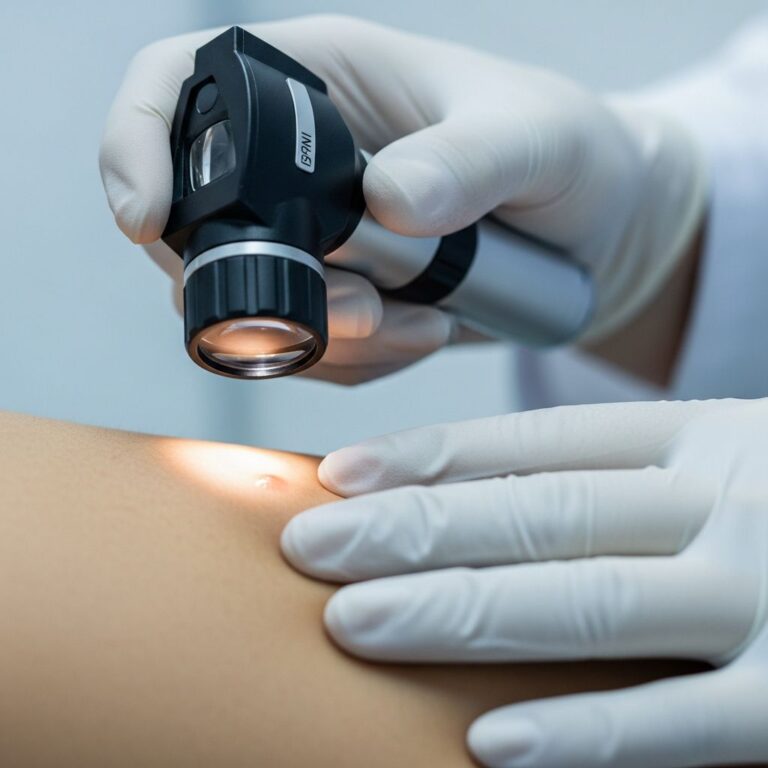
The diagnosis of capillary vascular malformations is primarily clinical, based on characteristic appearance and history. Most lesions are evident at birth or become apparent within the first few weeks of life. Healthcare providers should conduct a thorough history and physical examination to identify:
- Location and distribution of the malformation
- Color, size, and texture characteristics
- Rate of progression or change over time
- Associated systemic symptoms or findings
- Family history of vascular anomalies
For patients with facial capillary malformations, particularly those involving the forehead region, neuroimaging assessment is essential to exclude Sturge-Weber syndrome. Contrast-enhanced MRI of the brain can reveal characteristic leptomeningeal involvement and other vascular abnormalities associated with SWS. Additional diagnostic imaging may be warranted in cases of extensive or complex malformations to evaluate for involvement of deeper tissues or associated anomalies.
Treatment Options
Modern treatment approaches for capillary vascular malformations aim to improve cosmetic appearance and prevent complications. Treatment decisions depend on factors including lesion size, location, patient age, and associated conditions.
Laser Therapy
Laser treatment represents the gold standard therapeutic approach for capillary malformations. Pulsed dye lasers are specifically designed to target the hemoglobin in dilated capillaries, causing selective photothermolysis of abnormal vessels while minimizing damage to surrounding tissue. Multiple treatment sessions are typically required to achieve optimal results, as complete clearance of large lesions may necessitate sequential treatments spaced several weeks apart.
Early Intervention
Early treatment, ideally beginning in infancy or early childhood, offers several advantages. Younger patients often demonstrate better treatment response and faster healing, and early intervention may prevent the progressive darkening and thickening that characterizes untreated lesions over time. Treatment at a young age also addresses potential psychological effects of visible skin lesions during crucial developmental years.
Supportive Care and Monitoring
For patients who decline treatment or have lesions in challenging locations, monitoring for progression and associated complications remains important. Sun protection is recommended to prevent further darkening of lesions. In cases associated with systemic conditions like Sturge-Weber syndrome, multidisciplinary management involving neurology, ophthalmology, and dermatology ensures comprehensive care addressing all affected systems.
Prognosis and Long-Term Outcomes
The natural history of untreated capillary malformations involves progressive changes over the patient’s lifetime. While small midline lesions may spontaneously fade, larger unilateral port wine stains typically persist and gradually darken. The lesions grow proportionately with the child but do not spread to previously unaffected skin.
With modern laser treatment, many patients achieve significant improvement in appearance. However, complete clearance may not be possible in all cases, particularly for extensive or deeply penetrating lesions. The prognosis also depends on associated systemic conditions; patients with Sturge-Weber syndrome require ongoing management to prevent or minimize neurological and ophthalmological complications.
Frequently Asked Questions
Q: Will my child’s port wine stain fade on its own?
A: Small symmetrical capillary malformations on the midface (angel kiss) and nape of the neck (stork bite) often fade naturally over time. However, larger port wine stains typically persist and may darken and thicken with age.
Q: When should treatment begin?
A: Early intervention in infancy or early childhood offers optimal results. Treatment at a young age allows for better response to therapy and prevents progressive changes, while also addressing potential psychological concerns.
Q: Is capillary malformation always associated with a serious condition?
A: Most individuals with capillary malformations have isolated lesions without associated medical problems. However, facial lesions, particularly those on the forehead, warrant evaluation to exclude Sturge-Weber syndrome and other rare syndromes.
Q: What is the difference between a capillary malformation and a hemangioma?
A: Capillary malformations are congenital vascular anomalies composed of immature venule-like channels that are negative for GLUT-1 protein. Infantile hemangiomas are benign vascular tumors that are GLUT-1 positive and often appear later in infancy with potential for spontaneous involution.
Q: Will laser treatment completely remove the malformation?
A: Laser therapy can significantly improve the appearance of capillary malformations, though complete clearance may not be possible for all patients, particularly extensive lesions. Multiple treatment sessions are usually required to achieve optimal results.
Q: Are there any limitations or risks associated with laser treatment?
A: Laser treatment is generally safe and well-tolerated, though minor side effects such as temporary swelling, redness, or bruising may occur. Treatment should be performed by experienced dermatologists familiar with vascular lesions.
References
- Capillary Lymphatic Venous Malformations | Diagnosis & Treatment — Cincinnati Children’s Hospital Medical Center. 2024. https://www.cincinnatichildrens.org/health/c/capillary-lymphatic-venous-malformations
- Capillary Malformations — PubMed/National Center for Biotechnology Information. 2022. https://pubmed.ncbi.nlm.nih.gov/36243429/
- Capillary Malformations: Current Understanding and Future Treatment Options — Journal of Clinical Investigation. 2024. https://www.jci.org/articles/view/172842
- What Is a Capillary Malformation? — Stanford Children’s Health. 2024. https://www.stanfordchildrens.org/en/services/vascular-anomalies/capillary-malformation.html
- Definition of Capillary Malformation — National Cancer Institute Dictionary of Cancer Terms. 2024. https://www.cancer.gov/publications/dictionaries/cancer-terms/def/capillary-malformation
- Capillary Vascular Malformations: Port Wine Stains — Children’s Hospital of Philadelphia. 2024. https://www.chop.edu/conditions-diseases/capillary-vascular-malformations-port-wine-stains
Similar Articles








Read full bio of medha deb