Capsule Endoscopy: A Minimally Invasive Diagnostic Procedure
Discover how capsule endoscopy enables doctors to visualize your digestive tract without invasive surgery.
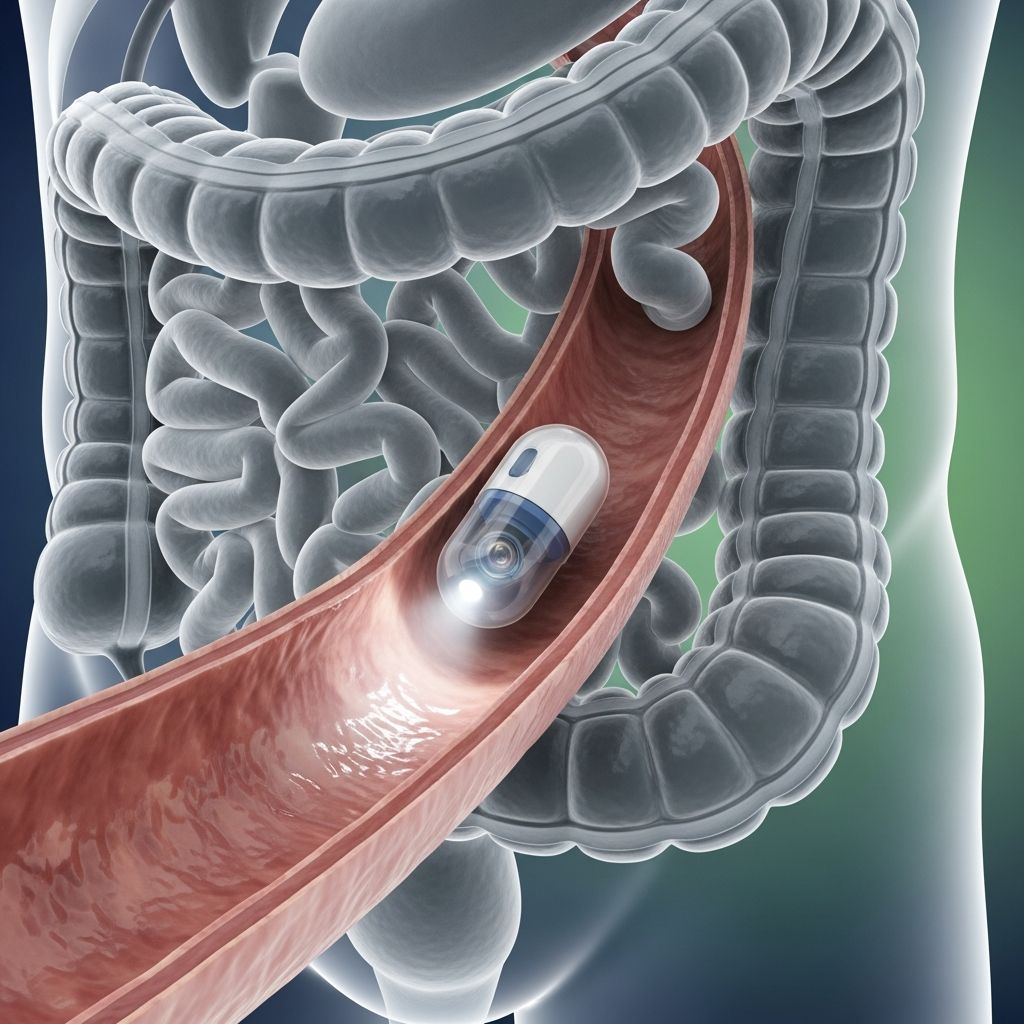
Capsule endoscopy represents a significant advancement in gastrointestinal diagnostic technology, offering physicians a non-invasive method to visualize the small intestine and diagnose various digestive disorders. Unlike traditional endoscopy procedures that require insertion of a tube through the mouth or rectum, capsule endoscopy uses a pill-sized camera that patients swallow, making it a more comfortable and convenient diagnostic option. This innovative procedure has transformed the way doctors evaluate patients with gastrointestinal complaints, particularly those with obscure bleeding or unexplained digestive symptoms.
What is Capsule Endoscopy?
Capsule endoscopy is a minimally invasive diagnostic procedure that uses a tiny wireless camera housed in a pill-shaped capsule to capture detailed images of your gastrointestinal tract. The capsule is approximately the size of a large vitamin and can be easily swallowed without disruption or risk of choking. When you ingest the capsule, the camera inside begins its journey through your digestive system, taking thousands of high-resolution pictures as it travels. These images are transmitted wirelessly to a recording device worn around your waist, allowing your doctor to later review the complete visual record of your digestive tract.
Wireless capsule endoscopy was introduced in 2000 as a less invasive method to visualize the distal small bowel in adults. Since its introduction, this technology has advanced significantly and has been adapted for use in pediatric gastroenterology. The procedure has become particularly valuable for examining the small intestine, an area that is difficult to access with traditional endoscopy methods.
How Capsule Endoscopy Works
The capsule endoscopy procedure operates through a sophisticated wireless transmission system. As the tiny camera travels through your digestive tract, it captures multiple images per second, collecting thousands of pictures during its journey. The capsule uses wireless technology to transmit these images to a recording device that you wear on your waist, which stores all the data for later analysis.
The recording device features adhesive patches containing antennae that connect to sensors placed on your chest and abdomen. These patches enable the secure reception of images throughout the procedure. Once the study is complete, your doctor retrieves the recording device and transfers the images to a computer where specialized software compiles them into a continuous video that can be thoroughly reviewed and analyzed.
Conditions Diagnosed by Capsule Endoscopy
Capsule endoscopy serves multiple diagnostic purposes in gastroenterology. The most common use of capsule endoscopy is to detect the source of obscure gastrointestinal bleeding, particularly when upper endoscopy and colonoscopy have been performed but have come back negative. Beyond this primary indication, healthcare professionals can use capsule endoscopy to diagnose various other gastrointestinal conditions.
Additional conditions that can be evaluated with capsule endoscopy include:
- Colon polyps and tumors
- Celiac disease
- Crohn’s disease
- Ulcerative colitis
- Chronic diarrhea
- Small bowel malformations
- Areas of malformation or disease within the small intestine
With the received video images from capsule endoscopy, specialists can identify areas of malformation, chronic conditions, or disease such as cancer, and determine appropriate treatment strategies.
Preparation for Capsule Endoscopy
Proper preparation is essential for obtaining clear, diagnostic-quality images during your capsule endoscopy procedure. Before undergoing the test, patients must follow specific dietary and medication guidelines to ensure optimal visualization of the digestive tract.
Dietary Requirements
Related Stories



Before swallowing the capsule, individuals must consume a clear liquid diet for 24 hours prior to the procedure. This preparation helps clear the digestive tract of food particles and debris that could interfere with image quality. After midnight on the day of the video recording, patients must fast from all solid foods and liquids to ensure an empty stomach. Laxatives may be required for some patients to further cleanse the digestive tract and provide optimal visualization.
Device Preparation
Upon arrival at your appointment, your doctor will review the procedure with you to ensure you understand what to expect. You will then wear a recording device on your waist during the procedure. You may be asked to briefly remove your shirt so that a series of electrode patches can be applied to the skin of your chest and abdomen, as these patches will connect to the recording device and enable image transmission. Not all devices use electrode patches, so your doctor will explain the specific setup for your particular capsule endoscopy system.
The Capsule Endoscopy Procedure
Procedure Steps
The capsule endoscopy procedure involves several straightforward steps that patients should understand before arriving for their appointment:
- Your doctor will provide you with a small capsule camera to swallow
- For most types of capsule endoscopy, you will swallow the capsule with water while in an upright position
- Your doctor will advise against certain activities that may affect the recording equipment, such as jumping and running
- The capsule travels through your entire digestive tract, transmitting images continuously
- You can return to normal activities while wearing the recording device, though vigorous exercise should be avoided
Special Considerations
If you require an esophageal capsule endoscopy, the procedure differs slightly. For esophageal imaging, you must drink a specific solution and swallow the capsule while lying down, then slowly move upright over the next 5 minutes. This positioning helps the capsule navigate the esophagus properly and obtain optimal images of that region.
For patients with severe dysphagia or swallowing disorders, the study can be safely undertaken by introducing the capsule endoscopically through standard endoscopic delivery methods rather than having the patient swallow it directly. A variety of accessories have been developed to deliver the capsule to the stomach or small intestine, including delivery devices that allow endoscopic placement of the capsule.
Duration and Passage of the Capsule
The capsule takes approximately 8 hours to pass through a person’s digestive tract and exit when a person goes to the toilet. However, this time can vary depending on the individual and the specific characteristics of their gastrointestinal system. Some patients may pass the capsule more quickly, while others may take longer. The complete procedure lasts for 8 hours or until you pass the capsule during a bowel movement, after which you can remove the recording device and return the equipment to your doctor.
After the procedure is complete, the pill camera passes naturally through the rectum in a day or two without requiring any intervention. Most patients do not even notice when the capsule is passed during normal bowel movements.
Understanding Your Results
Image Analysis Process
After your procedure, your doctor will collect the recording device and transfer the images from that device to a computer. Specialized computer software produces a video by stringing together the images that the camera has collected, creating a comprehensive visual record of your digestive tract. Your doctor will then watch this video to evaluate the capsule’s trip through your gastrointestinal tract and look for any abnormalities, areas of bleeding, polyps, inflammation, or other pathological findings.
Result Timeline
When your doctor has thoroughly reviewed the video, they will contact you to go over the results. You will typically hear from them about 2 to 3 weeks after your procedure, though the timeline may vary among different clinical practices. During this consultation, your doctor will explain any findings and discuss the next steps in your treatment or management plan if any abnormalities were detected.
Safety Profile and Risks
Capsule endoscopy is a relatively safe procedure that does not require any form of anesthesia. Generally, it is considered a safe, minimally invasive procedure that can play an important role in diagnosing conditions in the small intestine. The absence of sedation and the non-invasive nature of the procedure make it suitable for many patients who might not be candidates for traditional endoscopy.
Potential Complications
While capsule endoscopy is generally well-tolerated, some patients may experience minor side effects including pain, nausea, vomiting, bruising, or abdominal discomfort. In rare cases, more serious complications can occur. The most significant potential complication is capsule retention, which occurs when the capsule becomes stuck in the digestive tract and does not pass naturally. Capsule retention occurs in approximately 2.3% of cases and may require surgical or endoscopic removal if the capsule does not pass within the expected timeframe.
Certain conditions place patients at higher risk of capsule retention, including Crohn’s disease, strictures, adhesions, and other structural abnormalities of the small intestine. Your doctor will assess your individual risk factors before recommending capsule endoscopy and may perform a patency capsule test to establish luminal patency and minimize the risk of capsule retention.
If a capsule delivery device is used for endoscopic placement, additional risks associated with standard endoscopy may be present, including potential complications related to sedation. If the capsule does not pass within the expected timeframe, your doctor may need to perform surgery or another endoscopy to remove the capsule, or they may be able to prescribe medication to help expel the device.
Advantages Over Traditional Endoscopy
Capsule endoscopy offers numerous advantages compared to traditional endoscopy procedures. Unlike traditional endoscopy, which involves inserting a tube plus a miniature video camera through the digestive tract, capsule endoscopy involves simply swallowing a vitamin pill-sized camera. This makes the procedure much easier and less uncomfortable for patients.
Emerging innovations continue to expand the capabilities of capsule endoscopy technology. Researchers are developing ultra-small but powerful cameras that can detect even subtle changes in the lining of organs like the esophagus, making it possible for doctors to spot early lesions with remarkable precision. Advanced capsule systems are being equipped with tiny traditional endoscopy cameras so that images are readable in real time on a monitor, eliminating the need for delayed image review in certain applications. The team is also upgrading capsule technology to perform laser ablation, meaning that if a doctor spots a potentially dangerous lesion, they can remove it on the spot—a functionality that has never been demonstrated before with previous capsule systems.
Clinical Significance and Future Applications
Capsule endoscopy has transformed diagnostic gastroenterology by providing unprecedented access to the small intestine, an area that was previously difficult to visualize without invasive procedures. The procedure’s minimally invasive nature, combined with its diagnostic accuracy, makes it an invaluable tool for gastroenterologists managing patients with complex gastrointestinal disorders.
Researchers continue to enhance capsule endoscopy technology to expand its clinical applications. Advanced capsule systems provide all the benefits and capabilities of sedated endoscopy but in much less time and with significantly greater patient comfort. As technology continues to evolve, capsule endoscopy promises to revolutionize how physicians diagnose and treat various gastrointestinal conditions.
Frequently Asked Questions
Q: Is capsule endoscopy safe for children?
A: Yes, capsule endoscopy can be safely used in pediatric patients. However, younger children cannot swallow the patency capsule, and endoscopic placement may be required. Endoscopic placement of the capsule can be difficult in children with small oral or pharyngeal anatomy. Your pediatric gastroenterologist will determine the most appropriate approach based on your child’s age and anatomy.
Q: What happens if the capsule doesn’t pass naturally?
A: In rare cases (approximately 2.3% of procedures), the capsule may become retained in the digestive tract. If this occurs, your doctor may prescribe medication to help expel the device, or surgical or endoscopic removal may be necessary. Your doctor will monitor your condition and determine the best course of action.
Q: Can I eat or drink during the procedure?
A: Your doctor will provide specific instructions, but generally you should avoid strenuous activities that might affect the recording equipment. Light eating may be permitted after a certain period, but your doctor will advise you on specific dietary restrictions during the 8-hour recording period.
Q: How much does capsule endoscopy cost?
A: The cost of capsule endoscopy varies depending on your location, insurance coverage, and specific clinical facility. Contact your healthcare provider or insurance company for detailed pricing information.
Q: What is a patency capsule?
A: A patency capsule is a dissolvable capsule that is swallowed before the formal capsule endoscopy study to establish luminal patency and minimize the risk of capsule retention. It helps your doctor ensure that the bowel is patent (open) before proceeding with the full diagnostic capsule endoscopy.
Q: Will I feel the capsule passing through my body?
A: Most patients do not feel the capsule as it moves through their digestive tract. The procedure is painless, and the capsule typically passes naturally during bowel movements without the patient even noticing.
References
- NASPGHAN Capsule Endoscopy Clinical Report — North American Society of Pediatric Gastroenterology, Hepatology and Nutrition. 2016. https://pubmed.ncbi.nlm.nih.gov/27642781/
- Capsule Endoscopy: What You Need to Know — Healthline. 2024. https://www.healthline.com/health/digestive-health/capsule-endoscopy
- What Conditions Does Capsule Endoscopy Diagnose? — Johns Hopkins Medicine. 2024. https://uniospecialtycare.com/resources/what-conditions-does-capsule-endoscopy-diagnose/
- Capsule Endoscopy: What to Expect, Results, and More — Medical News Today. 2024. https://www.medicalnewstoday.com/articles/capsule-endoscopy
- Pill-Sized Imaging Capsule Could Help Catch Esophageal Cancer Sooner — Johns Hopkins University Engineering. 2024. https://engineering.jhu.edu/news/pill-sized-imaging-capsule-could-help-catch-esophageal-cancer-sooner/
- Wireless Capsule Endoscopy for Diagnostic Gastrointestinal Imaging — U.S. Food and Drug Administration. 2024. https://www.fda.gov/medical-devices/
Similar Articles








Read full bio of medha deb