Carbon Dioxide Laser Treatment: What To Expect And Aftercare
Advanced CO2 laser resurfacing for skin rejuvenation, scar reduction, and treatment of skin lesions with precise ablation technology.
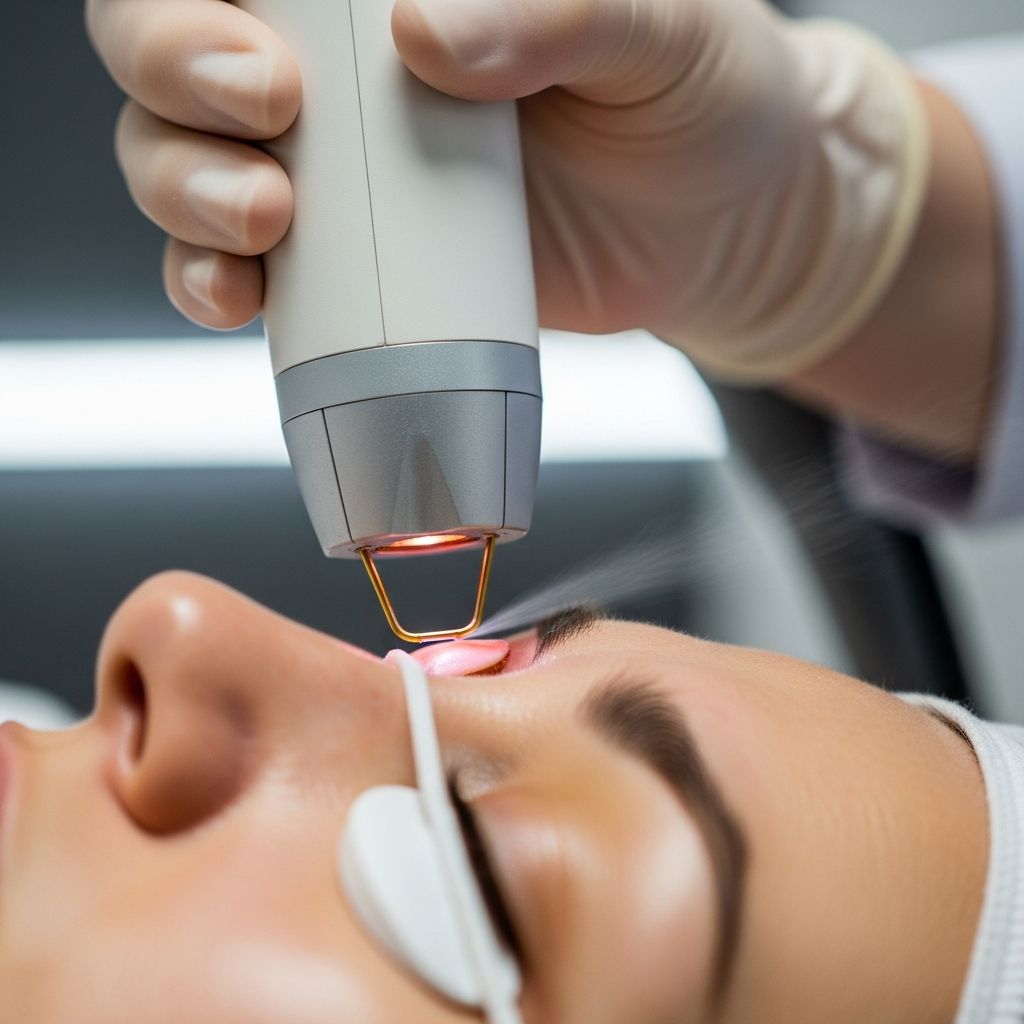
Carbon dioxide (CO2) laser treatment utilises an infrared wavelength of 10,600 nm to vaporise thin layers of skin. It is a precise and predictable method for skin resurfacing, which is of particular value in the treatment of scars, aged sun-damaged skin and other skin lesions.
What is carbon dioxide laser?
The carbon dioxide laser produces a specific wavelength of light in the infrared spectrum (10,600 nm). The active laser medium is a mixture of three gases consisting of 10–20% carbon dioxide, 10–20% nitrogen, and the remainder helium.
CO2 laser beams penetrate the top skin layers reaching into the dermis. It creates tiny microscopic areas of thermal damage that stimulate new collagen production and replace damaged skin surface by new epidermal cells. Carbon dioxide lasers emit energy with a peak wavelength of 10,600 nm, which is preferentially absorbed by intracellular water. Absorption of this wavelength by the epidermis ablates the most superficial layers, promoting subsequent re-epithelialization from residual skin appendages and adnexal structures in the dermis, such as sweat glands and hair follicles. The thermal injury below the zone of ablation induces heat-mediated contraction of collagen and subsequent collagen remodelling in the dermis.
What is the mechanism of action of CO2 laser?
The CO2 laser works primarily through photothermal ablation, where the laser energy is absorbed by water in the skin cells, leading to rapid heating and vaporisation of tissue. This process removes thin layers of skin precisely while coagulating deeper tissues to minimise bleeding. As skin contains a very high water percentage, this makes the CO2 laser ideal for precise, safe ablation with good haemostasis.
Compared with other lasers, such as the erbium-doped yttrium-aluminum-garnet laser, CO2 lasers generate more heat and cause greater coagulation of small blood vessels in the dermis, leading to substantially less bleeding when a large surface area is ablated. Fractional CO2 lasers create microscopic treatment zones (MTZs), treating only a fraction of the skin surface while leaving surrounding areas intact for faster healing.
What skin conditions are treated with CO2 laser?
CO2 lasers are employed for a variety of cutaneous conditions, including cosmetic and medical indications.
Cosmetic indications
- Photoaging and rhytids: Treatment of photoaged skin characterised by increased laxity, irregular colour and texture, and static rhytids. CO2 lasers allow precise control over thermal damage depth.
- Acne scarring: Effective revision of acne scars by inducing thermal damage and stimulating collagen production, blending scars with surrounding skin.
- Surgical and traumatic scars: Reduces prominence with less bleeding and crusting than dermabrasion.
- Skin laxity: Contraction of collagen fibrils causes skin tightening.
- Rhytides: Fine and deep wrinkles around mouth, eyes, and forehead.
Medical indications
- Premalignant lesions: Actinic keratoses and prevention of keratinocyte skin cancers (squamous cell carcinoma, basal cell carcinoma).
- Viral warts: Especially recalcitrant and anogenital warts (condyloma acuminatum, HPV 6/11), with high efficacy and lower recurrence.
- Benign raised lesions: Seborrhoeic keratoses, actinic keratoses, Bowen disease, etc.
- Other lesions: Rhinophyma, Xanthelasma, syringomas, trichoepitheliomas, dermatosis papulosa nigra.
CO2 laser resurfacing is particularly effective for photoaging, mild scarring, and solitary cutaneous lesions.
How is CO2 laser skin resurfacing performed?
The procedure is typically performed under local anaesthesia with tumescent anaesthesia or topical numbing creams for smaller areas. For full-face resurfacing, general anaesthesia or IV sedation may be used.
Related Stories



- Pre-treatment preparation: Avoid sun exposure, retinoids, and certain medications for 2–4 weeks. Prophylactic antiviral therapy for herpes simplex virus history.
- Cleansing and anaesthesia: Skin is cleansed, and anaesthetic nerve blocks or topical agents applied 1 hour prior.
- Laser application: Laser is scanned over the area in overlapping passes. Parameters adjusted for fluence, density, and pulse duration. Treatment time: 30 minutes to 2 hours depending on area.
- Post-procedure: Dressings applied; cooling masks used for comfort.
Fractionated delivery systems are preferred for darker skin types (Fitzpatrick III–VI) to reduce risks.
CO2 laser resurfacing before and after photos
(Note: Clinical images typically show before-and-after comparisons demonstrating wrinkle reduction, scar improvement, and skin tightening. For example, perioral rhytides smoothened and acne scars blended after one session.)
What is the recovery time after CO2 laser?
Downtime varies by treatment type:
| Treatment Type | Downtime | Healing Time |
|---|---|---|
| Fractional CO2 | 3–7 days redness/pinkness | Full recovery 1–2 weeks |
| Ablative full-field | 7–14 days oozing/crusting | 1–2 months erythema |
| Fractionated ablative | 5–10 days | Persistent pinkness 1–3 months |
Initial healing involves pinpoint bleeding, then erythema, oedema, and re-epithelialisation by day 7–10. Collagen remodelling continues for 3–6 months.
What are the side effects and risks of CO2 laser?
- Common: Pain, swelling, pruritus, erythema (weeks to months).
- Infection: Bacterial, herpetic, candidal; prevented by antimicrobials.
- Pigmentation changes: Hyperpigmentation (more in darker skin), hypopigmentation.
- Scarring: Rare with proper settings; hypertrophic in 1–5%.
- Other: Milia, acneiform eruption, prolonged redness.
Patients with Fitzpatrick I–II skin are ideal; higher risks for III–VI without fractionation.
CO2 laser treatment aftercare
- Keep area clean with saline soaks; apply petrolatum ointment.
- Avoid sun exposure; use broad-spectrum sunscreen SPF 50+ after re-epithelialisation.
- Topical retinoids after 4–6 weeks; gentle cleansers.
- Antivirals for 7–14 days if HSV risk.
- Moisturise to prevent dryness; avoid picking crusts.
Are CO2 laser results permanent?
Results from collagen remodelling last years with sun protection and skincare. Maintenance treatments every 1–2 years recommended for optimal longevity. Long-term benefits include smoother texture, tighter skin, and reduced pigmentation enduring for years.
Frequently asked questions (FAQs) about CO2 laser treatment
Who is suitable for CO2 laser resurfacing?
Ideal candidates: Fitzpatrick skin types I–II with photoaging, scars, or lesions. Type III–VI suitable with fractional lasers and adjusted parameters after consultation.
How many sessions of CO2 laser are needed?
1–3 sessions spaced 4–6 weeks for fractional; single session for full ablative. Depends on condition severity.
Does CO2 laser work on dark skin?
Yes, with fractional CO2 and conservative settings to minimise dyspigmentation risks.
What is the cost of CO2 laser treatment?
Varies by area and type: $1,000–$5,000 per session; consult provider for quotes.
Is CO2 laser painful?
Managed with anaesthesia; feels like sunburn post-treatment, relieved by cooling and analgesics.
References
- Carbon dioxide laser treatment — DermNet NZ. 2023. https://dermnetnz.org/topics/carbon-dioxide-laser-treatment
- Laser Carbon Dioxide Resurfacing — StatPearls, NCBI Bookshelf, NIH. 2023-07-17. https://www.ncbi.nlm.nih.gov/books/NBK560544/
- The Role of the CO2 Laser and Fractional CO2 Laser in Dermatology — PMC, NCBI. 2014. https://pmc.ncbi.nlm.nih.gov/articles/PMC3999431/
- Laser resurfacing — Mayo Clinic. 2023. https://www.mayoclinic.org/tests-procedures/laser-resurfacing/about/pac-20385114
- Laser Resurfacing — American Society for Dermatologic Surgery. 2023. https://www.asds.net/skin-experts/skin-treatments/laser-resurfacing
Similar Articles








Read full bio of Sneha Tete