Cardiac Arrest: Causes, Symptoms, and Emergency Treatment
Understanding cardiac arrest: Learn about causes, warning signs, and life-saving emergency treatments.
Understanding Cardiac Arrest
Cardiac arrest is a life-threatening medical emergency that occurs when the heart suddenly stops beating effectively or ceases to beat altogether. This condition causes blood flow to stop reaching the brain and other vital organs, potentially leading to death within minutes if left untreated. Unlike a heart attack, which occurs when blood flow to the heart muscle is blocked, cardiac arrest is an electrical problem where the heart’s pumping function fails completely.
Every year in the United States, approximately one million people experience cardiac events, with cardiac arrest representing one of the most critical medical emergencies requiring immediate intervention. The outcome of cardiac arrest depends heavily on how quickly emergency medical treatment is provided and how promptly bystanders initiate life-saving measures.
Causes of Cardiac Arrest
Cardiac arrest can result from various underlying conditions affecting the heart’s structure or electrical system. Understanding these causes is essential for prevention and risk assessment.
Primary Electrical Causes
The majority of sudden cardiac arrests are caused by ventricular fibrillation, a type of arrhythmia where the lower chambers of the heart (the ventricles) beat abnormally fast and with an irregular rhythm. This chaotic electrical activity prevents the heart from effectively pumping blood to the body.
Structural Heart Conditions
Several structural abnormalities can predispose individuals to cardiac arrest:
- Coronary artery disease: The buildup of plaque in coronary arteries restricts blood flow to the heart muscle, representing the most common cardiac cause of sudden unexplained death across all age groups.
- Cardiomyopathy: This condition occurs when the heart muscle becomes enlarged or stiff, leading to abnormal contractions.
- Congenital heart disease: Structural differences present from birth account for approximately 10-15% of sudden cardiac death cases, including coronary artery anomalies, aortic stenosis, and mitral valve prolapse.
- Heart valve disease: Damage or disease affecting heart valves can disrupt normal blood flow and heart function.
- Arrhythmogenic cardiomyopathy: This heart muscle disease causes progressive breakdown of cardiac tissue, increasing the risk of abnormal heartbeats and sudden death.
Other Contributing Factors
Beyond structural and electrical causes, several other factors can trigger cardiac arrest:
- A sudden blow to the chest
- Allergic reactions or medication interactions
- Severe breathing difficulties such as asthma attacks or choking
- Electrocution
- Abnormally low levels of magnesium or potassium in the blood
- Release of adrenaline
- Significant blood loss or lack of oxygen
- Genetic predisposition
Symptoms and Warning Signs
Recognizing the symptoms of cardiac arrest is crucial for prompt intervention. The condition typically presents with sudden, dramatic symptoms that require immediate emergency response.
Acute Symptoms
The typical signs of cardiac arrest include an abrupt loss of consciousness with eyes rolled back. Many individuals experiencing cardiac arrest may exhibit seizure-like activity due to inadequate oxygen flow to the brain. Additionally, a person suffering from cardiac arrest may experience irregular, labored, or absent breathing patterns, and may have a very weak or undetectable pulse.
Related Stories



Other symptoms that may precede or accompany cardiac arrest include:
- Heart palpitations
- Dizziness
- Lightheadedness
- General weakness
- Loss of consciousness (fainting)
The critical distinction of cardiac arrest is that it occurs suddenly, with no warning in many cases. Most individuals experiencing sudden cardiac arrest were not previously aware of their increased risk and were not under the care of a physician.
Emergency Treatment and Response
Immediate treatment is essential to prevent death from cardiac arrest. The first few minutes are critical, as survival depends on rapid intervention.
Immediate CPR
Cardiopulmonary resuscitation (CPR) must be initiated immediately when cardiac arrest is suspected. To check if CPR is needed, first assess whether the person is breathing normally or only gasping. If the person isn’t breathing or is only gasping, begin CPR with chest compressions immediately. This life-saving technique maintains blood flow to vital organs until advanced medical help arrives.
Defibrillation
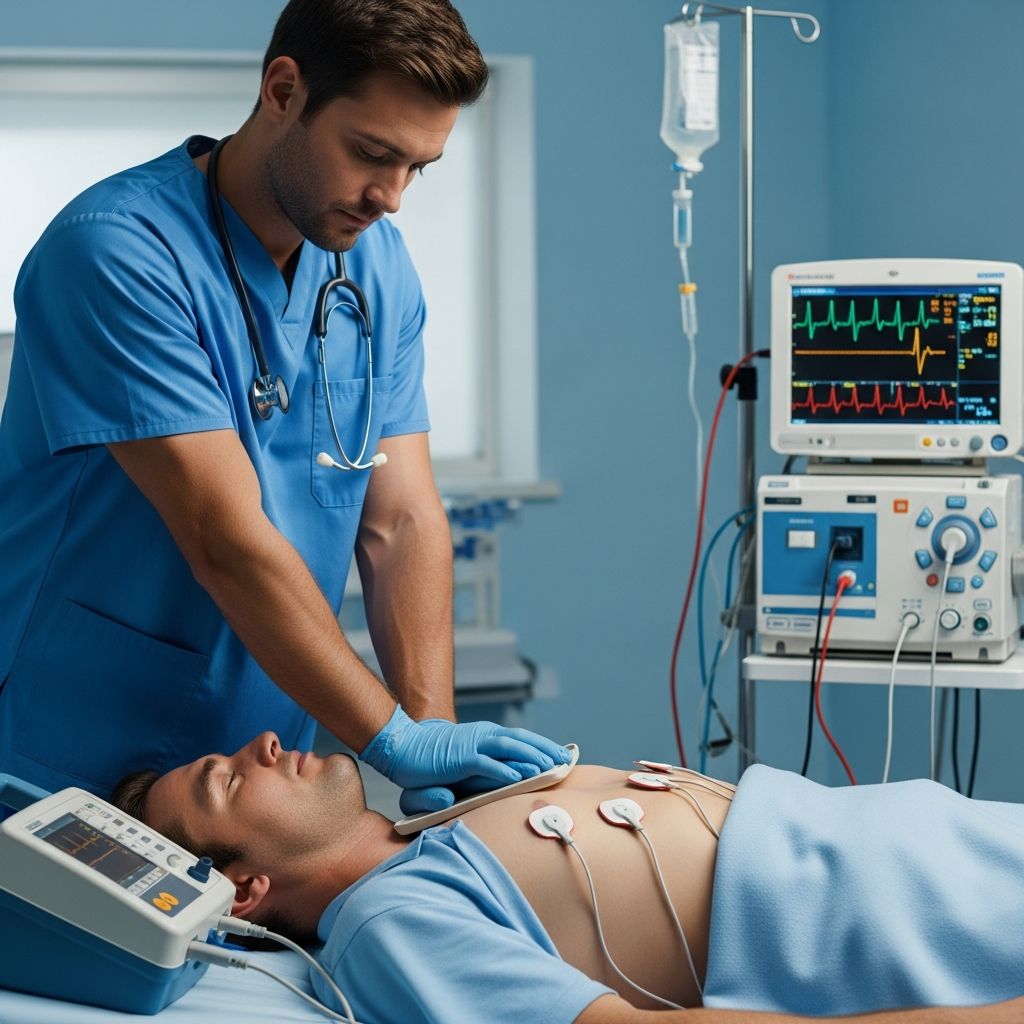
Resetting the heart rhythm through defibrillation is a critical component of cardiac arrest treatment. An automated external defibrillator (AED) can be used to deliver an electrical shock that may restore the heart’s normal rhythm. These devices are increasingly available in many public places, including airports, shopping centers, and sports facilities, making them accessible for bystander use.
Hospital-Based Treatment Options
Once a patient reaches the emergency room, healthcare professionals conduct comprehensive testing and implement advanced treatments tailored to the patient’s specific condition.
Diagnostic Testing
At the emergency room, healthcare professionals run tests to check for the underlying cause of cardiac arrest. Tests may include:
- Blood tests to assess electrolyte levels and cardiac markers
- Exercise stress tests to evaluate heart function
- Imaging tests to visualize heart structure and function
- Cardiac catheterization to identify blockages in heart arteries
- Electrophysiology (EP) studies to assess electrical function
Targeted Temperature Management
Targeted temperature management (TTM) is a specialized treatment designed to lower body temperature and help protect the brain from further damage. This therapy may involve cooling blankets, cooling helmets, ice packs, or other cooling methods to create a controlled hypothermic state that promotes neurological recovery.
Oxygen Therapy
Oxygen therapy helps ensure patients receive adequate oxygen so their organs continue to function properly during recovery. Maintaining proper oxygenation is essential for preventing secondary organ damage.
Extracorporeal Membrane Oxygenation (ECMO)
In severe cases, extracorporeal membrane oxygenation treatment may be used to pump blood through an artificial lung. This device adds oxygen and removes carbon dioxide from the blood before returning it to the body, effectively taking stress off the lungs and heart to promote healing.
Medications and Pharmacological Interventions
Various medications play important roles in treating cardiac arrest and preventing recurrence.
Anti-Arrhythmic Drugs
Through an intravenous line in the arm, emergency personnel may administer antiarrhythmic medications that work to restore the heart’s electrical rhythm. These drugs help stabilize abnormal heart rhythms and improve the chances of successful defibrillation.
Additional Medications
Other medicines that might be used to treat causes of sudden cardiac arrest or lower the risk of recurrence include:
- Beta blockers
- Angiotensin-converting enzyme (ACE) inhibitors
- Calcium channel blockers
These medications address underlying heart conditions and help prevent future cardiac events.
Invasive Procedures and Surgery
Depending on the identified cause of cardiac arrest, several invasive procedures or surgical interventions may be recommended.
Coronary Angioplasty and Stent Placement
Also called percutaneous coronary intervention, coronary angioplasty opens blocked or clogged heart arteries. During this procedure, the doctor inserts a thin, flexible tube into a blood vessel, usually in the groin, and advances it to the area of blockage. A tiny balloon on the tube’s tip is then inflated to open the artery and improve blood flow to the heart. A metal mesh tube called a stent may be placed through the catheter to remain in the artery and help keep it open.
Coronary Artery Bypass Surgery
Coronary artery bypass grafting (CABG) creates a new pathway for blood to flow around a blocked artery to the heart. This surgery restores blood flow to the heart muscle and is often recommended for patients with significant coronary artery disease.
Radiofrequency Catheter Ablation
This treatment blocks a faulty heart signaling pathway that may cause irregular heartbeats. One or more flexible catheters are inserted through blood vessels and guided to the heart, where radiofrequency energy creates small scars that block irregular heart signals.
Corrective Heart Surgery
Surgery may be performed to correct congenital heart conditions, heart valve disease, or diseased heart muscle, addressing the structural problems that contributed to cardiac arrest.
Genetic Testing and Family Screening
Genetic testing may be recommended for survivors of cardiac arrest and their blood relatives. This testing is important because certain conditions that increase the risk of cardiac arrest run in families. Understanding family history and genetic risk factors allows relatives to take preventive measures and seek appropriate medical monitoring.
Prevention and Risk Management
For individuals identified as having increased risk for sudden cardiac arrest, several preventive strategies may be implemented. Medical therapy is often recommended, and in some cases can provide significant protection. For those determined to be at high risk, an implantable cardioverter defibrillator (ICD) may be recommended to detect and treat dangerous arrhythmias automatically.
Additionally, avoiding certain risk factors becomes important for high-risk individuals. This may include limiting participation in competitive athletics or other strenuous activities, depending on the specific diagnosis and individual risk assessment.
Long-Term Recovery and Follow-Up Care
After successful defibrillation and emergency treatment, most people require hospital care to recover from the effects of their sudden cardiac arrest and to treat and prevent future heart problems. Once a patient’s heartbeat has been restored, follow-up treatment generally involves identifying what caused the sudden cardiac arrest and taking steps to prevent recurrence.
For example, if cardiovascular specialists determine that a patient’s sudden cardiac arrest was caused by coronary artery disease, they may recommend surgery to restore blood flow through affected arteries.
Frequently Asked Questions
Q: What is the difference between cardiac arrest and a heart attack?
A: A heart attack occurs when blood supply to the heart muscle is blocked, causing the muscle to die. Cardiac arrest is an electrical problem where the heart stops beating effectively. A heart attack can lead to cardiac arrest, but they are distinct conditions requiring different treatment approaches.
Q: How long can someone survive in cardiac arrest?
A: Brain damage can begin within minutes of cardiac arrest without treatment. Permanent brain damage can occur within 4-6 minutes, and death can occur within 8-10 minutes. This is why immediate CPR and defibrillation are critical.
Q: Can cardiac arrest be prevented?
A: While not all cases can be prevented, many can be through managing risk factors such as controlling high blood pressure, maintaining a healthy weight, not smoking, managing diabetes, and getting regular cardiac screening if you have family history of heart disease.
Q: What should I do if I witness someone in cardiac arrest?
A: Call emergency services immediately (911 in the US), begin CPR with chest compressions if trained, and locate and use an AED if available in the area. Quick action dramatically improves survival chances.
Q: What is an ICD and how does it work?
A: An implantable cardioverter defibrillator (ICD) is a small device implanted under the skin that monitors heart rhythm and automatically delivers therapy if dangerous arrhythmias are detected, potentially preventing cardiac arrest.
References
- Sudden Cardiac Arrest: Diagnosis and Treatment — Mayo Clinic. 2024. https://www.mayoclinic.org/diseases-conditions/sudden-cardiac-arrest/diagnosis-treatment/drc-20350640
- About Cardiac Arrest — Centers for Disease Control and Prevention (CDC). 2024. https://www.cdc.gov/heart-disease/about/cardiac-arrest.html
- Treatment of Cardiac Arrest — American Heart Association. 2024. https://www.heart.org/en/health-topics/cardiac-arrest/emergency-treatment-of-cardiac-arrest
- Sudden Cardiac Arrest: Causes, Signs & Treatment — Cincinnati Children’s Hospital Medical Center. 2024. https://www.cincinnatichildrens.org/health/s/sudden-cardiac-arrest
- Sudden Cardiac Arrest: Causes, Symptoms & Treatment — Tampa General Hospital. 2024. https://www.tgh.org/institutes-and-services/conditions/sudden-cardiac-arrest
- Cardiac Arrest: Causes & Symptoms — American Red Cross. 2024. https://www.redcross.org/take-a-class/resources/learn-first-aid/adult-cardiac-arrest
- Sudden Cardiac Arrest: Causes & Symptoms — Cleveland Clinic. 2024. https://my.clevelandclinic.org/health/diseases/21736-cardiac-arrest
Similar Articles








Read full bio of medha deb