Cardiac Sarcoidosis: Causes, Symptoms, and Treatment
Understanding cardiac sarcoidosis: A comprehensive guide to this rare inflammatory heart condition.
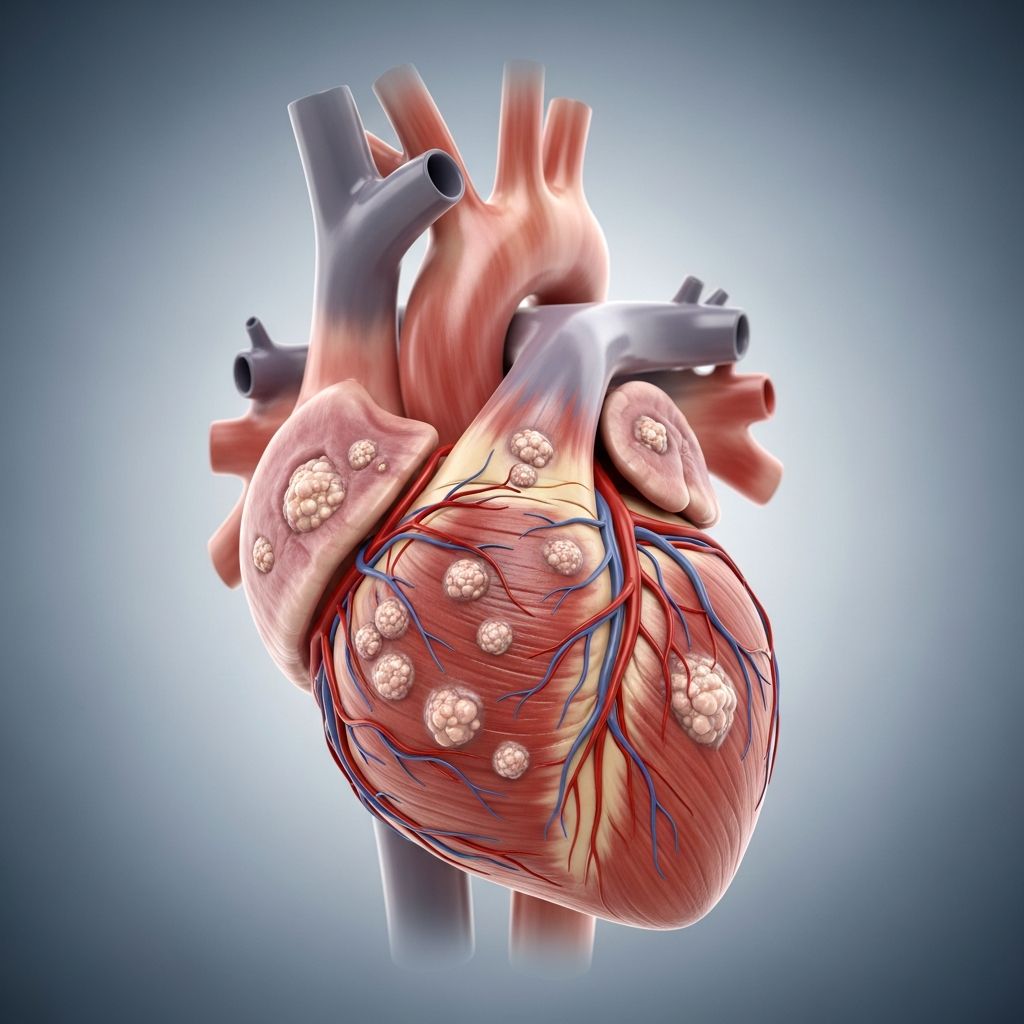
Understanding Cardiac Sarcoidosis
Cardiac sarcoidosis is a rare but serious condition that occurs when an inflammatory disease called sarcoidosis affects the heart. Sarcoidosis is a systemic granulomatous disease that can involve multiple organ systems, and when it impacts the heart, it can lead to significant complications including arrhythmias, conduction abnormalities, and heart failure. The prevalence of cardiac sarcoidosis-related cardiomyopathy has been increasing in recent years, making it increasingly important for healthcare providers and patients to understand this condition.
Cardiac sarcoidosis is characterized by the formation of non-caseating granulomas—clusters of inflammatory cells—within the myocardium, the muscular layer of the heart. This granulomatous infiltration can affect all three layers of the heart: the epicardium (outer layer), myocardium (middle layer), and endocardium (inner layer), though the myocardium is most commonly involved. The disease progresses through distinct histological stages, beginning with granulomatous inflammation that can lead to tissue dysfunction, injury, and fibrosis, ultimately resulting in scarring of heart tissue.
Epidemiology and Prevalence
Cardiac involvement occurs in up to one-quarter of patients with systemic sarcoidosis, though the actual prevalence may be underestimated due to diagnostic challenges. The condition remains largely undiagnosed in many patients, partly because clinical manifestations can be subtle or absent. Research indicates that approximately 37% of sarcoidosis patients with cardiac involvement are asymptomatic, presenting no obvious clinical signs or symptoms. This asymptomatic presentation makes screening and early detection crucial for preventing serious complications.
Cardiac sarcoidosis represents a poor prognostic feature of systemic sarcoidosis, and the diagnostic rate remains disappointingly low at approximately 19.2% when using endomyocardial biopsy alone, primarily due to the patchy distribution of granulomatous inflammation throughout the heart. Despite improved diagnostic tools and increased awareness, cardiac sarcoidosis is frequently misclassified as other conditions, with clinical misclassification occurring in up to 66% of cases, most often diagnosed incorrectly as dilated cardiomyopathy.
Clinical Manifestations and Symptoms
The clinical presentation of cardiac sarcoidosis varies widely, ranging from asymptomatic disease discovered incidentally to life-threatening complications including sudden cardiac death. The manifestations depend on the location and severity of granulomatous inflammation within the heart and can be categorized into two main groups: those associated with cardiac conduction disturbances and those related to myocardial impairment.
Conduction Abnormalities
One of the cardinal features of cardiac sarcoidosis is high-grade atrioventricular (AV) block, which represents a significant red flag for diagnosis, especially in individuals under 60 years of age with no other explanation for the conduction disturbance. The granulomatous infiltration preferentially affects the basal septum of the heart, disrupting the electrical conduction system and leading to various degrees of heart block, ranging from first-degree to complete heart block.
Arrhythmias
Ventricular arrhythmias are among the most serious manifestations of cardiac sarcoidosis and represent a major cause of sudden cardiac death in affected patients. Patients may experience atrial arrhythmias, including atrial fibrillation, as well as ventricular tachycardia and other dangerous rhythm disturbances. These arrhythmias result from the scar tissue and inflammation creating an abnormal electrical substrate within the myocardium, predisposing the heart to dangerous rhythm abnormalities.
Related Stories



Heart Failure
Cardiac sarcoidosis can progress to cause both systolic and diastolic heart failure through diffuse myocardial infiltration and subsequent fibrosis. Patients may present with reduced left ventricular ejection fraction (LVEF), and echocardiographic findings may reveal regional wall aneurysms or basal septal thinning in the absence of coronary artery disease. These structural changes reflect the extent of myocardial involvement and inflammation.
Diagnostic Approach
The diagnosis of cardiac sarcoidosis is challenging and requires a comprehensive, multifaceted approach that integrates clinical findings, imaging studies, laboratory data, and histopathological information. Rather than a binary diagnostic framework, cardiac sarcoidosis should be considered along a diagnostic continuum ranging from definite, highly probable, and probable, to possible, low probability, and unlikely.
Clinical Evaluation
The initial evaluation should include a detailed clinical history, physical examination, and assessment for extracardiac manifestations of sarcoidosis. Red flags that should prompt investigation for cardiac involvement include unexplained high-grade AV block in patients under 60 years, unexplained ventricular arrhythmias, or echocardiographic abnormalities such as reduced LVEF or regional wall aneurysms without coronary artery disease.
Electrocardiography
The 12-lead electrocardiogram (ECG) is an important initial screening tool and should be performed in all patients with systemic sarcoidosis. The ECG may reveal conduction abnormalities, various degrees of AV block, or arrhythmias. However, the ECG can be normal in many patients with cardiac involvement, limiting its sensitivity for diagnosis.
Echocardiography
Transthoracic echocardiography provides important structural and functional information about the heart. Characteristic findings may include regional wall motion abnormalities, especially in the basal septum, regional wall aneurysms, and reduced systolic function. However, echocardiography alone cannot definitively diagnose cardiac sarcoidosis and must be interpreted in conjunction with other diagnostic modalities.
Advanced Cardiac Imaging
The increased availability of advanced cardiac imaging techniques has significantly improved the diagnosis and identification of cardiac sarcoidosis. Both cardiac magnetic resonance (CMR) imaging and positron emission tomography (PET) imaging play crucial roles in detecting myocardial inflammation, fibrosis, and scar formation. CMR with late gadolinium enhancement can visualize areas of fibrosis and scar tissue, while PET imaging can detect areas of active inflammation. These imaging modalities have substantially improved diagnostic accuracy and are now essential components of the diagnostic evaluation.
Endomyocardial Biopsy
Endomyocardial biopsy remains the gold standard for definitive histological confirmation of cardiac sarcoidosis, as it allows direct visualization of non-caseating granulomas within myocardial tissue. However, the patchy distribution of granulomatous inflammation throughout the heart means that biopsy may miss areas of involvement, resulting in false-negative results. Therefore, negative biopsy does not exclude the diagnosis of cardiac sarcoidosis.
Laboratory Studies
Laboratory findings can support the diagnosis of sarcoidosis and may reveal hypercalcemia due to increased production of 1,25-dihydroxyvitamin D by activated macrophages in granulomas. Elevated angiotensin-converting enzyme (ACE) levels and abnormal chest imaging consistent with pulmonary sarcoidosis strengthen the likelihood of cardiac involvement.
Diagnostic Criteria
The Japanese Circulation Society (JCS) 2016 guideline provides systematic diagnostic criteria for cardiac sarcoidosis based on both major and minor criteria. A diagnosis of cardiac involvement is strongly suggested by satisfaction of either two or more major criteria, or one major criterion combined with at least two minor criteria. These standardized criteria help clinicians systematically evaluate patients and reach diagnostic conclusions, though experts emphasize that pathologic markers beyond granulomas may be crucial for early identification and appropriate therapeutic interventions.
Treatment and Management
The management of cardiac sarcoidosis requires a comprehensive, multidisciplinary approach addressing both the underlying inflammatory disease and the specific cardiac manifestations. Treatment should be tailored to the individual patient’s presentation and severity of disease.
Immunosuppression
Immunosuppression with corticosteroids remains the standard first-line therapy for the acute inflammatory phase of cardiac sarcoidosis. Corticosteroids reduce granulomatous inflammation and can help prevent disease progression and improve cardiac function. However, no prospective clinical trials exist to definitively guide immunosuppressive management, and treatment decisions are typically based on cohort studies and consensus opinions, leading to substantial variation across medical centers.
There is an evolving role for steroid-sparing agents in patients who cannot tolerate corticosteroids or who experience inadequate response to steroids alone. These agents may include mycophenolate mofetil, azathioprine, and other immunosuppressive medications. The tiered approach to treatment initiates immunosuppression in individuals with clinical manifestations and evidence of active inflammation.
Management of Arrhythmias
For patients with ventricular arrhythmias, implantable cardioverter-defibrillators (ICDs) are often necessary to prevent sudden cardiac death. Radiofrequency catheter ablation may be considered to reduce arrhythmia burden, though the challenging arrhythmia substrate created by scar tissue and ongoing inflammation often results in recurrence rates of approximately 46% within one to five years of follow-up. In select patients with refractory ventricular arrhythmias, cardiac sympathetic denervation may be considered as an adjunctive therapy.
Heart Failure Management
Standard heart failure therapies, including beta-blockers, angiotensin-converting enzyme inhibitors, and other guideline-directed medical therapies, form the foundation of management for patients with reduced ejection fraction. Advanced heart failure therapies such as durable mechanical circulatory support devices (left ventricular assist devices) or heart transplantation may be considered for patients who progress to advanced heart failure refractory to medical management.
Advanced Therapies
When cardiac sarcoidosis progresses to end-stage disease, individuals should be evaluated for advanced heart failure therapies. However, several sarcoidosis-specific considerations must be addressed: the degree of extracardiac organ involvement that may affect outcomes after transplantation, preexisting immunosuppression-related complications such as diabetes or adrenal insufficiency, and potential wound healing impairment. Limited data exist on long-term outcomes of mechanical circulatory support in cardiac sarcoidosis, and continued collaboration between multidisciplinary teams is essential for optimal management.
Screening for Cardiac Involvement
Current guidelines lack consensus on systematic screening for cardiac sarcoidosis in patients with systemic sarcoidosis. However, the 2014Heart Rhythm Society consensus recommends performing baseline cardiac history, electrocardiogram, and echocardiogram in all patients with systemic sarcoidosis, with further evaluation if abnormalities are detected. For patients with evidence of cardiac involvement, additional advanced imaging with CMR or PET should be considered to better characterize the extent of myocardial inflammation and fibrosis.
Prognosis and Outcomes
Cardiac involvement in sarcoidosis is considered a poor prognostic feature of systemic disease. The presence of cardiac manifestations significantly impacts survival and quality of life. Patients may progress to developing advanced heart failure or life-threatening ventricular arrhythmias, requiring escalation to advanced therapies. Despite increasing awareness and improved diagnostic tools, the condition remains frequently misdiagnosed, with many patients not receiving accurate diagnosis until advanced disease stages or at the time of heart transplantation or mechanical support device implantation.
Future Directions
Significant knowledge gaps in cardiac sarcoidosis underscore the need for an interdisciplinary approach to both patient care and future investigation. Prospective clinical trials are urgently needed to guide immunosuppressive management and define optimal treatment strategies. Enhanced understanding of disease mechanisms, improved diagnostic approaches, and development of novel therapeutic options remain critical priorities for advancing care of patients with cardiac sarcoidosis.
Frequently Asked Questions
Q: What is the difference between systemic sarcoidosis and cardiac sarcoidosis?
A: Systemic sarcoidosis is an inflammatory granulomatous disease that can affect multiple organs throughout the body, including the lungs, skin, and lymph nodes. Cardiac sarcoidosis occurs when the inflammatory process specifically involves the heart. Up to one-quarter of patients with systemic sarcoidosis may have cardiac involvement, though many remain undiagnosed.
Q: Can cardiac sarcoidosis be cured?
A: While cardiac sarcoidosis cannot be cured, it can be effectively managed with appropriate treatment. Immunosuppressive therapy with corticosteroids can help control inflammation and prevent disease progression. The goal of treatment is to reduce symptoms, prevent complications like sudden cardiac death, and preserve heart function.
Q: How is cardiac sarcoidosis diagnosed if a biopsy is negative?
A: Cardiac sarcoidosis diagnosis relies on a combination of clinical findings, imaging studies, laboratory data, and histopathology rather than biopsy alone. Advanced imaging such as cardiac MRI and PET imaging can detect inflammation and scarring. A negative biopsy does not exclude cardiac sarcoidosis due to the patchy distribution of disease throughout the heart.
Q: What lifestyle modifications are recommended for patients with cardiac sarcoidosis?
A: Patients should follow standard heart failure management recommendations, including sodium restriction, adequate hydration management, regular physical activity as tolerated, and stress reduction. Close follow-up with a multidisciplinary team of cardiologists and sarcoidosis specialists is essential for optimal outcomes.
Q: Is cardiac sarcoidosis hereditary?
A: Sarcoidosis itself has genetic predisposition factors, but cardiac sarcoidosis is not directly inherited. Family members of sarcoidosis patients may have a slightly increased risk of developing sarcoidosis, but this does not guarantee cardiac involvement.
References
- Sarcoidosis-Related Cardiomyopathy — National Institutes of Health, National Center for Biotechnology Information. 2021-07-22. https://pubmed.ncbi.nlm.nih.gov/34260889/
- Management of Cardiac Sarcoidosis in 2020 — Johns Hopkins University. 2020. https://pure.johnshopkins.edu/en/publications/management-of-cardiac-sarcoidosis-in-2020
- Diagnosis and Management of Cardiac Sarcoidosis: A Scientific Statement — Johns Hopkins University. https://pure.johnshopkins.edu/en/publications/diagnosis-and-management-of-cardiac-sarcoidosis-a-scientific-stat/
- Diagnostic and Management Strategies in Cardiac Sarcoidosis — PubMed. 2024-03-15. https://pubmed.ncbi.nlm.nih.gov/38373681/
- Cardiac Sarcoidosis: A Comprehensive Review of Risk Factors — Frontiers in Cardiovascular Medicine. 2023-10-05. https://www.frontiersin.org/journals/cardiovascular-medicine/articles/10.3389/fcvm.2023.1156474/full
- Diagnosis and Management of Cardiac Sarcoidosis: A Scientific Statement from the American Heart Association — American Heart Association. 2023. https://www.ahajournals.org/doi/10.1161/CIR.0000000000001240
Similar Articles








Read full bio of medha deb